Where Does Ljubljana Have Direct Trains To?
The direct rail routes out of Ljubljana, from Lake Bled and the Slovenian coast to Zagreb, Trieste, Vienna and Venice, with ticket and timetable practicalities.
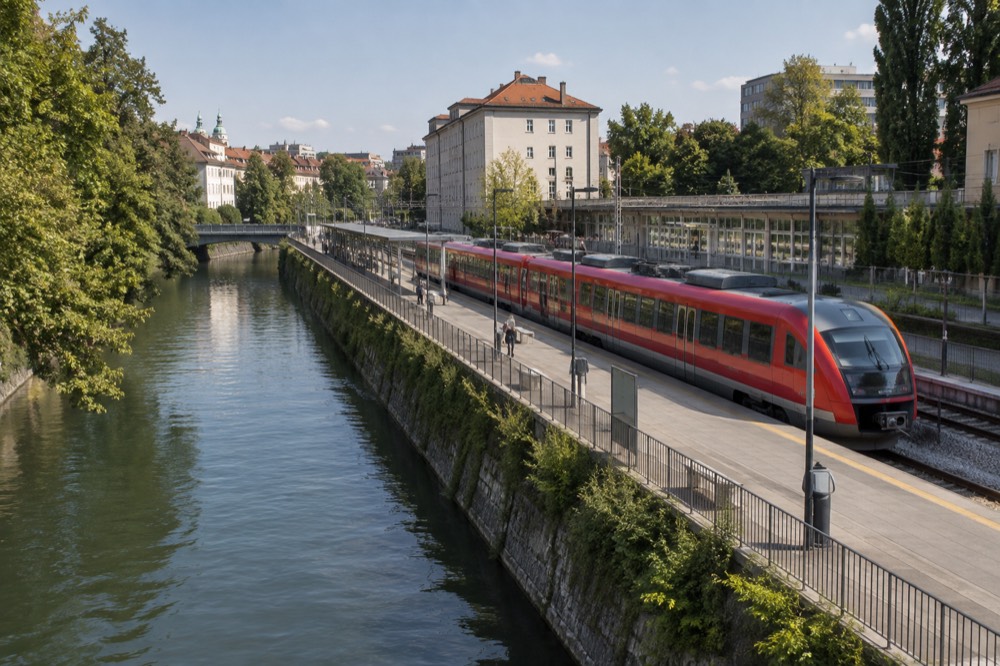
Where Does Ljubljana Have Direct Trains To?
Ljubljana's main station sits on the northern edge of the pedestrianised centre and sends direct trains to Slovenia's own headline destinations, including Lake Bled, the Soča Valley approach at Most na Soči, the coast near Koper, and the secondary cities of Maribor, Celje and Kranj. Internationally, direct services run to Zagreb in Croatia, Trieste in Italy, Vienna in Austria and Venice in Italy, with seasonal and cross-border variations through the year, so timetables should always be checked before travel.
Ljubljana's rail hub is compact by European capital standards. The station building faces Trg Osvobodilne fronte, a five-minute walk from the heart of the car-free centre, and nearly every platform serves a route a visitor would actually want. That walkability is the quiet advantage: unlike cities where the station is an hour from the old town, here you step off a train from Vienna or Zagreb and you are already in the middle of things, with the Ljubljana train station area doubling as a practical base for day trips.
The national operator is Slovenske železnice, and its network is genuinely useful for tourists in a way that surprises people who expect a small country to have a token railway. The spine of the network runs from the capital northwest toward Jesenice and the Austrian border, which is the line that serves Lake Bled. A second corridor runs east toward Maribor and onward connections, and a third runs southwest toward the Karst and the coast. The international links plug into all three.
One honest caveat belongs at the top of any article on this subject: fares and exact journey times for individual routes are not published in a form this site could verify, because the operator's own booking site blocks automated reads. The routes and destinations below are real and stable. The prices are not, so treat every timetable and fare as something to confirm at the point of booking rather than something to plan around from an article.
Slovenia is inside the European Union, the eurozone and the Schengen area, which changes the feel of every cross-border train listed here. The government's own summary records that Slovenia abolished border checks at its internal land and sea borders on 21 December 2007, with air borders following on 30 March 2008, so a train from Ljubljana to Trieste or Zagreb does not stop for passport control in normal circumstances. Croatia joined Schengen and the euro on 1 January 2023, which made the Zagreb route an internal journey too. There is no money to change and, ordinarily, no border to cross.
Which Slovenian Destinations Can You Reach by Direct Train from Ljubljana?
The domestic network covers the destinations visitors actually name: direct trains reach the Lake Bled area, the alpine town of Kranjska Gora's rail gateway at Jesenice, the Soča Valley's rail head, the spa and wine towns of eastern Slovenia including Maribor, Celje and Zreče, and the coast via the station serving Koper. Journey times are short because the country is small, with the longest domestic runs still comfortably inside three hours.
The Lake Bled line is the one that matters most, and it carries a detail most guides get wrong. Bled is served by two different stations on two different lines, and the one most advice sends people to is the less convenient one. Lesce-Bled is the main-line stop, and it sits 4 km from the lake, a genuine walk or a bus ride away. Bled Jezero, on the branch line, is 1.5 km from the centre, close enough to walk with a suitcase. The official Bled tourism site publishes both distances on its rail information page, and anyone planning a Ljubljana to Lake Bled day out by rail should check which station their train actually serves before assuming the trip ends at the lake shore.
| Destination area | Station to use | Distance from the sight | What to check before travelling |
|---|---|---|---|
| Lake Bled | Bled Jezero (branch line) | 1.5 km from the centre | Branch-line departure times, which are thinner than the main line's |
| Lake Bled | Lesce-Bled (main line) | 4 km from the centre | Bus or taxi connection for the last stretch |
| Bohinj and the Julian Alps | Bohinjska Bistrica area | Village-based access | Seasonal service levels on the Bohinj branch |
| The Soča Valley | Most na Soči | Valley floor, transfers onward | Connection times for onward buses toward Bovec |
| The coast | Divaca area, onward to Koper | Depends on final stop | Whether the coastal branch is running on your date |
| Eastern Slovenia | Maribor, Celje | City centres | Frequency, which drops outside working days |
The Soča Valley route deserves a word because it is the most scenic of the domestic lines and the least obvious from a map. The train threads through the Julian Alps foothills toward the Soča river basin, and the Soča Valley is one of the destinations where the rail head genuinely beats arriving by car for stress, even if it limits you to the valley's reachable half. For a fuller alpine loop, the Triglav National Park pages cover what is practical once you are there.
For anyone whose plan is "see the country by rail", the honest framing is that Slovenia's trains are a good spine with a thin ribcage. The main lines are frequent and reliable; the branch lines, including the one that makes Bled Jezero useful, run less often and demand a bit of timetable literacy. Build the day around the return departure, not the arrival, because a missed branch-line train in the evening can turn a relaxed day into an expensive taxi ride.
Can You Take a Direct Train from Ljubljana to Lake Bled?
Yes, direct trains run from Ljubljana to the Bled area roughly hourly through the day, and the journey is short enough that Bled works as a half-day trip by rail. The catch is the station: trains on the main line stop at Lesce-Bled, 4 km from the lake, while the closer Bled Jezero station, 1.5 km out, is served by fewer departures on the branch line, so the station choice matters as much as the train choice.
For most visitors the practical plan is simple. Take a main-line train to Lesce-Bled for frequency, accept the 4 km hop to the shore, or time the day around a branch-line departure to Bled Jezero for the walk-in arrival. The lake itself, the castle above it and the island church are all covered in detail on the Lake Bled guide, including the pletna boats that ferry visitors to the island.
What the train does not solve is the rest of the Bled experience. Vintgar Gorge, the river gorge that pairs naturally with the lake, is seasonal and closes for winter, with the operator stating it is open to visitors between April and October and deliberately declining to publish an exact closing date because closure depends on conditions. If the gorge is on your list, the season shapes the whole day, and a rail-only itinerary gives you the least flexibility to work around it. The wider set of guides lives on Ljubljana Travel Guide.
That flexibility gap is why guided coach day trips from Ljubljana to Bled exist alongside the perfectly good train. A small-group tour such as the Lake Bled and Castle trip, six hours, rated 4.7 from 1,641 reviews, from $86, bundles the castle entry option and the island into one fixed itinerary and removes the return-departure anxiety entirely. The train wins on price and independence; the tour wins on everything being arranged.
The related tour on this page goes the other way entirely, and it is worth explaining why a cave tour is the companion piece to a rail article. Postojna Cave and Predjama Castle are the single biggest day trip from Ljubljana that has no useful rail link: the caves sit in the Karst off the main corridors, and the standard way to reach them is the coach tour. The Cave and Castle Tickets and Tour runs six hours, is rated 4.8 from 2,802 reviews, and starts from $132, covering both the cave system and the cliff castle in one booked seat. If your rail plan handles Bled, this tour handles the one destination the rails cannot.
Which International Cities Have Direct Trains from Ljubljana?
Direct international trains from Ljubljana reach Zagreb in Croatia, Trieste in Italy, Vienna in Austria and Venice in Italy, and each of those four opens onward connections across Europe. All four routes cross internal Schengen borders, so there is no routine passport control and no currency to change on the Zagreb line, which has used the euro since Croatia adopted it on 1 January 2023.
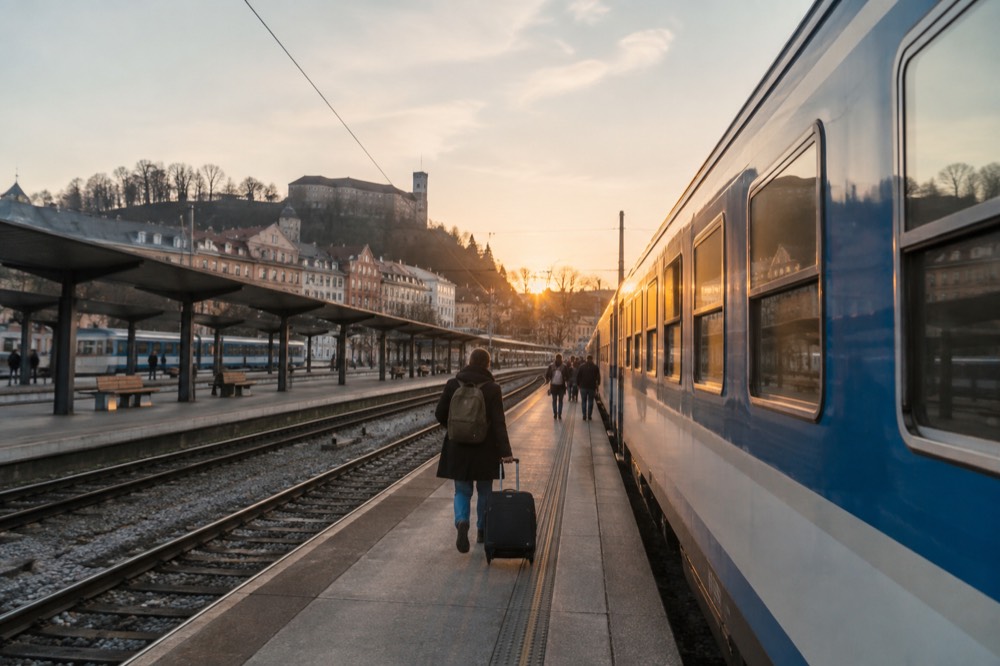
The Zagreb route is the most frequent international link and the easiest to treat casually, because both ends are in the eurozone and Schengen. It makes Zagreb realistic as a day trip or an easy two-city break, and the Ljubljana to Zagreb guide covers the arrival side, including what is walkable from the Croatian capital's own station. The Trieste route matters for a different reason: it is the fast way to the Italian coast, and it plugs into Italy's high-speed network, which is how Venice becomes reachable without flying. The Ljubljana to Trieste and Ljubljana to Venice pages cover both.
| Direct international route | Border status | What it connects to | Best used for |
|---|---|---|---|
| Ljubljana to Zagreb | Internal Schengen, euro on both sides | Croatian domestic rail | A day trip or a two-city break |
| Ljubljana to Trieste | Internal Schengen | Italian high-speed network | The Adriatic coast, onward to Venice |
| Ljubljana to Venice (via Italian connections) | Internal Schengen | Veneto and northern Italy | A Venice day out or an exit route |
| Ljubljana to Vienna | Internal Schengen | Austrian rail, Central Europe | An arrival or departure leg of a wider trip |
The Vienna route is the long one, and it is usually an arrival or departure leg rather than a day trip: it is the rail answer for travellers who want to reach Ljubljana without flying, and it is covered from the traveller's side on the trains from Ljubljana overview. Seasonal variation is real on the international lines, with some direct services running only in the summer holiday months and reverting to connections in winter, so a route that is direct in July may involve a change in February. Check the operator's live listing for your date rather than trusting a general article, including this one.
How Do You Buy Tickets and Find Timetables for Trains from Ljubljana?
Tickets for domestic and international trains are sold at the station in Ljubljana, from the operator's own website and app where a route is bookable online, and in some cases on board, though buying before boarding is the safe default. Timetables change by season, especially on the international and branch lines, so the live operator listing is the only source to trust for a specific date, and no fare on any route from Ljubljana is published on this site because none could be verified.
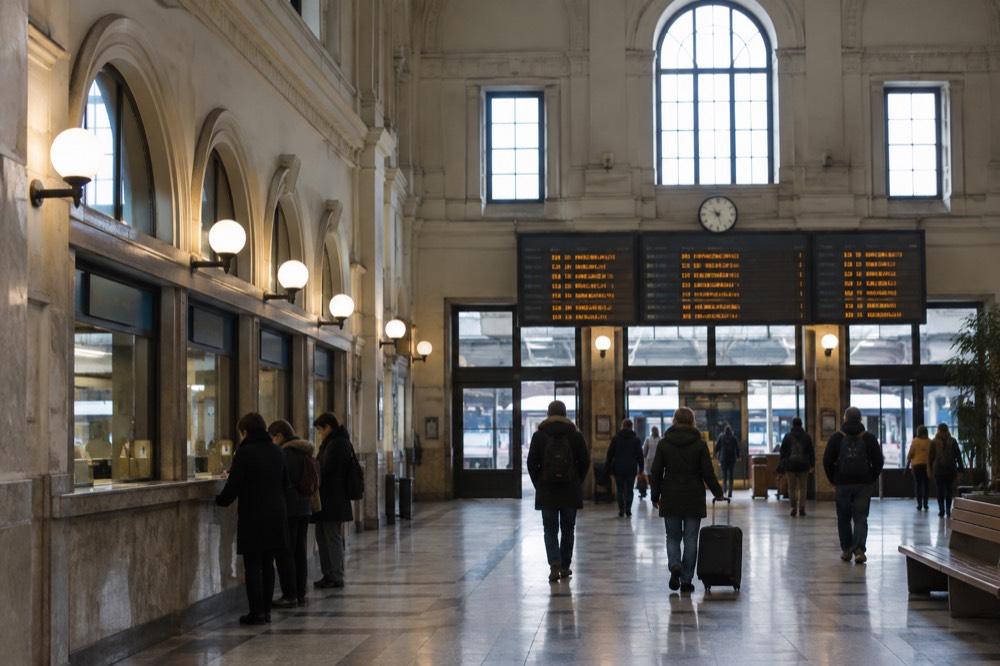
The station itself is easy to use. Ticket windows handle international journeys and domestic travel alike, and the staff routinely deal with the Ljubljana-to-Bled question, so it is worth asking which station your train serves rather than just asking for "a ticket to Bled". For the branch line to Bled Jezero, confirm the last return departure before you commit to a late afternoon by the lake. The getting around Ljubljana guide covers the city side, including the Urbana card for buses, which matters because buses accept no cash on board and you will likely use one to bridge a rail gap at some point in the day.
A few practicalities are worth stating plainly. Arrive at the station with time to spare on international departures, because platform assignments can change late. Keep the ticket until the end of the journey, as inspection happens on board. And if a day trip involves a branch line, photograph the return timetable at the destination station when you arrive; the small stations do not always display it clearly and the operator's site is not reliable on a phone in the alpine valleys.
For travellers who would rather not do any of this, the alternative is the tour layer. The cave and castle day trip covers the Karst with no timetable at all, the Bled coach tours remove the return-train calculation, and for a first day in the city before any of it, the free Ljubljana Unveiled walk on GuruWalk, tips-based and rated 4.91 from 1,496 reviews, is a two-hour orientation that starts and finishes within walking distance of the station itself.
Is the Train or the Coach the Better Way to Day-trip from Ljubljana?
The train is usually the better choice for Lake Bled and the Soča Valley, where the rails reach close to the sights and the fare beats a tour seat. The coach or a booked tour is the better choice for Postojna Cave, Predjama Castle, the Karst and the coast, where rail access is awkward or nonexistent, and for Vintgar Gorge, which is seasonal and closes for winter. Match the transport to the destination rather than to a general preference.
The deciding factor is rarely comfort or price; it is the last kilometre. Bled Jezero at 1.5 km from the centre is a walk. Lesce-Bled at 4 km is a connection. Postojna is neither: the cave is several kilometres from any useful station, and the scheduled coach tours exist precisely because that gap is not worth solving alone. The same logic applies to the coast, where a booked day trip to Piran or the Škocjan Caves sidesteps a rail journey that ends short of the water.
Price is the one dimension this site cannot settle, and it says so honestly: no verified Ljubljana-to-Bled fare exists here, and none will be invented. What can be said is the structure: rail fares on short domestic hops are generally modest, tour prices are published per seat with everything arranged, and the value calculation depends on how many moving parts you want to own. A solo traveller who enjoys timetables will find the train version of Bled rewarding. A family with a fixed afternoon will not.
Common Questions About Ljubljana Trains
Where Does Ljubljana Have Direct Trains To?
Direct trains from Ljubljana run domestically to the Lake Bled area, the Julian Alps corridor, the Soča Valley rail head and eastern cities including Maribor, and internationally to Zagreb, Trieste, Vienna and Venice. Timetables vary by season, so confirm your specific date with the operator before travelling.
Can you get to Lake Bled [by train](https://omio.tpk.ro/exV6rGgH) from Ljubljana?
Yes. Main-line trains stop at Lesce-Bled, 4 km from the centre, while the closer Bled Jezero station, 1.5 km out, is served by fewer branch-line departures. Check which station your train serves before assuming you arrive at the shore.
Is there a direct train from Ljubljana to Zagreb?
Yes, and the route is an internal Schengen journey with the euro on both sides, since Croatia joined Schengen and adopted the euro on 1 January 2023. There is no routine border check and no currency exchange.
Can you reach Postojna Cave by train from Ljubljana?
Not usefully. The cave sits kilometres from any convenient station, which is why the standard approach is a booked coach tour from Ljubljana, typically around six hours and covering Predjama Castle in the same day.
Do you need to book Ljubljana train tickets in advance?
For domestic hops, buying on the day at the station is normal. For international routes, especially in the summer holiday months, booking ahead through the operator's listing is the safer course, because direct services on some routes are seasonal and can fill.