Ljubljana to Zagreb by Train or Bus: Which Way to Travel
Zagreb is the nearest foreign capital to Ljubljana, and since Croatia joined the Schengen area and the euro on the same day the journey has become a borderless hop. Here is how to decide between the train, the bus and a guided day trip.
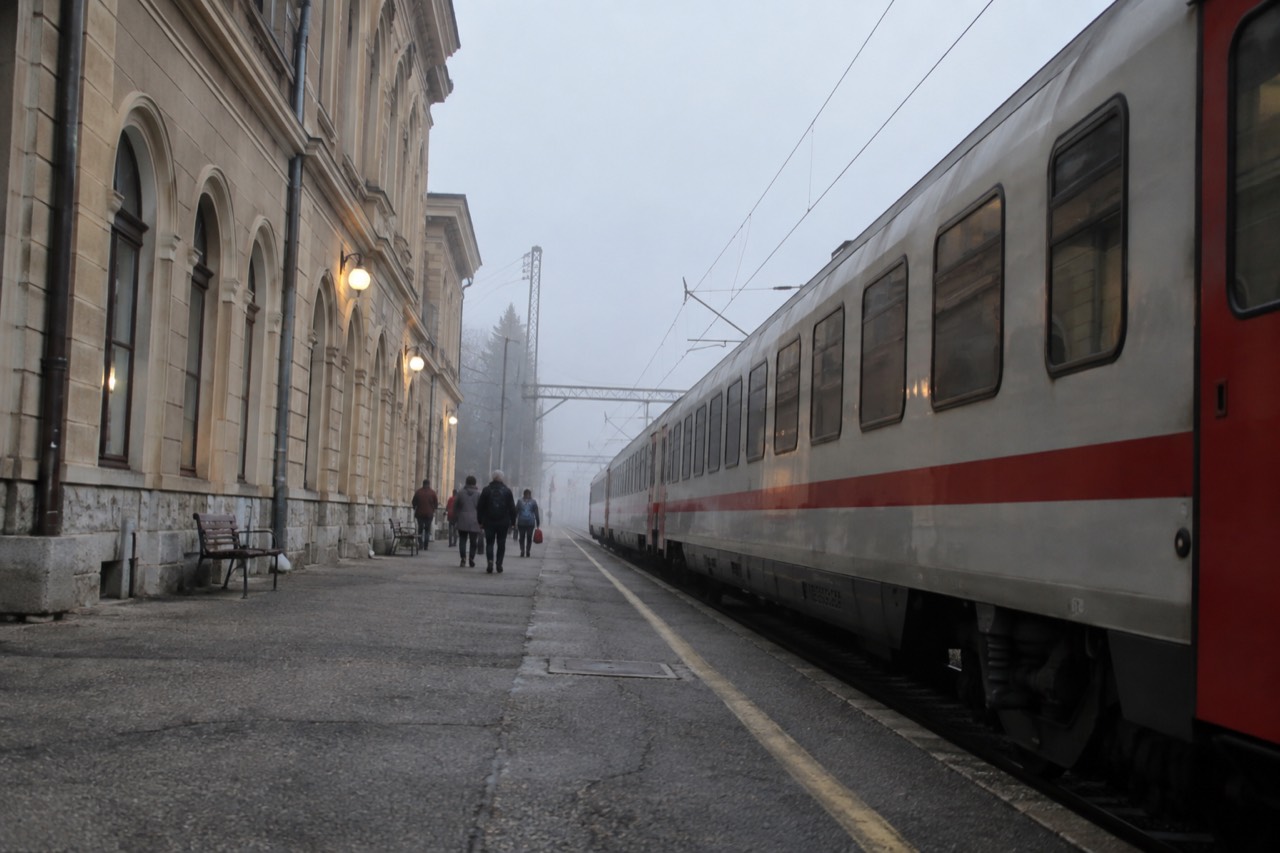
Short answer
Zagreb sits close enough to Ljubljana to work as a day trip or a two-city break. Croatia joined the Schengen area and the euro on 1 January 2023, so there are no routine border checks and no currency to change. The train and the bus both run the route, and a guided day trip is a third option.
Zagreb is the closest capital city to Ljubljana, and the corridor between the two is one of the busiest cross-border routes in this part of Europe. For years the practical answer to "how do I get there" involved a border stop and a wallet swap between the euro and the kuna. Both of those complications have now gone. Croatia joined the Schengen area and adopted the euro on 1 January 2023, which turns the run between the two capitals into something closer to a domestic journey than an international one.
That change is the reason this route deserves its own page. The decision between train and bus is no longer about border queues, and the decision about whether to go at all is easier when a day trip no longer eats half of itself in formalities. This guide compares the two public transport options, explains what the Schengen and euro changes mean in practice, and looks at the guided day trip that now exists as a third choice.
 parked at a modern bus station forecourt](/images/uploaded/guides/ljubljana-to-zagreb/body-1.jpg)
Is Zagreb a Realistic Day Trip from Ljubljana?
Yes, and more so than at any point in the route's history. Croatia's entry into the Schengen area on 1 January 2023 removed routine border checks on the journey, and its adoption of the euro on the same day removed the currency exchange step. A day trip now means one timetable decision rather than a border gamble, which is why operators have started selling Zagreb as a guided excursion from Ljubljana at all.
Realistic is not the same as relaxed. Zagreb is a capital with a proper list of sights, and a day trip means choosing between the Upper Town, the museums and the market rather than attempting all three. The city rewards a plan. Independent travellers should fix their return departure before they leave Ljubljana, because an evening spent hunting for a late connection is an evening lost in Zagreb.
The two-night statistic matters here. Slovenia's statistical office recorded 1,392,728 tourist arrivals in the Municipality of Ljubljana in 2025 and 2,844,129 overnight stays, which works out to an average stay of about 2.04 nights. Ljubljana is a two-night city, and a Zagreb day trip is the single most common way people extend that short stay without changing hotels. It is the same logic that makes Lake Bled the other great day out from the capital.
For anyone weighing Zagreb against other options, the Ljubljana versus Zagreb comparison covers the two-city question in depth, and the full menu of options sits on the day trips from Ljubljana page.
Train or Bus from Ljubljana to Zagreb: Which Is Better?
The train is the more comfortable ride and arrives at a station walking distance from Zagreb's main square, while the bus tends to offer more departures across the day and drops you at the edge of the city centre. Neither requires a border stop any more. The honest answer is that the better option is whichever one has a departure time that fits your day, and both timetables should be checked with the operators before you commit.
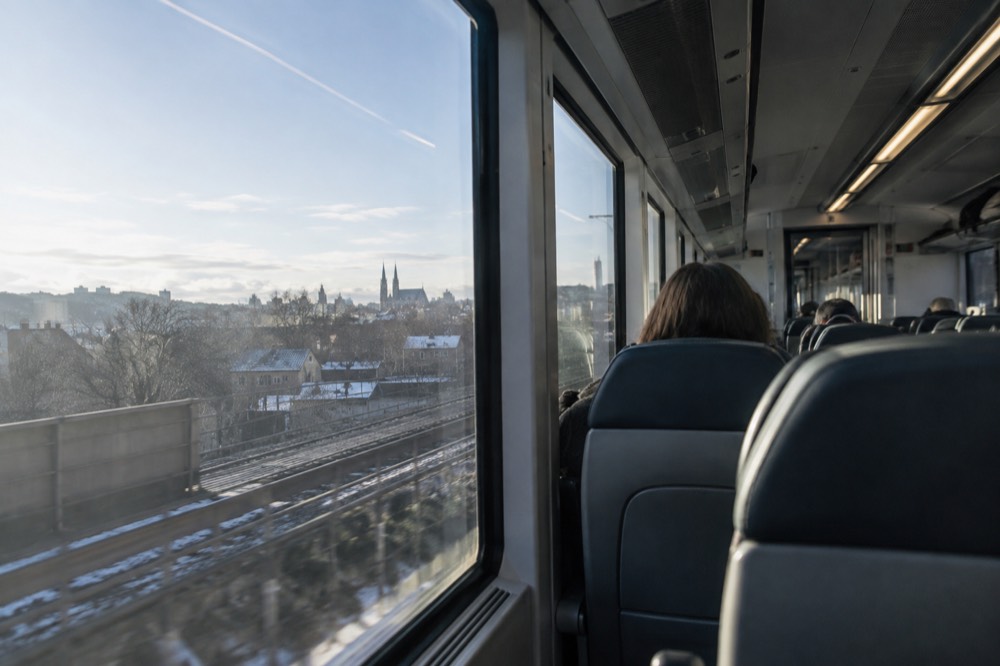
The train leaves from Ljubljana's main station, which sits just north of the centre and is covered in detail on the Ljubljana train station page. Zagreb's main station is a grand Habsburg-era terminus with a landscaped approach, and from its forecourt you walk straight down towards Ban Jelačić Square, the city's central plaza. That geography is the train's strongest card: you arrive into the middle of the city rather than at a bus terminal on its fringe.
The bus runs from the Ljubljana bus station, which stands directly beside the rail station, so the departure point is not a differentiator. Coaches in this region are generally modern, and the route is short enough that comfort differences matter less than they would on a long haul. The practical advantages are frequency and flexibility: if you miss a bus there is usually a later one, and return tickets are simpler to reshuffle.
Neither operator publishes a static fare table that could be verified for this page, so no price is printed here. Treat any number you see elsewhere as indicative until you see it on the operator's own booking page, and book directly rather than through an intermediary where you can.
| Factor | Train | Bus |
|---|---|---|
| Departure point in Ljubljana | Main rail station, north edge of the centre | Bus station beside the rail station |
| Arrival point in Zagreb | Main station, walking distance to Ban Jelačić Square | Coach terminal, edge of the centre |
| Border formalities | None, both countries in Schengen | None, both countries in Schengen |
| Currency | Euro on both ends | Euro on both ends |
| Comfort | Rail carriage, more space to walk | Modern coach, fixed seating |
| Timetable flexibility | Fewer departures, check the rail operator | Generally more departures, check the coach operator |
| Best for | Arriving into the heart of Zagreb | Fitting the day around a specific return time |
What Do the Schengen and Euro Changes Mean in Practice?
Since 1 January 2023, Croatia has been in both the Schengen area and the eurozone, so the Ljubljana to Zagreb route involves no routine border checks and no currency exchange. Slovenia made the same transition earlier: it joined the EU on 1 May 2004, adopted the euro on 1 January 2007 and abolished land and sea border checks on 21 December 2007, with air checks following on 30 March 2008.
The practical difference is bigger than it sounds on paper. Before 2023, a bus or train on this route stopped at the border while passports were checked, and every traveller needed kuna for Zagreb. Now the vehicle rolls through, and the same euro note that bought your coffee in Ljubljana buys one in Zagreb. The Slovenian government's own EU membership page states the dates plainly, and the European Commission's euro pages confirm both countries' positions in the eurozone.
Carry your passport anyway. Schengen membership removes routine checks, not the legal requirement to hold valid ID, and spot checks can occur on any internal route. Travellers from outside the EU should carry the passport they used to enter the Schengen area, because a random check on a cross-border bus is exactly where one is most likely to happen.
| Event | Date | What it changed |
|---|---|---|
| Slovenia joins the EU | 1 May 2004 | Free movement rights with EU neighbours |
| Slovenia adopts the euro | 1 January 2007 | No currency exchange from eurozone countries |
| Slovenia joins Schengen, land and sea checks end | 21 December 2007 | No road or rail border stops |
| Slovenia's air border checks end | 30 March 2008 | Flights treated as internal |
| Croatia joins Schengen and the euro | 1 January 2023 | The Ljubljana to Zagreb route becomes borderless and single-currency |
Is a Guided Day Trip to Zagreb Worth It Instead?
A guided day trip is worth it if you want Zagreb explained rather than merely visited, or if you would rather not manage two foreign timetables in one day. The trade is simple: you lose the freedom to linger anywhere you like, and you gain a guide, a fixed structure and a guaranteed return. For a first visit to a capital most travellers know little about, that trade favours the tour.
The route now has a dedicated product: a full-day guided trip from Ljubljana to Croatia's capital, run as a small outing with a guide who covers the city's main squares and the stories behind them. It suits the two-night visitor perfectly, the person whose Ljubljana stay is too short to absorb a second city unaided but long enough to want a second city at all. You can see the full-day Zagreb trip details on its own page.
Independent travel wins in two situations. If you have been to Zagreb before, a guide's circuit of the main sights is the part of the city you already know. And if your interest is specific, a single museum or a particular neighbourhood, a fixed itinerary is a cage rather than a frame. The independent route also costs less, since you pay only for transport rather than transport plus guiding.
| Traveller | Better choice | Why |
|---|---|---|
| First visit, short stay | Guided day trip | Structure and a guide without timetable homework |
| Repeat visitor | Independent | The tour covers ground you already know |
| Specific interest, one museum | Independent | Fixed itineraries do not bend for one site |
| Travelling with kids | Guided day trip | A guide carries the narrative while you carry the children |
| On a tight budget | Independent | You pay for transport only |
| Nervous about two foreign systems in a day | Guided day trip | Everything is handled |
What Should You Actually See in Zagreb?
Zagreb's core is compact and splits naturally into three: the Upper Town with its cathedral, parliament and funicular, the Lower Town with its green horseshoe of parks and museums, and the market quarter around Dolac and Ban Jelačić Square. All three are walkable from the main station, and a day visitor can cover the first and third properly while sampling the second.
Start high. The Upper Town is the historical core, reached on foot by steep lanes or by the short funicular that links it to the lower city, and it holds the cathedral, the parliament building and the Stone Gate, a painted shrine inside an old city gate. The views down over the red roofs are the postcard image of Zagreb, and the whole district is quiet in the morning before the day-trippers climb up. Other pages covering the same trip are gathered on Ljubljana Travel Guide.
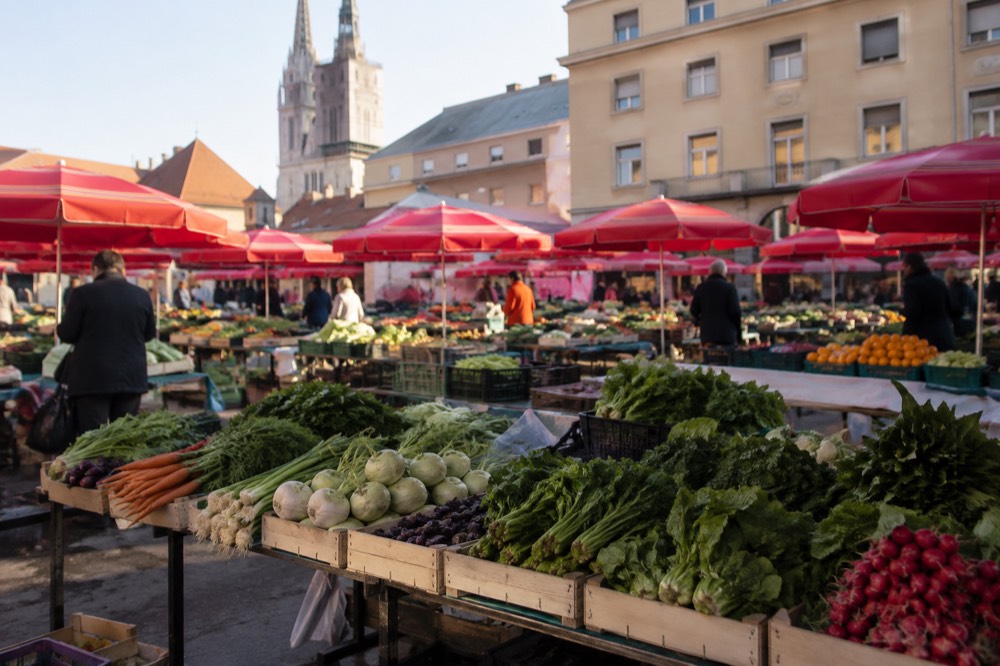
Come down to Dolac, the open-air market that sits a street above the main square. It is Zagreb's equivalent of Ljubljana's [Central Market](/attractions/central-market/), and it is the place to see what the city actually eats: piles of produce from the surrounding plains, and the flower sellers who occupy the steps at its edge. Ban Jelačić Square anchors everything below, a broad plaza where trams cross and the whole city seems to pass through.
The Lower Town's green horseshoe, a chain of parks and grand buildings laid out in the nineteenth century, holds most of the museums. A day visitor should pick one rather than touring them, and the Museum of Broken Relationships is the one that consistently draws international visitors, a small, strange and genuinely moving collection of donated objects each telling the story of a failed relationship. It is a fifteen minute walk from the main square.
Lunch is not an afterthought in Zagreb. The city's food identity runs to hearty central European fare, and the streets just off the main square are full of traditional grills and pastry shops. Leave time for it: the point of a day trip is a meal you could not have had at home, and Zagreb delivers that easily.
Should You Break the Journey at Postojna Cave?
Yes, if you are travelling by car or on a tour that includes the stop, because Postojna lies on the corridor between Ljubljana and the Croatian border and the cave is open every day of the year. The cave holds about 10 degrees Celsius year round, which makes it a reliable stop in any weather, and the adult ticket is 34.90 EUR with Predjama Castle at 24.00 EUR separately.
Postojna is the detour that is not a detour. The route south from Ljubljana towards the Croatian border passes through the karst region where Postojna Cave and Predjama Castle sit, and both are close enough to the road that a stop costs an afternoon rather than a day. The Postojna Cave guide covers the visit in full, but the essentials belong here: the cave tour runs about an hour and thirty minutes over a 3.7 km route travelled partly by train, and the operator's own timetable page is the place to check departures, which rise through summer and thin out in midwinter.
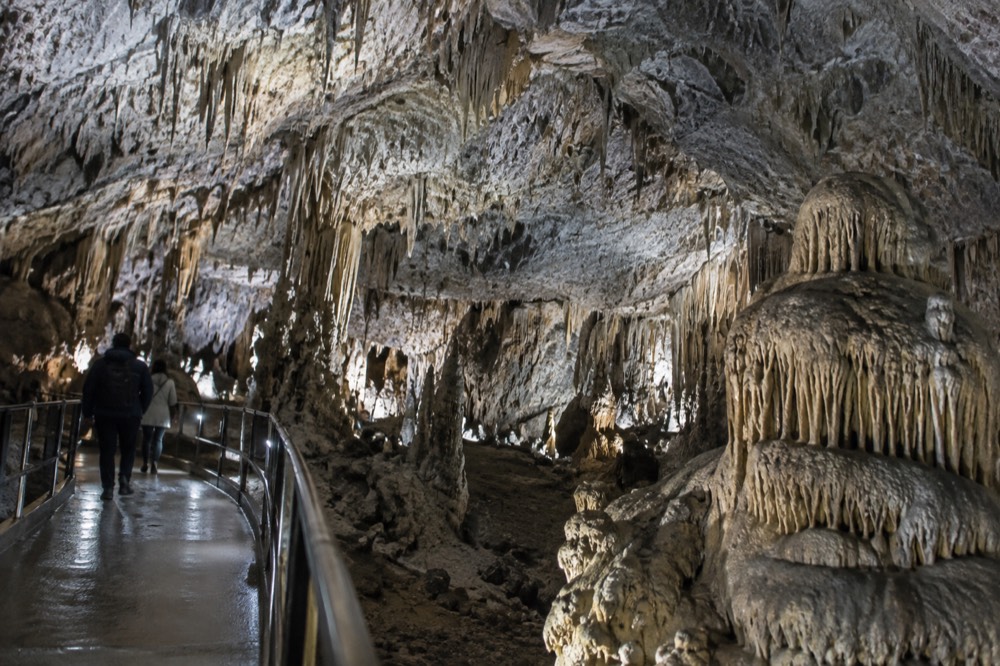
The temperature is the detail that catches people out. The cave holds roughly the same temperature all year, about 10 degrees Celsius, so summer visitors in shorts spend ninety minutes cold. Bring a layer even when Ljubljana is warm, and note the operator's advice to arrive thirty minutes before the stated tour time.
The combined cave and castle tour from Ljubljana is the easiest way to make the stop, and it pairs the two sights in a single outing with transport from the capital.
One caution, and it is a rule of this site rather than a travel tip: the combined Postojna and Predjama ticket price is deliberately not printed here. Two different figures circulate and neither is confirmed as the official combination on the operator's page, so the honest advice is to check the ticket page for the current combination before assuming a discount exists.
What About the Zagreb Airport as a Gateway to Slovenia?
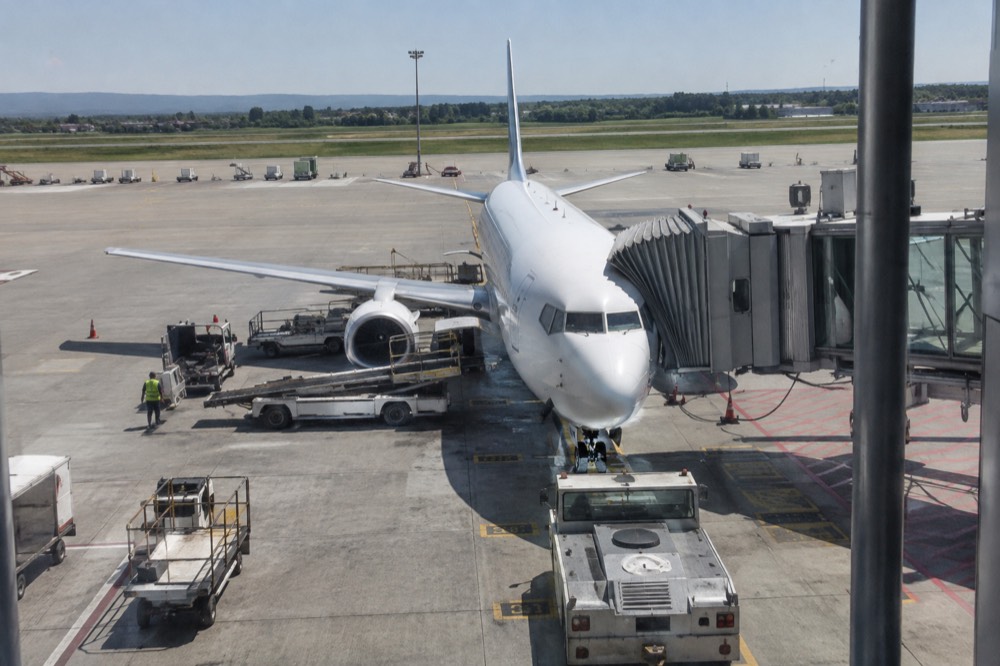
Zagreb's airport is a plausible alternative gateway for some travellers, because it is Croatia's main hub with a wider long-haul reach than Ljubljana's, but using it means crossing a second country's arrival formalities and a longer transfer at the end. For most visitors flying from within Europe, Ljubljana Airport, about 26 km from the city, remains the simpler choice.
The logic cuts both ways. If your home airport has no sensible flight to Ljubljana, flying to Zagreb and crossing overland is a real option now that the border is open and the currency is shared, and the which airport for Ljubljana question is covered in full on its own page. The overland transfer is straightforward in principle, but the airport's own site blocks automated reading, so no bus fare or timetable detail can be responsibly printed here: check times with the operator before planning a connection.
The reverse works too. Travellers combining the two capitals on one ticket sometimes fly into one and out of the other, and the borderless corridor makes that a one-way train or bus ride rather than a logistics problem. It is the kind of itinerary that was awkward during the kuna years and is now merely a booking.
How Does Zagreb Fit Into a Wider Slovenia Itinerary?
Zagreb works best as either the first or last day of a Ljubljana stay, not as a mid-trip excursion, because the departure point is the same rail and bus hub you will use for other day trips. Slot it at the start to ease into the region, or at the end when your energy for walking hills is spent and a guided structure sounds appealing.
The order matters less than the spacing. Ljubljana's day trips all leave from the same small area around the station, and stacking Zagreb between Piran and Lake Bled means three consecutive long days. Two of those are fine. Three turns a holiday into a commute. Anyone planning the full circuit should read the three days in Ljubljana itinerary first and decide where the Zagreb day earns its place.
Before you leave the capital, give Ljubljana itself its due. The castle entry with optional funicular is the single most popular ticket in the city, and the castle grounds are free to wander even if you skip the paid attractions. A morning on the hill before an afternoon train to Zagreb is a genuinely good day.
And if you would rather have the city explained before you leave it, the free GuruWalk walk from Roman roots to the Dragon Bridge, tips-based and rated highly by a large volume of guests, is the standard first-day move that this site recommends on its free walking tour page. It costs nothing up front and it makes every later walk, including the one through Zagreb, mean more.
The wider planning picture, including when the basin fog makes a city day smarter than a mountain one, sits on the best time to visit Ljubljana page. Zagreb, for what it is worth, shares the continental climate pattern, so a grey day in one capital is usually a grey day in the other.
Common Questions About Travelling from Ljubljana to Zagreb
Is Zagreb a realistic day trip from Ljubljana?
Yes. Croatia joined the Schengen area and the euro on 1 January 2023, so the journey involves no routine border checks and no currency exchange, which makes a day trip far more practical than it was. Fix your return departure in advance and pick two or three sights rather than trying to see everything.
Is it better to take the train or the bus from Ljubljana to Zagreb?
The train arrives at Zagreb's main station, a short walk from the central square, while the bus generally offers more departures across the day. Neither involves a border stop. Check both operators' timetables and pick whichever departure time fits your day; no verified fare is published on this page.
Do you need a passport to travel from Ljubljana to Zagreb?
You are not routinely checked, because both Slovenia and Croatia are in the Schengen area, but you should still carry valid ID. Sporadic checks remain legal on any internal Schengen route, and non-EU travellers should carry the passport they used to enter the area.
Do you need to change money between Slovenia and Croatia?
No. Both countries use the euro. Slovenia adopted it on 1 January 2007 and Croatia on 1 January 2023, so the same currency covers the whole trip.
Can you stop at Postojna Cave on the way to Zagreb?
Yes, if you are driving or on a tour that includes it. Postojna lies on the corridor towards the Croatian border, the cave is open every day of the year, and it holds about 10 degrees Celsius year round. The adult ticket is 34.90 EUR, with Predjama Castle at 24.00 EUR separately.
Is there a guided day trip from Ljubljana to Zagreb?
Yes, a full-day guided trip to Croatia's capital runs from Ljubljana with a guide covering the main sights. It suits first-time visitors on a short stay who want the city explained rather than merely reached.