Which Airport Is Best to Fly to Ljubljana?
Ljubljana Jože Pučnik Airport is the closest and usually the best airport for Ljubljana, about 26 km from the centre. Here is how it compares with Zagreb, Trieste and Venice.
Which Airport Is Best to Fly to Ljubljana?
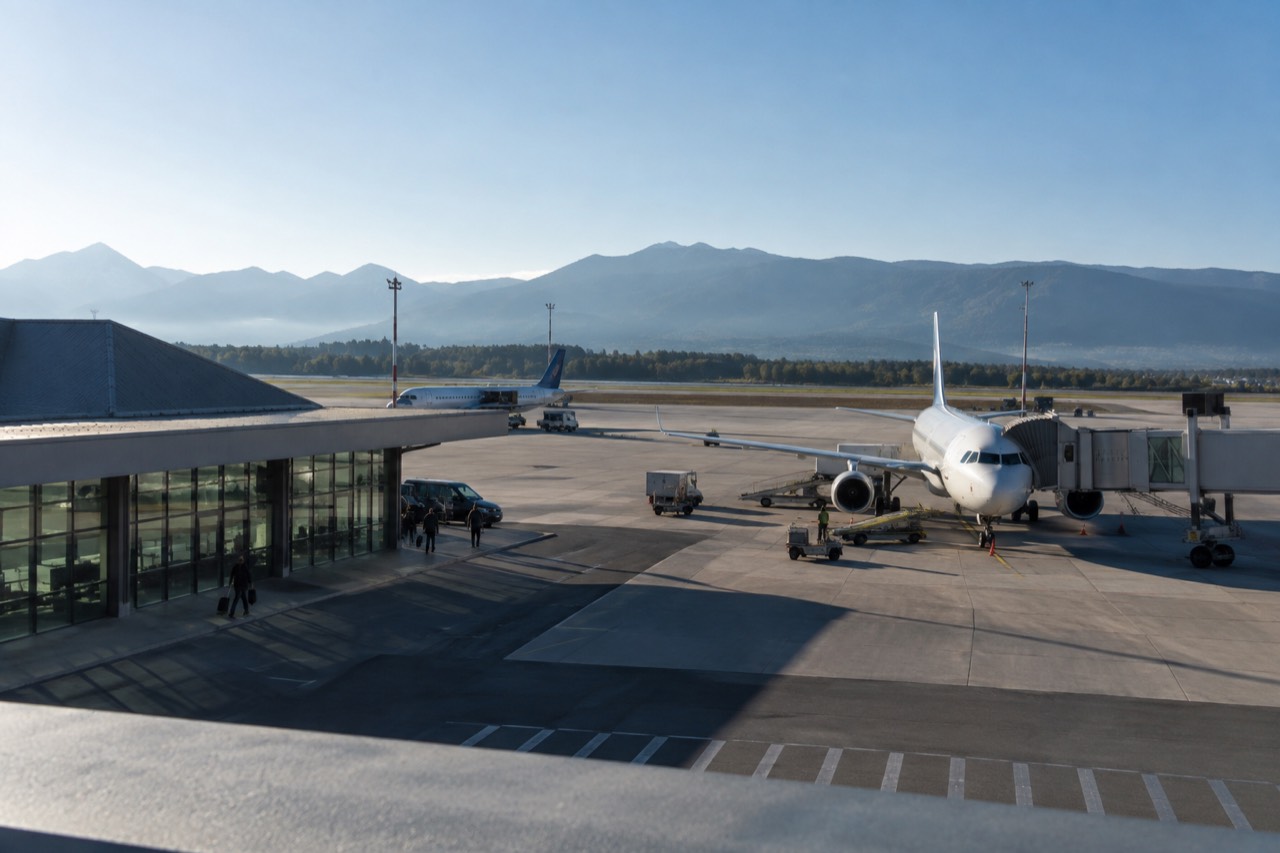
For almost every trip, Ljubljana Jože Pučnik Airport (LJU) is the best airport to fly into. It sits about 26 km north of the city, which puts you in the centre within roughly half an hour to an hour depending on your transfer. Fly into Zagreb, Trieste or Venice only when the fare saving is large or no direct route to LJU exists from your home airport, because each adds a cross-border transfer of one to three hours to your day.
Ljubljana's own airport is small, and that is its main virtue. Baggage claim is quick, the walk from gate to kerb is short, and the whole terminal can be crossed in minutes rather than the better part of an hour. For a city that averages 1,392,728 tourist arrivals a year, the airport never feels like the crush of a major hub, and queues move at the pace of a regional field rather than a capital gateway.
The trade-off is reach. LJU is served by a modest set of carriers and direct routes, so travellers arriving from outside Europe often need a connection, usually through a larger hub such as Frankfurt, Munich, Zurich or Istanbul. That connection is the reason people start looking at alternatives in the first place. A direct flight into Zagreb, Venice or Vienna can look cheaper on the search screen and then cost an entire afternoon in a coach or a train.
Slovenia is a member of the European Union, uses the euro, and sits inside the Schengen area, so once you land anywhere in the region the onward journey is a domestic-style transfer with no border formalities to plan around. The Slovenian government's own EU membership page records that land and sea Schengen checks were abolished on 21 December 2007, with air checks following on 30 March 2008, and Croatia joined Schengen and the euro on 1 January 2023, which makes the Zagreb and Istria routes internal journeys too. There is no currency to change and no border to clear coming from Italy, Austria, Hungary or Croatia.
The honest framing for the decision: LJU wins on convenience nearly always, and the alternatives win on fare and direct-route availability sometimes. The rest of this article puts numbers on "sometimes".
How Far Is Ljubljana Airport from the City Centre?
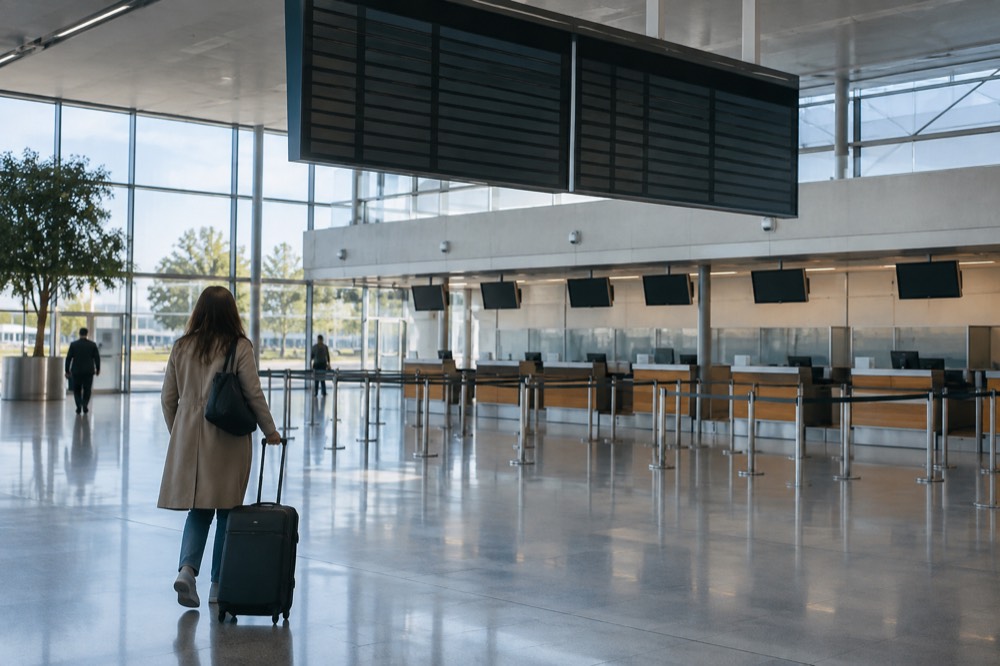
Ljubljana Jože Pučnik Airport is about 26 km from the city centre, which makes it one of the closer capital-city airports in the region. A private transfer or taxi covers the distance in roughly half an hour in normal traffic, while the shared airport bus takes longer because it stops along the way. The airport's own website blocks automated fare and timetable reads, so transfer prices and times should be checked live before you book.
The airport sits at Brnik, north of the city, and the run into town is a straightforward motorway drive. Options at the terminal include taxi and pre-booked [private transfer](https://tpk.ro/o5VLPVUy), a shared shuttle, and an airport bus whose timetable and fare are not published in a form this site could verify, so the live listing or the airport's own information desk is the source to trust on the day. Rough figures circulate online, but a figure that could not be read from a primary source is not one to plan a landing around.
Two things make the transfer easier than it looks on the map. First, the historic centre is pedestrianised, a zone of roughly 20 hectares closed to general traffic and expanded progressively since 2007, so your driver will drop you at the edge of the car-free area rather than the door. Second, the city is compact: once you are on foot, most hotels are within a fifteen-minute walk of the river. The practical guide to getting from Ljubljana Airport to the city centre covers the transfer options in detail, and the wider overview of getting around Ljubljana explains the Urbana card and the no-cash rule on city buses.
A word on timing. Because LJU is small, the transfer is rarely the bottleneck. Allow a comfortable hour from wheels-down to the Old Town on a normal day, and more if you land in the Friday afternoon peak or during the December fog, which this site's own climate reporting treats as a real planning factor: Ljubljana averages 91.2 days with fog a year, and December is the annual peak at 12.6 days under the 1971-2000 normals ARSO publishes.
Once you have landed and dropped your bags, the city rewards the arrival day. A first evening works well as a river walk or a food stop, and the arrival morning after works even better as a day trip, because every major tour in the city departs from a central meeting point a few minutes' walk from the Old Town.
Is It Cheaper to Fly Into Zagreb, Trieste or Venice Instead?
Sometimes, yes, but the saving has to clear a real bar. Zagreb is about 140 km away, Trieste is closer but still a cross-region transfer, and Venice involves the longest journey of the three. Each alternative adds a coach, train or private transfer costing both money and one to three hours, so a fare needs to undercut LJU by a wide margin before the maths favours it. For a short city break, the transfer usually eats the entire saving.
The comparison worth making is not just fare but fare plus transfer plus time. The table below sets out the honest shape of the decision using the distances and the border status that are verifiable; transfer fares are deliberately left out where no primary source publishes them, because a guessed number is worse than none.
| Airport | Country | Distance to Ljubljana | Border to cross? | Best for |
|---|---|---|---|---|
| Ljubljana (LJU) | Slovenia | about 26 km | none | Short breaks, first visits, anyone valuing time |
| Zagreb (ZAG) | Croatia | about 140 km | none, both in Schengen since 2023 | Cheaper fares from some hubs, combining two capitals |
| Trieste (TRS) | Italy | a cross-region transfer, the shortest of the three alternatives | none, Schengen internal | Combining Ljubljana with the Italian coast |
| Venice (VCE) | Italy | the longest transfer of the three | none, Schengen internal | Wide direct-route choice, slowest transfer |
Zagreb deserves a special mention because it works both ways. If the fare into Zagreb is much cheaper, the coach connection to Ljubljana is frequent and the border is invisible, and you can even build a two-capital trip out of it; the guide to travelling from Ljubljana to Zagreb lays out that route. Trieste suits a trip that wants the Adriatic in it anyway. Venice is the fallback of last resort for Ljubljana itself, but a reasonable choice if your itinerary genuinely starts or ends on the Italian side; see the Ljubljana to Venice guide for the connection.
What the alternatives cannot beat is the arrival experience. Landing at LJU at 22:00 and being at your hotel by 23:00 is a normal evening. Landing at Venice at 22:00 puts you on a coach the next morning. For a two-night city, and Ljubljana genuinely is a two-night city, with 2,844,129 overnight stays across 1,392,728 arrivals working out to an average of about 2.04 nights, an afternoon lost to a transfer is a quarter of the trip spent in transit rather than in the place you came for.
The cave and castle day trip is the classic use of that recovered time. The Cave and Castle Tickets and Tour runs six hours from Ljubljana to Postojna Cave and Predjama Castle, rated 4.8 across 2802 reviews, from $132, and it turns an arrival-morning slot into the single most reliable excursion in the region, because the caves hold roughly the same temperature year round whatever the weather is doing above ground.
Which Airport Should You Use If Lake Bled Is the First Stop?
Ljubljana Airport, comfortably. LJU sits north-west of the city, on the same side as Lake Bled, so the airport-to-Bled drive is shorter than the airport-to-city drive, roughly 30 to 40 minutes against roughly half an hour to an hour into the centre. No other airport in the region puts you closer, and the lake carries enough demand that tours and transfers from the city run daily.
This is the one case where the geography actively helps. A traveller whose first night is in Bled can drive straight past Ljubljana entirely, and a traveller based in the city has a dense choice of Bled excursions once settled. The Lake Bled guide covers the lake itself, and the Ljubljana to Lake Bled guide covers the route options from the city, including the rail detail most advice gets wrong: Bled Jezero station is 1.5 km from the lake, while the better-known Lesce-Bled station is 4 km out on a different line.
If Bled is the priority and the fare into LJU is workable, the decision is closed. If the fare into Zagreb is dramatically cheaper, the calculus changes, because you are then crossing the whole country before you see the lake, and the saving has to survive a 140 km transfer plus the final run north.
The same tours that make a Bled-first trip easy also make an LJU arrival pay off on the ground. The six-hour Lake Bled and Castle trip runs from the city at 4.7 across 1641 reviews, from $86, and the small-group castle-and-island version is rated 4.9 from 293 reviews, from $76, so the lake is reachable as a booked excursion rather than a self-drive puzzle.
Does the Season Change the Airport Decision?
Only at the margins. LJU's route network thins in winter, so the shoulder months are when an alternative hub is most likely to save real money, but winter also makes the long transfers less pleasant and Ljubljana's fog a factor worth planning around. In summer, when direct capacity into Slovenia is at its peak, there is rarely a good reason to land anywhere else.
The seasonal argument deserves honesty in both directions. Winter fares into LJU can be high because the direct list is short, and Zagreb, Vienna or Venice may then be cheaper by enough to matter. Against that, a winter arrival at a distant airport means a dark cross-country drive, and Ljubljana sits in a basin that fogs in while the hills above it sit in sunshine.
The practical winter move is to go up, not out, which argues for maximising time near the city rather than burning it on a transfer. The castle funicular, Šmarna Gora and the Bled and Julian Alps day trips all put you above the inversion layer within an hour of the centre.
Summer inverts the logic. Direct capacity into LJU rises, the transfer from any alternative airport gets slower with holiday traffic, and the things people come for, the lake, the Soča valley, the cave systems, are all running at full season. Caves hold roughly the same temperature year round, about 10 C at Postojna, which makes them the reliable answer on a wet or scorching day, and every cave tour departs from Ljubljana rather than from any airport.
One seasonal trap is worth naming. Vintgar Gorge, a common first stop for Bled-bound arrivals, is open to visitors between April and October and closes for winter, with the exact closing date depending on conditions and published only as "until the end of the season". An October arrival that assumed the gorge was open has, in some years, already missed it. Check before you build an itinerary around it.
How Do You Actually Choose Between the Airports?
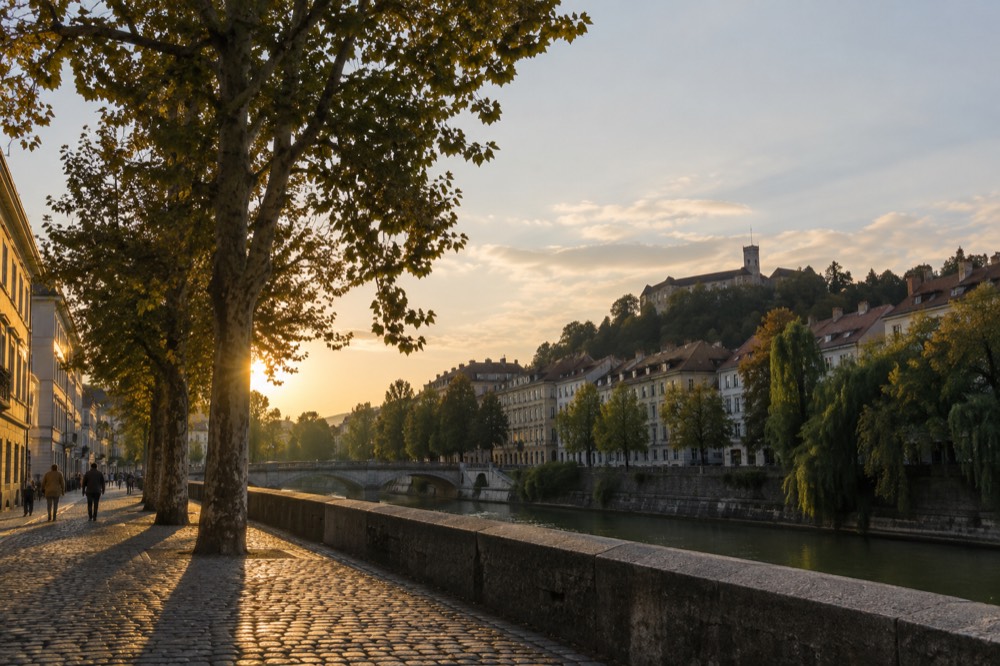
Start from the fare difference, then apply two tests. If flying into LJU costs only modestly more than the cheapest alternative, book LJU and bank the half-day. If the alternative saves a large sum, or is the only direct option, ask whether your itinerary genuinely includes that part of the region, because a transfer you were going to make anyway is free, while a detour transfer is pure cost.
The first test catches most cases. A 40 EUR saving evaporates in a 140 km coach fare and an afternoon. The second test is where the alternatives shine: a traveller flying into Venice for a Venice-to-Ljubljana trip, or into Zagreb for a two-capital itinerary, is not paying a transfer penalty at all, because the transfer is the trip. Those arrivals are a plan, not a workaround.
For the standard case, a two- or three-night Ljubljana city break, the ranking is stable. LJU first, at about 26 km. Zagreb second, for fare and frequency. Trieste third, for coastal itineraries. Venice last, reserved for trips that start in Italy. The flights to Ljubljana guide goes deeper on the route network, and this Ljubljana Travel Guide site carries the ground-level detail for every option once you have landed.
The tourist board's own visitor information, including the Ljubljana Card that bundles the castle funicular, the river cruise, city buses and more than thirty museums into a 24, 48 or 72 hour pass from 41 EUR for 24 hours, is the reference for planning the ground side of an arrival, and the card's maths is covered in the Ljubljana Card guide.
Whatever airport you choose, the first full day is where the region earns its keep, and the strongest excursions leave from the centre of the city rather than from anywhere near an airport terminal.
Common Questions About Flying to Ljubljana
Which Airport Is Best To Fly To Ljubljana?
Ljubljana Jože Pučnik Airport (LJU), about 26 km from the centre, is the best choice for almost every trip. Consider Zagreb, Trieste or Venice only when the fare saving is large or no direct route to LJU exists from your starting point.
How far is Ljubljana Airport from the city centre?
About 26 km. A taxi or [private transfer](https://gettransfer.tpk.ro/Ab8maxge) takes roughly half an hour in normal traffic; the shared airport bus takes longer. The airport's own site blocks automated fare and timetable reads, so check transfer details live before you travel.
Is it cheaper to fly into Zagreb and take a coach to Ljubljana?
Sometimes, but only when the fare saving is large. Zagreb is about 140 km away, and the transfer costs both money and one to three hours. For a short city break the transfer usually cancels the saving.
Do I need to cross a border coming from Zagreb, Trieste or Venice?
No routine border checks apply. Slovenia is in the Schengen area, and Croatia joined Schengen and the euro on 1 January 2023, so the journeys from Zagreb, Trieste and Venice are all internal Schengen transfers.
Which airport is closest to Lake Bled?
Ljubljana Airport. It sits north-west of the city on the same side as the lake, so the drive to Bled is roughly 30 to 40 minutes, shorter than the drive into the centre.
Does Ljubljana have more than one airport?
No. Ljubljana Jože Pučnik Airport at Brnik is the city's only commercial airport and Slovenia's main international gateway.