Triglav National Park from Ljubljana: The Complete Day Trip Guide
Triglav National Park is Slovenia's only national park and the Julian Alps are its roof. From Ljubljana the whole thing works as a day trip, and this guide covers the drive, the tours, the seasons and the costs.
Short answer
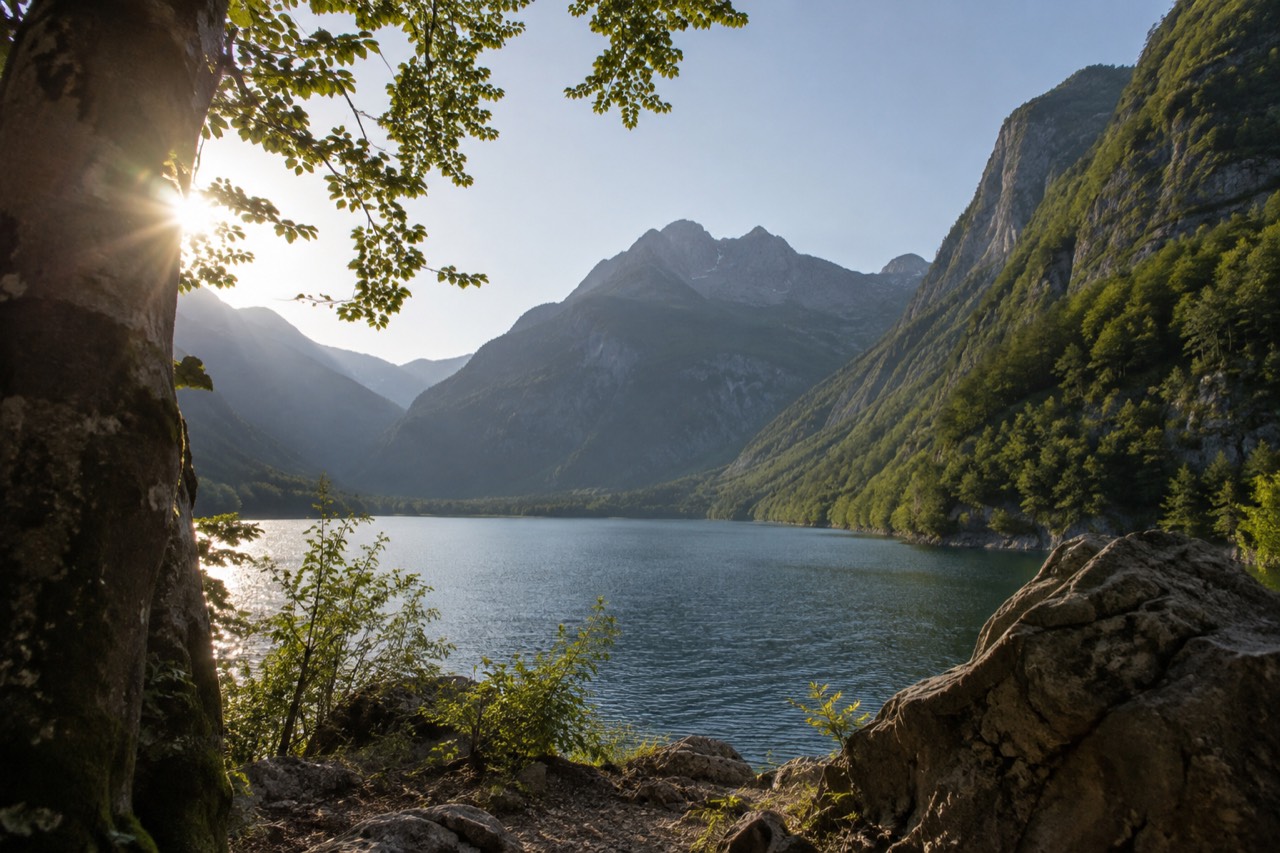
Triglav National Park covers 840 square kilometres of the Julian Alps, and its heart sits roughly an hour to two hours' drive from Ljubljana depending on your destination. Entry to the park is free. Most visitors from the city go on a guided day tour of 6 to 12 hours, or self-drive to Lake Bled, Vintgar Gorge or the Soča Valley.
Slovenia keeps its biggest landscapes in one place. Triglav National Park stretches across 840 square kilometres of the Julian Alps in the country's north-west, takes its name from Mount Triglav at 2864 metres, and wraps up lakes, gorges, alpine pastures and one of Europe's most photogenic river valleys. The park was founded in its modern form in 1981, though parts of it have been protected since 1924, which makes it one of the older protected landscapes on the continent.
What surprises most first-time visitors is how close it all sits to the capital. The park's southern edge is barely an hour from the city, and even the far corners, the Soča Valley and the high passes, are a manageable morning's drive. That geography is why the park anchors the day-trip scene here: you can breakfast in Ljubljana and stand above an alpine lake before noon.
This guide covers the practical side of getting from Ljubljana into the park, the guided tours that do the driving for you, what you can see independently, and the seasonal detail most guides skip. One thing to settle immediately: park entry is free. There is no gate and no park-wide ticket, so the only costs are the individual attractions inside it and your transport.
What Is Triglav National Park and Why Is It Worth the Trip?
Triglav National Park is Slovenia's only national park, covering 840 square kilometres of the Julian Alps around Mount Triglav, the country's highest peak at 2864 metres. It was established in 1981 on earlier protections dating to 1924, entry is free, and from Ljubljana its lakes, gorges and alpine valleys are all reachable as a day trip.
The park's official information page, published by the park authority at tnp.si, sets out the basics: 840 square kilometres, founded 1981, free entry. What the numbers do not convey is variety. Inside one park boundary you get Lake Bled just outside its southern edge, Lake Bohinj deep inside it, the Vintgar Gorge, the karst springs of the Soča, the Vršič Pass road with its fifty hairpins, and herdsman villages like Velika Planina's neighbours on the high pastures.
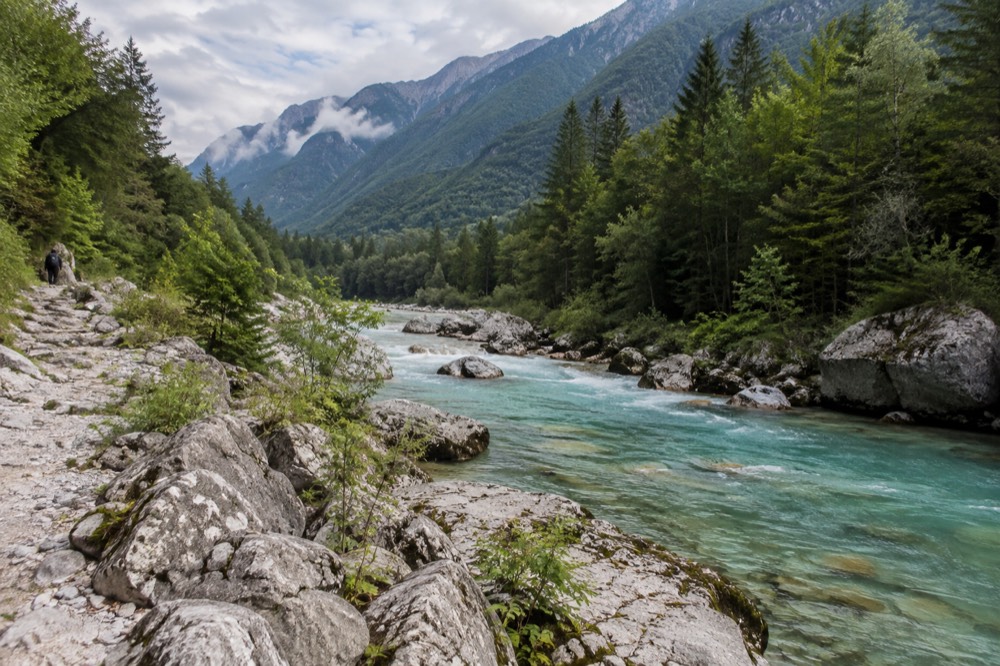
That variety is the whole argument for the day trip. A single long day from Ljubljana can take in a lake, a gorge and a mountain pass, which is a spread few European capitals can offer before dinner. The park also holds the headwaters of the Soča, the river that carved the valley most photographers come to Slovenia for, and the range of habitats runs from beech forest at the valley floor to high alpine karst.
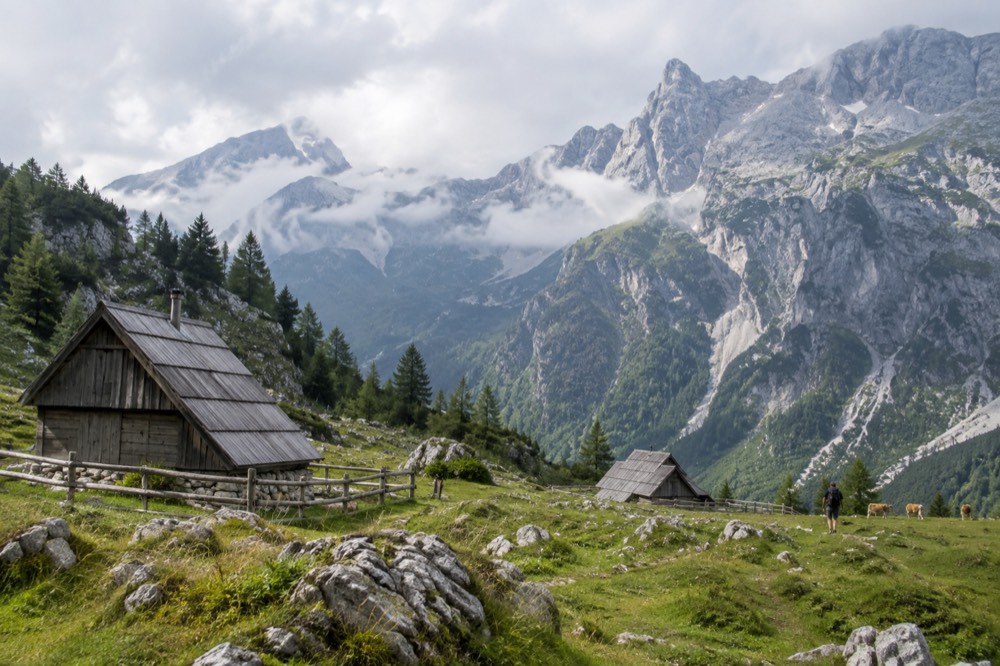
For a visitor based in the city, the park splits naturally into three zones. The Bled and Bohinj corner is the closest and the busiest. The Vršič and Soča side is the dramatic one, over the highest road pass in the country and down into the emerald valley. The high pastures and villages, Velika Planina among them, are the quiet option. A day trip can realistically cover one zone properly or two zones at a brisk pace.
How Far Is Triglav National Park from Ljubljana, and How Do You Get There?
Driving from Ljubljana to the park's southern edge at Lake Bled takes about an hour, roughly 55 kilometres on the A2 motorway. Reaching the park's interior, Lake Bohinj or the Vršič Pass, takes closer to 90 minutes, and the far side at the Soča Valley adds the crossing of the pass itself. There is no direct public transport to the park's interior, so most visitors drive or take a guided tour.
The motorway does most of the work. The A2 runs from the city north-west towards the Karawanks tunnel, and the Bled exit drops you at the lake in about an hour of easy driving. From there the road along the north shore of Bohinj and up towards the Soča is slower, alpine driving: single carriageway, frequent bends, and in summer frequent coaches. The Vršič Pass itself, the classic route over into the Soča Valley, is closed in winter and only opens once the snow is cleared in late spring.
| Destination from Ljubljana | Rough drive time | Road character |
|---|---|---|
| Lake Bled, park's southern edge | About 1 hour | Motorway most of the way, easy |
| Lake Bohinj, park interior | About 1 hour 30 minutes | Motorway, then lakeside single carriageway |
| Vintgar Gorge | About 1 hour 5 minutes | Motorway, then a short rural approach |
| Vršič Pass | About 1 hour 45 minutes | Alpine road, 50 hairpins, closed in winter |
| Soča Valley beyond the pass | About 2 hours 30 minutes | Full pass crossing, seasonal |
| Velika Planina trailhead | About 1 hour 15 minutes | Motorway, then a cable car or forest track |
Public transport is the weak link. Trains and coaches reach Bled comfortably, and our guide to the Ljubljana to Lake Bled route covers that leg in detail, but beyond Bled the network thins out fast. Bohinj has a seasonal bus service, the Soča Valley has a sparse one, and the high pastures have none at all. A visitor without a car who wants the park's interior has two realistic options: a guided day tour, or a hire car picked up in the city.
The tour option solves more than transport. Parking at Bled, at Vintgar Gorge and at the Vršič Pass trailheads fills early in high summer, and the park's most popular spots run timed-entry and capacity controls. A tour that arrives mid-morning with a reserved slot skips the queueing that eats a self-drive day alive. For the driving-averse, the car rental basics for Ljubljana are worth reading before committing to the alternative.
For anyone weighing the two approaches, this is the decision point where a guided trip earns its keep, so here are the three day trips from the city that best cover the park and its neighbours.
The first of those is the dedicated park tour, the second pairs the park with Lake Bled in a small group, and the third is the contrast pick: caves and a cliff castle instead of mountains, for the day the forecast turns wet.
What Does a Triglav National Park Day Tour from Ljubljana Include?
A full-day guided tour from Ljubljana runs around twelve hours and covers the park's headline sights in one loop: typically Lake Bled, the Vintgar Gorge or Bohinj, the Vršič Pass road and the Soča Valley, with transport, a guide and planned stops included. Food and optional extras like boat rides are usually paid separately. It is the only realistic way to see the park's far side without an overnight stay.
The full-day circuit is the ambitious option, and it works because the geography cooperates. The route runs out from the city to Bled, up the Bohinj side, over the Vršič Pass, down into the Soča Valley and back through the karst fringe. Twelve hours sounds long, but the driving is broken into short, scenic segments, and the stops are the point rather than the gaps between them.
What the listing for the full-day park tour makes clear is the trade you are making: a very full day against coverage of the park that would otherwise need two nights. The tour handles the pass road, which is the segment self-drivers most often underestimate. Fifty hairpins up, fifty down, and a queue of coaches in July.
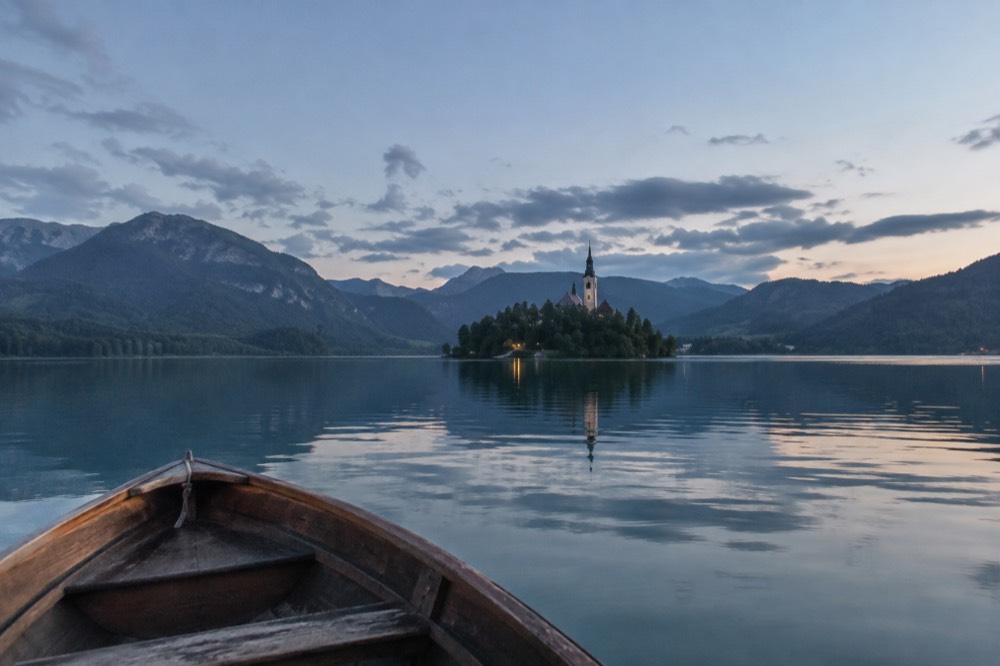
The small-group alternative, which pairs Lake Bled with Triglav National Park over about ten hours, trades the Soča crossing for a slower morning at the lake. Fewer hours in the van, more time at each stop, and a group size small enough that the guide can flex the itinerary. For most first-time visitors that is the better fit; the full-day loop suits travellers who want the Soča's turquoise water in the same day as Bled's island church.
If twelve hours in the mountains sounds like too much, the honest answer is that it is a big day and not everyone's day. The smaller circuit covers the park's southern half, still with the guide and the transport, and it is the version families and slower travellers tend to prefer.
There is also a middle path worth naming. The Soča and Kranjska Gora day tour from Ljubljana approaches the same high country from the north, through Kranjska Gora and over the pass, and spends its afternoon in the valley. It covers a different slice of the park's edge, and for a second day-trip day it pairs well with either of the options above. Our Soča Valley guide covers what that valley holds in its own right.
What Can You See in Triglav National Park on Your Own?
The park's most visited sights are all reachable independently with a car: Lake Bohinj, the Vintgar Gorge, the Savica waterfall, the Vršič Pass road and the Soča Valley's upper reaches. Entry to the park itself is free, and the paid attractions inside it, the gorge and the cable cars, sell their own tickets. The constraint is parking and time, not access: each stop is straightforward, but fitting three into one self-drive day is ambitious.
Lake Bohinj is the park's centrepiece and the sight most visitors under-plan for. Bled gets the crowds, Bohinj gets the postcards: a glacial lake with a church at one end, a cable car up Vogel at the other, and the Savica waterfall a short walk beyond. Our Lake Bohinj guide covers it fully, but the day-trip framing matters here: Bohinj is inside the park boundary and Bled, strictly, sits just outside it, which is a distinction that surprises people who assume Bled is the park's lake.
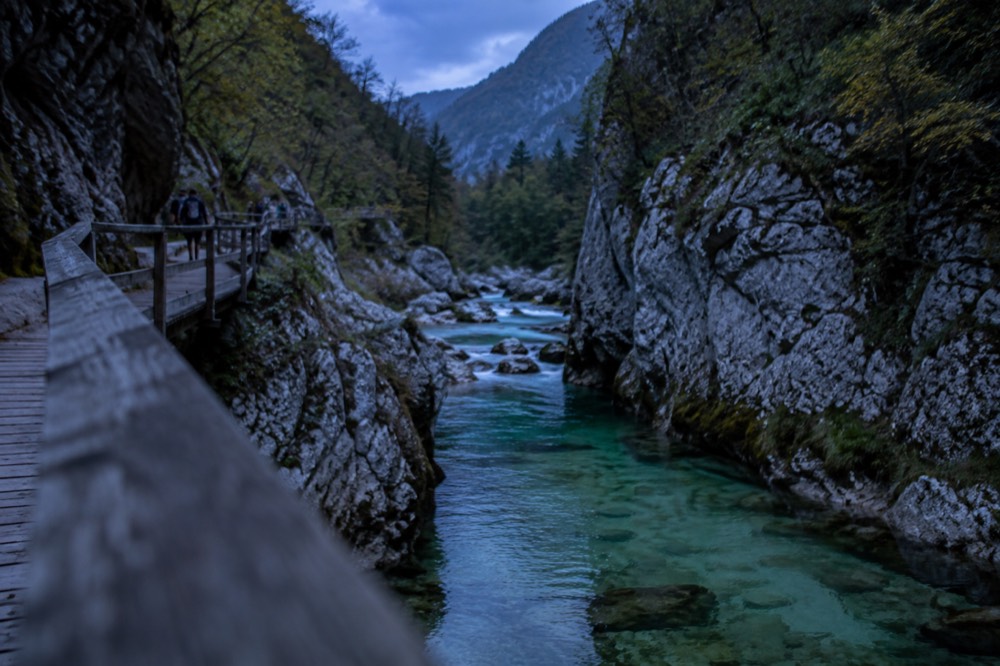
The Vintgar Gorge is the park's single most popular paid attraction, and it is seasonal. The operator states plainly that the gorge is open to visitors between April and October and closes for winter, with the exact closing date depending on conditions. Timed-entry slots apply, the operator flags 10:00 to 13:00 as the crowded window, and the adult All-in-One Pass is 15.00 EUR. The full hours and season detail is in our Vintgar Gorge guide, and the official page at vintgar.si carries the current dates.
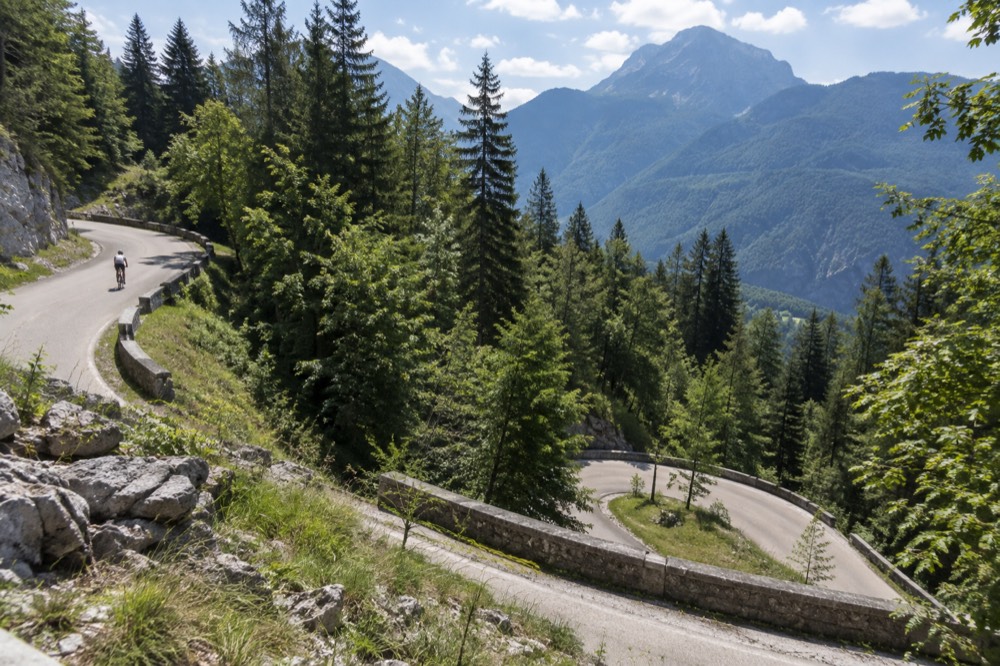
The Vršič Pass road is the self-drive highlight and the self-drive hazard in one. It is the highest road pass in the country, was built partly by Russian prisoners of war in the First World War, and its hairpin bends are the park's signature drive. It is closed in winter and opens late in spring, and even in summer it demands a driver who enjoys mountain roads rather than tolerates them. Cyclists and motorbikers treat it as a destination in itself.
For walkers, the park's range runs from an hour's lakeside stroll to multi-day hut-to-hut routes up Triglav itself. A day-tripper's realistic menu is the Bohinj shoreline, the gorge walkway, or the short trails around the pastures near Kranjska Gora. The serious summit routes need an early start and an overnight, which puts them outside day-trip range from the city.
If reading all that has you leaning towards letting someone else handle the road, the timing and the parking, the full-day park tour is the one that covers the most ground in a single seat.
What Does a Day in the Park Cost?
Entry to Triglav National Park is free, so a day's cost is the sum of the attractions you pick and your transport. Inside or beside the park, the main paid items are the Vintgar Gorge at 15.00 EUR for an adult, Bled Castle at 19.00 EUR, the pletna boat to Bled Island at 20 EUR per person and the Bled Boat Line electric boat at 16 EUR per person. A guided tour from Ljubljana bundles the transport and the guiding into one price.
| Item | Adult price | Notes |
|---|---|---|
| Triglav National Park entry | Free | No gate, no park-wide ticket |
| Vintgar Gorge | 15.00 EUR | All-in-One Pass, timed entry, April to October |
| Bled Castle | 19.00 EUR | Per the castle's own price list |
| Pletna boat to Bled Island | 20 EUR | Per person, each way of the lake crossing |
| Bled Boat Line electric boat | 16 EUR | Per person, official Bled information |
| Vogel cable car | Paid separately | Check the operator's current price on site |
The free park entry is worth stating twice because it changes the arithmetic. A self-drive day can be as cheap as fuel plus one gorge ticket, or as expensive as a boat, a castle and a cable car stacked together. The guided tours sit in between, and their current prices are on each operator's live listing rather than printed here, because they move with the season.
One cost that catches people out is nothing in the park at all: it is the city-centre parking if you drive. Ljubljana's historic core is pedestrianised, roughly 20 hectares of it, so a self-drive day starts with a car left in a garage at the edge of the zone. Build that into the morning, or start the day with a tour pickup instead.
When Is the Best Time of Year to Visit the Park from Ljubljana?
June to September is the reliable window for a Triglav National Park day trip: the pass roads are open, the gorge is running, and the high pastures are green. July and August bring the crowds and the heat, while May and late September trade thinner crowds against a real chance of closures and cold at altitude. Winter shuts the high routes entirely, though the lakes and the valley towns stay reachable.
The seasonal mechanics are unforgiving at altitude. The Vršič Pass is snowbound from roughly November to May. Vintgar Gorge closes from the end of October. The cable cars and the high pastures run summer schedules. A day trip planned for April can be a lake-only day, and that is worth knowing before you book anything non-refundable.
The crowd mechanics are equally predictable. The gorge operator itself flags 10:00 to 13:00 as the busy window, and Bled's lakeshore follows the same curve. A tour that arrives before ten or a self-driver who starts at eight sees the same sights with half the company. Midsummer weekends are the pinch point, and Tuesdays in June are the opposite.
And here is the detail that most guides to the park get wrong, because it belongs to the city rather than the mountains. Ljubljana sits in a basin, and in the colder half of the year a temperature inversion caps that basin with fog and low cloud while the high ground above sits in sunshine. ARSO's climate normals for 1981 to 2010 put numbers on it: the city records 56 hours of sunshine in the whole of December and just 2 clear days that month, while Kredarica, the station at 2514 metres on Triglav itself, records 120 hours and 6 clear days over the same December. In January the mountain gets 139 hours against the city's 71.
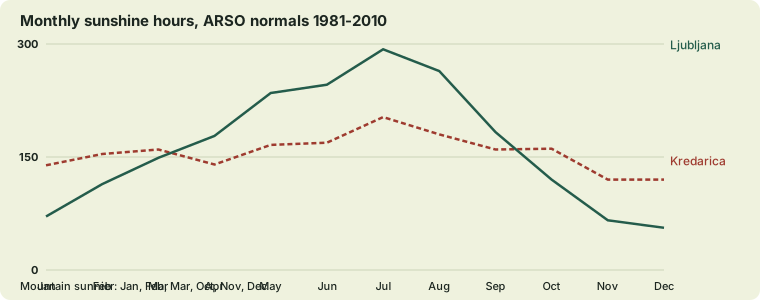
The inversion reverses the usual advice. A grey, foggy morning in the city is often the very morning the park is in full sun, a few hundred metres up. The monthly means still favour the plains in summer, and the mountain is never warmer than the city on average, so the claim is about sunshine and cloud, not temperature. But for a November or February day trip the practical reading is simple: if the city is grey, go up.
How Should You Plan the Day: Tour, Self-drive or Something in Between?
Choose a guided full-day tour if you want the park's far side, the Soča Valley and the pass, in one day without driving. Choose self-drive if you want to linger at two or three fixed stops and set your own pace. Choose a small-group Bled-and-park tour if your day is shorter, your group is mixed-age, or the forecast is uncertain. There is no wrong answer, only a mismatch between the route and the driver's appetite for hairpins.
The honest comparison is about hours and control. A tour buys you the pass road, the parking and the timing, and costs you the freedom to stay an extra hour where the light is good. Self-drive buys you the freedom and costs you the early start, the parking anxiety and the route homework. The middle options, small-group tours and half-day trips, buy you a compromise on both.
| Approach | Best for | Watch out for |
|---|---|---|
| Full-day park tour | The Soča and the pass in one day, no driving | A long day, roughly twelve hours door to door |
| Small-group Bled and park tour | First visit, families, shorter days | Covers the southern park, not the far side |
| Self-drive | Photographers, slow travellers, set itineraries | Parking at Bled and Vintgar fills by mid-morning |
| Soča and Kranjska Gora tour | A second day-trip day, valley focus | Approaches from the north, skips Bohinj |
| Winter day trip | Lakes and valley towns only | The pass and the gorge are closed |
Two practical notes finish the planning picture. First, the caves to the south-west of the city hold roughly the same temperature year round, about 10 C at Postojna, which makes them the reliable answer on a day the mountain forecast turns. Our Postojna Cave guide covers that option. Second, if the park day is part of a longer stay, the question of whether to base yourself at Bled instead of the city is a real one, and our Ljubljana or Bled comparison works through it with the timings that matter.
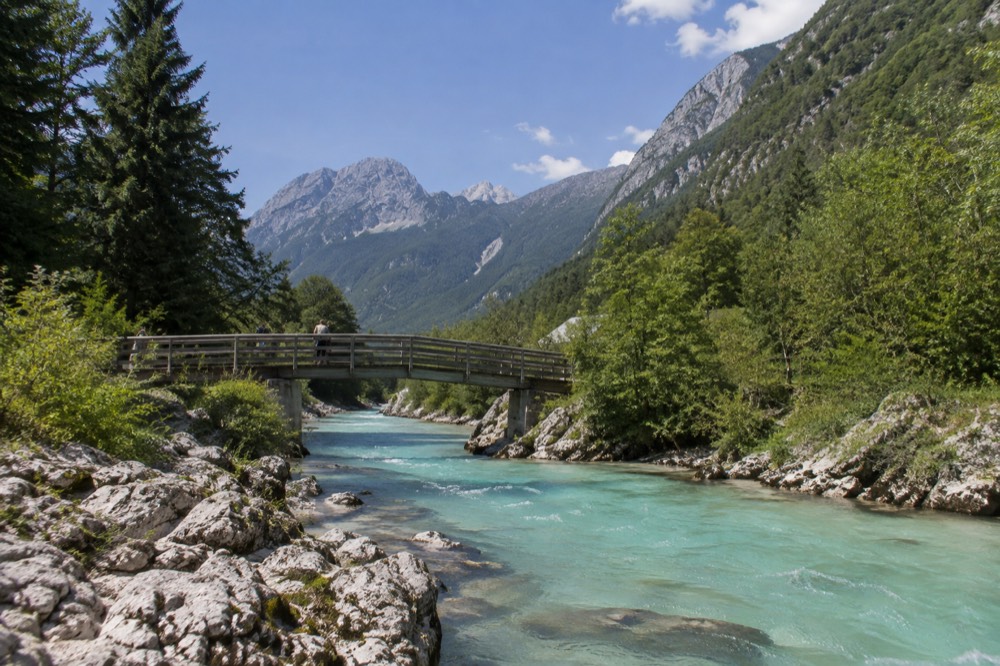
Whatever the season, the park rewards the early start and punishes the optimistic one. Check the pass status and the gorge season before you set out, take the layer the altitude demands even in July, and if the city wakes up grey, remember the sunshine arithmetic: the grey is local, and the park is above it. For everything the city itself holds on the days you stay closer to base, Ljubljana Travel Guide keeps the full set of neighbourhood, food and itinerary pages.
Common Questions About Triglav National Park from Ljubljana
How far is Triglav National Park from Ljubljana?
The park's southern edge around Lake Bled is about an hour's drive, roughly 55 kilometres on the motorway. The park's interior, Lake Bohinj and the Vršič Pass, is closer to 90 minutes, and the Soča Valley beyond the pass adds the crossing itself.
Is entry to Triglav National Park free?
Yes. There is no gate and no park-wide ticket. The paid items are individual attractions inside or beside the park, such as the Vintgar Gorge at 15.00 EUR for an adult and Bled Castle at 19.00 EUR.
Can you do Triglav National Park as a day trip from Ljubljana?
Yes, and most visitors do. Guided tours run from about six to twelve hours depending on how much of the park they cover, and a self-driver can reach Bled, Bohinj or the gorge comfortably in a day. The far side, the Soča Valley, is a long day by car and a standard full-day tour.
What is the best month to visit Triglav National Park?
June and September balance open roads, thinner crowds and reasonable weather. July and August are the warmest and busiest. The Vintgar Gorge runs April to October and the Vršič Pass opens late spring after snow clearance, so check both before a May or October trip.
Do you need a tour for Triglav National Park?
You do not, if you have a car and stay in the park's southern half. A tour earns its keep for the pass-and-Soča circuit, where the driving is demanding and the parking is scarce, and for anyone without a car, since public transport beyond Bled is sparse.
Is Triglav National Park worth it in winter?
The lakes and valley towns are reachable and quiet, and the low winter sun can be spectacular. But the Vršič Pass is closed, the Vintgar Gorge is shut, and the high pastures are under snow, so a winter day trip is a lake-and-town day rather than a mountains day.