Ljubljana to Trieste by Bus or Train: How the Cross-Border Trip Works
Trieste is the closest Italian city to Ljubljana, close enough that the Slovenian coast and the karst caves sit directly on the route between them. Here is how the bus and train options actually work, what the border means in practice, and how to turn the transfer into a day worth remembering.
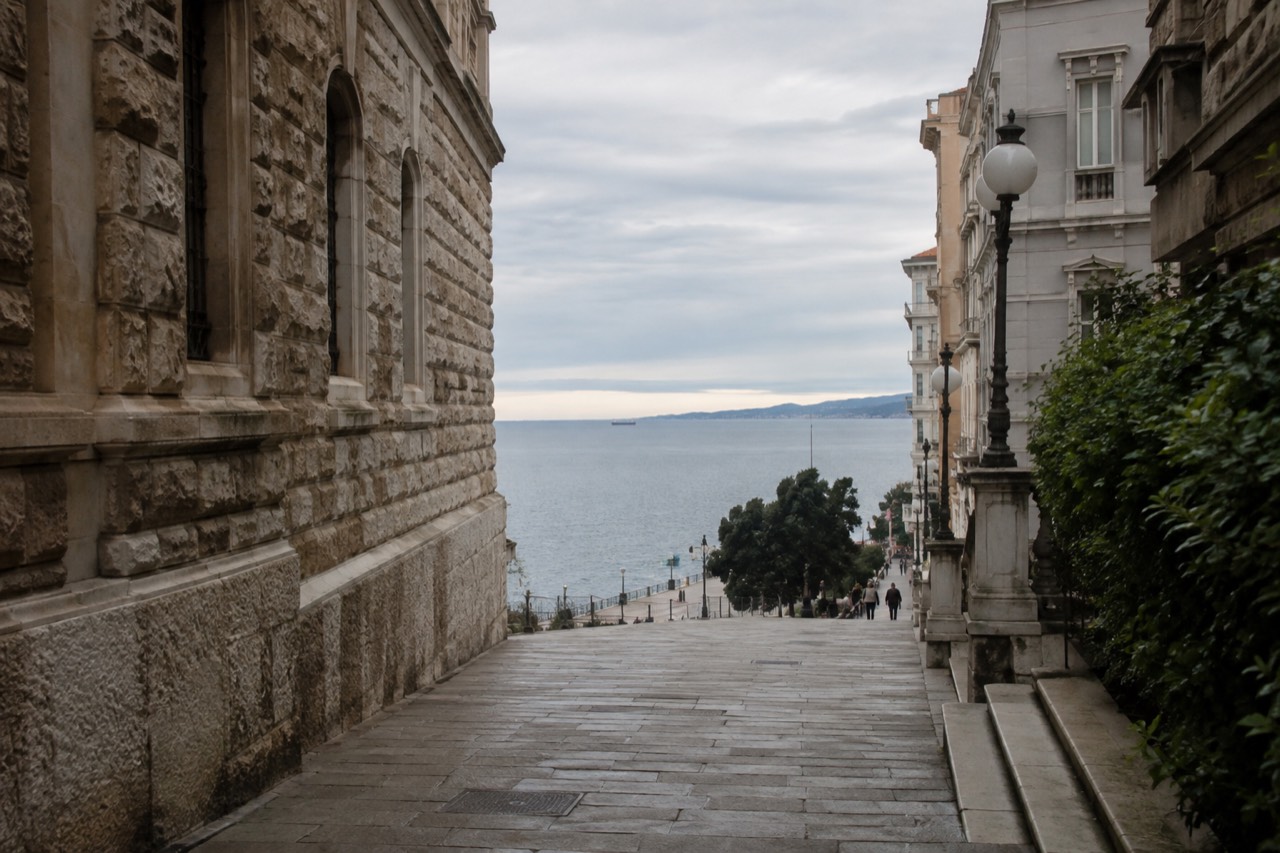
Short answer
There is no simple fast rail link between Ljubljana and Trieste, so most travellers take a direct coach, drive, or combine the trip with Postojna Cave, Predjama Castle or the Slovenian coast. Slovenia and Italy are both in the Schengen area and the eurozone, so there are no routine border checks and no currency to change. Fares and timetables shift by season, so check the operator's live listing before you commit.
The run from Ljubljana down to Trieste is one of the shortest international journeys in Europe that still feels like a proper trip. You leave a pedestrianised basin city, cross a karst plateau honeycombed with caves, pass the Slovenian coast, and arrive in an Italian port within a couple of hours of real travel. Both ends use the euro. Both ends are inside the Schengen area. The interesting question is not whether you can do it, but which way of doing it fits your day.
This guide lays out the bus and train reality, the border situation, the driving option, and the stops that turn a two-hour transfer into the best day of your itinerary. The karst section of this route, Postojna Cave and Predjama Castle, is covered in detail on our Postojna Cave guide, and the Italian end has its own page at things to know about Trieste.
How Do You Get from Ljubljana to Trieste?
You have four realistic options: a direct coach between the two cities, a rail route that is slower and less convenient than the distance suggests, a self-drive run across the karst, or a guided day tour that folds the coast or the caves into the journey. The coach is the workhorse choice, the car is the flexible one, and the tour is the one that converts travel time into sightseeing. There is no fast direct train, which surprises people every year.
The distance is short and the terrain is easy, which makes the lack of a quick rail link all the more frustrating. The rail network between Slovenia and Italy was cut for decades and has only partially been stitched back together, so the train involves either a slow cross-border service or a detour. The coach operators run the direct corridor, and in practice most visitors choose them or drive.
Think about what the day is for before you pick. If Trieste is the destination and you want maximum time there, the direct coach wins: it runs from the Ljubljana bus station complex and drops you in the centre of the Italian city. If the journey itself matters, the karst and the coast are the two great detours, and a car or a tour is the only sensible way to catch them.
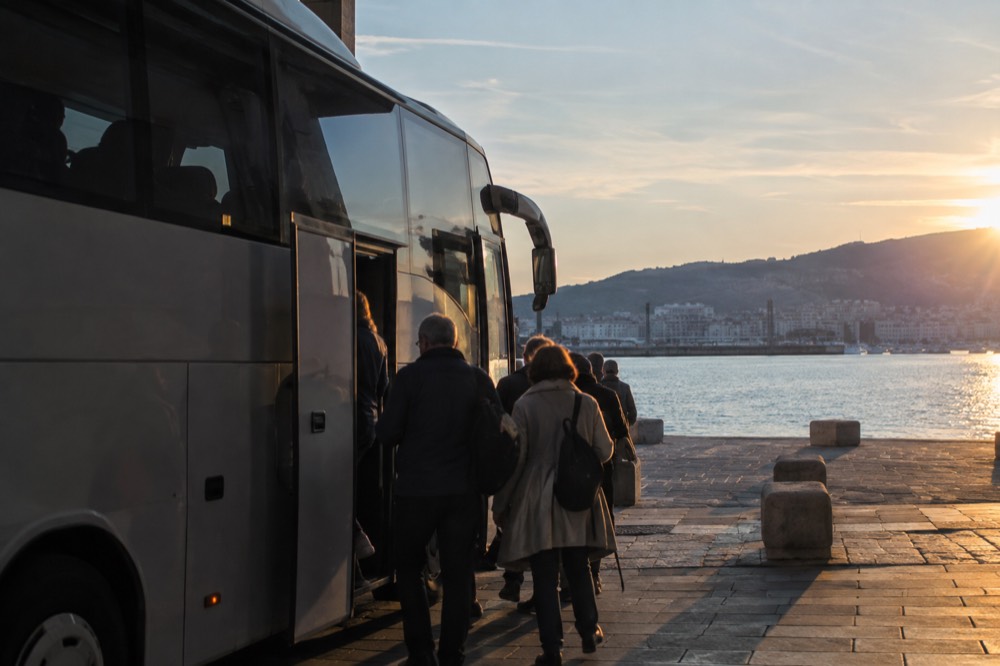
One planning note before anything else: the centre of Ljubljana is pedestrianised, roughly 20 hectares of it, so no coach or car will collect you from your hotel door in the old core. Everything departs from the station district on the northern edge of the centre, an easy walk from almost anywhere you are likely to stay. Build that walk into your morning.
Is There a Direct Train from Ljubljana to Trieste?
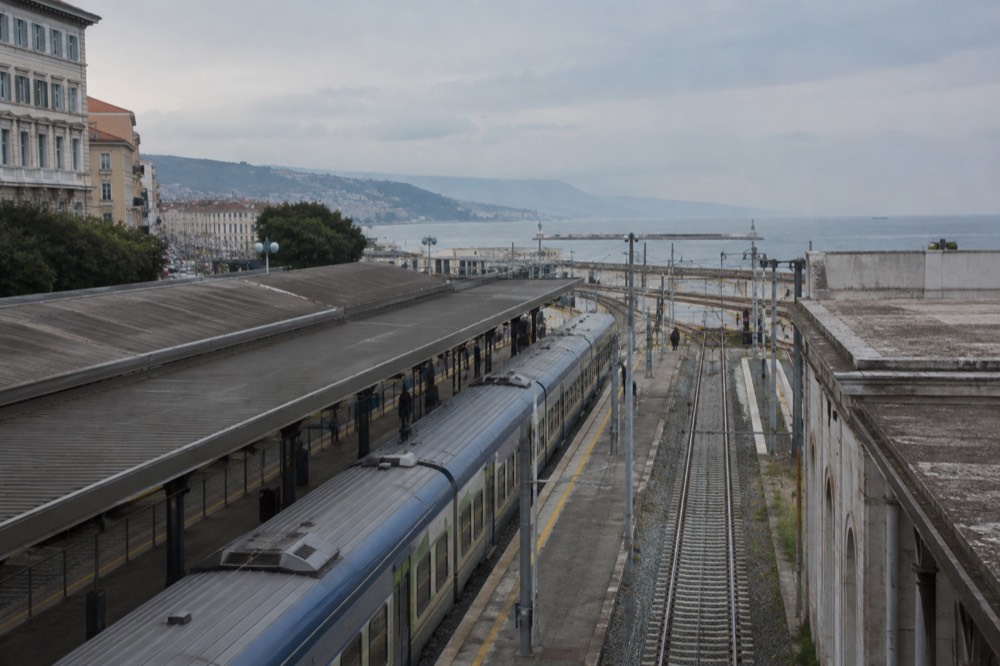
There is a rail connection, but it is not the fast, frequent, direct service the distance implies, and on most timetables the train takes longer than the coach for the same journey. The cross-border rail link was severed for decades and has only been partially restored, so services are limited, connections can be awkward, and the timetable changes with the season. For a day trip, the train is usually the weaker choice; for rail enthusiasts and slow travellers, it works.
The history matters here because it explains the present. Rail traffic between Slovenia and Italy across this border was suspended for a long stretch of the twentieth century and only resumed decades later, and the restored service has never been built back to full intercity frequency. That is why a journey of this length can involve a change, a long layover, or a bus substitution, and why every timetable you find online should be treated as provisional until you see it on the operator's own site.
If you do take the train, the practical advice is simple. Check the Slovenian rail operator's live timetable rather than a third-party summary, book nothing that cannot be changed, and be aware that the Ljubljana train station is small and unhurried, so arrive close to departure rather than hours early. Departure boards are reliable; the coffee is survivable.
The train does have one genuine advantage: it forces you through the karst landscape at ground level, and the approach to the coast is prettier than the road in places. If your trip is about the travelling rather than the arriving, that counts for something. For everyone else, read the bus section next.
| Option | What it is really like | Who it suits |
|---|---|---|
| Direct coach | The standard choice; runs the main road corridor between the two cities | Day trippers who want time in Trieste |
| Train via the restored cross-border link | Limited services, seasonal timetable, sometimes slower than the coach | Rail travellers and unhurried journeys |
| Self-drive | A motorway run across the karst; parking in Trieste is the main headache | Anyone detouring to caves or the coast |
| Guided day tour | Transport plus stops folded into one booking | First-time visitors who want the route explained |
Whatever you choose, the decision that matters most is what happens in the middle of the route. The karst plateau between Ljubljana and the sea holds two of the most visited underground systems in Europe, and a transfer that skips them is a transfer that misses the point of the geography. The Postojna Cave and Predjama Castle tour from Ljubljana covers exactly that section, with tickets handled for you, and it is worth a look even if you otherwise travel independently. Check availability
Is There a Direct Bus from Ljubljana to Trieste?
Yes, a direct coach runs between Ljubljana and Trieste, and it is the option most travellers should default to. It departs from the main bus station next to the rail station, crosses at the Škofije border area, and delivers you to central Trieste without a change. Fares and frequencies vary by season and operator, so treat any figure you see online as provisional and book from the operator's live listing.
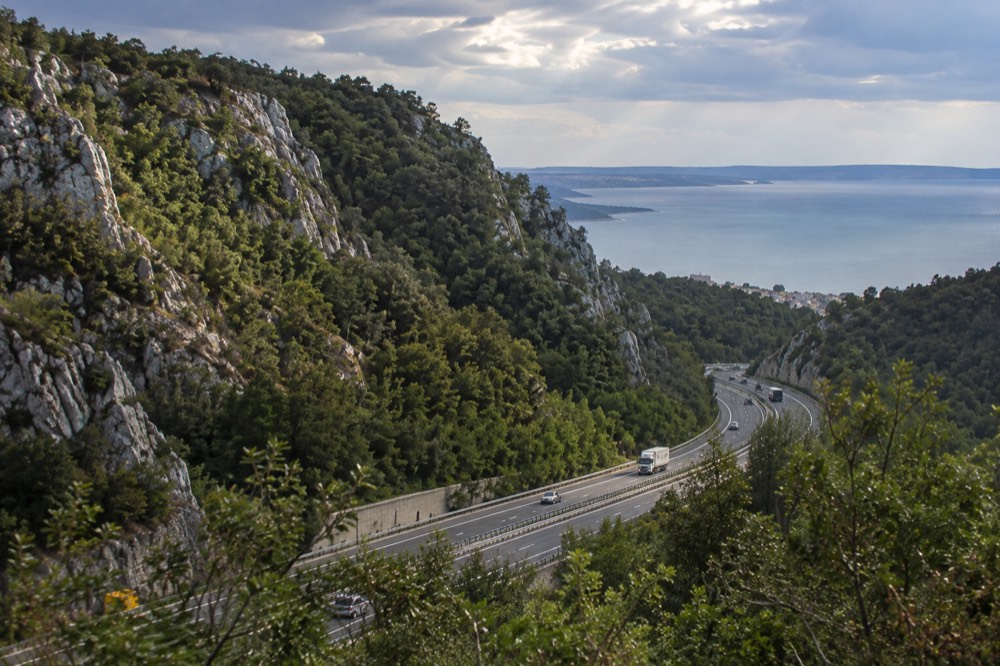
The coach corridor works because the road works. The motorway runs southwest out of Ljubljana towards the coast, and the border crossing between Slovenia and Italy on this route is a Schengen internal one, which in normal conditions means the coach does not stop at all. You sit down in one country and stand up in another, and the only sign you have crossed is the road signs changing language.
Book ahead in summer. The coast is the busiest corner of Slovenia between June and August, and cross-border coaches fill with both tourists and locals shopping or working across the line. In winter the service thins, and a morning departure can be the only sensible one for a day trip, because you need the hours of daylight for the Italian end.
One thing worth doing before you commit to the coach: decide whether Trieste alone is the day. The direct coach passes within a short hop of Postojna, and the cave is the single most visited attraction in this half of Slovenia. If the idea of sitting on a coach past one of Europe's great caves bothers you, the alternative is to break the journey. Postojna's own schedule runs tours daily, including holidays and in bad weather, with the visitor route covering 3.7 km partly by the underground train, and the cave holding about 10 degrees Celsius all year, which is why it is the reliable answer on a wet or scorching day. The operator's own ticket page publishes the current prices and the timetable grid.
The coach itself is unglamorous and dependable, which is exactly what a border hop needs. Luggage goes in the hold, tickets are checked electronically, and the drivers on this route have seen every kind of passenger from school groups to conference delegates. Bring something to read for the stretch between the coast and the city, because the views are better on the Slovenian side.
Should You Drive from Ljubljana to Trieste?
Driving is the most flexible way to do this route and the only way to do the karst and the coast properly in one day, but it means dealing with Italian city parking at the far end and a cross-border drop-off if you are using a hire car. The road itself is easy: motorway most of the way, then a coastal approach into Trieste. Check your hire agreement allows Italy before you book the car.
The case for driving is the case for the detours. Postojna Cave sits minutes off the motorway. Predjama Castle, the cliff fortress built into a cave mouth, is a short drive beyond it. The Škocjan Caves, a UNESCO World Heritage site inscribed on 28 November 1986, lie to the south, and the Slovenian coast at Piran or Koper fits neatly before the border. None of that is reachable from a coach seat.
The case against is Trieste. It is a real city with real city parking, and the central streets fill early. Park at the edge and walk in, or use one of the peripheral lots, and the day improves immediately. Also be honest about driver fatigue: this is a day of short hops rather than one long haul, but hopping all day in summer heat is still tiring.
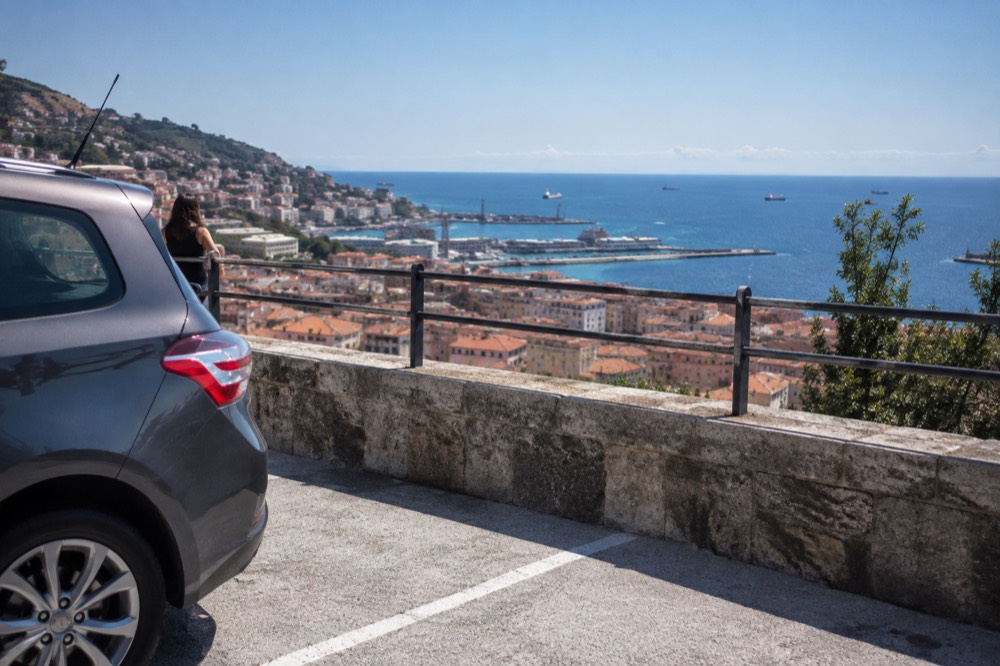
If you would rather not drive, the guided alternative for the coast section is the Piran trip with a historic walking tour, which covers the Slovenian end of the shoreline with a guide and leaves the Italian end to you. Piran is the prettiest town on this coast, a compressed Venetian peninsula that takes an afternoon to walk properly, and our Piran guide has the full picture.
For the karst section without a car, the Cave and Castle tickets and tour is the established product: six hours, rated 4.8 from 2,802 reviews, from $132, covering both Postojna Cave and Predjama Castle with transport and entry handled. It runs from Ljubljana, which means you can pair it with a separate coast or Trieste day rather than trying to merge everything.
Do You Need a Passport to Cross from Slovenia Into Italy?
No routine border checks apply on this route: Slovenia has been in the Schengen area since 21 December 2007, when it abolished internal land and sea border controls, with air checks following on 30 March 2008, and Italy was already a member. You should still carry your passport or national ID card, because checks can be reintroduced temporarily, but in normal conditions the coach drives straight through. Both countries use the euro, so there is no currency exchange either.
The border here is one of the quietest in Europe. The Slovenian government's own EU membership page states the dates plainly, and the practical effect is that the crossing at Škofije is a line on a map rather than a queue of vehicles. Slovenia adopted the euro on 1 January 2007, before it joined Schengen, so the two changes came in that order within thirteen months.
| Fact | Detail |
|---|---|
| Slovenia in the EU | Since 1 May 2004 |
| Slovenia in the eurozone | Euro adopted 1 January 2007 |
| Schengen, land and sea checks abolished | 21 December 2007 |
| Schengen, air checks lifted | 30 March 2008 |
| Routine checks on the Italian border | None in normal conditions |
| Currency on both sides of the line | Euro |
Two caveats, both real. First, Schengen allows member states to reintroduce temporary internal checks, and Italy has done so periodically at various borders, so a spot check is possible even when it is unlikely. Second, if you are a non-EU visitor, your right to be in the zone is documented by your passport and your entry stamp, so carry the passport even though nobody may ask for it. A day trip with no ID is a small risk that is entirely avoidable. The wider set of guides lives on Ljubljana Travel Guide.
The euro removes the last friction. Prices differ between the two countries, and Trieste is broadly pricier than Ljubljana for restaurant meals, but the coins in your pocket work on both sides. Our Ljubljana prices guide covers what the Slovenian end costs, from the 3.13 EUR per night tourist tax to the 1.50 EUR zone 1 bus ride.
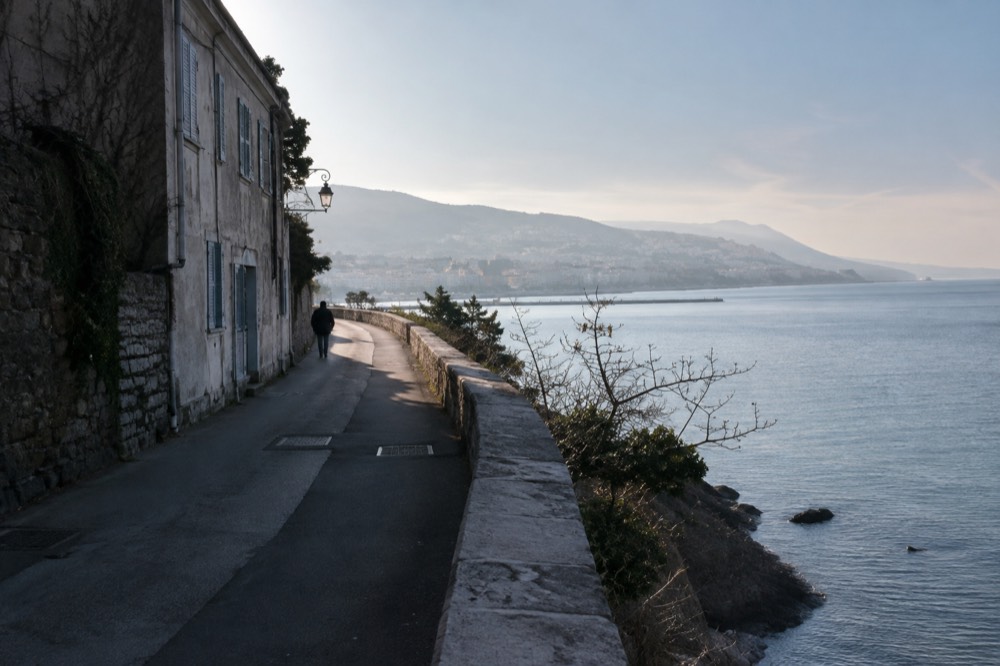
What Is Worth Stopping for Between Ljubljana and Trieste?
The two headline stops are Postojna Cave and Predjama Castle, which sit minutes apart on the motorway corridor, and the strongest alternatives are the UNESCO-listed Škocjan Caves to the south and the coastal town of Piran before the border. Postojna is the show cave with the underground train; Škocjan is the wild one with roughly 400 stairs and a canyon you walk through; Predjama is a castle built into a cliff face. All three are bookable, and all three are seasonal in different ways.
Start with the difference between the caves, because it is the decision most visitors get wrong. Postojna is engineered for volume: a 3.7 km visitor route, part of it on the cave train, about an hour and a half inside, departures spread across slots from 09:00 to 18:00 with frequency rising through summer. Škocjan is a walk: about 2 km of route, roughly 400 stairs, tours running 2h30 to 3 hours, through a canyon so large it has its own weather. Postojna's adult ticket is 34.90 EUR, Škocjan's ranges from 16.00 EUR in the winter months to 24.00 EUR in July and August, per the park's own tour page.
| Stop | What it is | Adult price | Time needed |
|---|---|---|---|
| Postojna Cave | Train-assisted show cave, 3.7 km route | 34.90 EUR | About 1h30 inside |
| Predjama Castle | Castle built into a cave mouth in a cliff | 24.00 EUR | 1 to 2 hours |
| Škocjan Caves | UNESCO gorge cave, about 400 stairs | 16.00 to 24.00 EUR by season | 2h30 to 3 hours |
| Piran | Venetian coastal peninsula town | Free to wander | Half a day |
Predjama Castle is the surprise package. It hangs in a cliff face halfway up a 123 metre rock wall, with rooms carved back into the cave system behind it, and it is open year-round. The combination ticket question comes up constantly, and the honest answer is that the two separate prices are the only published figures: 34.90 EUR for the cave and 24.00 EUR for the castle. Check the operator's site for any current combination deal rather than assuming one.
The coast is the other half of the route. Piran, Koper and the salt pans at Sečovlje sit between the karst and the border, and if you are driving, an afternoon in Piran followed by the short hop into Italy is the classic day. Our Skocjan Caves guide and Predjama Castle guide break both karst stops down in full.
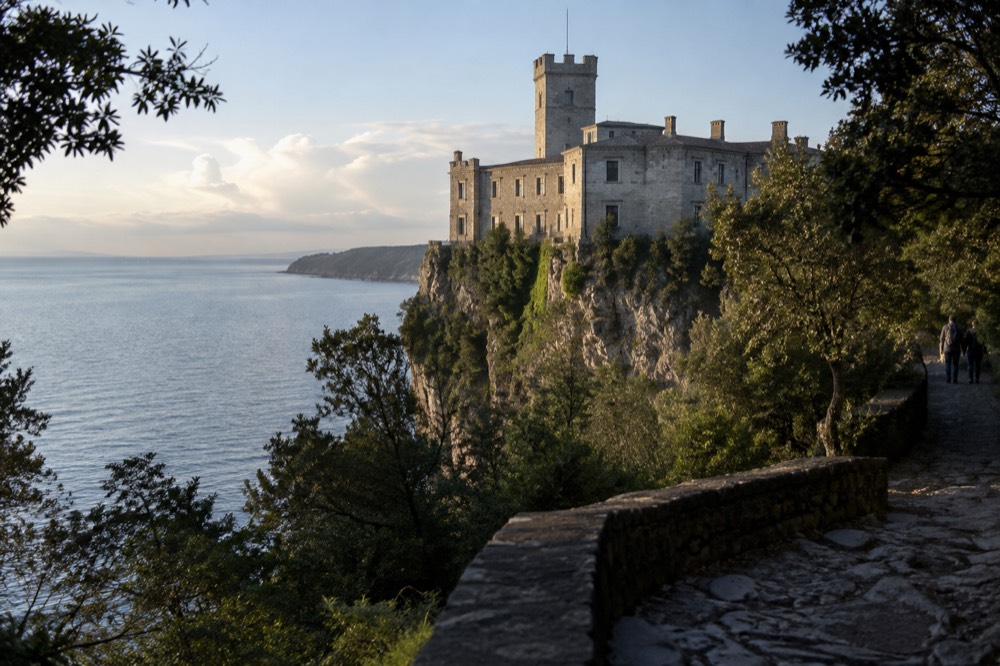
How Long Do You Need, and What Does the Day Cost?
A comfortable Trieste day trip needs a full day: the crossing itself is short, but the morning departure, the walking, the Italian lunch and the return add up, and the cave or coast detours push the day well past ten hours. Budget roughly 35 to 60 EUR per person for transport and a cave entry, plus food, or from $80 per person if you hand the whole karst section to a guided tour. Treat every timetable as seasonal until you have seen it on the operator's own page.
The arithmetic of the day is straightforward. A direct coach crossing plus time in Trieste is a nine to ten hour day from door to door. Add Postojna on the way down and you add two to three hours including the 30 minute early arrival the cave operator asks for before train boarding. Add the coast instead and you add a half day. Doing the caves, the coast and Trieste in one outing is possible with a car and an early start, but it is a long day and most people who try it wish they had split it.
Costs are dominated by the cave tickets. Postojna at 34.90 EUR and Predjama at 24.00 EUR together are 58.90 EUR before lunch, which is why the combined tickets-and-tour products, from $132 with transport included, are worth comparing rather than dismissing. The Bled and Castle day trip is the same price band for a different direction, useful if you are splitting your week between the coast and the lakes.
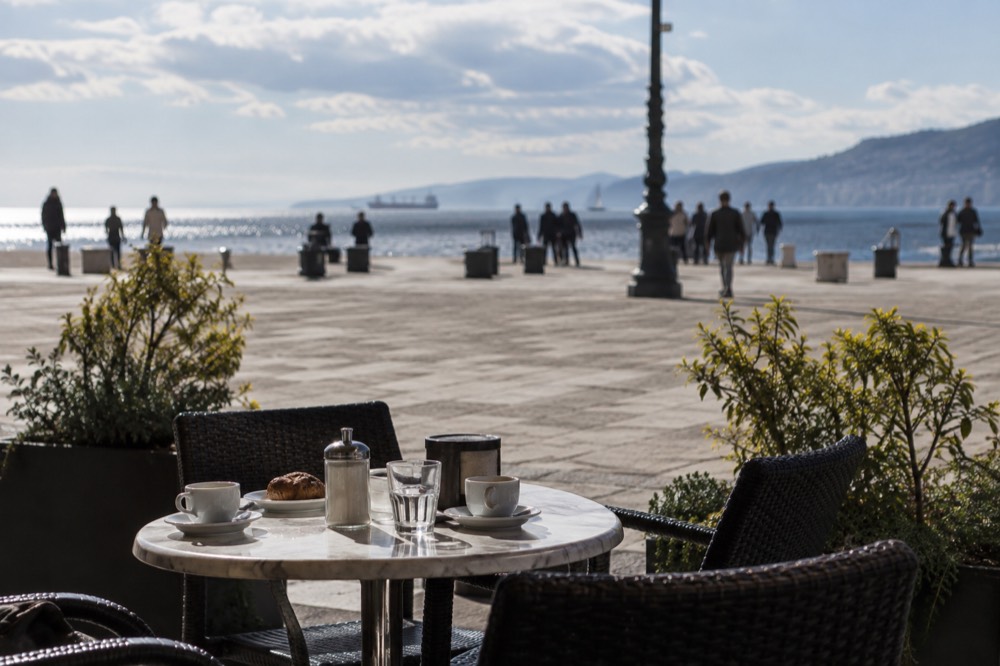
If Trieste itself is the whole point, keep the day simple. Arrive mid-morning, walk the seafront and the central squares, eat properly, and take a late afternoon coach back. Trieste's coffee culture is the thing people remember, a legacy of the port's historic roasteries, and a long morning coffee is the correct way to start an Italian day. Keep receipts if you plan to reclaim anything at the border, though with both countries in the EU there is no duty-free allowance game to play.
Back on the Ljubljana side, if you have a spare evening before or after the trip, the city's own sights reward it. The castle entry ticket with optional funicular, from $17, is the cheapest structured product on the roster, and the castle grounds themselves are free to walk into, with only the funicular and the tower ticketed. Our Ljubljana Castle guide explains exactly which parts cost what.
What Is the Weather Doing on This Route?
The route crosses one of the foggiest airsheds in Slovenia: Ljubljana sits in a basin that averages 91.2 days of fog a year, while the karst and the coast often sit above the inversion in full sun. ARSO's 1981-2010 normals give Ljubljana just 56 hours of December sunshine against 120 hours at Kredarica, 2514 m up on Triglav. Plan the coast end of the route for sunshine and expect the city end to be grey.
This is the planning fact that most guides miss entirely. Ljubljana is a basin city: cold air pools on the floor in the colder half of the year, fog and low cloud cap it, and the hills a few hundred metres up sit above the grey in clear air. ARSO's own normals, published for 1981-2010, put the city at 37 clear days a year against 130 overcast, with October and November averaging a single clear day each. The fog series, which ARSO publishes only for the 1971-2000 period, puts September and October at 12.4 fog days apiece, above January's 11.3.
| Station | Altitude | Clear days/yr | Overcast days/yr | Dec sunshine (h) | Jan sunshine (h) |
|---|---|---|---|---|---|
| Ljubljana, Bežigrad | 299 m | 37 | 130 | 56 | 71 |
| Kredarica, Triglav | 2514 m | 47 | 117 | 120 | 139 |
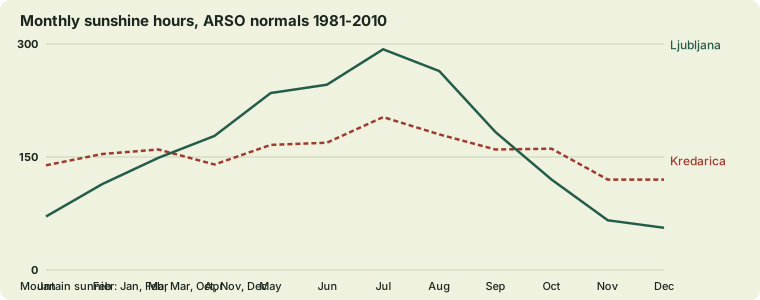
For this route the implication is concrete. If you wake in Ljubljana to fog, do not cancel: drive or ride down out of the basin, because the coast at Piran and the Italian end at Trieste are frequently in clear air while the capital is grey. The reverse is rarer, but a fine city morning can still deliver a windy bora day on the coast, the cold katabatic wind the northern Adriatic is known for. Pack a layer for the seafront even in summer.
The caves, meanwhile, are weatherproof by physics. Postojna holds about 10 degrees Celsius and Škocjan about 12, year round, which is why every wet-weather and heatwave itinerary in this region defaults to them. If your Trieste day collapses in rain, the karst will still be open, and the underground temperature will not care what the sky is doing.
Which Option Should You Actually Pick?
Take the direct coach if Trieste is the destination and you want simplicity. Drive if you want the karst and the coast on your own clock. Take the cave and castle tour if you want the headline stops handled for you, or the Piran tour if the coast is your priority. Do not take the train unless the journey itself is the point, and do not try to combine the caves, the coast and Trieste in a single day without a car and an early start.
The honest summary is that this is a route with one great transfer option and several great detours, and the mistake is treating it as a simple A to B. The direct coach does A to B perfectly. Everything else on this page, the caves, the cliff castle, the Venetian coast, is what makes the day memorable, and each one costs you a couple of hours. Decide which of those you actually want before you book anything.
First-time visitors with two or three days in the capital should probably split the difference: one day for Trieste by coach, one day for the karst or the coast by tour or car, and the evenings for the city itself. Our one day in Ljubljana and 2 days in Ljubljana itineraries show how those evenings fit. If you are travelling without a car and want the transfer day to carry its own weight, the trio below covers the three strongest guided options from the capital: the karst day trip, the lake alternative, and the free GuruWalk tips-based city walk for your arrival evening.
Common Questions About Ljubljana to Trieste
How do you get from Ljubljana to Trieste?
Take a direct [coach](https://busbud.tpk.ro/4kLAIElq) from the Ljubljana bus station, drive across the karst, or book a guided day tour that folds in the caves or the coast. There is no fast direct train, so the coach is the default transfer and the car or tour is the way to add detours.
Is there a direct train from Ljubljana to Trieste?
There is a rail link, but it is limited and seasonal, restored only partially after decades of suspension, and it is usually slower than the coach for the same journey. Check the operator's live timetable before relying on it.
Is there a direct bus from Ljubljana to Trieste?
Yes, a direct coach runs the corridor between the two cities, departing from the main bus station next to the rail station and crossing the border at Škofije without a scheduled stop. Frequencies and fares vary by season, so book from the operator's live listing.
Do you need a passport to travel from Slovenia to Italy?
Both countries are in the Schengen area, so there are no routine border checks, but you should still carry your passport or national ID because temporary checks can be reintroduced. Both countries also use the euro, so there is no currency exchange.
What is worth stopping for between Ljubljana and Trieste?
Postojna Cave and Predjama Castle sit minutes off the motorway, the UNESCO-listed Škocjan Caves lie to the south, and the coastal town of Piran fits neatly before the border. Postojna is the train-assisted show cave, Škocjan is the walking cave with about 400 stairs, and Predjama is the cliff castle.
How long do you need for a Ljubljana to Trieste day trip?
Plan a full day of nine to ten hours for the round trip with time in Trieste, and more if you add a cave or a coastal stop. Combining the caves, the coast and Trieste in one day is possible with a car and an early start, but splitting it over two days is more comfortable.