Ljubljana from a Koper Cruise Stop: A Realistic Shore Day Plan
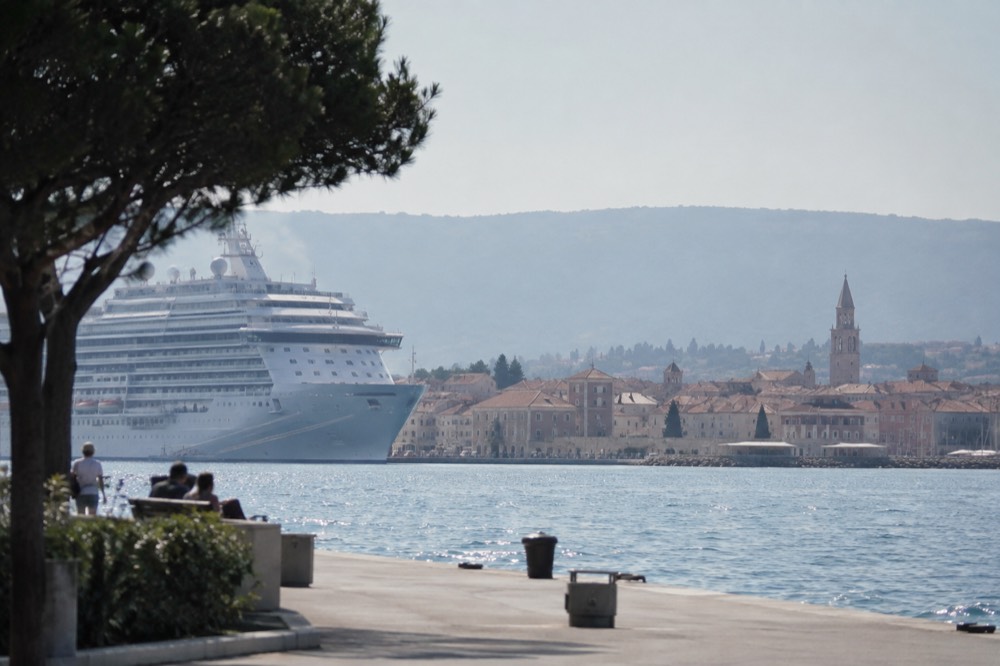
A cruise call at Koper forces one decision on you before you even step ashore: the capital, the coast, or the caves. Here is how each option actually plays out, with the real prices and the mistakes that cost people their day.
Short answer
Yes. A Koper cruise call is enough for a half day in Ljubljana. The centre is pedestrianised, a castle ticket with the funicular is 19.00 EUR, a river cruise runs 15 EUR, and the Ljubljana Card at 41 EUR covers the funicular, cruise, buses and museums. Book or plan the transfer before you disembark; the transfer is the day's only real risk.
Koper is the port Mediterranean itineraries use for Slovenia, and every passenger on the ship is quietly asking the same question at breakfast: is the capital worth the transfer, or is the coast the smarter call. The honest answer is that both work, but they reward completely different kinds of day. The coast is slow, salty and close. Ljubljana is compact, walkable and, for a country whose identity is stitched through it, the place people actually remember.
This page is the realistic version of that decision. It assumes you have one day, limited patience for logistics, and no appetite for discovering at 14:00 that the thing you wanted closed at 13:00. The capital's centre is pedestrianised, roughly twenty hectares of it, which means once the transfer is done everything else is on foot and nothing is far. That single fact shapes the whole plan.
Can You Really Visit Ljubljana from a Koper Cruise Stop?
Yes, comfortably, provided you treat the transfer as the fixed cost of the day and build everything else around it. Ljubljana's centre is compact and closed to general traffic, the castle sits directly above it on a funicular, and the river runs through the middle, so a half day covers the Old Town, the castle viewpoint and a boat trip without rushing. The mistake is trying to add a second destination on top; the transfer each way eats the slack.
The shape of the day is simple. You come ashore at Koper, you ride inland, you spend the middle of the day in the capital, and you ride back in time for all-aboard. What varies is how much of the middle you get, and that depends almost entirely on how the transfer is arranged. A ship excursion removes the timing risk and removes your flexibility. An independent coach or [private transfer](https://gettransfer.tpk.ro/Ab8maxge) gives you the flexibility and hands the timing risk back to you.
Slovenia makes the logistics unusually painless in one respect: it is in the European Union, the eurozone and the Schengen area. There is no border to clear and no currency to change, wherever you have come from in the region. The government's own pages state that land and sea internal border checks were abolished on 21 December 2007, with air checks following on 30 March 2008, so a day trip anywhere in the country is domestic travel in practice.
| Option | Best for | The trade-off |
|---|---|---|
| Ljubljana, the capital | First-time visitors, architecture, food, river | The transfer is the longest of the three; you trade beach time for the country's best half day |
| Piran and the coast | Short calls, sea lovers, low-effort days | Almost no transfer, but you see a lovely town rather than the country's identity |
| Postojna Cave and Predjama | Bad weather, families, anyone who has seen a capital before | Weather-proof, but you skip the city entirely |
If your ship is in port from early morning to late evening, Ljubljana is the easy winner. If you are ashore for five hours, read the transfer section twice before committing. The Ljubljana Travel Guide covers each of these destinations in depth if you want to go deeper on one of them, and our Piran coastal guide is the honest case for staying by the sea.
What Does Getting from Koper to Ljubljana Involve?
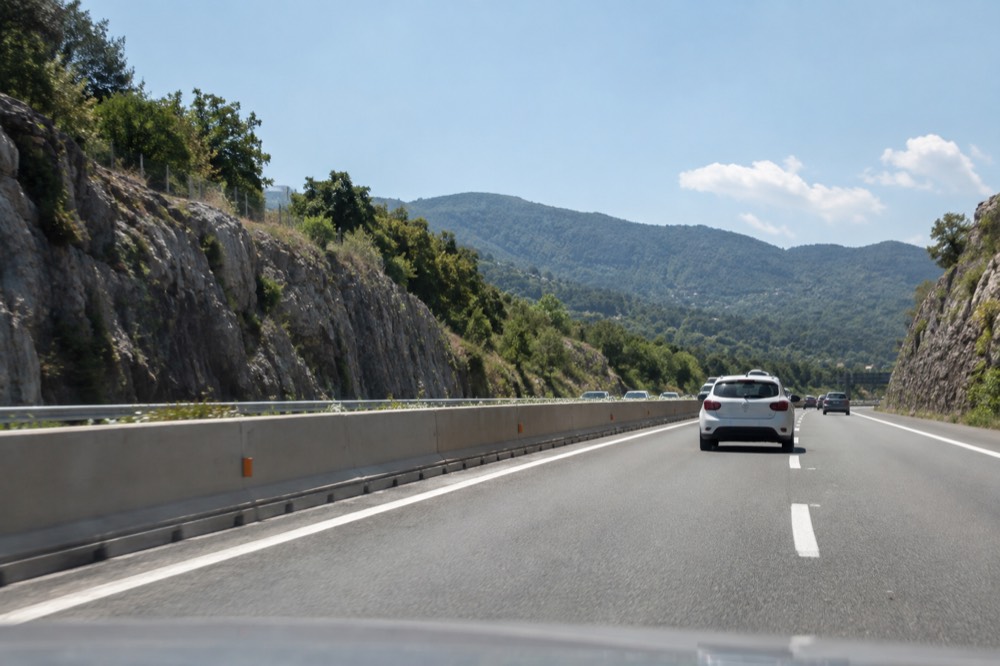
The transfer is a straightforward motorway run between the coast and the capital, and your only real decision is who owns the timing: the ship's excursion desk, an independent coach, or a private driver. There is no border, no currency exchange and no seasonal closure to worry about. What you must not do is arrive at Koper without having decided, because the queue for the last coach is where cruise days die.
Ship excursions are the safe option and the expensive one. You are met at the terminal, herded onto a coach, and returned before all-aboard with a margin built in. For a first visit with a short call, that margin is worth paying for. The guide on the coach usually becomes the guide in the city, which means you spend your capital hours on someone else's route.
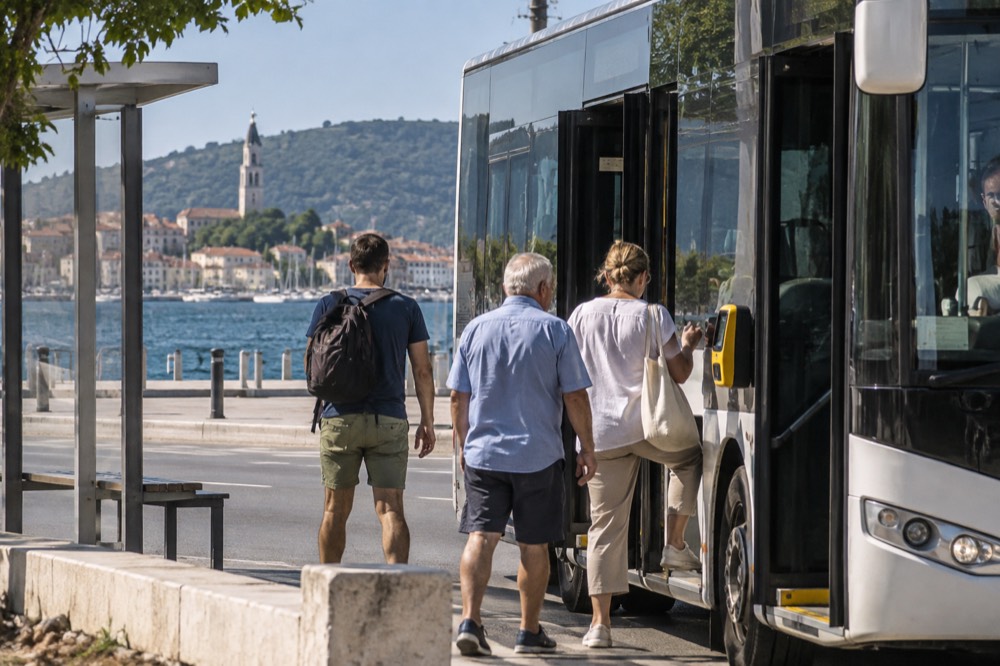
The independent route is cheaper and freer. Coaches run between the coast and Ljubljana on a regular schedule, and the coach station in the capital sits beside the rail station at the northern edge of the centre, a short walk from everything. The risk is purely arithmetic: if the return leg is delayed, the ship does not wait. Private transfers solve that by putting the schedule in your hands, at a price, and suit groups of four or six splitting the cost.
| Transfer type | Who controls timing | Flexibility in the city | Suited to |
|---|---|---|---|
| Ship excursion | The ship | Low, fixed route and return | First visits, tight calls, nervous travellers |
| Independent coach | The timetable | Medium, tied to departure times | Confident travellers, longer calls |
| Private transfer | You | High, you set the return | Groups, families, anyone with a hard all-aboard |
One practical note that saves genuine confusion: the centre of Ljubljana is a pedestrian zone, progressively expanded since 2007. Coaches and cars cannot drop you inside it. Every arrival lands at the edge, and from the edge everything is a walk. That is not a problem, it is the reason the city works so well for a half day; plan to arrive, park the logistics, and not touch a vehicle again until the return leg. Our getting around Ljubljana guide covers the same ground for longer stays.
What Should You Do with Limited Time in Ljubljana?
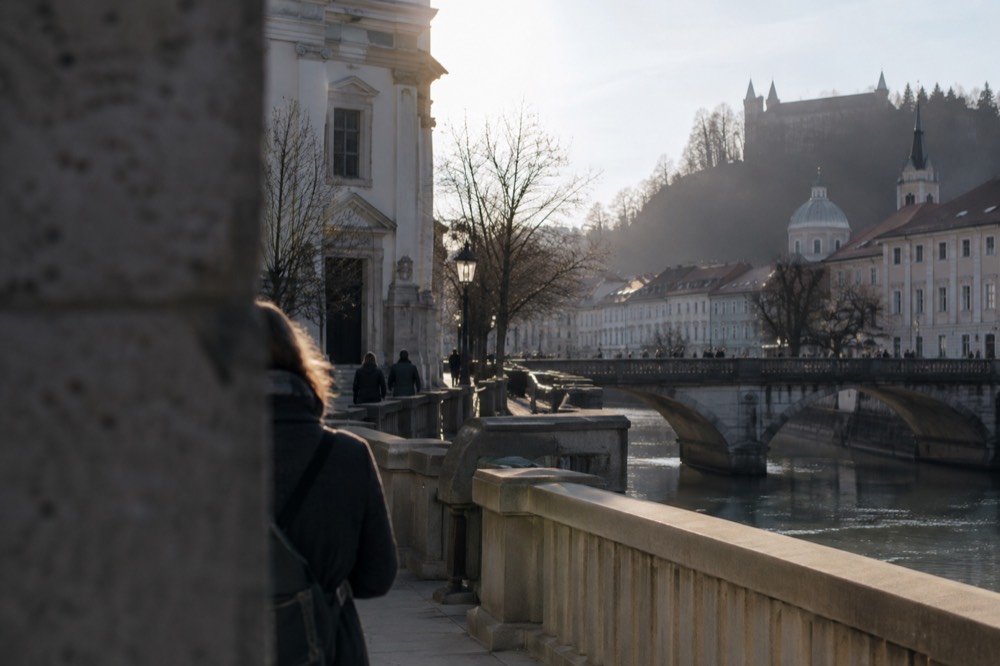
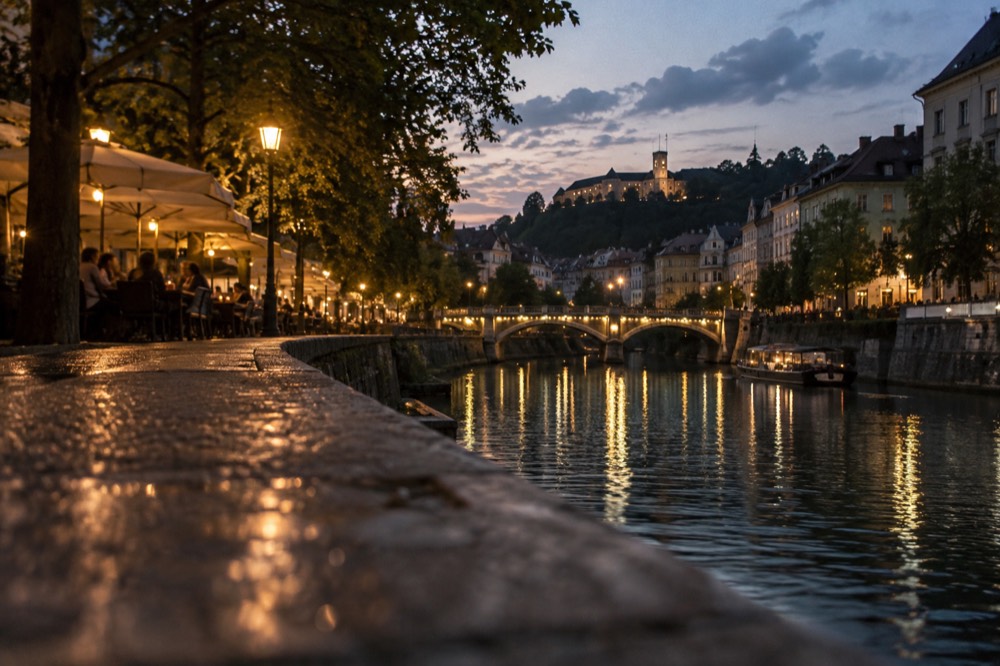
Walk one loop and ride the river once. Start at Prešeren Square, cross the Triple Bridge into the Old Town, loop through the Central Market, take the funicular up to the castle for the view, and finish with a boat on the Ljubljanica. Everything on that loop sits within a few hundred metres of everything else, and the official prices are modest: the castle ticket with the funicular is 19.00 EUR and a river cruise runs 15 EUR.
The loop works because the city was built at this scale. Prešeren Square is the natural starting point, the meeting place of the city, with the Franciscan church on one side and the Triple Bridge carrying foot traffic across the river into the Old Town. From there the streets narrow into the medieval core, and the market halls and open-air stalls of the Central Market sit along the river between the bridges. Our Prešeren Square guide and Old Town guide break those areas down street by street if you have longer than an afternoon.
The castle is the one climb, and the funicular removes it. The castle's own price list puts a return funicular ride at 6.00 EUR for an adult and the combined castle ticket with funicular at 19.00 EUR, and the castle is open 365 days a year, with attractions running 09:00 to 18:00 in the October-to-April half of the year and to 20:00 from May to September. The last ticket is sold up to an hour before closing, which matters on a tight afternoon. Our Ljubljana Castle guide covers what the ticket actually includes.
| Stop | What it is | Official price |
|---|---|---|
| Prešeren Square and the Triple Bridge | The city's meeting point and its most photographed crossing | Free |
| Central Market | Covered halls and open-air stalls along the river | Free to wander |
| Ljubljana Castle, ticket with funicular | Viewing tower, exhibitions, both-way funicular | 19.00 EUR adult |
| Castle funicular only, return | The climb up the hill without the castle attractions | 6.00 EUR adult |
| River cruise, Barka Ljubljanica | Fifty-minute loop on the river from the Breg pier | 15 EUR |
The river is the finishing move, and it is where a short day gets efficient. The two- and-a-half-hour boat cruise and walking tour pairs the river loop with a guided walk through the Old Town with castle views, which is precisely the shape of a good cruise-stop visit compressed into one booking. It carries a 4.7 rating across 366 reviews on the live listing, and for anyone who wants the city explained rather than just seen, it is the strongest single purchase of the day.
If you would rather keep the afternoon unstructured, the fifty-minute electric boat tour runs the same stretch of the Ljubljanica in a shorter, quieter format, and the Ljubljanica river cruise guide compares the operators and piers. Whichever you choose, book the time slot before you leave the ship: midday departures fill first, and a cruise day has no spare hour to wait for the next sailing.
For the food-inclined, one timing fact matters more than any other: Odprta Kuhna, the open-air food market on Pogačarjev trg, runs on Fridays, roughly March to November, and the official wording is "every sunny Friday", which is literal. It is cancelled in bad weather. If your call falls on a dry Friday, the market square at lunchtime is the best eating decision available in the country. Our Odprta Kuhna guide explains the setup.
Is the Ljubljana Card Worth It on a Cruise Day?
For a full day ashore, usually yes, and the arithmetic is simple. The 24-hour card costs 41.00 EUR and includes the castle funicular, the river cruise, city buses, a guided walking tour, four hours of bike share and one entry each to more than thirty museums and galleries. The castle ticket with funicular at 19.00 EUR plus a 15 EUR cruise already totals 34.00 EUR, so the card pays for itself with the walking tour or a single museum on top.
The official card page publishes the tiers plainly: 41.00 EUR for 24 hours, 49.00 EUR for 48 and 54.00 EUR for 72, with child prices lower. The mechanics matter for a cruise day: each included attraction allows one entry, and the card deactivates itself the moment the hours run out. On a shore day you activate it when you step off the transfer, not on the ship, and you use it hard until you step back on.
| Item, bought separately | Price |
|---|---|
| Castle ticket with funicular, adult | 19.00 EUR |
| River cruise, Barka Ljubljanica | 15 EUR |
| Guided walking tour | Included in card, priced separately otherwise |
| Subtotal before a single museum | 34.00 EUR |
| Ljubljana Card, 24 hours | 41.00 EUR |
The card's weakness is the short call. If you are ashore for five hours and will see the square, the bridges and the castle and nothing else, buying the two items separately at 34.00 EUR beats a 41.00 EUR card you never fully arm. The card wins when the day includes the walking tour, the cruise, a museum and a bus ride, which is the natural shape of a full-day call. The [Ljubljana Card guide](/guides/ljubljana-card/) runs the full comparison for longer stays.
One museum fact is worth knowing whatever you decide: the national institutions, including the National Gallery, MSUM and the Slovenian Ethnographic Museum, admit visitors free on the first Sunday of every month. If your cruise day happens to be a first Sunday, the card's museum advantage shrinks and the separate-ticket route gets stronger. Most of those same museums close on Mondays, which is the planning fact people miss.
If the river is the part of the capital that appeals most, there is also a standalone fifty-minute electric boat tour on the Ljubljanica, a quieter alternative to the combined cruise-and-walk format for anyone who would rather wander the Old Town alone and save the commentary for the water. The live listing carries the current times and price.
What If the Weather Turns on Your Cruise Day?
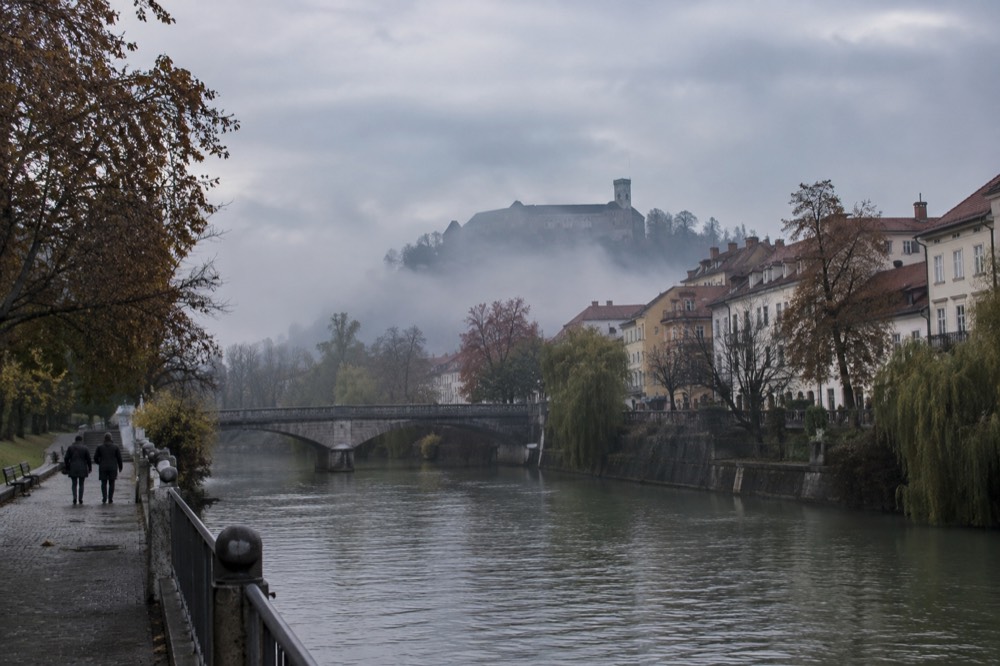
Plan around the basin. Ljubljana sits on the floor of a basin, and in the colder half of the year cold air traps fog and low cloud under clearer air above, so the city can be grey while the hills are in sun. ARSO's 1971-2000 normals give Ljubljana 12.4 fog days in September and 12.4 in October, level with midwinter, and the caves, holding about 10 C year round, are the weather-proof answer.
That autumn fog figure surprises people, and it should: most guides put Ljubljana's fog in deep winter, when in fact the early-autumn shoulder matches it. If your cruise sails in September or October, the odds of a grey capital are as high as they get all year, and the same months are the wettest. A wet or foggy cruise day is not a ruined one, but it changes the ranking: the caves rise, the coast holds, and the open-air parts of the capital shrink to the covered ones.
The practical translation: in bad weather the museums carry the capital. The National Gallery charges 10 EUR for its permanent collection and stays open until 18:00, closed Mondays; the Museum of Modern Art is 7 EUR; the City Museum is 10 EUR. The rainy day in Ljubljana guide has the full wet-weather itinerary, and the castle itself, with its indoor exhibitions and video mapping, is a better grey-day stop than its postcard image suggests.
Should You Swap Ljubljana for the Caves?
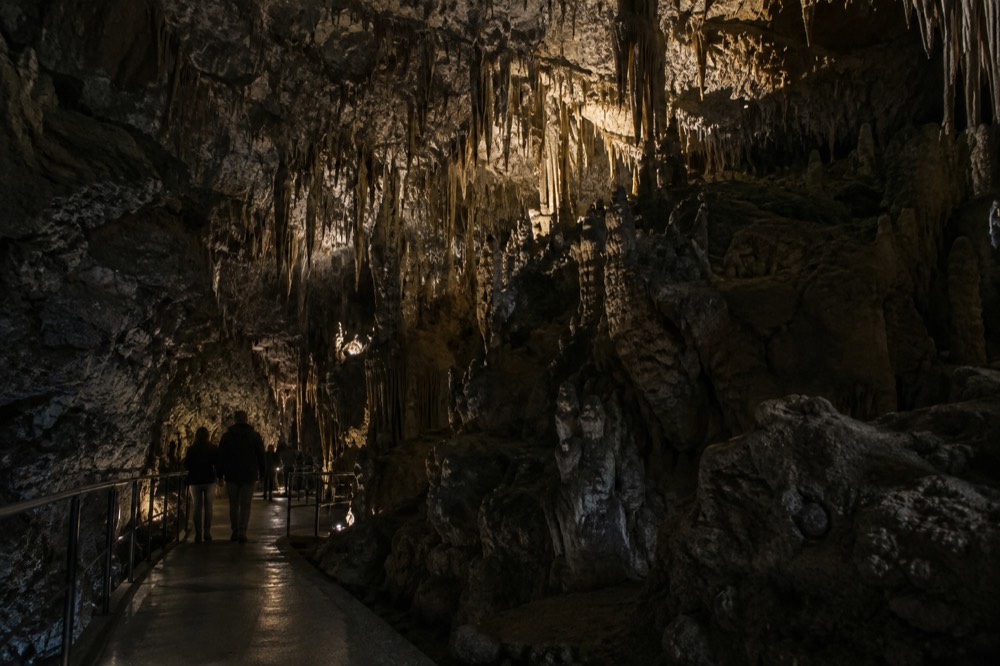
If you have been to Ljubljana before, or the forecast is dire, yes. Postojna Cave holds about 10 C every day of the year, runs a 3.7 km visitor route partly by underground train, and costs 34.90 EUR for an adult, with Predjama Castle at 24.00 EUR next door. The combined cave-and-castle day trip from the capital runs six hours and is the strongest weather-proof day in the country.
The caves are the reliable answer to every form of bad luck: rain, fog, heatwave. The temperature never moves, the tour runs every day including holidays and in bad weather, and the train does most of the distance. The official guidance is to arrive 30 minutes before the stated tour time, with train boarding 15 minutes before. The 10 C figure is the one that catches people out: a August visitor in shorts is cold for ninety minutes, so carry a layer even on the hottest day of the cruise.
| Cave | Adult price | Temperature | The experience |
|---|---|---|---|
| Postojna Cave | 34.90 EUR | 10 C year round | 3.7 km route, partly by cave train, about 90 minutes |
| Škocjan Caves, high season | 24.00 EUR | 12 C year round | A walk through a UNESCO gorge, 2 to 3 hours, roughly 400 stairs |
| Predjama Castle | 24.00 EUR | Above ground | The cliff castle built into a cave mouth, open year-round |
Škocjan is the connoisseur's alternative: a UNESCO World Heritage site since 28 November 1986, a walking route rather than a train ride, and a genuinely different experience of the karst. The honest differentiator is that Postojna is a ride and Škocjan is a hike with stairs, which is the real decision for anyone with sore knees. Our Postojna Cave guide, Škocjan Caves guide and Predjama Castle guide cover all three in depth.
For a cruise passenger, the simplest version of the cave day is the combined tickets-and-tour product: Postojna Cave and Predjama Castle in one six-hour trip, with a 4.8 rating across 2,802 reviews on the live listing and entry handled for you. It removes every timing decision the cave region otherwise demands.
What Should You Sort Out Before You Disembark?
Three things: payment, timing and the weather call. Slovenia uses the euro and sits inside Schengen, so there is no border or currency to plan for. City buses take no cash at all, so you need a contactless bank card, a phone wallet or a 2.00 EUR Urbana card before you board. And the forecast decides your ranking of capital, coast and caves, with September and October the months most likely to force a change of plan.
The bus rule is the one that catches visitors. Ljubljana's buses do not accept cash, full stop. A single zone-1 ride costs 1.50 EUR and covers 90 minutes including transfers; the Urbana card itself costs 2.00 EUR and is sold at the LPP Passenger Centre on Slovenska, at Urbanomat machines, kiosks, tourist information centres and post offices. Contactless Visa, Mastercard and mobile wallets work directly on board, which has removed the old trap of needing a card before you could board at all, but cash still does nothing. The operator's payment page states all of this plainly.
| Practical item | The fact |
|---|---|
| Currency | The euro, adopted 1 January 2007; no exchange needed from eurozone countries |
| Borders | Schengen member since 21 December 2007, no routine internal checks |
| City bus fare | 1.50 EUR, 90 minutes including transfers, zone 1 |
| Cash on buses | Not accepted; contactless cards and phones work on board |
| Tourist tax, if staying overnight | 3.13 EUR per person per night, under-7s exempt |
| Museums | Free first Sunday of the month at the national institutions; most close Mondays |
Two smaller facts round out the day. If your plans ever extend to an overnight, tourist tax in Ljubljana runs 3.13 EUR per person per night, a 2.50 EUR tax plus a 0.63 EUR promotion surcharge, with half rate for ages 7 to 18. And if you are choosing between sail dates, the best time to visit Ljubljana guide walks the seasons month by month; the short version is that the city's clearest, sunniest months are the summer half of the year, and the fog numbers above are the honest cost of the autumn shoulder.
Which Plan Should You Actually Pick?
Pick by call length and weather, nothing else. A full day with a decent forecast belongs to Ljubljana: the walking loop, the castle funicular and the river, with the card if you will use the walking tour and a museum. A short call belongs to Piran. A dire forecast belongs to the caves, at 10 C whatever the sky is doing. The one plan that fails is the improvised one, decided in the terminal queue.
Decide on the ship, the night before. If Ljubljana wins, know whether you are on a ship coach or an independent one, know your all-aboard time with an hour of margin, and know which of the three river formats you want before you reach the pier. The capital rewards a decided visitor more than any other port city on the Adriatic, because everything it offers sits inside a walkable, car-free core that was practically built for people with six hours.
Common Questions About a Koper Cruise Stop
Can you really visit Ljubljana from a Koper cruise stop?
Yes. A half day in the capital is realistic on any full-day call. The centre is pedestrianised and compact, the castle funicular removes the only climb, and the official prices are modest: 19.00 EUR for the castle ticket with funicular, 15 EUR for a river cruise. The transfer is the fixed cost of the day, so decide how you are making it before you disembark.
What does getting from Koper to Ljubljana involve?
A straightforward motorway run with no border and no currency change, since Slovenia is in the EU, the eurozone and Schengen. Your choice is between a ship excursion that owns the timing, an independent coach tied to a timetable, or a private transfer that puts the schedule in your hands. Coaches drop at the edge of the pedestrianised centre, and everything from there is on foot.
What should you do with limited time in Ljubljana?
One loop: Prešeren Square, the Triple Bridge, the Old Town, the Central Market, the funicular up to the castle, and a boat on the Ljubljanica to finish. The two-and-a-half-hour boat cruise and walking tour compresses most of that into a single booking if you would rather not navigate it yourself.
Is the Ljubljana Card worth it on a cruise day?
For a full day, usually. The 24-hour card costs 41.00 EUR and includes the funicular, the river cruise, buses, a walking tour and more than thirty museums. The castle ticket and cruise bought separately total 34.00 EUR, so the card pays off once you add the walking tour or a museum. On a short call of five hours, buy the two items separately instead.
Should you swap Ljubljana for the caves?
If the forecast is bad or you have seen the capital, yes. Postojna Cave holds 10 C year round and runs every day regardless of weather, with an adult ticket at 34.90 EUR and Predjama Castle next door at 24.00 EUR. The combined six-hour cave-and-castle tour is the simplest weather-proof version of the day.
What should you sort out before you disembark?
Payment and timing. City buses take no cash, so carry a contactless card, a phone wallet or buy a 2.00 EUR Urbana card. Confirm your return transfer with an hour of margin before all-aboard. And check the forecast the night before: September and October average 12.4 fog days each and 147 mm of rain each, the months most likely to move your plan from the capital to the caves.