Odprta Kuhna: Ljubljana's Open Kitchen Market, Explained
Every Friday from spring to late autumn, Pogačarjev trg turns into Odprta Kuhna, the Open Kitchen, where Slovenian chefs cook in the open air beside the Central Market. Here is how the market works, when it runs, what it costs and the one weather catch that catches almost everyone out.
Short answer
Odprta Kuhna runs on Fridays on Pogačarjev trg in central Ljubljana, roughly from March to November, from about 10:00 to 21:00 and later on warm evenings. Entry is free, dishes are bought directly from the chefs' stalls, and the market is cancelled in bad weather, so check the forecast before you plan your Friday around it.
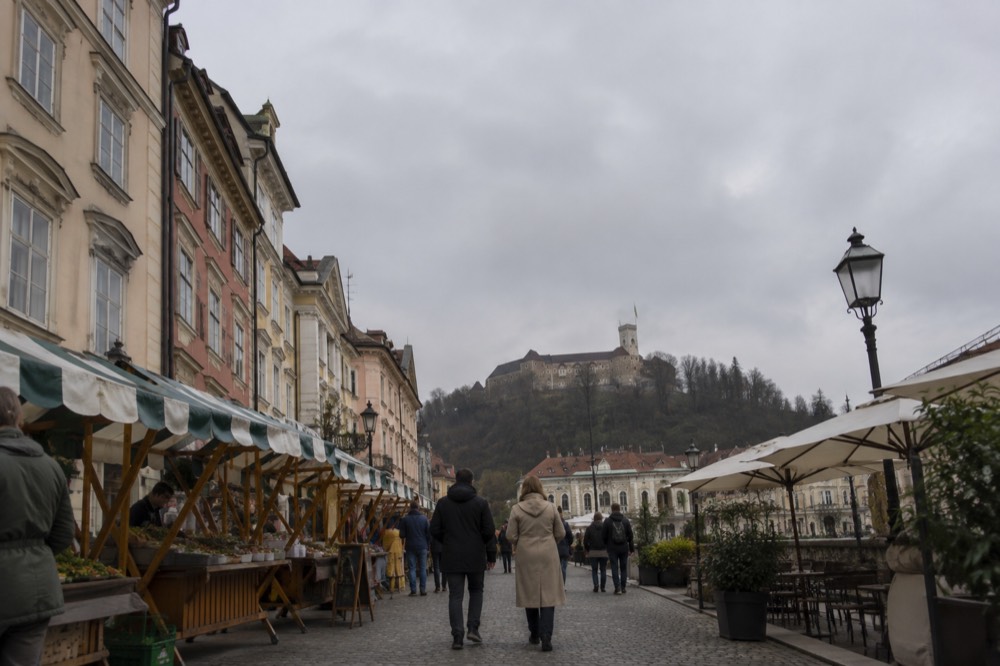
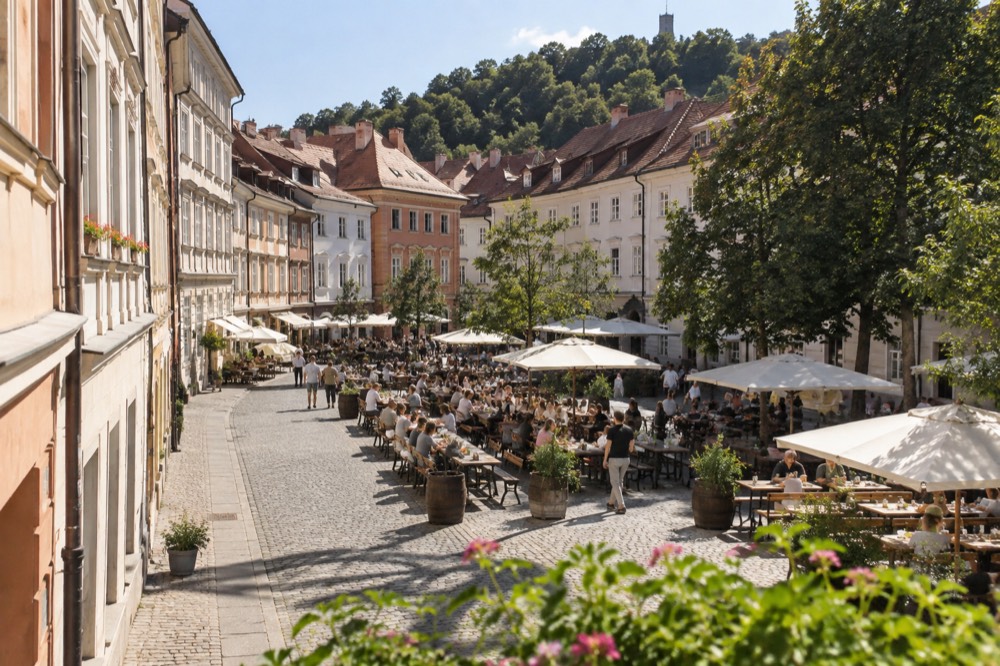
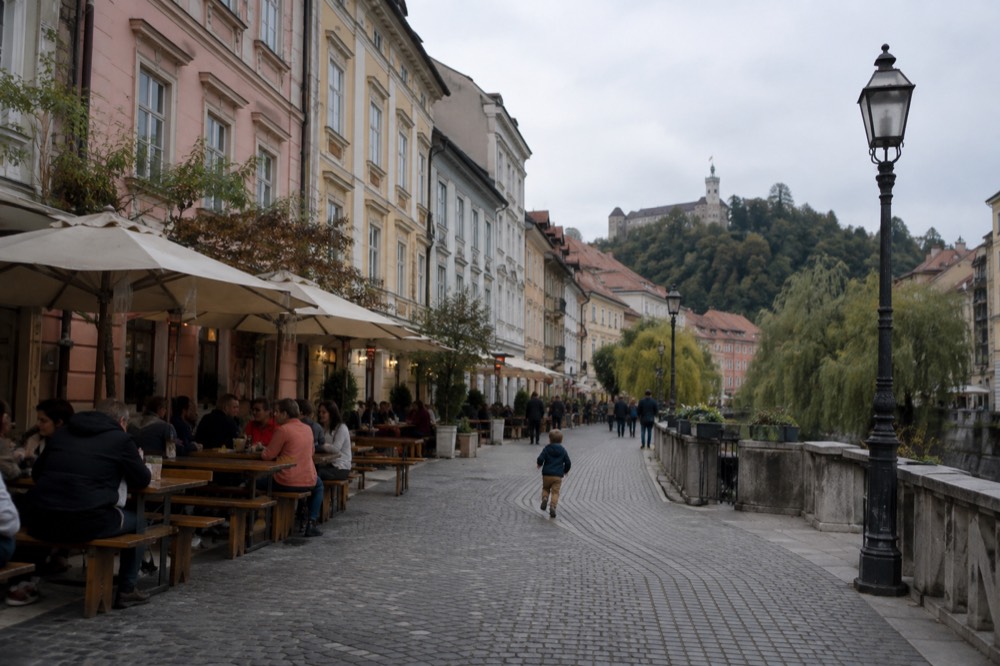
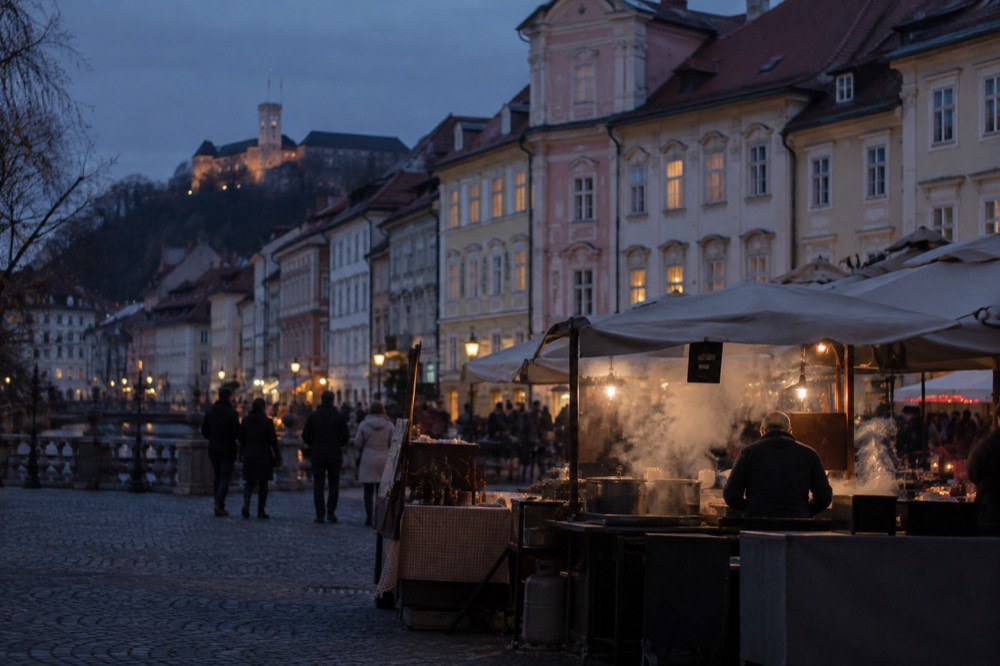
Every Friday, from roughly March to November, the eastern edge of Ljubljana's Central Market changes character. Pogačarjev trg, the open square between the Plečnik-designed market colonnades and the Ljubljanica, fills with chefs cooking on open-air ranges, benches of diners and a queue of people holding plates rather than shopping bags. That is Odprta Kuhna, the Open Kitchen, and it is the single best weekly food event in the city.
The concept is simple and worth understanding before you go. Restaurants and caterers from across Slovenia, not just Ljubljana, are invited to cook their food in the open, at market prices, in front of whoever turns up. The visitor's official events page calls it "every sunny Friday", and that wording is literal: rain cancels the market, which is the single most important planning fact about it and the one most guides leave out.
What Is Odprta Kuhna and Where Exactly Does It Happen?
Odprta Kuhna, the Open Kitchen, is a weekly open-air food market in which Slovenian chefs and caterers cook and sell their dishes from stalls on Pogačarjev trg, the square at the eastern end of Ljubljana's Central Market, beside the Ljubljanica river. It runs on Fridays in the warmer months, entry is free, and you pay individual stall prices for what you eat. It sits inside the pedestrianised historic centre, minutes from Prešeren Square and the Triple Bridge.
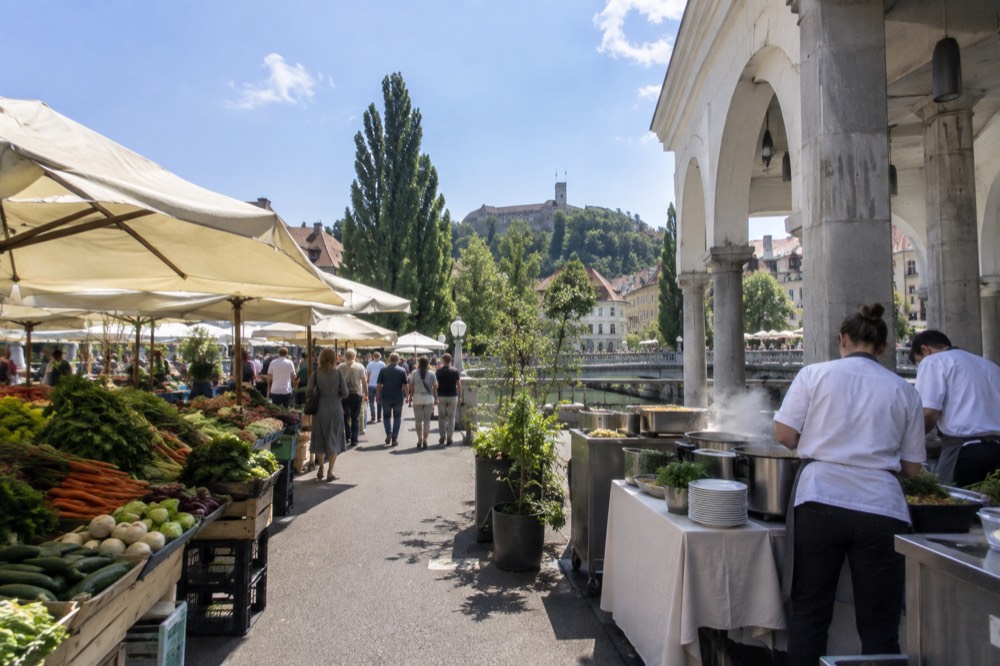
The setting matters as much as the food. Pogačarjev trg is part of architect Jože Plečnik's market complex, the long colonnade that runs along the river between the Dragon Bridge and the Triple Bridge. On weekdays the square is the open-air part of the Central Market, where fruit, vegetable and flower sellers trade. On a market Friday the same space is taken over by cooking stations, tables and benches.
The range of food is broader than "Slovenian" suggests. You will find Slovenian classics, certainly, but also guest chefs cooking Balkan, Italian, Asian and fusion food, plus natural wine stalls, craft beer stands and dessert makers. The unifying idea is that the people selling the food are the people who cooked it, standing behind the counter in whites. It is closer to a street-food festival with a chef habit than a farmers' market.
If you are planning a wider eating trip through the city, our guide to where to eat in Ljubljana covers the restaurants, and the Ljubljana food tour page compares the guided tasting walks. Odprta Kuhna is the third leg of the city's food offer: the one you cannot book and cannot move to a Saturday.
When Does Odprta Kuhna Run, and What Are the Hours?
Odprta Kuhna runs on Fridays, roughly from March to November, from about 10:00 to 21:00, with the market staying open later on warm evenings. The official wording is "every sunny Friday", which means the market is cancelled in bad weather, so the single most important planning step is checking the forecast the day before. There is no market in winter, and there is no make-up day if a Friday is rained off.
The season is deliberately loose at both ends. The visitor board's own page for the event gives the March-to-November frame and the 10:00 start, and tells you plainly that the market only happens in good weather. That is not a disclaimer to skim: it is the operating rule. A wet Friday in May has no Odprta Kuhna, and a bright one in late November may still have one, because the season responds to conditions rather than a fixed calendar.
| Question | Answer |
|---|---|
| Which day? | Friday only |
| Where? | Pogačarjev trg, beside the Central Market colonnade |
| Season | Roughly March to November |
| Hours | About 10:00 to 21:00, later on warm days |
| Entry cost | Free, you pay per dish at the stalls |
| Weather rule | Cancelled in bad weather, no make-up day |
| Winter | No market, the Central Market itself continues |
Timing within the day changes the experience. Late morning and lunchtime are the most family-friendly and least crowded hours, with the market at full stall strength but the benches still findable. Early evening is the liveliest stretch, when the after-work crowd arrives and the cooking ranges are at full tilt, and it runs loudest and longest on the warm Fridays of June and July. If you want to photograph the market rather than eat your way through it, arrive before noon.
The contrast with the rest of the week is worth knowing. The Central Market itself, the covered halls and the outdoor stalls around Vodnikov trg, trades Monday to Saturday, so a Tuesday visitor still gets the produce, the cheese sellers and the market bars, just not the chefs. Odprta Kuhna is the Friday layer on top of a market that works all week.
If your trip cannot be bent around a Friday, a guided tasting walk is the closest substitute, because it puts Slovenian food in front of you on any day of the week. These are the three we would compare first:
The Slovenian Cuisine Walking Tour is the closest match in spirit: four hours, a city walk, and tastings at a series of stops chosen to show what the country actually eats. The Food and Wine Tour covers similar ground in three hours with more emphasis on pairing, and the Wine Tasting Experience moves the whole thing onto a silent electric boat on the Ljubljanica, which is a different and rather good way to spend two hours.
How Much Does Food Cost at the Open Kitchen?
Entry to Odprta Kuhna is free and there is no cover charge, no minimum spend and no ticket: you pay each stall directly for what you order. The market was created as a pay-as-you-go alternative to restaurant dining, so costs scale with your appetite rather than a set menu. Treat it like a street-food festival: a snack costs a few euros, a full plate costs more, and a serious evening across several stalls lands near a mid-range restaurant meal.
We will not print a per-dish price list here, and the reason is a real one: stall prices are set by the individual chefs and change week to week with the guest list, so any specific figure would be out of date before it was published. What is safe to say is the structure. You pay at the stall when you collect, cash and cards both work at most stands, and there is no table service, no booking and no time limit on the benches.
A few practical cost notes that do hold steady:
- Portions are restaurant-sized rather than festival-taster-sized, so two stalls can easily make a full dinner for one person.
- Drinks are sold separately from food, including natural wine and craft beer stands, and are priced per glass.
- The benches are communal and free, so there is no seat charge of the kind some European food markets add.
If you are building a full food budget for the city, our Ljubljana prices guide carries the numbers that do hold still, from tourist tax to bus fares. For the market itself, go with a loose plan and a card, and order from whatever stall has the queue of locals at it.
What Should You Eat at Odprta Kuhna?
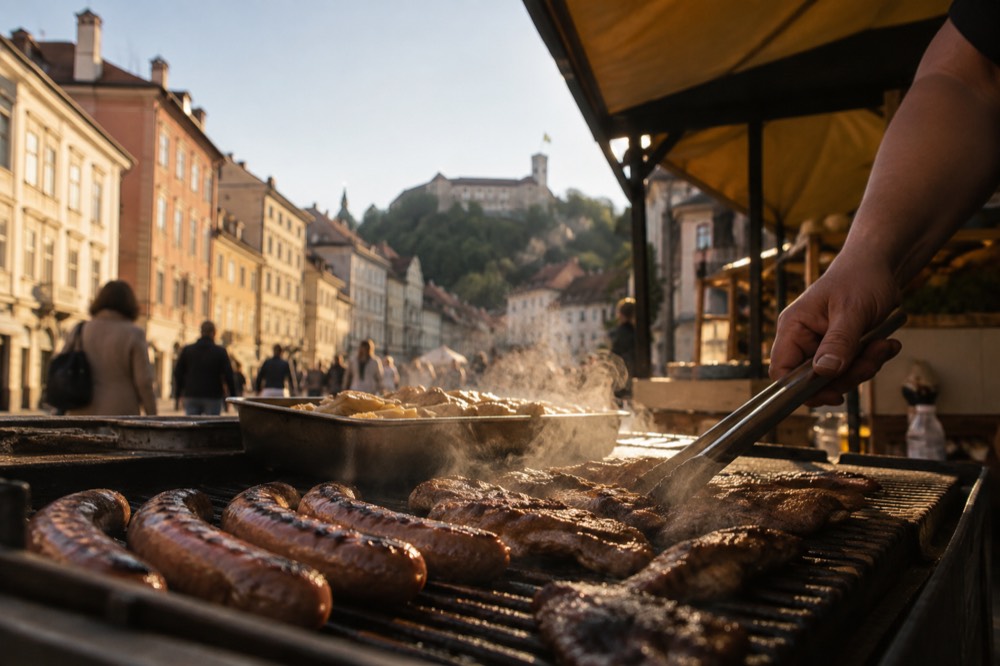
The stalls change weekly, so there is no fixed dish list, but the reliable backbone is Slovenian home cooking from the chefs who run the city's restaurants: grilled meats and sausages, štruklji and other rolled pastries, freshwater fish, seasonal vegetable dishes and a strong dessert bench. Guest chefs bring Balkan grill, Italian pasta and more adventurous fusion plates. The best strategy is to walk the full square once before buying anything, then buy two or three small plates rather than one large one.
The Slovenian staples are the ones worth knowing in advance, because you will meet them at the market and everywhere else in the country. The Slovenian food in Ljubljana guide covers them in depth, but the short version for a market Friday runs like this.
| Dish or stall type | What it is | Why order it here |
|---|---|---|
| Štruklji | Rolled pastry, filled sweet or savoury, steamed or baked | The classic Slovenian comfort food, and stalls sell it in portions made for eating standing up |
| Grilled meats and sausages | Carniolan sausage, pork and lamb from the grill | The smell pulls half the queue in the first place |
| Freshwater fish | Trout and other river fish, usually grilled | Slovenia's rivers and its fish farming both show up on market plates |
| Seasonal vegetables | Spring asparagus, summer peppers, autumn pumpkin dishes | The market's own produce, one colonnade away, cooked the same day |
| Dessert stalls | Pancakes, potica, cakes and modern pastry | The sweet bench is strong and easy to underestimate |
| Wine and beer stands | Slovenian natural wine, local craft beer | Sold by the glass, made to be drunk at the benches |
Potica, the rolled nut or walnut bread that shows up at every Slovenian celebration, is worth a specific mention because the market versions are often better than the café ones. So is the pumpkin seed oil that Slovenians put on nearly everything savoury, which you will taste on salads and spreads before you identify it.
Two honest warnings. First, the most photogenic stall is not always the best one, and the queue of locals is a better signal than the smoke. Second, because the chefs rotate, a dish you loved on one Friday may simply not be there on the next. Treat Odprta Kuhna as a weekly lottery in your favour, not a fixed menu.
How Do You Get to Pogačarjev Trg?
Pogačarjev trg is in the pedestrianised historic centre, a five-minute walk from Prešeren Square across the Triple Bridge, so almost nobody needs transport at all: from anywhere in the centre you walk. From further out, city buses stop a short walk away, a single 90-minute ride in zone 1 costs 1.50 EUR on the Urbana card or a contactless bank card, and cash is not accepted on board. Taxis and rideshares drop at the edge of the pedestrian zone, not on the square itself.
The car-free centre is the fact that reshapes every arrival. The historic core of Ljubljana is closed to general motor traffic, so a car is not an option for the last few hundred metres and never was going to be. Walking in is the default, and from the Triple Bridge or the Dragon Bridge you are already there: Pogačarjev trg sits between the two, along the river. The wider set of guides lives on Ljubljana Travel Guide.
| Option | What to know |
|---|---|
| On foot from Prešeren Square | About five minutes across the Triple Bridge, entirely pedestrianised |
| City bus | Single zone 1 ride 1.50 EUR, 90 minutes including transfers, Urbana or contactless card, no cash on board |
| Taxi or rideshare | Drops at the edge of the pedestrian zone, then a short walk |
| Driving | The centre is closed to general traffic, use the outskirts car parks |
The bus detail is the one that catches visitors out. Ljubljana's city buses take no cash at all, so either tap a contactless Visa, Mastercard or phone wallet on boarding, or buy an Urbana card for 2.00 EUR and top it up at a kiosk, a Urbanomat machine or the LPP Passenger Centre on Slovenska cesta. The getting around Ljubljana guide covers the whole system, and paying for public transport in Ljubljana answers the fare mechanics in detail.
Cyclists have the easiest arrival of all. The city's BicikeLJ share bikes have stations within a couple of minutes of the square, and the riverside paths make the approach pleasant rather than merely practical.
Why Is the Weather Rule So Important for a Friday Visit?
Odprta Kuhna is cancelled in bad weather, and Ljubljana's own climate makes that rule bite: the city's foggiest and joint wettest months are September and October, both shoulder-season months inside the market's season, so an autumn Friday is genuinely at risk. ARSO's records give September and October 12.4 fog days each and 147 mm of rain each, wetter than July. Checking the forecast the day before is not caution, it is the difference between a plan and a hope.
This is where the market's biggest weakness meets the city's most under-reported weather fact. Most guides will tell you Ljubljana is foggy in winter. ARSO's published normals say the early-autumn shoulder is just as bad: 12.4 fog days in September and 12.4 in October, level with December's peak, and both months carrying 147 mm of rain, the joint wettest of the year and well above July's 115 mm. The 07:00 humidity figures agree, with September mornings the most humid of the year at 94 percent.
The basin inversion is the silver lining. On a morning when the market square is grey, the hill a few hundred metres up can be in full sun, and the castle funicular is a two-minute ride from the river. Our Ljubljana in winter and rainy day in Ljubljana guides carry the full indoor plan for the Fridays the market calls off, from the national museums, which open free on the first Sunday of the month, to the cave day trips, which hold roughly the same temperature year round and are the reliable wet-weather answer.
Is Odprta Kuhna Good with Kids and Dietary Needs?
Yes, and in some ways it is easier than a restaurant. There is no waiting for a table, the benches are communal and forgiving, and portions can be mixed across stalls, so a fussy eater can take one thing while the rest of the table takes five. Vegetarians and vegans are better served than the grill-heavy first impression suggests, because the seasonal vegetable stalls and the pasta and pastry benches are consistent features. Gluten-free options appear regularly but vary with the guest chefs.
The practical points that make it work with a family:
- No booking, no waiting. You arrive, you order, you sit. With children, that structure removes the hardest part of a restaurant meal.
- Small plates, small risk. A child who refuses a dish has cost you a few euros, not a main course.
- The square is enclosed by market colonnades. It is pedestrianised space, with the river on one side, so the running-around radius is safe and visible.
- Dessert is a stall, not a negotiation. The sweet bench does the persuading for you.
For dietary needs, the open format is an advantage you do not get in a restaurant: you can ask the chef directly, at the counter, what is in a dish, because the person who cooked it is standing in front of you. Vegetarians should head for the vegetable and štruklji stalls first, and vegans will usually find at least two workable stands among the guests, though the mix rotates. Anyone with a serious allergy should ask at the stall rather than infer from the menu card, for the same reason.
Families planning a fuller trip will find the Ljubljana with kids guide useful for the rest of the week, and the market's own Saturday morning, covered in the Ljubljana markets guide, is the calmer family version of the same square.
What If There Is No Odprta Kuhna During Your Visit?
If your trip misses a market Friday, the closest substitutes are the guided food and wine walks, which run on any day, and the Central Market's own weekday trade, which continues without the chefs. A cooking class replaces the eating with the making, and the city's restaurant scene covers everything else. The market's loss is not the food's loss: Slovenia's cooking is available every day of the week in Ljubljana, just not in the open air on a square.
The weekday Central Market is the cheapest substitute and a genuinely good one. The covered halls trade Monday to Friday from 07:00 to 16:00 and Saturday to 14:00, and the outdoor stalls run Monday to Saturday, so the produce, the cheese counters and the market bars are all there, minus the open-air cooking. Our Central Market guide walks the whole complex, from Vodnikov trg to the riverside colonnade.
For the cooking itself, a hands-on class is the deeper replacement. The štrukelj cooking class puts you in a kitchen making the rolled pastry you would have eaten at a stall, which converts a missed Friday into the thing you can go home and repeat. The listing for the štrukelj cooking class covers the format.
The cuisine walking tour remains the best like-for-like swap, and it deserves its own mention because it is the related tour for this whole guide: a four-hour walk with tastings, run on the days Odprta Kuhna is not.
And for an evening that keeps the market's glass-in-hand spirit without the food, the boat cruise with craft beer tasting runs the river year-round, an hour on the Ljubljanica with Slovenian beer poured on board.
The one thing we would not do is treat a missed Friday as a reason to leave the city. The two days in Ljubljana itinerary works around any day of the week, and the food offer in the old town does not close with the market.
Odprta Kuhna Versus the Guided Food Tours: Which Should You Pick?
Pick Odprta Kuhna if your visit includes a Friday and the forecast holds, because it is the city's food culture in one square at market prices, and no tour can reproduce it. Pick a guided food walk if you want the eating explained, or if you are visiting on any other day.
The two are complements rather than rivals: the market feeds you, the tour teaches you, and a food-mad visitor with a Friday to spare should do the tour on another day and keep Friday free for the square.
The honest comparison, in the dimensions that actually decide it:
| Dimension | Odprta Kuhna | Guided food walk |
|---|---|---|
| Which day | Friday only, weather permitting | Runs on any day you book |
| Who explains the food | The chefs, briefly, at the stall | A guide, for the full walk |
| Cost structure | Free entry, pay per dish | Fixed tour price, tastings included |
| Weather risk | Cancelled in rain | Runs, with indoor stops |
| Range | Rotating guest chefs, unpredictable | Curated stops, reliable |
| Best for | Eating, atmosphere, people-watching | Understanding Slovenian food |
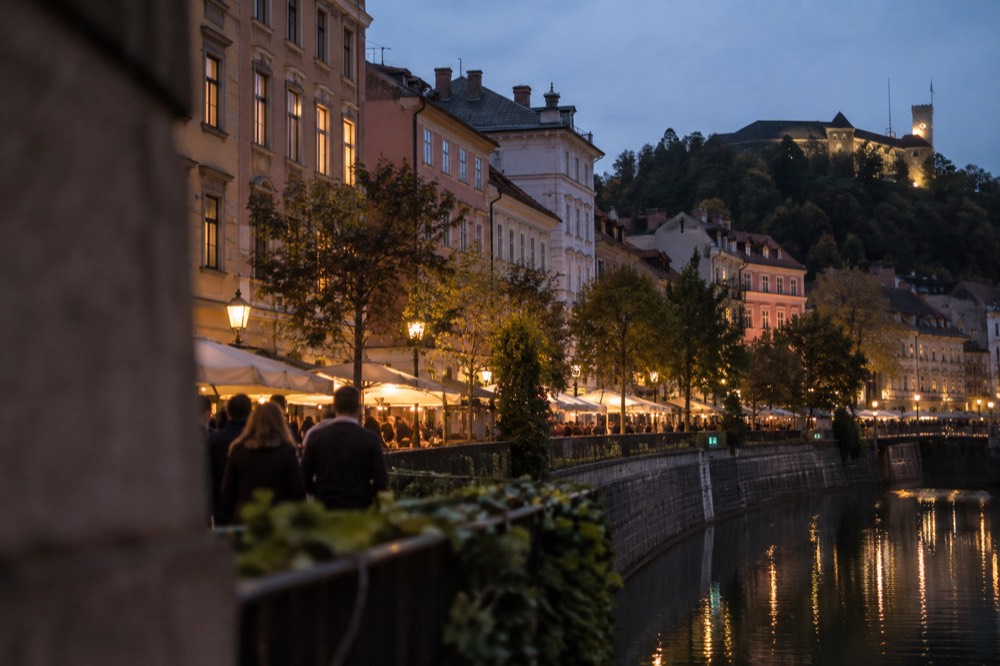
The weather row is the one that decides most trips. A Friday in late September, the joint wettest month of the year, is a coin flip on whether the market happens at all, while a booked walk runs either way. A family with one evening in the city should weigh that seriously. A solo visitor with flexibility should gamble on the square, because the upside, a warm evening of open-air cooking on a Plečnik square, is the best food experience Ljubljana offers.
If you are leaning toward the guided side, these are the three food and wine products we would put head to head:
Common Questions About Odprta Kuhna
When is Odprta Kuhna held?
On Fridays, roughly from March to November, from about 10:00 to 21:00 and later on warm evenings. The market is cancelled in bad weather, so check the forecast before planning a Friday around it.
Where is Odprta Kuhna?
On Pogačarjev trg, the open square at the eastern end of Ljubljana's Central Market, between the Plečnik colonnades and the Ljubljanica river, about five minutes' walk from Prešeren Square across the Triple Bridge.
Does Odprta Kuhna cost anything to enter?
No, entry is free. You pay the individual stalls directly for what you eat and drink, and there is no cover charge, ticket or minimum spend.
Is Odprta Kuhna open in winter?
No, the market runs roughly March to November and there is no winter edition. The Central Market itself continues year-round, but the open-air cooking stalls stop for the cold months.
What happens if it rains on a Friday?
The market is cancelled. The official wording is "every sunny Friday", which is literal, and there is no make-up day. The rainy-day alternatives include the museums, the cave day trips and the city's restaurants.
Can you visit Odprta Kuhna with children?
Yes, and it suits families well: no booking or waiting, communal benches, small purchasable portions across many stalls, and a pedestrianised square with room to move.