Ljubljana Photography Spots and Viewpoints: Where to Shoot the City
Ljubljana is a small city with an outsized range of photographic subjects: a castle on a hill, a river threaded through it, bridges designed by Jože Plečnik, and a basin location that produces some of the most distinctive light of any European capital.
Short answer
The best photography spots in Ljubljana are the Castle Viewing Tower for the panorama, the Ljubljanica banks at dawn, Tromostovje and the Dragon Bridge for architecture, Prešeren Square at blue hour, and the castle funicular for a moving elevated angle. Šmarna gora offers the best free viewpoint outside the centre.
Ljubljana photographs bigger than it is. The city has well under three hundred thousand residents, yet it offers a hilltop castle, a river that bends through the middle of the old centre, a chain of bridges by one of Europe's more singular architects, and a basin setting that wraps the whole thing in river fog for weeks at a time. Photographers who arrive expecting a small administrative capital tend to leave with fuller memory cards than planned.
This guide walks through the spots that consistently deliver, the viewpoints worth climbing for, the light conditions that make this city unusual, and the day trips that extend a photographic trip beyond the basin. Distances are short here: the historic centre is pedestrianised and compact, so most of the locations below sit within a twenty minute walk of each other.
What Are the Best Photography Spots in Ljubljana?
The strongest photography spots in Ljubljana are the Castle Viewing Tower for the full city panorama, the Ljubljanica riverbanks between Tromostovje and the Dragon Bridge for reflections, Prešeren Square at blue hour, the Central Market colonnade for Plečnik's architecture, and the Metelkova district for street art. Šmarna gora, just outside the city, gives the best free elevated view of the whole basin. Each rewards a different time of day, which the sections below break down.
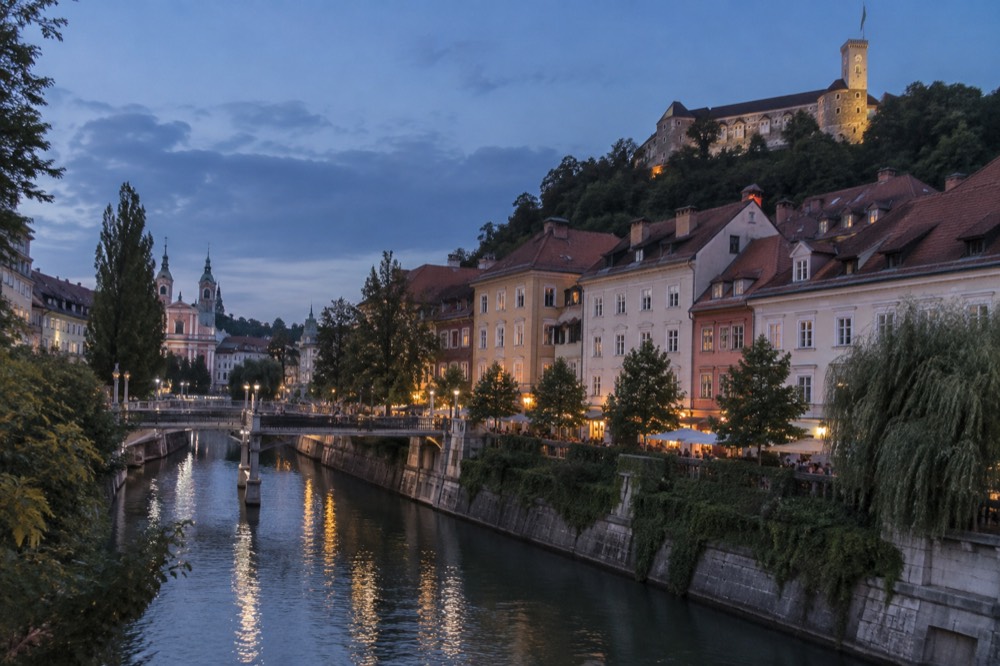
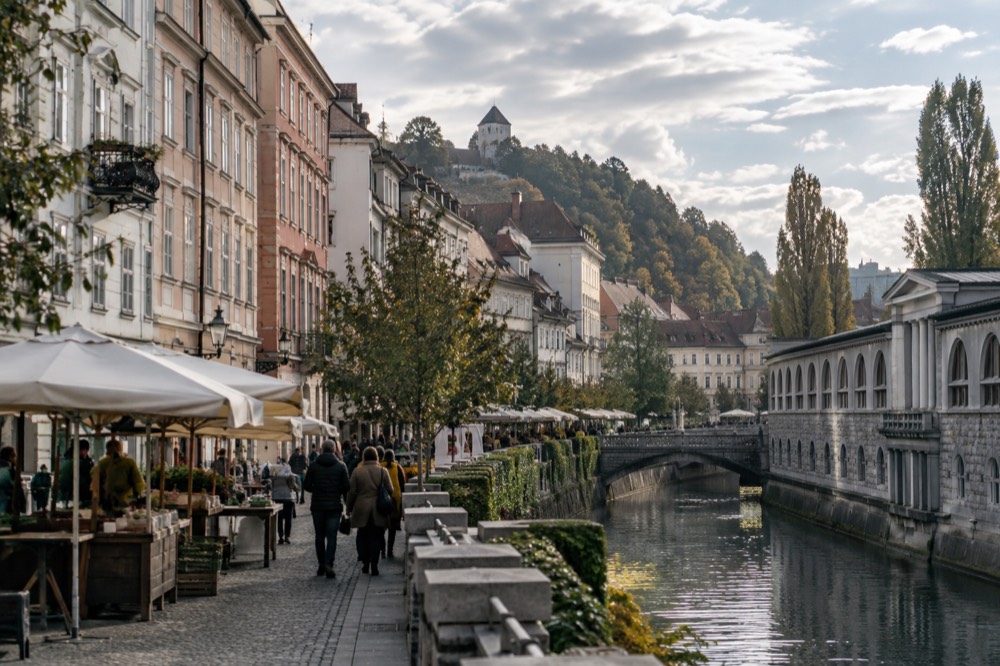
Start with the river. The Ljubljanica runs roughly east to west through the centre, and its banks are lined with willows, market stalls and café terraces that give you foreground material at almost any hour. The stretch between Tromostovje, Plečnik's triple bridge, and the Dragon Bridge is the densest: two of the city's signature structures sit about two hundred metres apart, both reflected in slow water.
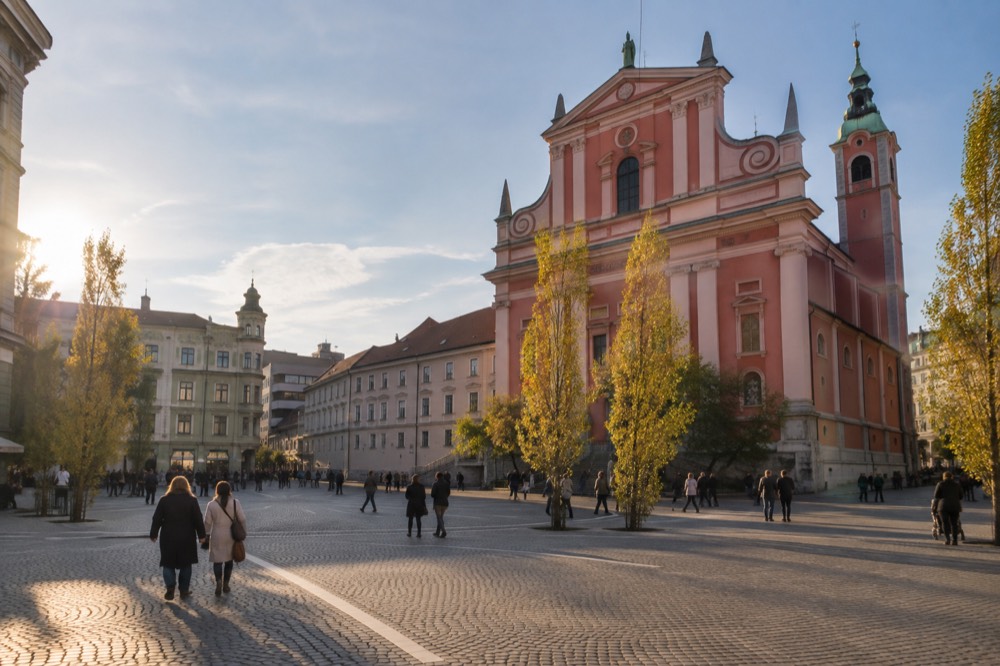
Prešeren Square works best in the last hour of daylight, when the pink façade of the Franciscan Church of the Annunciation catches warm side light and the square's café lights begin to compete with the sky. Shoot the square from the Tromostovje end with a moderate telephoto to compress the church against the buildings behind it.
Here is a summary of the core spots and when each one performs:
| Spot | Best light | Signature shot |
|---|---|---|
| Castle Viewing Tower | Mid-morning or sunset | Full city panorama with the Julian Alps on clear days |
| Tromostovje | Early morning | Triple bridge with the church behind |
| Dragon Bridge | Overcast midday | Dragon statues against sky |
| Prešeren Square | Blue hour | Lit church façade and café glow |
| Central Market colonnade | Morning market hours | Plečnik's columns with produce stalls |
| Metelkova | Evening | Street art and painted façades |
| Šmarna gora | Sunrise | City in the basin below |
The Central Market deserves more camera time than most visitors give it. Plečnik designed the covered colonnade running along the river between the two market squares, and its repeated columns photograph well in the long shadows of morning, when the outdoor stalls are at their fullest. The market runs Monday to Saturday, with the outdoor section opening around 06:00.
Which Ljubljana Castle Viewpoints Give the Best Photos?
The Castle Viewing Tower is the primary photographic viewpoint, giving a complete panorama over the city and, on clear days, the Kamnik Alps and Julian Alps on the horizon. The castle ramparts and courtyard offer layered foregrounds of towers and roofs, while the funicular approach shoots the old town from a rising angle. The castle grounds are free to enter, but the tower and funicular are paid attractions.
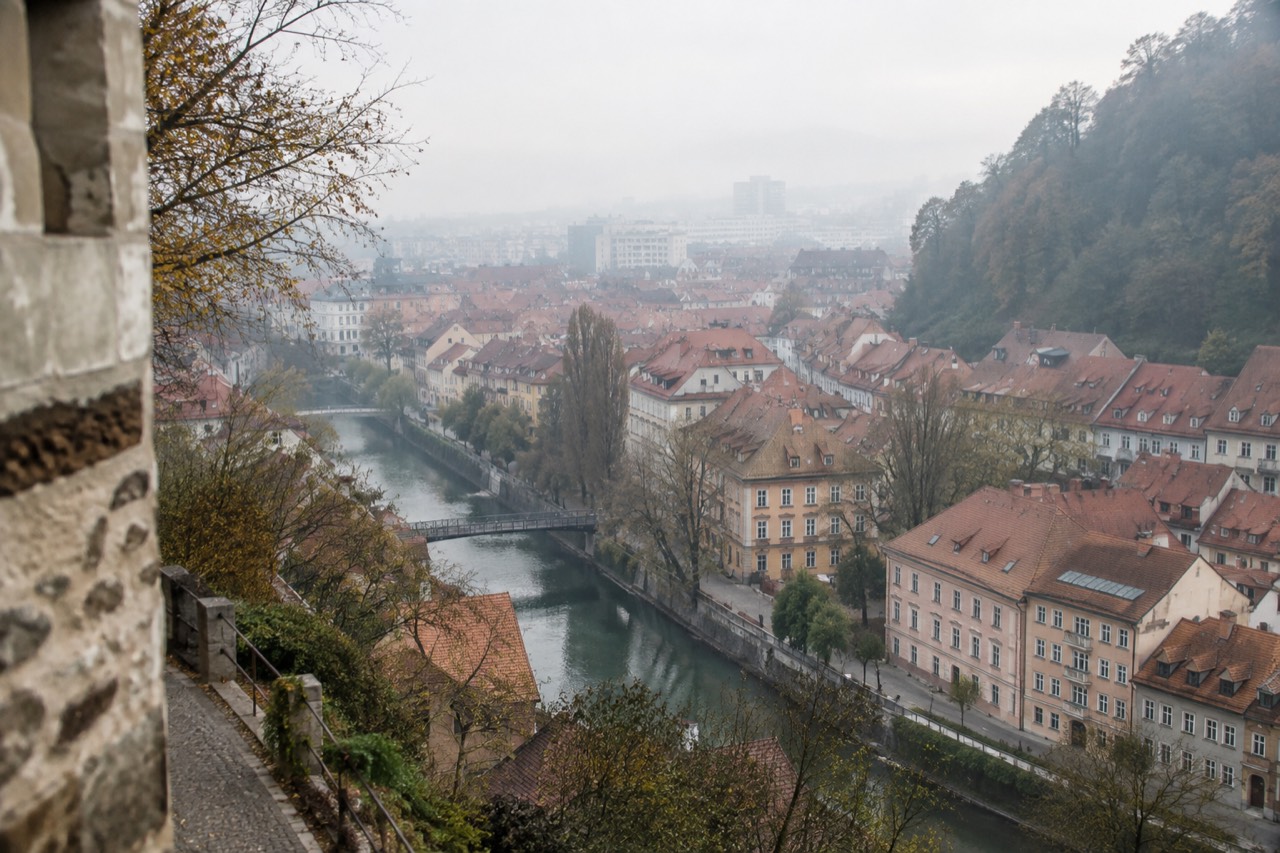
Ljubljana Castle sits on a hill directly above the old town, and the tower on top of it is the single best place to photograph the city as a whole. From the top you can read the city's shape at a glance: the river's loop, the grid of the centre inside it, and the ring of hills and mountains beyond.
The funicular is the fastest way up and a photographic subject in its own right. The official price list puts a single adult funicular ride at 3.30 EUR, a return at 6.00 EUR, and a combined castle ticket with funicular at 19.00 EUR. The funicular runs 09:00 to 19:00 from January to April and October to December, and 09:00 to 22:00 from May to September.
| Item | Price |
|---|---|
| Funicular, single, adult | 3.30 EUR |
| Funicular, return, adult | 6.00 EUR |
| Funicular, return, child 7-18 | 4.50 EUR |
| Castle ticket including funicular, adult | 19.00 EUR |
| Castle ticket including funicular, child 7-18 | 13.50 EUR |
The castle's own attractions, including the tower, are open 09:00 to 18:00 in the colder part of the year and 09:00 to 20:00 from May to September, with the last ticket sold an hour before closing. The full details are on the castle's official price list.
Timing matters more than equipment here. The castle sits on the south side of the river valley, which means the old town below it is lit from the north and east in the morning. Mid-morning to early afternoon gives the most even light across the rooftops; late afternoon puts long shadows across the western districts and can leave the foreground flat. For sunset shots, arrive at the tower at least forty minutes before the sun goes down to claim a corner.
A guided option pairs the walk up with the ride: the Guided Walk and Funicular tour covers the old town on foot first, then takes the funicular up to the castle, a two hour format rated 4.6 from 650 reviews, from $24.
Where Are the Best Riverside Angles on the Ljubljanica?
The best riverside angles are from the eastern bank looking west at Tromostovje at dawn, from Čevljarski most, the shoemakers' bridge, looking along the water in both directions, and from the steps near the Ribji trg pier at blue hour. The reflections in the slow-moving river double every lit façade, so the hour after sunset consistently outperforms midday for riverside photography.
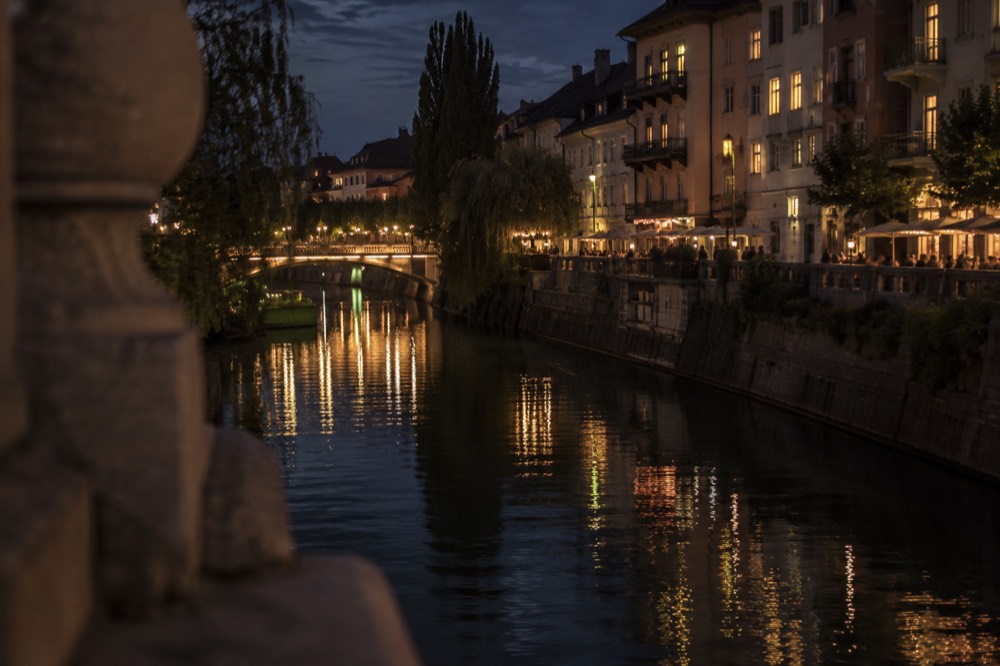
The Ljubljanica moves slowly enough through the centre that it behaves like a mirror on calm evenings. Work the banks on foot: the whole pedestrian stretch is under two kilometres end to end, and the best compositions change every fifty metres as the bridges and building lines shift.
Čevljarski most is the underused one. Most visitors cluster at Tromostovje and the Dragon Bridge, but the shoemakers' bridge sits mid-bend in the river, which lets you shoot up or downstream with curved banks leading the eye. At blue hour, the market colonnade on one side and the old town roofline on the other both reflect cleanly.
The river itself has a story worth photographing. It is a karst river that runs underground and resurfaces repeatedly on its way to the city, carrying different names along its surface stretches before emerging as the Ljubljanica from springs at Retovje near Vrhnika. The [Ljubljanica river cruise](/attractions/ljubljanica-river-cruise/) guide covers the boat options if you want to shoot the banks from the water.
A fifty minute electric boat tour is the simplest way to get on the river with a camera: it is rated 4.6 from 149 reviews and runs from $17. Because the boats are electric and silent, vibration is not an issue for longer exposures from the deck.
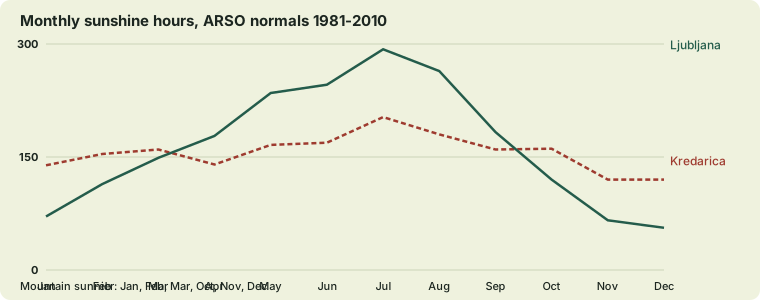
One caution for evening river work: the same basin calm that gives you mirror reflections also gives the city its fog, and September and October average 12.4 fog days each on the 1971-2000 series, level with December. On a foggy evening the reflections disappear into grey, so keep an indoor or elevated alternative in your back pocket for those nights.
What Are the Best Free Viewpoints in Ljubljana?
The best free viewpoints are Šmarna gora, a hill northwest of the centre with an unobstructed view over the whole city basin, Rožnik hill on the city's western edge above Tivoli Park, and the castle grounds, which cost nothing to enter even though the tower and funicular are paid. For a city without a skyscraper district, Ljubljana offers a surprising amount of elevation that costs nothing at all.
Šmarna gora is the one locals will tell you about. The hike from the village of Tacen takes most people under an hour, and the summit church sits above a meadow with a clean view southeast across the entire basin. On a clear morning you can photograph the city with the Kamnik Alps behind it, and in the colder half of the year you will often be standing above the fog that is sitting on the city below, which is the single most dramatic photographic condition this location produces.
Rožnik is closer and lower, reachable on foot from Tivoli Park, and works better as a sunset location looking back toward the city. It lacks the alpine backdrop but requires no transport.
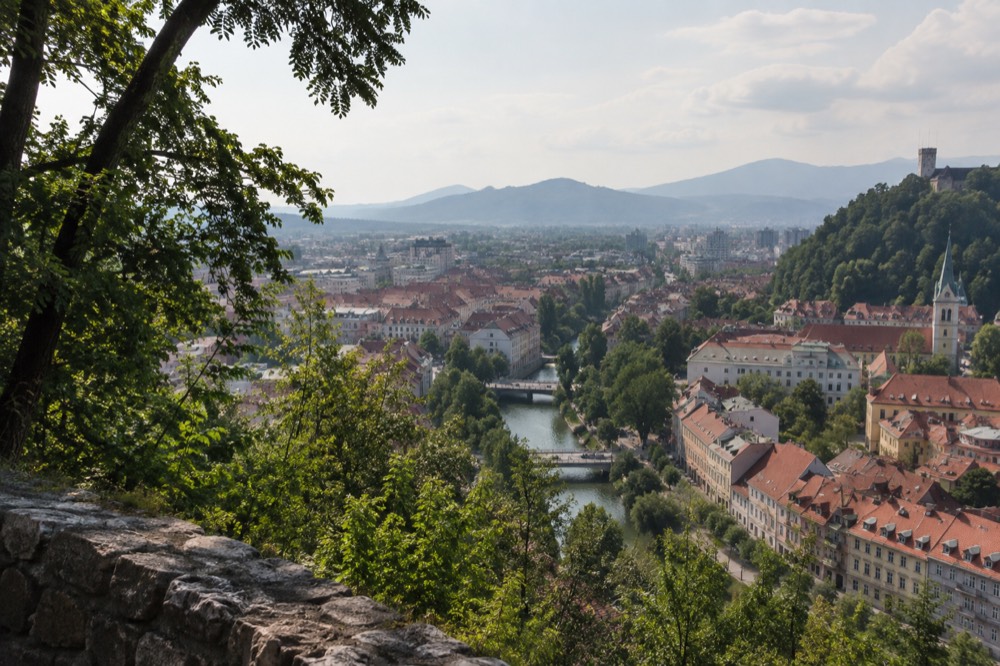
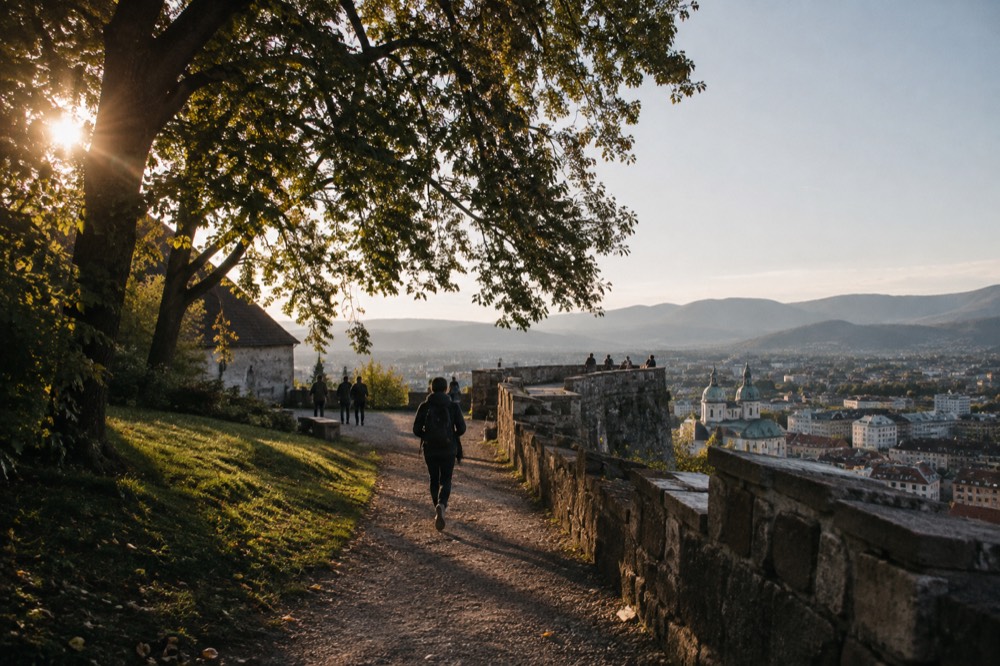
The castle grounds are the third free option. Even without a tower ticket, the terraces and rampart walks on the hill give elevated angles over the rooftops with tree and stonework foregrounds. The castle's official site does not publish details on which sections of the grounds are freely accessible at which hours, so treat this as generally true rather than a guarantee, and check on arrival.
| Viewpoint | Position | Cost | Best time |
|---|---|---|---|
| Šmarna gora | Highest of the free hills, northwest of the centre | Free | Sunrise, autumn and winter mornings |
| Rožnik | Lower hill on the western edge | Free | Sunset |
| Castle grounds | Hill terraces directly above the old town | Free | Morning or late afternoon |
| Castle Viewing Tower | Top of the castle hill | Paid ticket | Mid-morning to sunset |
When Is the Best Time of Day and Year for Photos in Ljubljana?
The best time of day is the hour around dawn, when the river is calm, the centre is empty and the light is soft, and the half hour after sunset for blue hour reflections. Seasonally, April to June offers the most reliable combination of long evenings and green scenery, while October to December delivers the city's signature fog, which is a photographic asset rather than a problem if you shoot from above it.
The fog is the thing to understand about photographing this city. Ljubljana sits in a basin, and in the colder half of the year cold air is trapped under warmer air above it, so the city fogs in while the hills a few hundred metres up sit in sunshine. This is why the temperature at 660 metres can exceed the temperature at 299 metres on individual days, and why a morning at Šmarna gora can put you above a sea of fog with the castle tower and church spires poking through.
The practical reading of those numbers: if you visit between October and February, plan for grey, wet mornings in the city and put your elevation shots first. The inversion means the fix for a foggy morning is to go up, to the castle, to Šmarna gora, or further afield into the Julian Alps. ARSO's published climate normals for Ljubljana are the primary source for all of these figures.
For street and architecture work rather than landscapes, overcast is your friend. Ljubljana supplies it generously: 130 overcast days a year means the soft, shadowless light that flatters façades and street scenes is the default condition, not the exception. The Dragon Bridge's bronze dragons and the market colonnade both photograph well under flat grey skies, where harsh sun would create contrast problems.
Which Day Trips from Ljubljana Are Best for Photography?
The most photogenic day trips are Postojna Cave and Predjama Castle, where a cliff-built castle and an underground train route combine in one tour, Lake Bled, whose island church and castle cliff are among the most photographed scenes in Europe, and the Soča Valley for turquoise river water under alpine peaks. All three are reachable on guided tours that depart from central Ljubljana, which removes the need to drive mountain roads yourself.
Lake Bled is the obvious first choice and carries more search demand than the entire city of Ljubljana. The classic shot, the island church framed from the lakeshore with Bled Castle's cliff behind, is a twenty minute lakeside walk from most arrival points, and the light on it turns over completely between morning and afternoon. The Lake Bled and Castle day trip runs six hours, is rated 4.7 from 1641 reviews and starts from $86.
Postojna Cave is a different discipline entirely. The cave holds roughly 10 degrees Celsius year round, which makes it a reliable destination in any weather, and the 3.7 kilometre visitor route, partly travelled by the cave's underground train, passes formations that photograph well but demand fast glass and steady hands in low light. Predjama Castle, built into the mouth of a cave system in a cliff face, is one of the most striking architectural subjects in Slovenia. The combined Cave and Castle tour runs six hours, is rated 4.8 from 2802 reviews and starts from $132.
| Day trip | Photographic subject | Tour duration | Rating |
|---|---|---|---|
| Postojna Cave and Predjama Castle | Cave formations and a cliff castle | 6 hours | 4.8 from 2802 reviews |
| Lake Bled and Bled Castle | Island church, lake, castle cliff | 6 hours | 4.7 from 1641 reviews |
| Soča Valley and Kranjska Gora | Turquoise river, alpine peaks | 10 hours | 4.9 from 183 reviews |
| Velika Planina | Alpine herdsmen's village | 6 hours | 4.8 from 74 reviews |
The Soča Valley rewards photographers who make the long drive: the river's colour is genuinely unusual, an opaque turquoise that photographs accurately without filters, and the valley walls give scale. The ten hour tour format is rated 4.9 from 183 reviews. Closer to home, Velika Planina offers traditional herdsmen's huts on an alpine plateau, a subject that reads instantly as "Alpine past" and is far less photographed than Bled.
Vintgar Gorge is worth flagging with a caveat: it is open to visitors between April and October and closes for winter, with the exact closing date depending on conditions each year, so check before planning a gorge shoot outside midsummer.
What Camera Gear and Settings Work Best in Ljubljana?
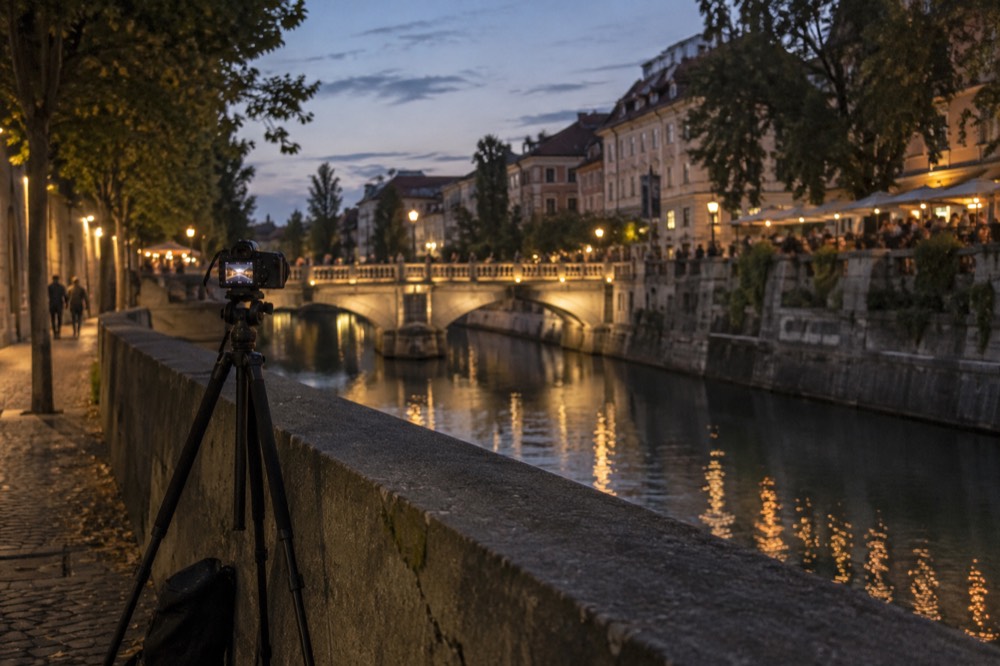
A standard zoom covering roughly 24 to 70 mm equivalent handles most Ljubljana subjects, with a wide angle for the castle tower and bridge interiors and something long for compressed rooftop shots from the hill. A tripod is essential for blue hour river reflections but unnecessary by day. In the caves, a fast lens and high ISO capability matter more than anything else, since flash photography is restricted and the light is dim and warm-toned.
The centre's compactness shapes the kit list. Because everything is walkable and the streets are pedestrianised, weight is the only real constraint, and a single body with a mid-range zoom plus a fast prime for evening work covers the city. The river reflections at blue hour run several seconds long at base ISO, so a small travel tripod pays for itself on the first evening.
For the fog mornings, meter for the highlights and let the shadowed city below fall dark: the shot is the contrast between the lit hilltop and the grey sea below, not detail in both. Expose as if shooting a snow scene, adding a stop or so over what the meter suggests, then recover in post.
What Practical Tips Make Photographing Ljubljana Easier?
The centre is pedestrianised, so plan to walk between spots rather than drive, and use the city buses only for outlying viewpoints like Šmarna gora's trailhead. Buses do not accept cash on board, but contactless bank cards and phones do. Museums close on Mondays and national institutions are free on the first Sunday of each month, which matters if your shot list includes interiors.
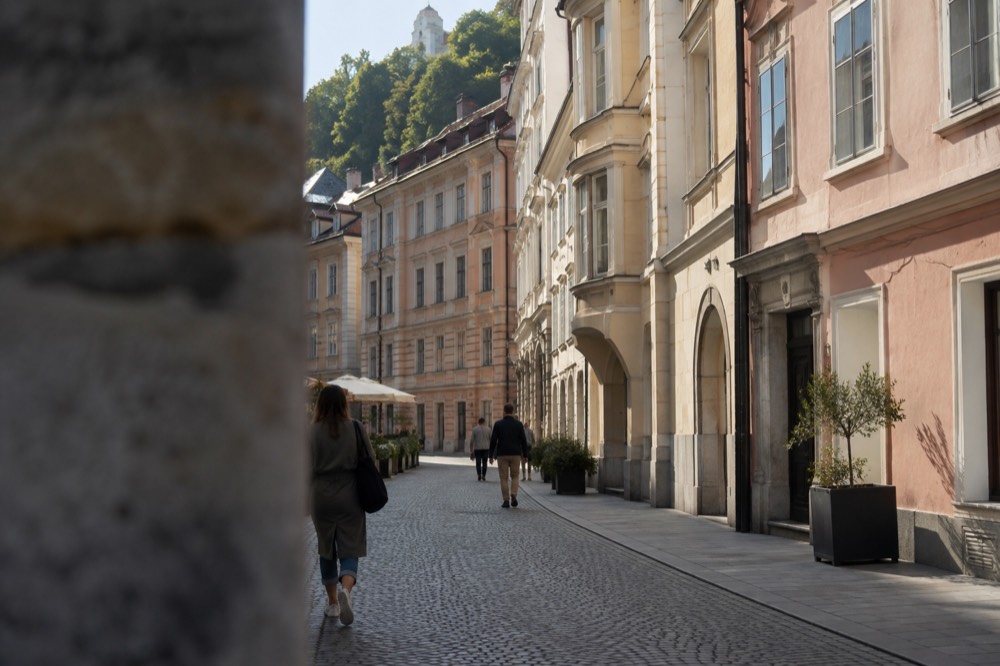
The pedestrianised centre, roughly 20 hectares of it, is the single most useful practical fact for a photographer here. You can walk between Prešeren Square, the bridges and the market without crossing traffic, and the golden hour dash between locations takes minutes, not the half hour it would in a larger city.
For the buses you do need, a single zone 1 ride costs 1.50 EUR for ninety minutes including transfers, and an Urbana card costs 2.00 EUR to buy, though contactless payment on board makes the card optional for short visits. The details are on the city transport operator's payment page.
Two seasonal notes finish the picture. The Christmas market period transforms the riverside into a lit subject that photographs beautifully at blue hour, and the Open Kitchen food market runs on Fridays on Pogačarjev trg roughly March to November, but only, in the tourist board's own words, on every sunny Friday: it is cancelled in bad weather, so check before building a Friday shot list around it.
If your photography trip extends across several days, this Ljubljana Travel Guide site's itinerary pages, including the one day and three day plans, sequence these locations in walkable order, which is the same order a photographer should shoot them in.
Common Questions About Photography in Ljubljana
Where is the best view of Ljubljana?
The Castle Viewing Tower gives the fullest panorama of the city and the mountains beyond it. For a free view, Šmarna gora, northwest of the centre, looks over the entire basin, and in the colder half of the year you can stand above the fog sitting on the city below.
Is Ljubljana Castle free to photograph from?
The castle grounds are free to enter, so the ramparts and terraces cost nothing and give elevated angles over the rooftops. The Viewing Tower and the funicular are paid attractions: a combined castle ticket with the funicular costs 19.00 EUR for an adult.
When is golden hour in Ljubljana?
It depends sharply on season, because Slovenia sits at a northern latitude where summer evenings stay light until late and winter afternoons end by about 16:00. In midsummer, plan riverside blue hour for after 21:00; in December, the equivalent window starts before 17:00 and the city's 56 hours of December sunshine mean you should take whatever light you get.
Can you photograph inside Postojna Cave?
Yes, photography is permitted on the visitor route, but the cave holds about 10 degrees Celsius year round and the lighting is dim and warm-toned, so a fast lens and high ISO settings are needed. Arrive dressed warmly: visitors in summer clothing are regularly cold for the ninety minute tour.
Is the Ljubljanica good for reflection photos?
Yes. The river moves slowly through the centre and behaves like a mirror on calm evenings, doubling the lit façades along the banks. The stretch between Tromostovje and Čevljarski most is the densest for reflections, and the half hour after sunset is the most reliable window.
Do you need a tripod in Ljubljana?
For blue hour river reflections, yes: exposures run several seconds at base ISO. By day a tripod is unnecessary and awkward in the pedestrianised centre, where the streets are narrow and busy. A small travel tripod you can carry in a bag is the right compromise.