Trains from Ljubljana: Every Useful Route
Ljubljana's station is small, but the routes out of it reach Zagreb, Trieste, Vienna, Venice and the Julian Alps. Here is what each connection is actually like, and where the train lets you down.
Short answer
Ljubljana's rail links cover Zagreb, Trieste, Vienna, Venice and a branch line toward Lake Bled via Lesce-Bled, 4 km from the lake. Slovenia is in the EU, the eurozone and Schengen, so there is no border formality or currency change on any of these routes. The one trap is Bled: the station most advice sends you to is not the closest one.
Ljubljana's railway station sits at the northern edge of the centre, a ten minute walk from Prešeren Square, and it is one of the few capital-city stations in Europe you can cross end to end in under three minutes. That smallness is the honest starting point for this guide. The network is modest, some of the interesting places in Slovenia have no station at all, and the single most useful thing a visitor can know is which routes the train genuinely wins and which it quietly loses.
What the station does have going for it is position. Slovenia is in the European Union, it adopted the euro on 1 January 2007, and it has been in the Schengen area since 21 December 2007, with air checks lifted on 30 March 2008. In practice that means a train from Ljubljana to Zagreb, Trieste, Vienna or Venice crosses open borders with no passport checks and no currency to change. Croatia joined Schengen and the euro on 1 January 2023, so even the Zagreb route, once a genuine international crossing, is now an internal trip. The Ljubljana Travel Guide desk rates border simplicity as this city's most underrated travel feature.
Which Destinations Can You Actually Reach by Train from Ljubljana?
The useful direct rail destinations from Ljubljana are Zagreb in Croatia, Trieste in Italy, Vienna in Austria, and a domestic network reaching Lesce-Bled for Lake Bled, the Soča Valley approach via Bohinj, and the coast direction via Sežana. Postojna has a station, but the cave is a walk or taxi from it, and many marquee sights, including Piran and most of Triglav National Park, have no usable rail link at all. The train map of Slovenia is thinner than the country deserves.
The domestic skeleton is simple. The main line runs northwest toward Jesenice, passing Lesce-Bled, and continues over the border toward Villach in Austria. A branch from Jesenice drops to Bohinj and then, famously, through the Bohinj tunnel to the Soča side, which is one of the most scenic stretches of rail in the country. South and east, lines run toward Zagreb, toward Nova Gorica on the Italian border, and toward Maribor and onward to Vienna.
What the map does not show is the last-mile problem. Predjama Castle has no station. The Škocjan Caves have no station. Piran has no station, and even the buses there involve a change. This is why the day-trip economy around Ljubljana runs on coaches and guided tours rather than rail, and it is why the Postojna Cave guide and the Piran guide both treat the train as a partial answer at best.
| Destination | Country | Rail situation | Border checks |
|---|---|---|---|
| Zagreb | Croatia | Direct international train | None, both in Schengen |
| Trieste | Italy | Direct international train | None, both in Schengen |
| Vienna | Austria | Via Spielfeld or Villach, usually one change | None, both in Schengen |
| Venice | Italy | Usually via Trieste or Villach, one change | None, both in Schengen |
| Lake Bled | Slovenia | Lesce-Bled, 4 km from the lake | Domestic |
| Bohinj | Slovenia | Station near the lake's eastern end | Domestic |
| Postojna Cave | Slovenia | Station exists, cave is further out | Domestic |
| Piran | Slovenia | No rail link, bus required | Domestic |
The pattern to notice: the international routes are respectable, and the domestic reach into the Alps is genuinely good, but the karst and the coast are bus country. If your itinerary leans coastal or subterranean, the train will only ever be part of the answer.
How Do You Get from Ljubljana to Lake Bled by Train?
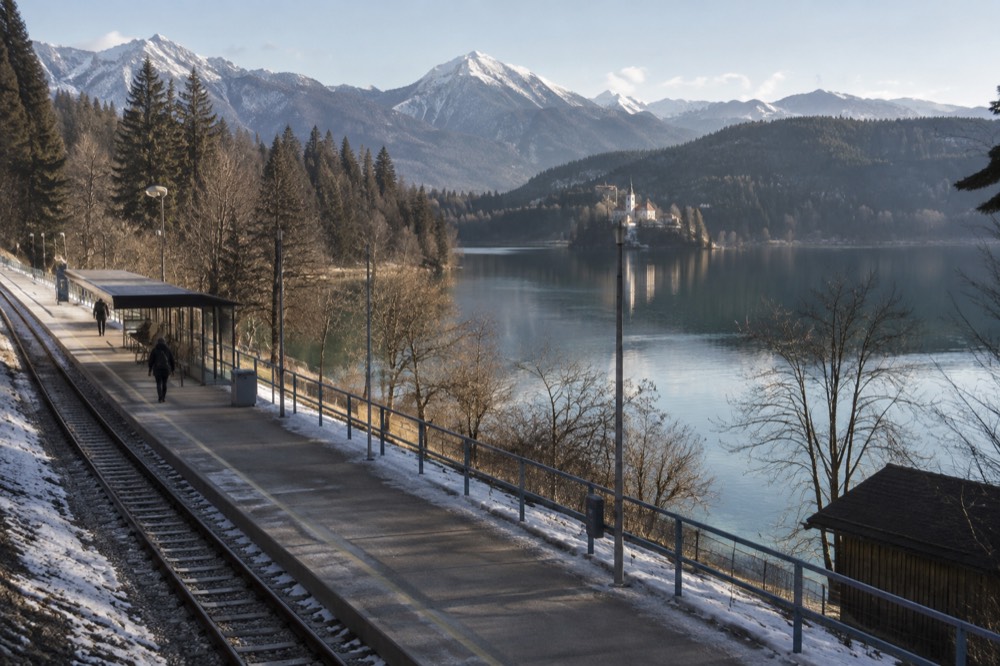
Trains from Ljubljana toward Jesenice stop at Lesce-Bled, which is 4 km from the lake, and most rail advice sends you there. But a second station, Bled Jezero, on the Bohinj branch line, sits just 1.5 km from the centre of Bled, within walking distance of the water. Neither the journey time nor the fare is published in a form this site could verify, so check both when booking. Know which station your ticket names before you board.
The two-station detail is the single most got-wrong fact in Slovenian rail travel, and it is verified directly on the official Bled tourism pages. Lesce-Bled is the main-line stop, served by the trains continuing toward Jesenice and Austria, and it sits inland from the lake with a bus or taxi connection covering the 4 km. Bled Jezero sits on the branch that curves down toward Bohinj, on the lake's western side, and the 1.5 km into Bled centre is a walk many visitors would happily do with a backpack.
The catch is frequency. The main line through Lesce-Bled carries far more trains than the branch through Bled Jezero, so the "wrong" station is often the faster overall journey simply because you are not waiting for it. The right move is to check the day's departures for both stations against the time you want to arrive, and to remember that the branch line continues to Bohinj, one of the loveliest lake destinations in the country, covered in full in the Lake Bohinj guide.
Once you are at the lake, the sightseeing is compact. Bled Castle charges 19.00 EUR for an adult, the pletna boat to the island is 20 EUR per person, and the electric Bled Boat Line is 16 EUR. The Lake Bled guide covers all of it, and the train from Ljubljana to Lake Bled question is answered in detail there as well.
| Station | Distance to Bled centre | Line | Best for |
|---|---|---|---|
| Lesce-Bled | 4 km | Main line toward Jesenice | Frequency, onward travel to Austria |
| Bled Jezero | 1.5 km | Bohinj branch line | Walking straight to the lake, continuing to Bohinj |
For many visitors the honest conclusion is that a guided day trip beats the timetable. The Lake Bled Day Tour runs six hours from the city, is rated 4.8 from 888 reviews and starts from $57, and it removes the station-choice problem entirely. The Small-Group Bled, Castle and Island option, 5h 30m, rated 4.9 from 293 reviews, from $76, bundles the castle and the island into the same day.
The trio above spans the three ways people actually leave Ljubljana for a day: a cave-and-castle tour, a Bled trip with the castle included, and a free tips-based city walk for the day you stay put. The free walk, Ljubljana Unveiled on GuruWalk, runs about two hours, is rated 4.91 from 1,496 reviews, and costs nothing up front with tips at the end.
What Is the Train from Ljubljana to Zagreb Like?
The Ljubljana to Zagreb train is an international route that no longer feels international: both Slovenia and Croatia are in Schengen and the eurozone, so there are no passport checks and no currency change, and the run connects two capitals roughly 140 km apart by rail. It is the most useful international line out of Ljubljana for a city-break extension, and Zagreb rewards a day or two with a proper square, a great market and cheaper prices.
Zagreb is the natural first international train trip from Ljubljana because it is short, frequent by Balkan standards, and lands you in the middle of a walkable capital. Since Croatia joined Schengen and adopted the euro on 1 January 2023, the crossing is administratively identical to travelling inside Slovenia. The Slovenian government's EU membership page states the underlying position plainly: Slovenia abolished internal land and sea border checks on 21 December 2007, and the same now applies on the Croatian side.
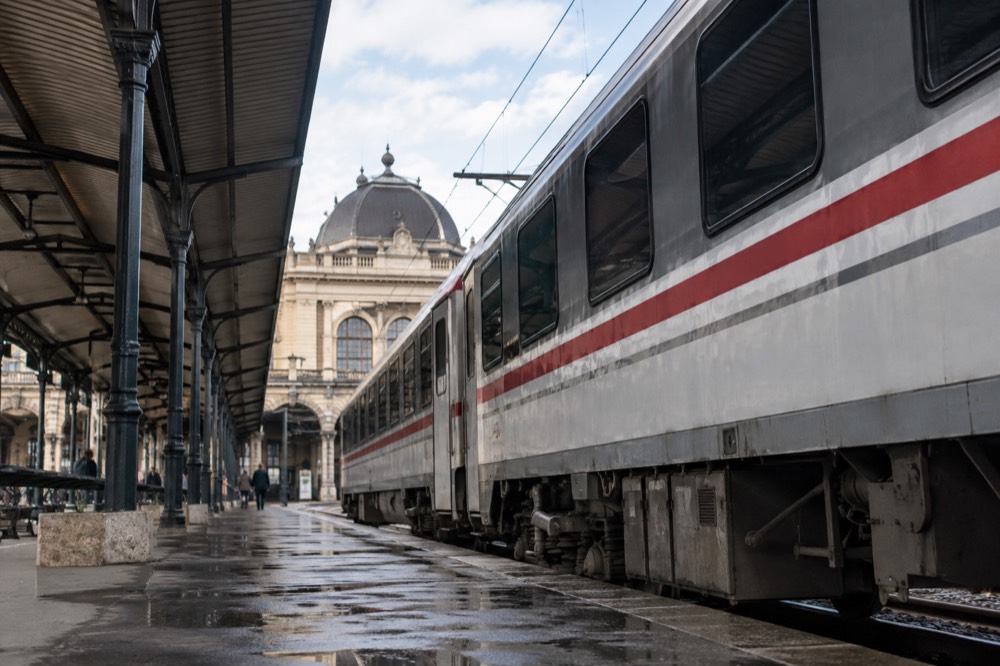
The route itself crosses the Slovenian hills and the Sava valley, pleasant rather than spectacular, and the arrival into Zagreb puts you within a short tram or walk of Ban Jelačić Square. For anyone weighing the two capitals against each other, the Ljubljana or Zagreb comparison is the dedicated write-up, and the general Zagreb guide covers what to do once you are there.
There is also a guided option if you would rather not negotiate the rail day yourself. The Zagreb Full-Day Trip runs 8 to 9 hours from Ljubljana, from $293.19, and it is a genuinely new listing without a rating yet, which is worth knowing before you book.
| Route fact | Detail |
|---|---|
| Border | None; both countries in Schengen since Croatia joined 1 January 2023 |
| Currency | Euro on both sides |
| Passports | Not checked for internal Schengen travel |
| Typical use | One or two days in Zagreb, or a onward leg toward Belgrade |
| Alternative | Guided full-day trip from Ljubljana, 8 to 9 hours |
Which International Routes Are Worth the Rail Seat?
Vienna, Venice and Trieste are all reachable from Ljubljana by rail, usually with one change, and all three sit inside Schengen so the crossings are frictionless. Trieste is the shortest and most underrated, Vienna is the long-haul classic through the Alps, and Venice is the route where the scenery and the destination both justify the effort. None of these are journeys to improvise on the day: the international connections are thin, and a missed train can mean a long wait.
Trieste is the sleeper pick. It is close, it is Italian, it has a proper café culture and a seafront, and the Ljubljana to Trieste guide makes the case that it is the easiest foreign-city day out from the Slovenian capital. Venice is the headline route, covered in the Ljubljana to Venice guide, and it is the one where booking ahead genuinely matters because seats on the connecting legs sell out in high season.
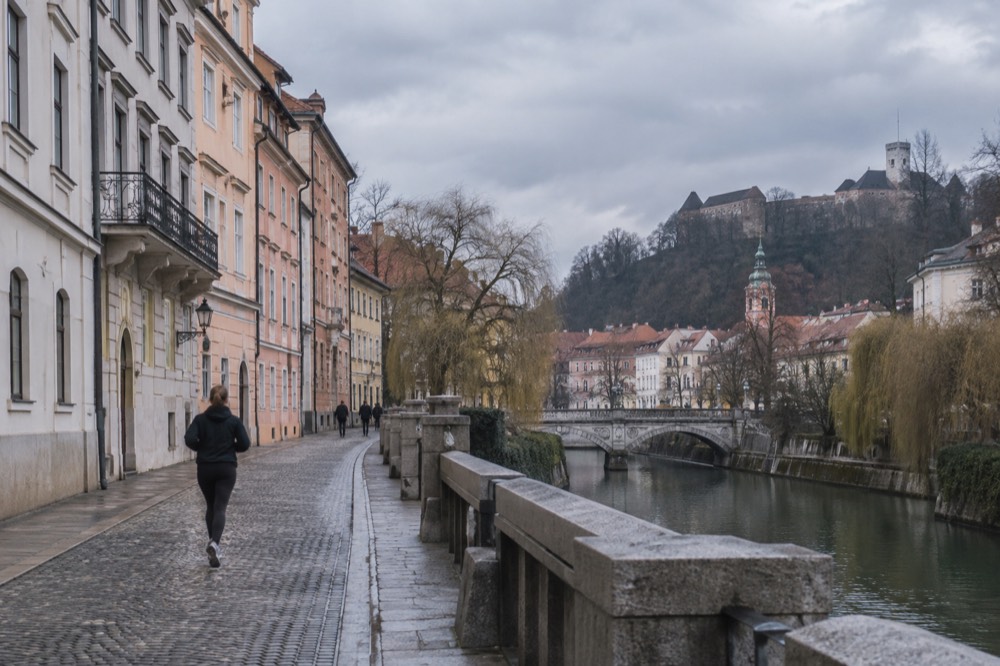
Vienna, via the Austrian connection, is the longest of the three and the most scenic on its northern stretches. The dedicated Ljubljana to Vienna write-up covers it, and the general rule for all three is the same: check the last return connection before committing to a day trip, because an international day return from Ljubljana is usually tighter than it looks on the departure board.
| Route | Border | Character | Plan it with |
|---|---|---|---|
| Ljubljana to Trieste | None | Short, coastal, café city | The Ljubljana to Trieste guide |
| Ljubljana to Venice | None | Scenic, high demand, book ahead | The Ljubljana to Venice guide |
| Ljubljana to Vienna | None | Long-haul through the Alps | The Ljubljana to Vienna guide |
| Ljubljana to Zagreb | None | Two-capital run, easiest extension | The Ljubljana to Zagreb guide |
For anyone whose real interest is where the rails go inside Slovenia rather than out of it, the where do Ljubljana trains go write-up lists the domestic network stop by stop, and the most scenic train ride in Slovenia piece argues the case for the Bohinj-to-Soča stretch as the country's best hour on rails.
Do You Need to Book Slovenian Trains in Advance?
For domestic travel, no: Slovenian regional trains rarely sell out and tickets are normally bought at the station or on the day without drama. For international routes, yes, or at least strongly advised: the cross-border connections run only a few times daily, seats are limited, and the Vienna and Venice legs in particular can be full in summer. The rule of thumb this desk gives travellers is book the international legs, wing the domestic ones, and always check the last departure of the day before planning a return.
The asymmetry surprises people who have used Swiss or Austrian railways, where frequency makes booking irrelevant. Slovenia's network is thin enough that a single missed connection reshapes a day, and thin enough that the scenic branch lines, the Bohinj stretch above all, run only a handful of times daily in each direction.
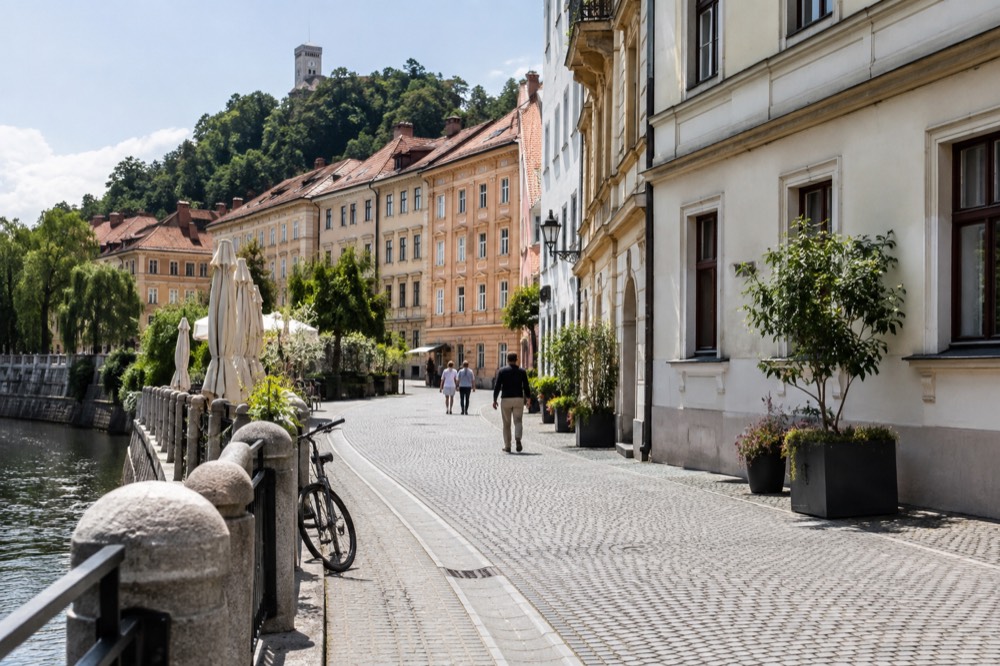
One practical note on fares: this site could not verify a published Ljubljana-to-Bled fare or a Ljubljana-to-Zagreb fare in any form it is willing to print, because the rail operator's own fare tables are not reliably readable to automated checks. Rather than guess a number, the advice is to treat fares as small: domestic Slovenian rail pricing is modest by Western European standards, and the fare is rarely the reason to change plans. The Ljubljana prices guide puts rail costs in the context of everything else you will spend in a day.
There is one seasonal wrinkle worth flagging. Ljubljana sits in a basin, and ARSO's climate normals record that the city averages 91.2 days with fog a year, with September and October at 12.4 fog days each, level with December and above January, figures published for the 1971-2000 period. An early-morning rail departure in autumn can start in grey and climb into sunshine as the line gains altitude toward Lesce, which is either a disappointment or a bonus depending on which side of the window you favour.
What Does Ljubljana's Main Station Offer Arriving Travellers?
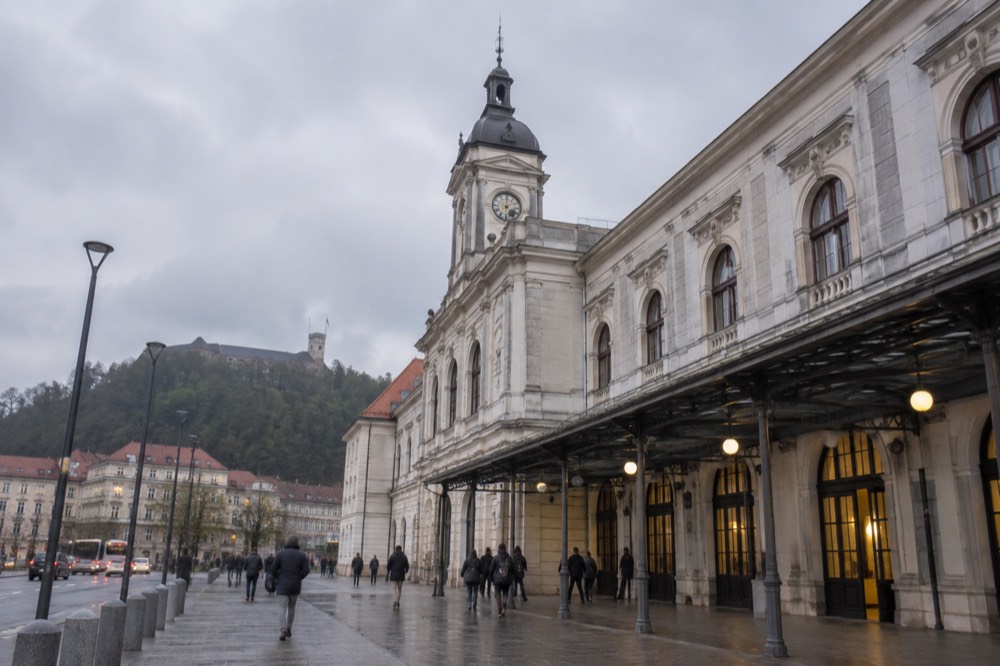
Ljubljana's station, Ljubljana Glavna, is a compact terminal with ticket counters, a left-luggage facility, cafés and an underpass to the bus station next door, which is the more useful half of the complex for most day trips. The centre is a ten minute walk away, and the historic core beyond it is pedestrianised, so you arrive on foot into a car-free centre, the fact that most reshapes a visitor's first hour.
The station's real function for a visitor is as a transfer hub rather than a destination. The adjacent bus station is where the coaches to Bled, Piran and the karst actually leave from, and the Ljubljana bus station guide explains that side of the complex. If your plan involves the karst, the honest advice is that the train is the weak link: Postojna's station is not at the cave, and no rail option reaches Predjama at all.
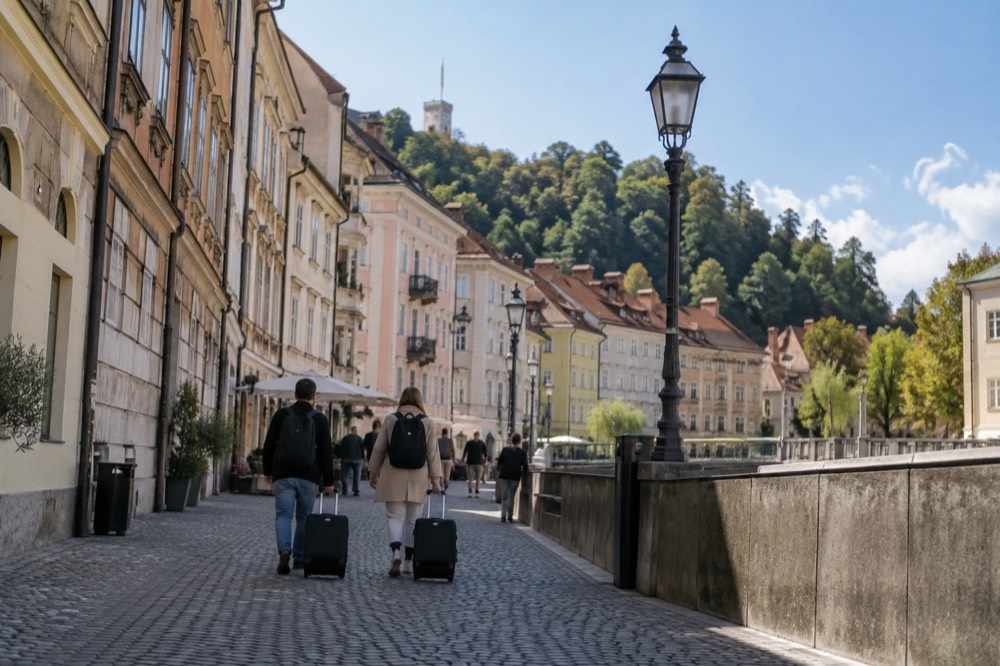
That is the specific gap the guided tours exist to fill. The Cave and Castle Tickets, 6 Hours trip from Ljubljana, rated 4.8 from 2,802 reviews and from $132, handles Postojna Cave and Predjama Castle in one six-hour day, and the Postojna Cave and Predjama, 5h 30m version, rated 4.9 from 474 reviews, from $80, does the same pair faster.
The booking question for the caves is a real one, because the cave's official timetable is a month-by-month grid with departures rising through summer, and a tour that pre-books your slot removes the one thing that can go wrong on a karst day. For the city's own hilltop sight, the do-you-need-to-book question is answered separately in the castle write-up.
When Is the Train Not the Best Choice?
The train loses to the coach and the guided tour for the karst, the coast and the high Alps: Postojna Cave, Predjama Castle, the Škocjan Caves, Piran and the core of Triglav National Park are all either unreachable or awkward by rail, and the branch lines that do exist run too rarely for a relaxed day trip. The train wins for Zagreb, Trieste, Vienna, Venice, Bohinj and, with the station-choice caveat, Bled. Everything else in Slovenia is bus or tour country.
The karst is the clearest case. Postojna Cave holds a steady 10 C year round, which makes it the reliable answer for a rainy or a heatwave day, but the rail-plus-walk logistics eat the advantage. A cave that takes about 1 hour 30 minutes to tour, on a route of 3.7 km travelled partly [by train](https://omio.tpk.ro/exV6rGgH) inside the mountain, does not pair well with an infrequent rail timetable outside it.
The coast is similar: no station in Piran, and the Piran at Sunset, Historic Walk tour, 6 hours, rated 4.6 from 169 reviews, from $86, exists precisely because the rail map ends before the sea does. For the Alps, the Full-Day Triglav National Park Tour, 12 hours, rated 4.9 from 205 reviews, from $141.97, covers ground the branch lines touch only at their edges.
| Sight | Rail access | Best option |
|---|---|---|
| Postojna Cave | Station exists, cave is further out | Guided tour or coach |
| Predjama Castle | None | Guided tour or coach |
| Škocjan Caves | None | Guided tour or coach |
| Piran | None | Coach or guided tour |
| Lake Bled | Two stations, 4 km and 1.5 km out | Train works, tour is easier |
| Bohinj | Station near the lake | Train genuinely wins |
| Zagreb, Trieste, Vienna, Venice | Direct or one change | Train genuinely wins |
For the days you stay in the city itself, the free walking tours are the natural companion to a rail-heavy itinerary, because they cost nothing up front and fill the gaps between departures. The Ljubljana Unveiled walk on GuruWalk, about two hours, rated 4.91 from 1,496 reviews, is the most-reviewed of them, and the free walking tour guide compares all eight.
The same logic applies to Bled for travellers who want the lake without studying two station timetables. The Lake Bled and Castle trip, 6 hours, rated 4.7 from 1,641 reviews, from $86, includes the castle entry that a rail day trip would leave you to buy separately at 19.00 EUR, and it runs daily regardless of branch-line frequency.
And for the evening before an early train, the free night walk on GuruWalk, rated 4.91 from 470 reviews, fills ninety minutes with the corners daytime tours skip, at no upfront cost.
Whichever way you split your days, the split itself is the planning decision: rail for the cities and the big lakes, tours and coaches for the karst, the coast and the high mountains, and the free walks for everything in between.
Common Questions About Trains from Ljubljana
Can you get from Ljubljana to Lake Bled by train?
Yes, but the station matters. Lesce-Bled, on the main line, is 4 km from the lake, while Bled Jezero, on the Bohinj branch, is 1.5 km from Bled centre. Check which station your ticket names before you board, and check the branch-line frequency, because the main line runs far more trains.
Are there passport checks on trains from Ljubljana?
No. Slovenia has been in the Schengen area since 21 December 2007, with air checks lifted on 30 March 2008, and Croatia joined Schengen on 1 January 2023. Routes to Zagreb, Trieste, Vienna and Venice are all internal Schengen travel with no routine border checks.
Do you need to change money to travel from Ljubljana by train?
Not to Croatia, Italy or Austria. Slovenia adopted the euro on 1 January 2007, and Croatia adopted it on 1 January 2023, so every international rail route from Ljubljana except those heading further east uses the euro.
Is there a train from Ljubljana to Postojna Cave?
Postojna has a railway station, but the cave is not at the station, so you need a connecting bus, taxi or a long walk to complete the trip, and Predjama Castle has no rail link at all. Most visitors take a guided tour from Ljubljana, which bundles the cave, the castle and the transfers into one booking.
Should you book Slovenian trains in advance?
Domestic trains rarely sell out and can be bought on the day. International connections run only a few times daily with limited seats, so the Vienna and Venice legs in particular are worth booking ahead in high season.
Which is the most scenic train ride from Ljubljana?
The stretch from Bohinj through the Bohinj tunnel down to the Soča side is widely regarded as the country's best rail scenery, and it connects to the Soča Valley, which most visitors reach as part of a longer day trip because the branch line runs infrequently.