Which Is Nicer, Ljubljana or Zagreb?
An honest comparison of Ljubljana and Zagreb for visitors: size, cost, atmosphere, day trips and which city suits your trip better.
Which Is Nicer, Ljubljana or Zagreb?
For most short-trip visitors, Ljubljana is the nicer of the two, and it is not a close call. It is compact, car-free at its centre and sits within an hour of Lake Bled, Postojna Cave and the Julian Alps, so two nights can carry three great days. Zagreb is the bigger, more metropolitan option with stronger café culture and larger museums, and it rewards a longer, slower visit. Two or three days: choose Ljubljana. Five days and a real city: Zagreb earns its place.
That verdict comes with an honesty note. This site researches Slovenia in depth and Croatia only at the edges, so the Zagreb side of this comparison is deliberately thinner on numbers. Where a Zagreb figure is not verifiable from a primary source, it stays out of the article rather than being guessed. What follows is a comparison built on what can actually be sourced, plus the structural differences between the two capitals that no price list changes.
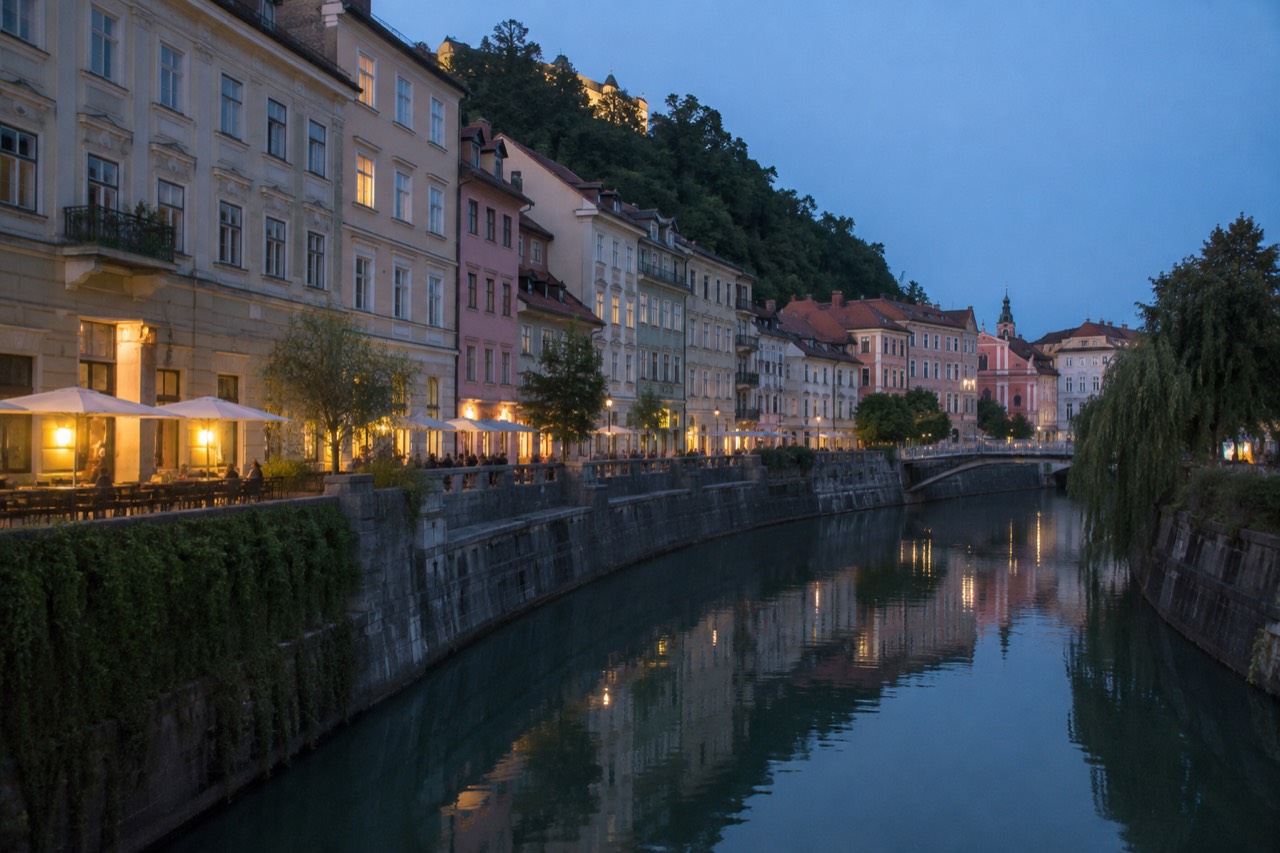
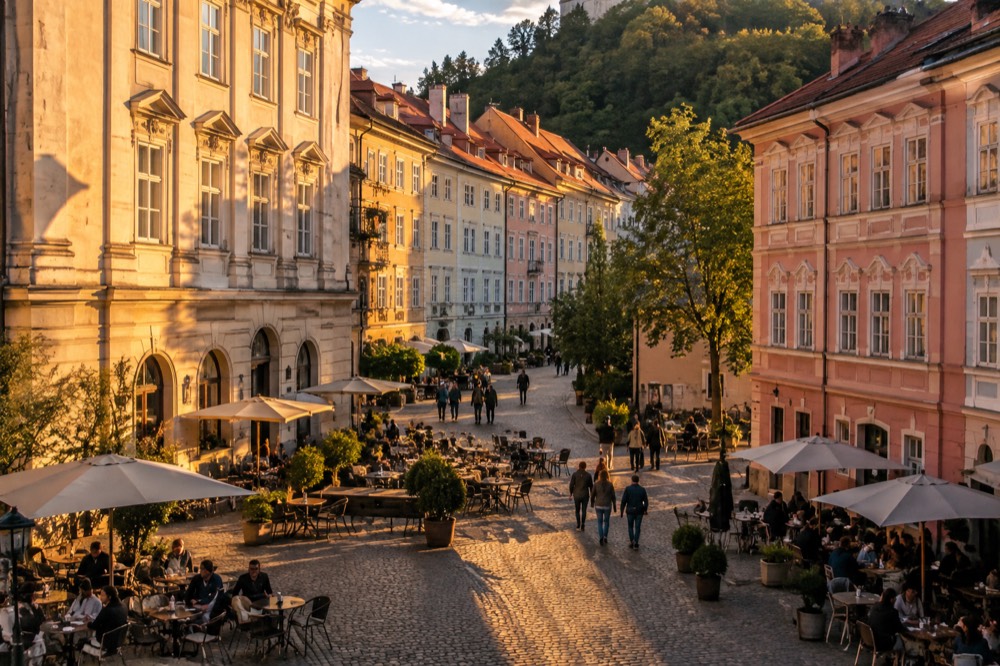
Start with what the two cities are. Ljubljana is a small capital of about 293,244 people in the settlement itself, reported by the Slovenian statistics office, and it behaves like a large town. The historic centre is a pedestrian zone of roughly 20 hectares, progressively closed to traffic since 2007, which means the core experience is walking, riverside terraces and a castle hill at one end. Zagreb is Croatia's capital, several times larger, split between a hilly Upper Town and a flat, Austro-Hungarian lower centre, with trams running through the middle of it. One is a walkable bowl; the other is a working Central European city.
There is a practical point that makes the comparison easier than it looks: since 1 January 2023 Croatia has been in both the eurozone and the Schengen area, so travelling between the two cities involves no border checks and no currency change. Slovenia adopted the euro in 2007 and joined Schengen in December 2007, with air checks following in March 2008. You can do both cities on one trip with one wallet, which is exactly what a lot of visitors now do.
If you are planning around Slovenia at all, the Ljubljana vs Zagreb guide breaks the two-city itinerary down day by day, and getting from Ljubljana to Zagreb covers the transfer options in detail.
Is Ljubljana or Zagreb Bigger?
Zagreb is much bigger, and the gap defines the experience more than any attraction list. Zagreb is a capital with a tram network, a proper rush hour and a metropolitan spread; Ljubljana counts about 293,244 people in the settlement itself and you can walk across its entire centre in twenty minutes. Bigger means more museums and more nightlife in Zagreb. Smaller means nothing in Ljubljana is more than fifteen minutes from anything else, which for a short visit is the more valuable quality.
The honest way to frame it: Zagreb offers depth, Ljubljana offers density. In Zagreb you choose a district and spend half a day in it, because the city rewards settling in. In Ljubljana the whole point is that you do not have to choose. The castle, the Triple Bridge, Prešeren Square, the Central Market and the Metelkova autonomous cultural zone all sit within an easy walk of each other, and the Ljubljanica river runs through the middle of it all with boat departures from the Breg and Ribji trg piers.
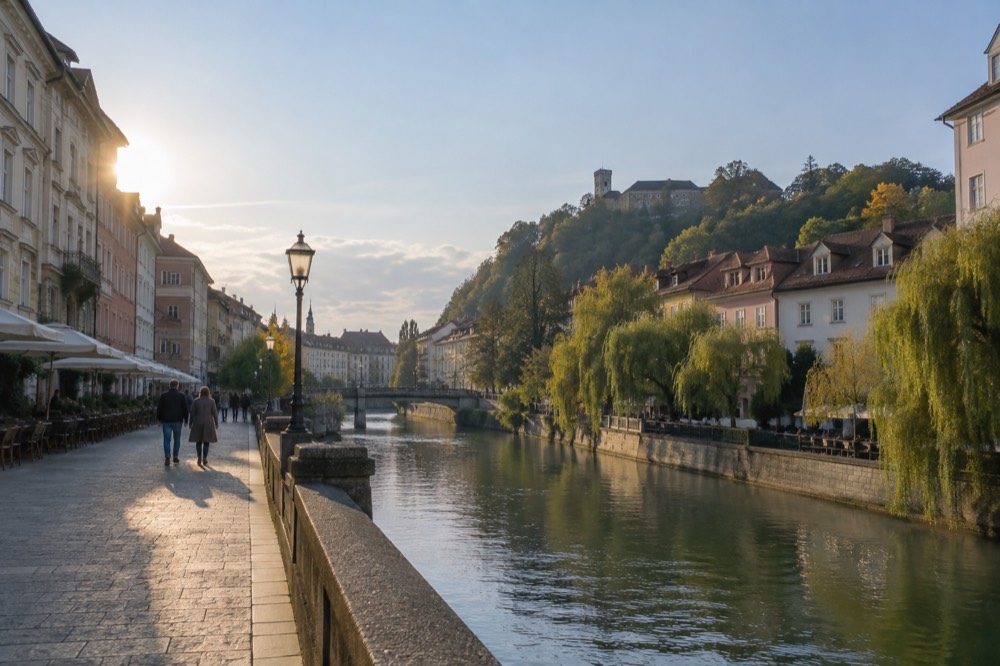
Density also changes how a visit feels in the evening. Ljubljana's centre concentrates its restaurants and bars along the river and two or three streets, so the city feels lively on a Tuesday in October. A larger capital spreads the same energy across more ground and can feel quieter street by street. Visitors who describe Ljubljana as "nicer" are usually describing exactly this: not more things to do, but less distance between all of them.
The numbers back the two-night pattern. The Slovenian statistics office recorded 1,392,728 tourist arrivals and 2,844,129 overnight stays in the Municipality of Ljubljana in 2025, which works out to an average stay of about 2.04 nights. Ljubljana is, arithmetically, a two-night city, and it is built to be enjoyed at that scale. A useful companion read is how many days you need in Ljubljana.
If you are leaning Ljubljana, these are the three experiences that consistently define a short visit, from the cave day trip to the lake to the free walk that orients you on day one.
Is Ljubljana or Zagreb Cheaper?
Neither city is expensive by Western European standards, and the difference between them is smaller than the gap either shows against Vienna or Milan. In Ljubljana the verifiable costs are low and published: a castle ticket with the funicular is 19.00 EUR, a river cruise about 15 EUR, a city bus ride 1.50 EUR and the tourist tax 3.13 EUR per person per night. Zagreb's daily costs are broadly comparable. The real money difference is day trips, where Ljubljana's best excursions are closer and cheaper to run.
Here is what a day in Ljubljana actually costs, from figures published by the operators and the city:
| Item | Price | Notes |
|---|---|---|
| Ljubljana Castle ticket with funicular, adult | 19.00 EUR | Covers the Viewing Tower, exhibitions and the funicular both ways |
| Funicular return only, adult | 6.00 EUR | Castle grounds themselves are free to enter |
| Ljubljanica river cruise, adult | 15 EUR | 50 minutes, hourly departures in season |
| City bus single, zone 1 | 1.50 EUR | 90 minutes including transfers; cash is not accepted on board |
| Tourist tax | 3.13 EUR per night | Per person, includes the promotion surcharge |
| Ljubljana Card, 24 hours | 41.00 EUR | Covers funicular, cruise, buses, a walking tour and 30+ museums |
Two of those rows deserve comment. The no-cash rule on city buses catches visitors out: you pay with an Urbana card or a contactless bank card, never notes. And the card only pays off if you will genuinely use the cruise and the museums; the [Ljubljana Card guide](/guides/ljubljana-card/) runs the full maths. Zagreb's equivalents, a funicular ride up to the Upper Town and a tram ticket, are famously cheap, and no comparison pretending Ljubljana wins on every line item is honest.
Where the money genuinely diverges is the day-trip layer. From Ljubljana, Lake Bled is under an hour away by road and the small-group day tour starts from $57, while the Postojna Cave and Predjama Castle trip runs from $80. From Zagreb, the equivalent headline excursions are further afield and the travel time is built into the price. If your holiday is a city base plus daily excursions, Ljubljana is the cheaper engine for it. Other pages covering the same trip are gathered on Ljubljana Travel Guide.
Still weighing the two cities against your budget? The cave-and-castle day trip below is the most-booked excursion out of Ljubljana, and it can be booked with free cancellation, so it does not have to lock in your plans today.
Which Is Better for a Weekend, Ljubljana or Zagreb?
For a single weekend, Ljubljana is the better pick for most travellers, because its entire attraction set fits inside two days without rushing. Zagreb needs three or four days to stop feeling truncated: its Upper Town, its museum quarter and its café life unfold better with time. Ljubljana also has a weather caveat most guides miss: it sits in a basin that fogs in from autumn to spring, so a winter weekend can be grey at street level while the hills above are in sunshine.
Plan around that and the weekend works.
That fog fact is the one thing a first page of search results will not tell you, and it is worth internalising before you book dates.
A two-day Ljubljana weekend writes itself. Day one: the Old Town and the river in the morning, the castle by funicular in the afternoon, dinner along the Ljubljanica. Day two: a day trip, with Lake Bled the classic choice and Postojna Cave the reliable wet-weather one, since the caves hold roughly 10 C year round regardless of what the sky above is doing. The two-day Ljubljana itinerary lays it out hour by hour.
A Zagreb weekend, by contrast, tends to become a Zagreb half-visit: the Upper Town and the main square on day one, the Museum of Broken Relationships and the Dolac market on day two, and a nagging sense that the city had more to give. That is not a mark against Zagreb. It is simply a bigger animal, and the is 2 days in Ljubljana enough question has a cleaner answer than its Zagreb equivalent.
Which Has Better Day Trips, Ljubljana or Zagreb?
Ljubljana wins the day-trip contest decisively. Within roughly ninety minutes of the city you can reach Lake Bled, Postojna Cave, Predjama Castle, the UNESCO Škocjan Caves, the Soča Valley, the Piran coast and the Velika Planina herdsmen's village, and most of those are bookable as guided tours from the city centre. Zagreb's best day trips are real, but the standout, Plitvice Lakes, is a longer haul and the excursion network is thinner for a short stay. If day trips are half your holiday, base yourself in Ljubljana.
The comparison in table form:
| Ljubljana base | Zagreb base | |
|---|---|---|
| Headline day trip | Lake Bled, from $57 on a guided day tour | Plitvice Lakes, a longer round trip |
| Underground option | Postojna Cave and Predjama Castle, from $80, caves hold about 10 C year round | No comparable show cave within easy reach |
| Alpine option | Triglav National Park, Soča Valley, Velika Planina | Further and fewer organised options |
| Coastal option | Piran, about 9h 30m as a combined Škocjan and coast trip | Istria and the Adriatic, a longer drive |
| Free orientation | GuruWalk free walks, including a tips-based Old Town walk rated 4.91 from 1,496 reviews | Free walking tours exist but with less depth of coverage on this site |
The Postojna day is the one to single out, because it is the trip that best shows what a Ljubljana base buys you. The six-hour Cave and Castle Tickets tour is rated 4.8 across 2,802 reviews and runs from $132, pairing the 3.7 km cave system, partly travelled by the underground train, with the cliff-built Predjama Castle. Entry tickets for the cave bought separately are 34.90 EUR for an adult, with Predjama at 24.00 EUR, so the tour price is carrying transport and guiding on top. You can check availability on the tour page or Check availability on the operator's live listing.
The Bled day is the other pillar. The six-hour Lake Bled and Bled Castle trip runs from $86 and is rated 4.7 across 1,641 reviews, and Bled Castle's adult entry is 19.00 EUR if you go independently. The Lake Bled guide covers the lake itself, and Lake Bled or Lake Bohinj is the follow-up question most people end up asking. On the Zagreb side, Plitvice is genuinely magnificent and the Plitvice Lakes guide covers it, but one great distant park does not outweigh Ljubljana's half-dozen options inside ninety minutes.
One more Ljubljana habit worth importing into your planning: the national museums, including the National Gallery and the Slovenian Ethnographic Museum, are free on the first Sunday of every month, and most close on Monday. Time a weekend around that and a rainy Sunday turns into a free museum afternoon.
If you are still deciding, these three picks span the Ljubljana case: the cave day trip, the lake and castle day, and the free walk that costs nothing until you decide it was worth something.
Common Questions About Ljubljana or Zagreb
Which Is Nicer, Ljubljana Or Zagreb?
For most visitors on a short trip, Ljubljana: it is compact, pedestrianised at its centre and surrounded by better day trips. Zagreb is the pick for a longer, more metropolitan stay with bigger museums and café culture.
Is Ljubljana or Zagreb bigger?
Zagreb, by a wide margin. Ljubljana's settlement counts about 293,244 people and its centre is fully walkable in twenty minutes, while Zagreb is a tram-served capital several times the size.
Is Ljubljana or Zagreb cheaper?
Roughly comparable for daily costs. In Ljubljana, a castle ticket with funicular is 19.00 EUR, a river cruise about 15 EUR and a bus ride 1.50 EUR. The real saving is day trips, which are closer and cheaper from Ljubljana.
Which is better for a weekend, Ljubljana or Zagreb?
Ljubljana, because two days cover it completely. Zagreb needs three or four days to avoid feeling truncated. In winter, remember Ljubljana's basin fog and build in a trip uphill or to Bled.
Which has better day trips, Ljubljana or Zagreb?
Ljubljana. Lake Bled, Postojna Cave, Predjama Castle, Škocjan Caves, the Soča Valley and Piran all sit within about ninety minutes, most with guided tours from the city. Zagreb's Plitvice Lakes is superb but stands more alone.
Do you need a passport to travel between Ljubljana and Zagreb?
No routine border checks apply. Slovenia has been in the Schengen area since December 2007 and Croatia joined Schengen and the euro on 1 January 2023, so the route is internal on both counts, though carrying ID is still legally required.