What Is the Easiest Way to Get to Ljubljana?
The easiest way to reach Ljubljana depends on where you start: flying into Ljubljana Airport 26 km from the city, arriving by train, or driving into a pedestrianised centre. Here is how each option works.
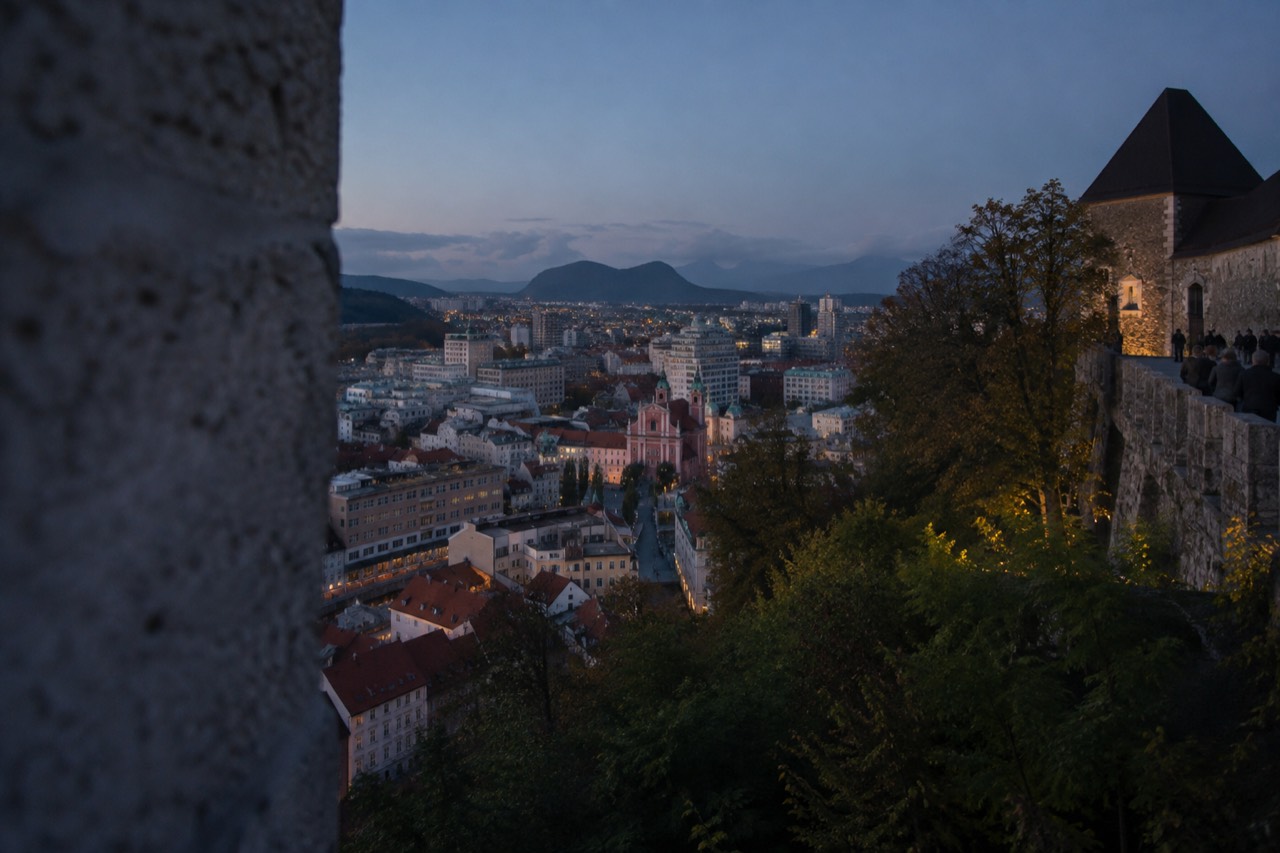
What Is the Easiest Way to Get to Ljubljana?
The easiest way to get to Ljubljana is to fly into Ljubljana Jože Pučnik Airport, about 26 km from the city, and take the airport bus or a pre-booked transfer into the centre. If you are already in central Europe, the train is often easier still: direct services connect Ljubljana to Vienna, Zagreb, Trieste and beyond, and no border checks apply because Slovenia is inside the Schengen area.
That is the short answer, but the honest version is that "easiest" changes with your starting point. A traveller flying from London faces a different decision from a traveller already in Venice or Graz, and the wrong choice can add hours. This page walks through the three main doors into the city: the airport, the railway and the road, then covers the last stretch from the terminal to the centre.
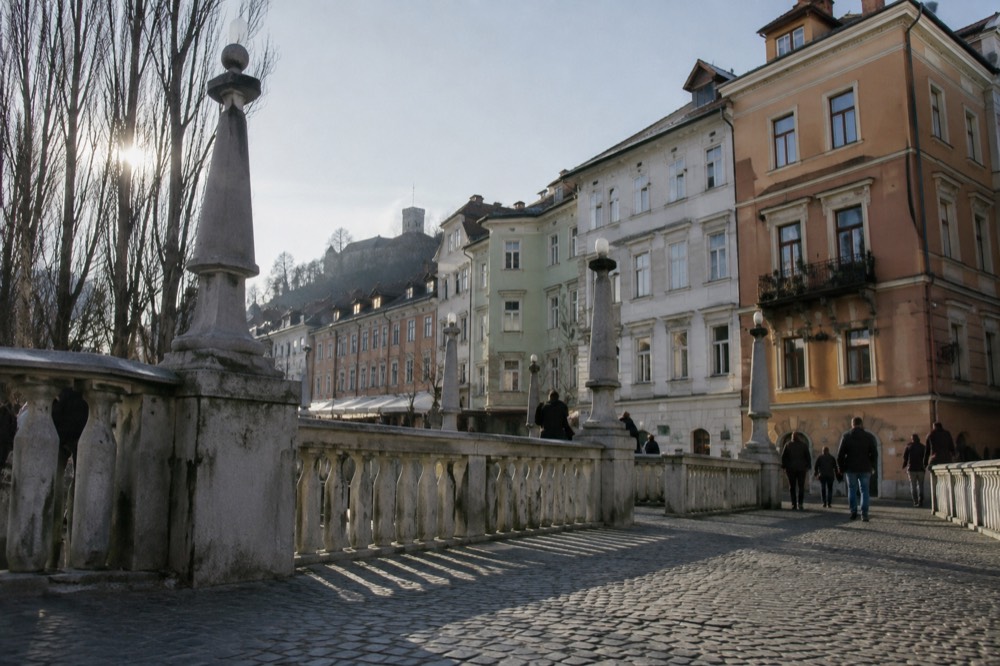
Two structural facts make Ljubljana unusually painless to arrive in. First, Slovenia is a member of the European Union, adopted the euro on 1 January 2007, and joined the Schengen area on 21 December 2007, with air border checks lifted on 30 March 2008. Coming from Italy, Austria, Hungary or Croatia, there is no routine border control and no currency to change, as the Slovenian government's own EU membership page sets out. Second, the city itself is compact: the historic centre is a pedestrianised zone of roughly 20 hectares, closed to general motor traffic, so once you arrive you walk almost everywhere.
For context on scale, the city is home to 293,244 people and recorded 1,392,728 tourist arrivals and 2,844,129 overnight stays in 2025. That works out to an average stay of about two nights, which tells you something useful: most visitors pass through quickly, so the arrival leg of the journey deserves a bit of planning rather than being improvised at the airport. Our Ljubljana Travel Guide covers what to do once you have landed; this page is purely about the getting there.
Which Airport Should You Fly Into?
Ljubljana Jože Pučnik Airport (LJU) at Brnik is the closest airport, about 26 km northwest of the city, and it is the easiest choice whenever a sensible flight exists. The alternatives are Trieste, Venice, Zagreb and Klagenfurt, all of which trade a cheaper or better-timed flight for a longer and less convenient transfer across a border.
LJU is a small airport, which is its main virtue. Distances inside the terminal are short, baggage appears quickly, and the bus and taxi ranks are a one-minute walk from arrivals. The trade-off is the flight network: the range of direct routes is modest, and fares can be higher than flying into a bigger hub nearby. Plenty of visitors weigh a cheap Venice or Zagreb flight against the extra two to three hours of cross-border ground travel that follows, and the maths only works if the fare gap is large.
If you are comparing options, our pages on flights to Ljubljana and which airport to use for Ljubljana go deeper on the routes and the transfer trade-offs. One thing worth saying plainly: the airport's own website is difficult to read for timetable and fare information, so treat any specific bus fare you see quoted on a forum with caution and confirm with the operator before relying on it. The bus between the airport and the city exists and runs regularly, but exact times and prices should be checked rather than assumed.
Once you are in the city, the arrival question inverts: Ljubljana is an excellent base for day trips, and the two most popular are Postojna Cave with Predjama Castle, and Lake Bled. Both are covered by guided tours that leave from central meeting points, which removes the need to [rent a car](https://discovercars.tpk.ro/laYIo9hK) at the airport at all. The cave and castle trip runs six hours and is rated 4.8 from 2,802 reviews, while the Bled and Bled Castle trip also runs six hours, rated 4.7 from 1,641 reviews. For a first afternoon in the city itself, the free GuruWalk walk "Ljubljana Unveiled" is a tips-based two-hour orientation from Roman roots to the Dragon Bridge, rated 4.91 from 1,496 reviews.
Can You Get to Ljubljana by Train?
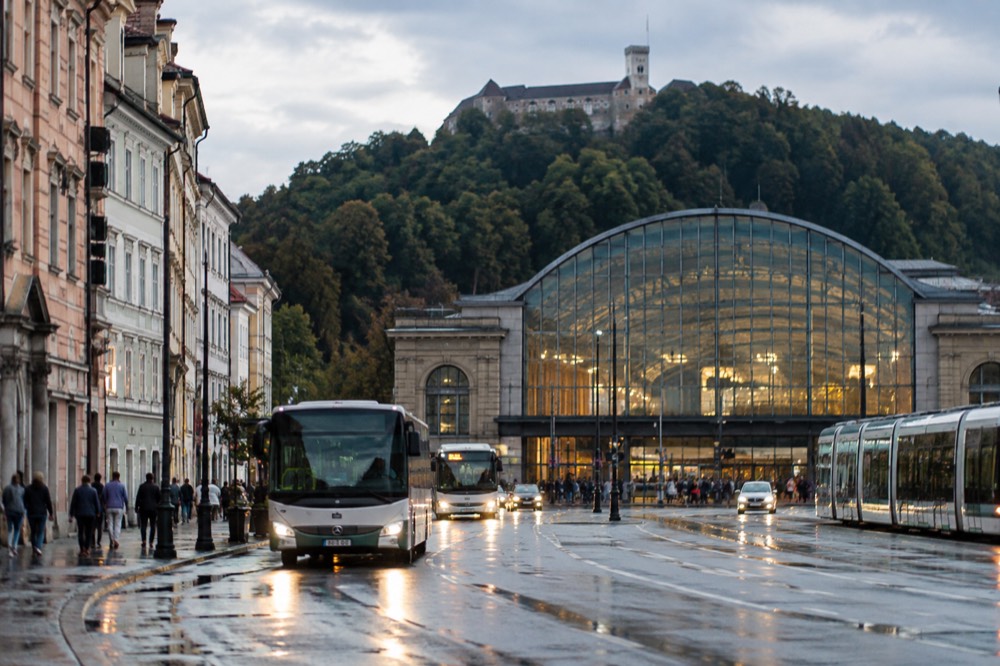
Yes, and for anyone already in central Europe the train is genuinely the easiest way in. Ljubljana's station sits at the northern edge of the centre, a ten-minute walk from Prešeren Square, and direct services connect the city with Vienna, Zagreb, Trieste, Prague and Budapest, among others. No border formalities apply on these routes because every neighbour is inside the Schengen area.
The station's position is the reason rail scores so highly here. You step off the train, walk out onto a street, and the old town begins almost immediately. There is no airport-style transfer to budget for, no 26 km leg, and no timetable dependency beyond the train itself. Our page on trains from Ljubljana lists the destinations and journey times in detail, and the train station guide covers facilities and onward connections.
The practical caveat is that Slovenian rail is mid-renovation. The national operator's website resists automated reading, so fares and some journey times are best checked at the counter or through a booking service rather than trusted from a blog. As a rule of thumb, the direct international services are comfortable and reliable, while domestic branch lines are slower than the bus equivalents. If your starting point has a direct train to Ljubljana, take it. If it does not, compare the connection time against a coach before committing.
Is Driving to Ljubljana a Good Idea?
Driving to Ljubljana is easy: Slovenia's motorways are modern, the country is small, and the drive from Vienna, Venice or Zagreb is under half a day. The complication is the last kilometre, because Ljubljana's historic centre is pedestrianised, so you cannot drive to your hotel door if it sits inside the old town.
The motorway network converges on the city from all four compass points, and the ring road delivers you to the edge of the centre quickly. The one administrative detail to sort before driving is the vignette, the electronic toll sticker required on Slovenian motorways, which you buy before entering the network. Miss it and the fine is steep. Crossing borders is frictionless in the ordinary case: Slovenia's land and sea Schengen checks were abolished in 2007, and Croatia joined Schengen and the euro on 1 January 2023, so the Zagreb and Istria routes are internal journeys too.
The real decision is whether you need the car once you arrive. Because the centre is pedestrianised, a car in Ljubljana is mostly a parked expense. It earns its keep if your itinerary runs outward: the karst caves, the Soča Valley, the coast at Piran and the alpine north are all easier with wheels, and public transport to some of them is thin. Our day trips guide lays out which destinations work by bus and train and which do not, and getting around Ljubljana covers the in-city alternatives, including the urban buses where cash is not accepted on board.
How Do You Get from the Airport Into the City?
The airport-to-centre leg comes down to three options: the airport bus, a pre-booked private transfer, or a taxi from the rank, covering the roughly 26 km from Brnik into Ljubljana. The bus is the cheapest, the transfer is the most predictable, and all three take a similar amount of time in normal traffic.
The bus runs between the airport and the main bus station, which sits beside the train station at the northern edge of the centre, so the drop-off point is already walkable for most old-town hotels. The airport's own site blocks detailed timetable reading, so check the operator's current times before you fly rather than relying on a fixed schedule quoted anywhere online. A pre-booked transfer costs more but removes every variable, which matters for early flights and late arrivals. Taxis are metered at the rank outside arrivals.
Here is how the main arrival routes compare once you are on the ground:
| Arrival route | Best for | The catch |
|---|---|---|
| Fly into LJU, bus or transfer to centre | Shortest total door-to-door time from most of Europe | Limited direct routes can mean higher fares |
| Fly into Trieste, Venice or Zagreb, transfer by road | Cheaper flights from some hubs | Adds two to three hours of cross-border ground travel |
| Direct train from Vienna, Zagreb, Trieste and others | Anyone already in central Europe | Fares best confirmed at the station or a booking service |
| Drive your own or a hire car | Itineraries that continue into the karst, the Alps or the coast | The pedestrianised centre means parking outside the old town |
One seasonal note that most arrival guides skip: Ljubljana sits in a basin, and ARSO's climate normals record 56 hours of sunshine in the whole of December in the city, against 120 hours at Kredarica at 2,514 m on Triglav, because winter inversions trap fog and low cloud over the basin while the high ground stays in sun. If you are arriving between October and March and the forecast looks grey, it is often the valley, not the whole country, and a day trip upward fixes it. That is also the season when the caves, which hold roughly the same temperature year round, become the reliable bad-weather plan.
A final practical detail worth knowing before you book anything: the city charges a tourist tax of 3.13 EUR per person per night, made up of a 2.50 EUR tax plus a 0.63 EUR promotion surcharge, with a half rate of 1.57 EUR for ages 7 to 18 and children under 7 exempt, as the tourist board's tax page explains. It is collected by your accommodation, not at any border or airport, so it does not affect how you travel in.
Once you have arrived, the question stops being transport and becomes time. The cave and castle day trip is the single most popular excursion from the city, and it is worth booking ahead for summer and any weekend.
Postojna Cave holds about 10 C year round and the guided route covers 3.7 km, partly by the cave train, so the trip works in any weather and any season. Predjama Castle is built into the cliff face beside it, and the two are usually visited together on a single six-hour outing from the city.
Common Questions About Getting to Ljubljana
What Is The Easiest Way To Get To Ljubljana?
Fly into Ljubljana Jože Pučnik Airport, about 26 km from the city, and take the airport bus or a pre-booked transfer into the centre. If you are already in central Europe, a direct train to Ljubljana's station is often easier, since the station is a ten-minute walk from the old town and no border checks apply within Schengen.
Which airport is closest to Ljubljana?
Ljubljana Jože Pučnik Airport (LJU) at Brnik, about 26 km northwest of the city. Trieste, Venice, Zagreb and Klagenfurt are the usual alternatives, but each adds hours of ground travel to reach Ljubljana.
Do I need to change money or clear a border entering Slovenia?
No. Slovenia is in the European Union, uses the euro, and is inside the Schengen area, so there are no routine border checks arriving from Italy, Austria, Hungary or Croatia, and no currency to change if you are coming from the eurozone.
Can I drive to my hotel in Ljubljana's old town?
Generally not. The historic centre is a pedestrianised zone of roughly 20 hectares, closed to general motor traffic, so hotels inside it are reached on foot from car parks or drop-off points at the edge of the zone.
Is the train or the bus better from the airport?
The airport bus runs to the main bus station beside the train station at the northern edge of the centre, walkable for most old-town hotels. Exact times and fares should be confirmed with the operator before you fly, as the airport's own site does not publish an easily readable timetable.