Which Cities Have Direct Trains to Ljubljana?
A practical guide to the cities with direct rail links into Ljubljana, how the cross-border routes work inside Schengen, and what to check before you book.
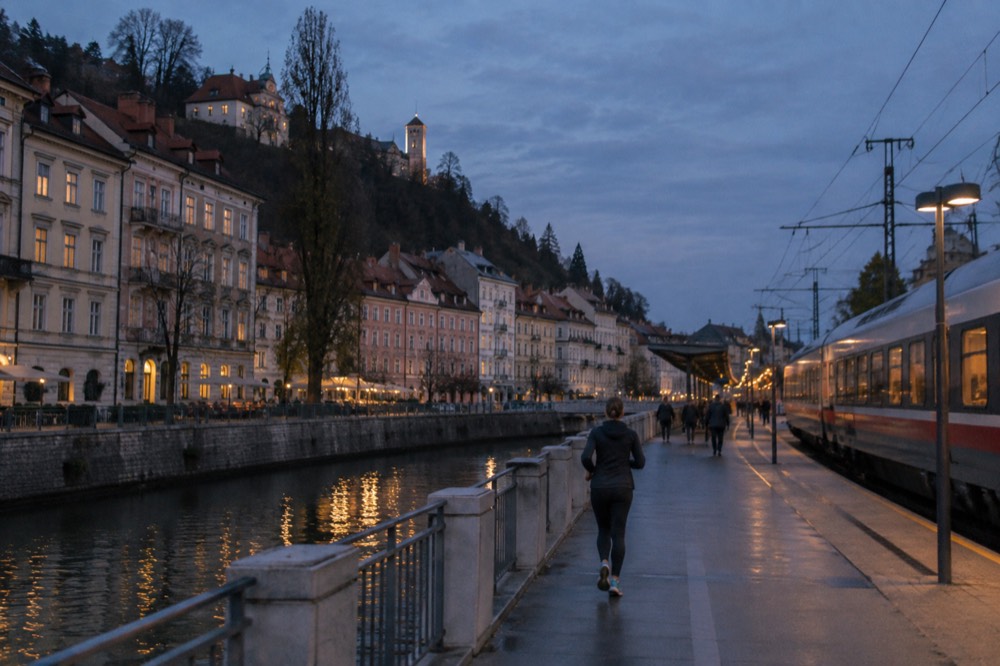
Which Cities Have Direct Trains to Ljubljana?
The cities you can typically reach Ljubljana from without a change are Zagreb, Trieste, Vienna, Munich, Budapest, Zurich and Venice, though the exact list shifts with each timetable year and some routes run only on certain days. Slovenia's rail network is small, so a handful of international corridors do the work, and frequencies are thin compared with the German or Italian systems. The practical rule is simple: name your starting city, check the current Slovenian Railways or national-operator timetable for your travel date, and book the seat rather than assuming a walk-up service exists. A route that appears on the map as a straight line may in reality be one departure a day, so the timetable always outranks geography here.
That answer comes with a caveat worth stating plainly. Direct does not mean frequent. On several of these corridors one or two trains a day is the whole service, and a missed connection can mean a long wait or an overnight stop. Weekend and midweek schedules differ, and cross-border routes in this part of Europe are adjusted more often than domestic ones, sometimes with little notice.
The good news is border friction, which used to be the annoying part of these journeys, has largely disappeared. Slovenia has been inside the Schengen area since land and sea checks were lifted on 21 December 2007, with air checks following on 30 March 2008, as the Slovenian government's own EU membership page sets out. Croatia joined Schengen and the euro on 1 January 2023, so even the Zagreb route is now an internal journey with no routine border checks and no currency to change. Slovenia itself adopted the euro on 1 January 2007, so a visitor arriving from anywhere in the eurozone steps off the train into a country that already uses their money.
Which Cities Sit on the Direct International Routes?
Zagreb, Vienna, Munich, Budapest, Zurich, Trieste and Venice are the anchors of the direct network, with Zagreb the most frequent neighbour and the long-distance routes running once or twice daily. The pattern reflects geography: Ljubljana is a junction city between the Balkans, the Alps and the Adriatic, so its international services fan out in several directions rather than concentrating on one corridor. Frequencies are modest, and on the longer routes the overnight or early-morning departure is often the only one. That makes the booking step genuinely consequential, because the alternative to the one train is usually not another train but a bus or a night in a hotel.
| Route direction | What to expect | Planning note |
|---|---|---|
| Zagreb, Croatia | The busiest international link, now an internal Schengen journey | No border checks and no currency change since Croatia joined Schengen and the euro on 1 January 2023 |
| Trieste and the Italian border | A short cross-border hop into the Adriatic port city | Services are limited and seasonal adjustments are common, check the date |
| Vienna and Austrian routes | Long-distance corridors into Central Europe | Thin frequencies, often one departure a day in each direction |
| Munich, Zurich, Budapest | The long-haul direct services, some running overnight | Book a seat in advance; walk-up availability is not guaranteed |
| Venice area | Seasonal and timetable-dependent links into the Veneto | Confirm the service runs on your specific travel date |
The honest framing for all of these is that the timetable, not the map, decides your trip. A city can be directly connected and still leave you waiting six hours if you miss the one morning train. Our where do Ljubljana trains go piece goes deeper on the domestic side, and the trains from Ljubljana guide covers the booking mechanics and what the station itself is like.
One more practical point: the Slovenian rail operator's website blocks some automated access, which is why this site does not publish a fare table for these routes. Fares and exact departure times should be read from the operator's own timetable for your travel date, and the earlier you check, the more options you will see.
Do You Pass Through Border Checks on the Way?
No, not on the routes from Croatia, Austria, Italy or Hungary, because Slovenia has been in the Schengen area since December 2007 and Croatia followed in January 2023, so all of Ljubljana's direct international trains arrive from inside the zone. There are no routine passport checks on these services and no currency exchange at the border. Slovenia uses the euro, adopted on 1 January 2007, and Croatia adopted it the same day it joined Schengen, so the Zagreb train is now as frictionless as a domestic service.
The two-date structure of Slovenia's own Schengen entry is the detail that gets written wrong elsewhere. Land and sea border checks were abolished on 21 December 2007, and internal air checks followed on 30 March 2008. For a rail traveller none of that history matters day to day, but it explains why the journey from Vienna or Trieste feels like a domestic ride: it has effectively been one for border purposes for well over a decade.
What you should still carry is your passport or ID card. Schengen rules allow occasional checks, and operators can ask for identification when booking international tickets regardless of the border situation. The absence of routine checks is not the absence of any checks, and a ticket inspector is within their rights to ask.
Since you will arrive with a full day ahead of you if you take a morning train, it is worth having a plan that does not depend on a car. The cave region southwest of the city is the classic first excursion, and the Postojna Cave and Predjama Castle tickets-and-tour option from Ljubljana, rated 4.8 from 2,802 reviews over six hours from $132, handles the karst in one organised block. You can read more about Postojna Cave for what the underground route involves.
The same trip also clears the practical question of how to reach a cave without a [hire car](https://discovercars.tpk.ro/laYIo9hK), which is the single most common headache for rail arrivals. Predjama Castle is perched in a cliff face 9 km from the cave, and a combined ticket-and-tour package removes both the transfer and the queueing in one move.
Can You Continue from Ljubljana to Lake Bled by Train?
Yes, Lake Bled is reachable by rail, but the station you choose matters: Bled Jezero station is 1.5 km from the centre while Lesce-Bled, the one most advice sends you to, is 4 km away on a different line. The two-station detail is genuinely useful and widely got wrong, because the names look interchangeable and the walking distance is not. Check which line your train uses before assuming you will step out beside the lake.
| Station | Distance from Bled centre | Why it matters |
|---|---|---|
| Bled Jezero | 1.5 km | The closer station, on the line that reaches the lake itself |
| Lesce-Bled | 4 km | The better-known interchange, but a 4 km walk or transfer to the lake |
Neither a coach fare nor a train fare for the Ljubljana to Bled leg can be published here, because no primary source for either could be verified. The journey and its options are covered in our Ljubljana to Lake Bled guide, and the train from Ljubljana to Lake Bled answer explains the station choice in full. If the timetable does not fit your arrival, the From Ljubljana: Trip to Lake Bled and Bled Castle day tour, six hours from $86 and rated 4.7 from 1,641 reviews, removes the connection risk entirely.
What Is Arriving at Ljubljana's Station Actually Like?
Ljubljana's main station sits just north of the historic centre, close enough that the walk into the pedestrianised old town takes only a few minutes, and the station-to-hotel leg rarely needs a car. The centre is closed to general motor traffic, a zone of roughly 20 hectares that has been progressively expanded since 2007, so most visitors arriving by train simply walk or take a bus across the river. This is the single most useful fact for anyone stepping off a long-distance service with luggage, because it means the last kilometre of an international journey is a stroll rather than a navigation problem.
For onward travel inside the city, the practical detail that catches visitors out is payment. City buses do not accept cash on board. A single ride in zone 1 costs 1.50 EUR for 90 minutes including transfers, the Urbana card itself costs 2.00 EUR, and contactless bank cards and mobile wallets are accepted on board. Cards and top-ups are sold at the LPP Passenger Centre on Slovenska cesta, at Urbanomat machines, kiosks, tourist information centres and post offices.
The station area is functional rather than beautiful, but it is close to everything that matters. The Ljubljana train station guide maps the facilities, and if your train arrives late, the Ljubljana walking tour options all start within the pedestrian zone. A first evening walk across the Triple Bridge or along the Ljubljanica is the standard way to end an arrival day, and nothing about it requires planning beyond comfortable shoes.
If you arrive with a spare morning before your return train, the free GuruWalk walk Ljubljana Unveiled, tips-based and rated 4.91 from 1,496 reviews, covers the Old Town from Roman roots to the Dragon Bridge in about two hours, which fits neatly between an arrival and a departure. This site, Ljubljana Travel Guide, exists precisely because the city rewards that kind of short, dense visit.
How Should You Book, and What Can Go Wrong?
Book the international leg in advance, verify the departure time against the operator's own timetable for your exact date, and never plan a tight connection off a once-daily train, because a single missed service can cost you a night. Thin frequencies are the real risk on this network, not the border or the price. A seat reservation on a cross-border train is cheap insurance against the one departure you actually needed being full.
A few habits make the difference. Check whether your route runs daily or only on certain days of the week, since several of the long-distance corridors do not. Confirm the arrival platform and any bus replacement sections, which appear on engineering weekends and are usually announced only on the operator's site. And if your journey ends in a late-evening arrival, book accommodation within walking distance of the centre in advance, because the pedestrianised old town is pleasant on foot and awkward by car at the best of times.
For the return leg, the same rules apply in reverse. Morning departures to the west and north are the ones that connect onward, and they leave from a station that is easy to reach but worth arriving at with time to spare. The travellers who enjoy this network are the ones who treat the timetable as a fixed structure to build around, not a menu to choose from on the day.
Common Questions About Direct Trains to Ljubljana
Which Cities Have Direct Trains To Ljubljana?
Zagreb, Trieste, Vienna, Munich, Budapest, Zurich and the Venice area are the cities typically served without a change, though frequencies are thin, some routes run only on certain days, and the exact list shifts with each timetable year. Check the operator's timetable for your travel date before building plans around a specific service.
Do you need a passport on trains to Ljubljana?
There are no routine border checks on direct trains arriving from inside the Schengen area, which covers every neighbouring country on these routes, including Croatia since 1 January 2023. Carry a passport or ID card anyway, because Schengen rules allow occasional checks and operators may ask for identification on international tickets.
Do you need to change money when arriving in Ljubljana by train?
Not if you are coming from the eurozone. Slovenia adopted the euro on 1 January 2007, and Croatia adopted it on 1 January 2023, so the trains from Zagreb, Vienna, Trieste and Budapest all arrive in a country that either already uses your currency or expects a simple exchange at an ordinary rate.
Can you take a train from Ljubljana station straight to Lake Bled?
Yes, but check which station you are heading for. Bled Jezero station is 1.5 km from Bled's centre, while Lesce-Bled, the better-known interchange, is 4 km away on a different line. The names look interchangeable and the walking distances are not.
How often do international trains run to Ljubljana?
Thinly. The Zagreb link is the most frequent international route, while several long-distance corridors run only once or twice a day, some overnight, and a few only on certain days of the week. Book a seat in advance rather than assuming walk-up availability.
Is Ljubljana's station far from the old town?
No. The main station sits just north of the historic centre, and the walk into the pedestrianised old town takes only a few minutes. The centre is closed to general motor traffic, so most rail arrivals simply walk or take a short bus ride across the river.