A Weekend in Ljubljana: The Perfect Two-Day City Break Plan
Two days is the sweet spot for Ljubljana: the centre is small, walkable and pedestrianised, and the city's own visitor numbers show most people stay about two nights. Here is how to spend them well.
Short answer
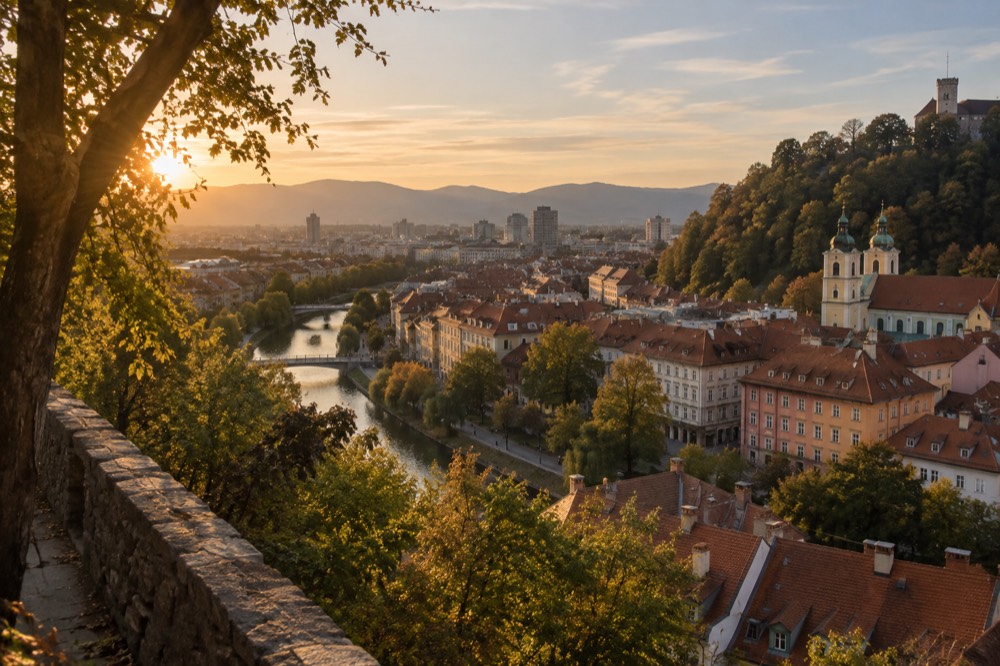
A weekend in Ljubljana works because the city is compact: day one covers the Old Town, Prešeren Square, the Triple Bridge and Ljubljana Castle, and day two adds either the museums and Metelkova or a day trip to Postojna Cave, Lake Bled or the coast. A 24-hour Ljubljana Card costs 41 EUR and includes the funicular, a river cruise and buses.
Ljubljana received 1,392,728 tourist arrivals in 2025, good for 2,844,129 overnight stays, which works out to an average stay of about 2.04 nights. The arithmetic says most visitors treat this as a weekend city, and the city rewards exactly that: the historic centre is a pedestrianised zone of roughly 20 hectares, everything worth seeing sits inside a 20-minute walk, and the castle hill rises above it all like a viewing platform someone thoughtfully placed in the middle. This plan assumes you arrive Friday evening or Saturday morning and leave Sunday afternoon, which is the shape of the typical visit.
How Many Days Do You Need for a Weekend in Ljubljana?
Two full days is the honest answer, and the city's own visitor statistics back it up. Ljubljana recorded 2,844,129 overnight stays against 1,392,728 arrivals in 2025, an average of about 2.04 nights per visitor, so a Saturday-to-Sunday plan matches how most people actually use the city. Two days covers the Old Town, the castle, the river, the markets and one day trip, with room left over for a long dinner rather than a rushed checklist.
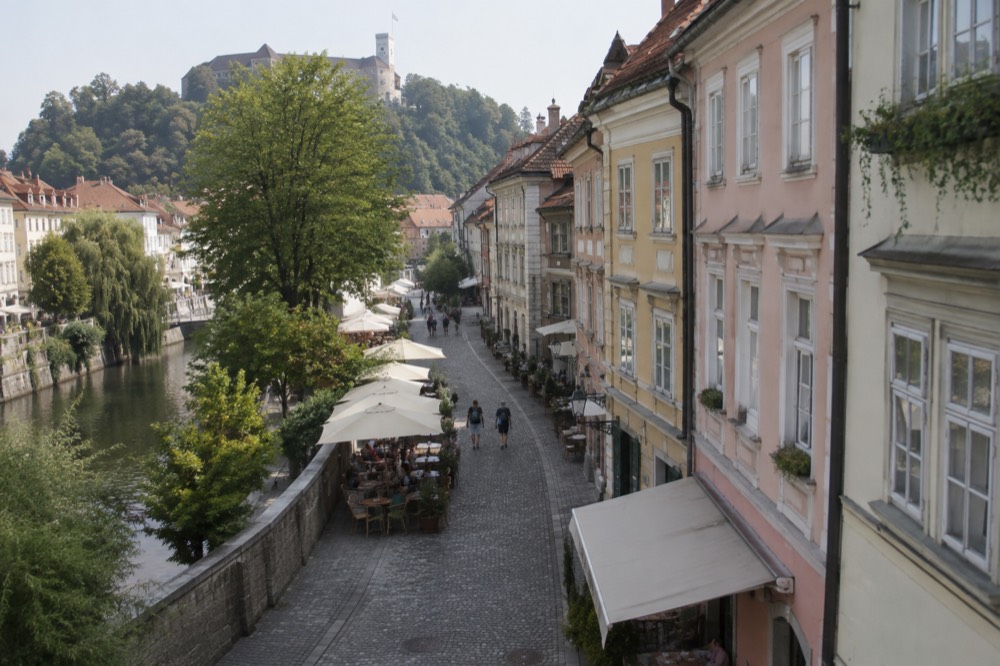
The reason two days is enough is geography. Prešeren Square, the Triple Bridge, the Cathedral, the Central Market and the riverfront promenades all sit within a few hundred metres of each other, and the whole core is closed to general traffic, expanded progressively since 2007 per the city's own mobility pages. You will walk almost everywhere, which removes the transit planning that eats half a weekend in bigger capitals.
What two days does not cover is Slovenia. Lake Bled, Postojna Cave, the Soča Valley and the Piran coast are all half-day to full-day trips, so the real decision is not how long to stay in Ljubljana but whether to give one of your two days away. This plan keeps day one entirely in the city and treats day two as a fork: museums and neighbourhoods, or one big excursion. If you have three days, the 3 days in Ljubljana plan adds the second fork without the squeeze.
What Should You Do on Day One in Ljubljana?
Start at Prešeren Square and the Triple Bridge, walk the riverfront to the Central Market, cross to the Old Town's lanes, then take the funicular up to Ljubljana Castle for the afternoon and stay for the view at dusk. A castle ticket with the funicular costs 19.00 EUR for an adult, the funicular alone is 3.30 EUR single or 6.00 EUR return, and the castle is open 365 days a year, 09:00 to 18:00 outside the May-to-September season.
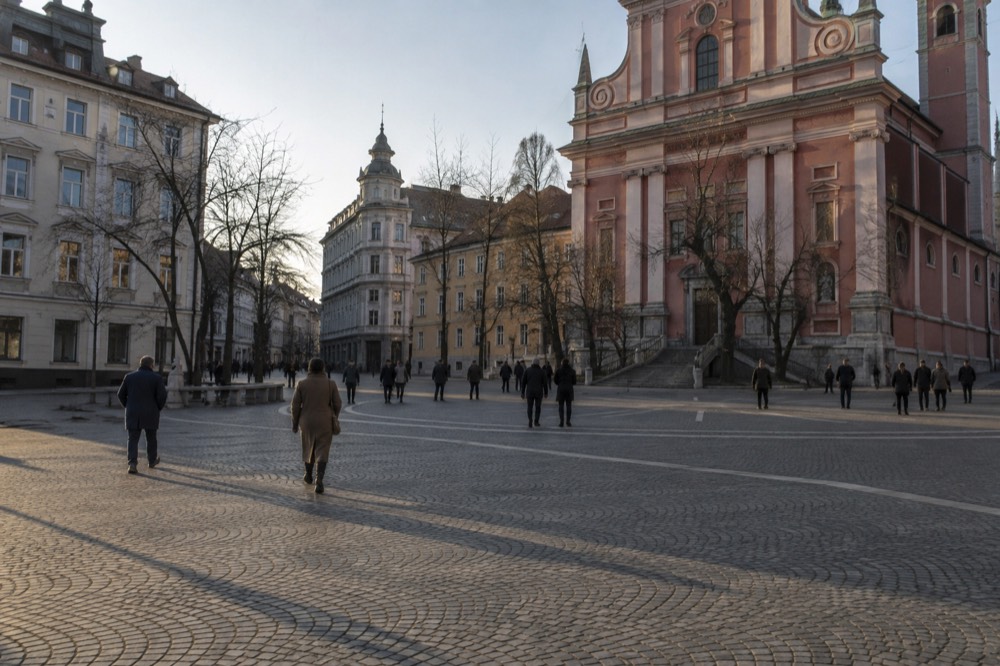
Morning belongs to the flat centre. Prešeren Square, with the Franciscan Church of the Annunciation facing it, is the natural starting point because every walking route in the city crosses it. From there, Plečnik's Triple Bridge leads into the Old Town, and the dragon bridge is two minutes east with the city's four dragons guarding its ends. Give the morning two unhurried hours; the distances are trivial and the point of Ljubljana is the pace.
Late morning, walk up to the Central Market. The outdoor stalls on Vodnikov and Pogačarjev trg run roughly 06:00 to 18:00 in summer, and the covered halls are open Monday to Friday 07:00 to 16:00 and Saturday 07:00 to 14:00, so a Saturday visit catches both. If your weekend falls on a Friday between March and November, check Odprta Kuhna, the Open Kitchen street-food market on Pogačarjev trg, which runs Fridays from 10:00 to 21:00 and later on warm days. Note the official wording: it runs "every sunny Friday", and it is cancelled in bad weather, so it is a fair-weather plan, not a guarantee.
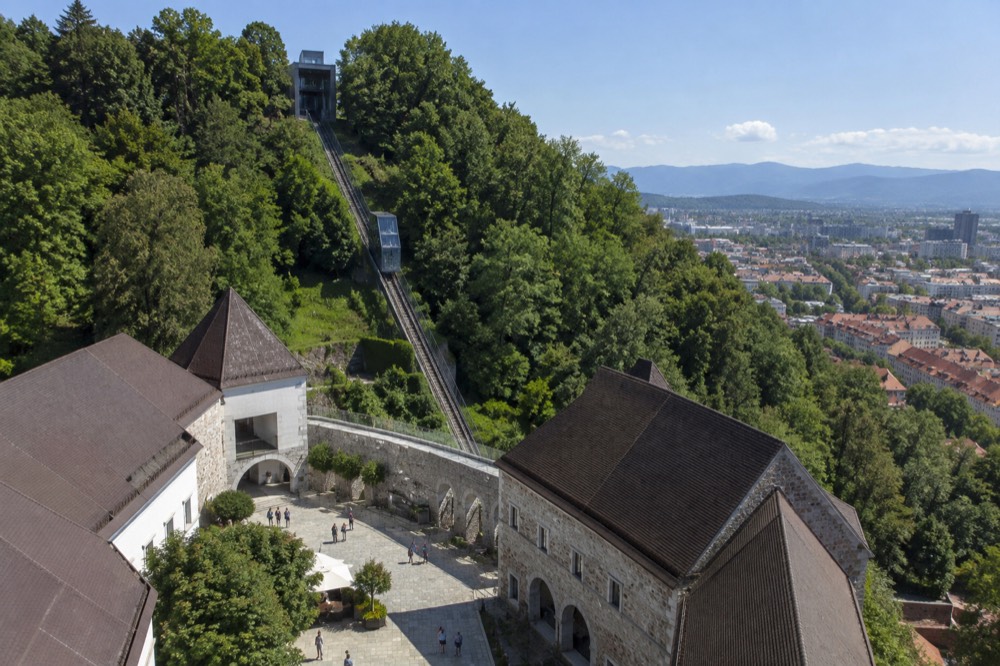
Afternoon is the castle. The funicular runs from near the market end of the Old Town, 09:00 to 22:00 from May to September and 09:00 to 19:00 the rest of the year, with the castle attractions open an hour less. The 19.00 EUR combined adult ticket covers the Viewing Tower, the Slovenian History exhibition, the Puppet Museum, the video mapping and the funicular both ways, per the official price list. If you would rather have a guide for the whole city first, a guided Old Town walk ending with the funicular ride up is a well-reviewed format, and the Ljubljana walking tour page compares the options.
Evening, come down off the hill and eat. The riverbank between the Triple Bridge and the Špica is where Ljubljana does its promenading, and the terrace tables fill from early evening in every season that is not actively raining. For where to aim, the where to eat in Ljubljana guide has the neighbourhood-by-neighbourhood breakdown, and the Ljubljana food tour page covers the tasting-walk format if you want the food explained rather than just served.
A first day works as a table because the timings are forgiving:
| Time | Activity | Cost note |
|---|---|---|
| 09:00-11:00 | Prešeren Square, Triple Bridge, riverfront, Dragon Bridge | Free |
| 11:00-12:30 | Central Market stalls and covered halls | Free to browse |
| 12:30-14:00 | Lunch in the Old Town | Roughly 12-20 EUR a head |
| 14:00-17:00 | Funicular and Ljubljana Castle | 19.00 EUR combined adult ticket |
| 17:00-18:30 | Viewing Tower and castle ramparts at dusk | Included in ticket |
| 19:00 onward | Dinner along the Ljubljanica | Roughly 25-40 EUR a head |
Should You Buy the Ljubljana Card for a Weekend?
For a packed two days, yes: the 24-hour card costs 41.00 EUR for adults and includes the castle funicular, the Ljubljanica river cruise, city buses, a guided walking tour, four hours of BicikeLJ bike share and one entry each to more than 30 museums and galleries. A castle ticket with funicular at 19.00 EUR plus a river cruise at about 15 EUR already totals roughly 34 EUR, so the card pays for itself after those two items and a single museum.
The card comes in 24, 48 and 72-hour tiers at 41.00, 49.00 and 54.00 EUR for adults, with child prices at 26.00, 31.00 and 35.00 EUR, per the official tourist board page. It auto-deactivates when the hours run out, and each included attraction allows one entry. For a weekend, the 48-hour tier is the natural fit if you arrive Saturday morning, and the arithmetic still works: the funicular, the cruise, a walking tour and two museums clear the 49.00 EUR price without trying.
Where the card stops being automatic is the relaxed weekend. If your plan is one castle visit, one long lunch and a lot of wandering, you will not hit the numbers, and paying as you go is cheaper. The [Ljubljana Card](/guides/ljubljana-card/) guide runs the full comparison, tier by tier, against the individual prices. One honest gap: whether the tourist train is included is not stated on the official page, so do not count it in your sums.
Where Should You Eat and Drink on Your First Evening?
Head for the riverfront between the Triple Bridge and the Špica, where the terrace concentration is highest, and aim for Slovenian staples rather than generic international menus. A three-course dinner with a glass of local wine typically runs 25 to 40 EUR per person, craft beer sits at pub prices rather than capital-city prices, and the Open Kitchen street-food market is the Friday option if your weekend starts then.
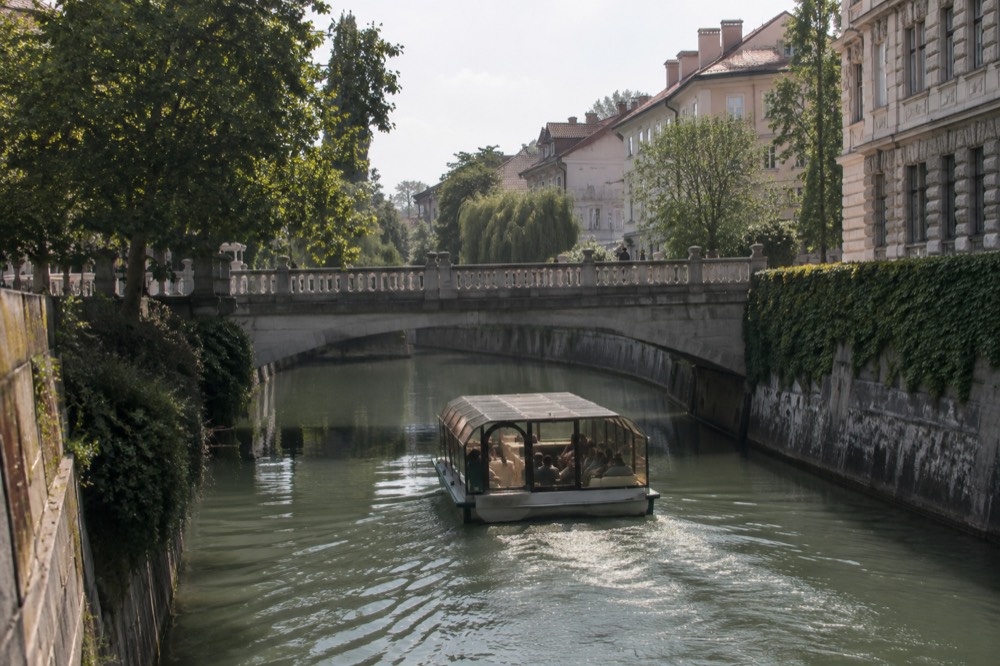
Ljubljana's evening economy runs on the Ljubljanica. Both banks from the Triple Bridge downriver are lined with tables, and the Ljubljanica river cruise is the pre-dinner move many people add: Barka's 50-minute cruise costs 15 EUR and departs from Breg, hourly from 11:00 with the last sailing around 19:00 in the May-to-September season. Doing the cruise at dusk, then eating, uses the same stretch of river twice in one evening without repeating yourself.
For the food itself, the honest advice is to book ahead on Saturday night, because the city's visitor volume means the good rooms fill. Slovenian staples worth ordering once include štrukelj, the rolled pastry that even has its own cooking class here, and anything pairing Teran or Refošk wine with pršut. If you want the city's food explained while you eat, the Slovenian cuisine walking tour with tastings runs four hours and is rated 4.8 across 552 reviews, from 104 US dollars; it is a half-evening commitment rather than a dinner replacement, so plan around it.
What Should You Do on Day Two of a Ljubljana Weekend?
Day two is the fork in the plan: either a full-day trip out of the city, or a museum-and-neighbourhood day inside it. If you stay in town, the National Gallery opens 10:00 to 18:00 Tuesday to Sunday at 10 EUR for the permanent collection, most state museums close on Mondays, and admission at the national institutions is free on the first Sunday of every month, which is worth building a weekend around if the dates align.
The stay-in-town version of Sunday morning starts with coffee, then a museum. The first-Sunday rule is the single best museum fact in the city: the National Museum of Slovenia, the National Gallery, MSUM and the Slovenian Ethnographic Museum each publish free first-Sunday admission in their own words, confirmed on four separate official sites. If your weekend straddles a first Sunday, the museum half-day costs nothing. The National Gallery guide has the details; otherwise the Plečnik House is the architect-lover's stop, 12 EUR including the guided tour, which runs hourly and is the only way in.
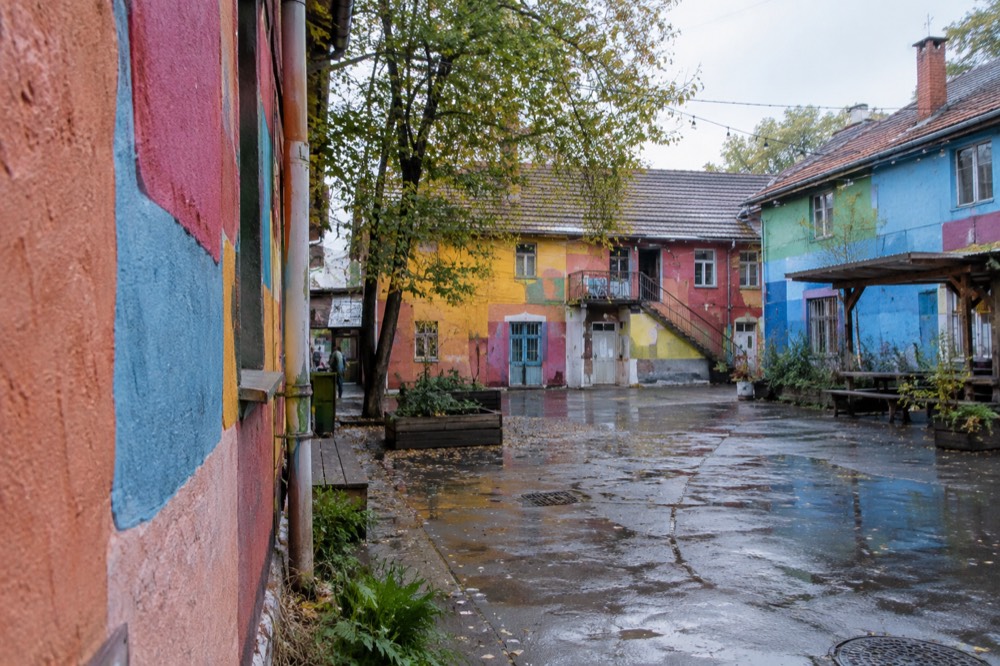
Afternoon, walk to Metelkova. The autonomous cultural centre in the former army barracks is free to enter, individual clubs set their own covers, and it is most active in the evenings, busiest Friday and Saturday, per the tourist board's own listing. Pair it with the Tivoli Park stroll back toward the centre and you have a gentle final afternoon that ends where it started, at the river.
The museum-and-neighbourhood day, laid out:
| Time | Activity | Cost note |
|---|---|---|
| 09:30-11:00 | Breakfast and the riverbank | 8-15 EUR |
| 11:00-13:00 | National Gallery or Plečnik House | 10 EUR or 12 EUR with guide |
| 13:00-14:30 | Lunch near the market halls | 12-20 EUR |
| 15:00-17:00 | Metelkova and Tivoli Park | Free |
| 17:00-19:00 | Final river circuit and dinner | 25-40 EUR |
Should You Spend Day Two on a Day Trip Instead?
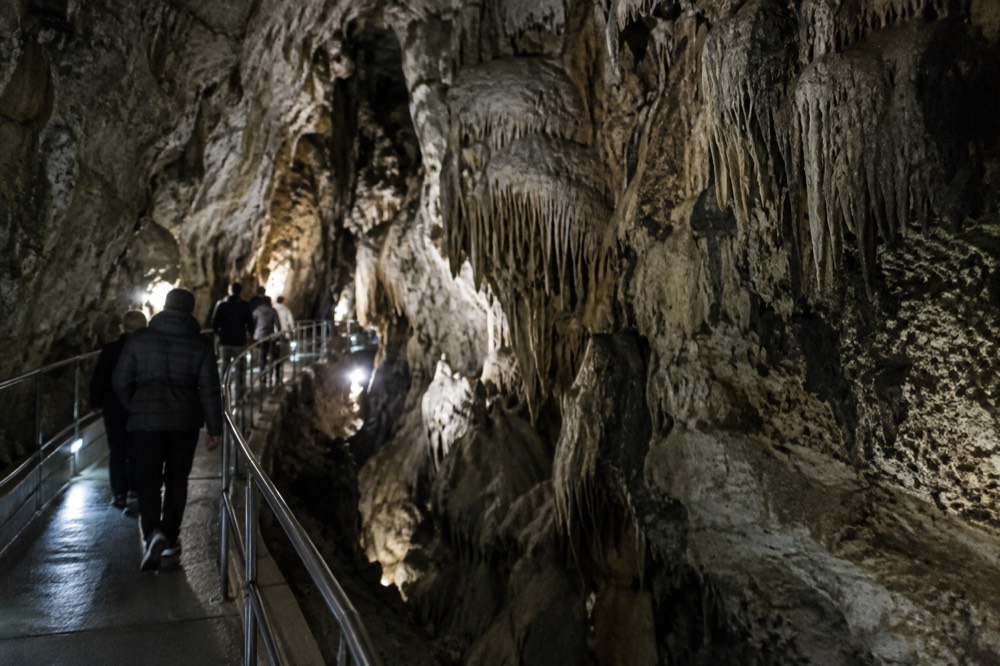
Yes, if this is your only weekend in Slovenia. Postojna Cave and Predjama Castle are the classic pairing, about an hour's drive away, with the cave holding a steady 10 C year round and tours lasting about 90 minutes over 3.7 km, partly by the underground train. Cave entry costs 34.90 EUR for adults and Predjama Castle 24.00 EUR separately, so a tour that bundles transport and tickets saves both the driving and the queueing.
The caves are this site's strongest day-trip recommendation for a weekend visitor because they are weatherproof. Caves hold roughly the same temperature year round, which makes them the reliable answer to rain, fog and heatwaves alike, and Postojna runs every day including holidays and in bad weather. The 10 C figure matters more than people expect: visitors arrive in August in shorts and are cold for 90 minutes, so bring a layer even in summer. Predjama Castle, built into a cliff face 123 metres up, is open year round and pairs naturally with the cave on the same road. More of these guides are collected on Ljubljana Travel Guide.
The bundled Cave and Castle day trip from Ljubljana runs six hours, is rated 4.8 across 2,802 reviews and starts from 132 US dollars, and it is the format that removes every logistics decision from your Sunday. If caves are not your thing, Lake Bled is the alternative: Bled Castle entry is 19.00 EUR, the pletna boat to the island is 20 EUR per person, and the Lake Bled day tour runs six hours from 57 US dollars with a 4.8 rating across 888 reviews. The day trips guide compares every option from the city, including the coast at Piran and the Soča Valley for a longer day.
One planning note if you drive yourself: Vintgar Gorge, the popular add-on near Bled, is open only between April and October and closes for winter, with the exact closing date depending on conditions, so check before building it into an autumn or spring weekend. The gorge costs 15.00 EUR for an adult and uses timed-entry slots, and the operator states it is most crowded between 10:00 and 13:00.
What Does a Weekend in Ljubljana Cost?
Budget roughly 150 to 250 EUR per person for the weekend excluding accommodation and travel to the city, based on the verified prices: 19.00 EUR for the castle with funicular, 15 EUR for a river cruise, 10 to 12 EUR for museum entry, 25 to 40 EUR for a good dinner and 3.13 EUR per person per night in tourist tax, which is levied on top of your room. A day trip adds 80 to 140 EUR if you take a bundled tour.
The tourist tax is the line item people forget: 3.13 EUR per person per night, comprising 2.50 EUR of tax plus a 0.63 EUR promotion surcharge, with a half rate of 1.57 EUR for ages 7 to 18 and children under 7 exempt, per the tourist board. It is collected by your accommodation, not at a desk, so it appears on your hotel bill rather than in your planning spreadsheet.
| Item | Figure |
|---|---|
| Tourist tax, per person per night | 3.13 EUR |
| Castle ticket with funicular, adult | 19.00 EUR |
| Funicular only, return | 6.00 EUR |
| River cruise, Barka, 50 minutes | 15 EUR |
| National Gallery, permanent collection | 10 EUR |
| Plečnik House with guided tour | 12 EUR |
| Museum of Modern Art | 7 EUR |
| Single bus ride, 90 minutes with transfers | 1.50 EUR |
| Postojna Cave, adult | 34.90 EUR |
| Predjama Castle, adult | 24.00 EUR |
| Bled Castle, adult | 19.00 EUR |
| Pletna boat to Bled Island, per person | 20 EUR |
Eating out is cheaper than most western European capitals, and the Ljubljana prices and Ljubljana on a budget guides break it down meal by meal. The is Ljubljana expensive for tourists post answers the same question in plain terms if that is the deciding factor for your budget.
When Is the Best Weekend to Visit Ljubljana?
For sunshine, June through September, with July the sunniest month at 293 hours; for a Christmas-market weekend, December despite the fog; and avoid assuming autumn is a dry shoulder season, because ARSO's 1981-2010 normals put September and October as the joint wettest months at 147 mm each, above July's 115 mm, and the foggiest months alongside December at 12.4 fog days each.
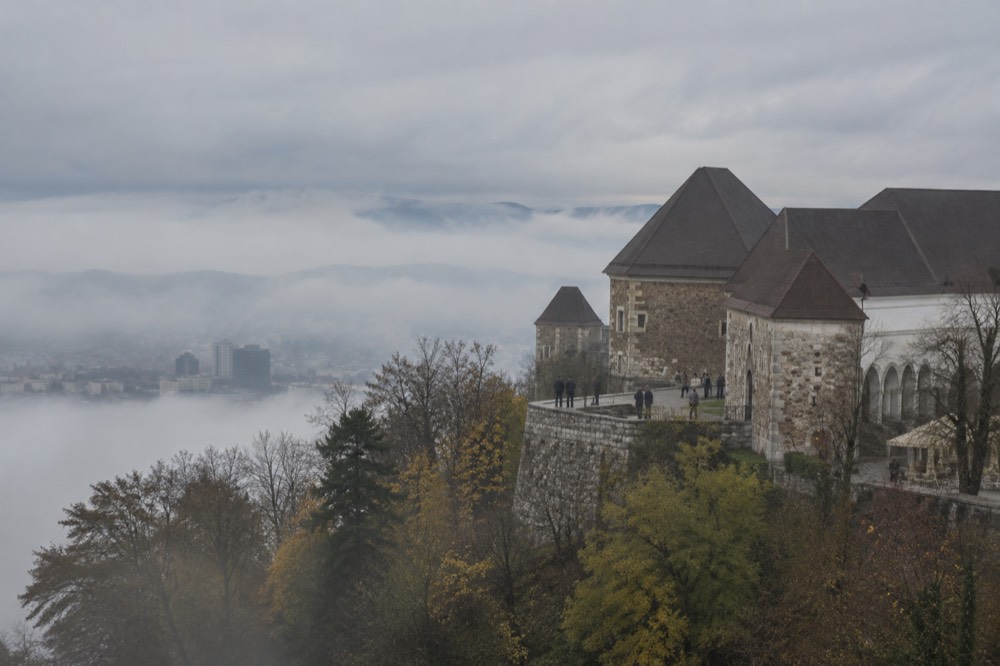
The climate data is the part most guides get wrong, so it deserves its own section. Ljubljana sits in a basin at 299 m, and in the colder half of the year a temperature inversion caps the city under fog and low cloud while the hills a few hundred metres above it sit in sunshine. ARSO's normals, 1981 to 2010, put numbers on it: the city gets 56 hours of sunshine in the whole of December and just 2 clear days that month, while Kredarica at 2514 m on Triglav gets 120 hours and 6 clear days over the same December. Annually the city averages 37 clear days against 130 overcast.
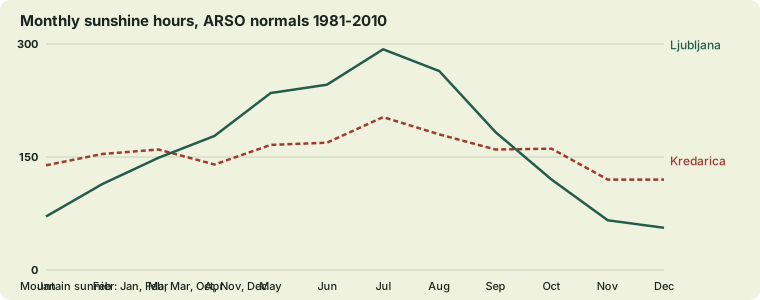
The practical translation for a weekend visitor: a winter weekend should build in altitude. The castle funicular, the Šmarna gora hike and any trip up the Ljubljana-to-Bled axis all buy you a chance of standing above the fog line in sun. A summer weekend needs no such rescue, but it needs the 10 C cave layer if you are doing Postojna, and it needs museum bookings because July and August are the peak. The best time to visit Ljubljana guide runs the full twelve months.
How Do You Get Around Ljubljana in a Weekend?
On foot, almost entirely: the centre is pedestrianised and everything in this plan is within a 20-minute walk. For anything further, city buses cost 1.50 EUR for a 90-minute ride with transfers in zone 1, the Urbana card costs 2.00 EUR to buy, and the critical fact is that buses do not accept cash on board, though contactless bank cards and phones now work directly.
The no-cash rule is the detail that catches visitors. You can board with a contactless Visa, Mastercard or mobile wallet and be charged directly, per the operator LPP's own payment page, which removes the old trap of needing an Urbana card before your first ride. But if you are paying by card-on-board, watch that each tap is a new fare, whereas a topped-up Urbana covers 90 minutes of transfers. Urbana cards are sold and topped up at the LPP Passenger Centre on Slovenska 56, at Urbanomat machines, kiosks, tourist information centres and post offices.
If you are arriving by air, Ljubljana Airport is about 26 km from the city, and the Ljubljana airport to city centre guide covers the transfer options, including the fact that the airport bus exists but that its timetable details should be checked rather than assumed. If you are arriving [by train](https://omio.tpk.ro/exV6rGgH), the Ljubljana train station is a 10-minute walk from Prešeren Square, which is why the day-one plan starts there. A car is a liability in the centre: the pedestrian zone means you park on the edge and walk, so only rent one if the day trips justify it.
| Transport | Cost | Note |
|---|---|---|
| Walking | Free | The whole centre is pedestrianised |
| Bus, single, zone 1 | 1.50 EUR | 90 minutes including transfers |
| Urbana card | 2.00 EUR | One-off purchase cost |
| Contactless on board | Yes | Cash is not accepted |
| River cruise | 15 EUR | Included in the Ljubljana Card |
| BicikeLJ bike share | Included with the card | 4 hours on the 24-hour card |
What Should You Pack for a Weekend in Ljubljana?
Comfortable walking shoes above all, plus a warm layer for the caves or a winter visit, a rain layer for September and October, and no currency concerns: Slovenia is in the European Union, the eurozone and the Schengen area, so the euro is the only money and there are no routine border checks arriving from Italy, Austria, Hungary or Croatia.
The euro was adopted on 1 January 2007, and Schengen land and sea border checks were lifted on 21 December 2007 with air checks following on 30 March 2008, per the Slovenian government's own EU membership page. Croatia joined Schengen and the euro on 1 January 2023, so even the Zagreb and Istria routes are internal. What this means for packing is simple: no currency exchange, no passport queue planning, one less thing.
The layer advice is not generic. Postojna Cave holds 10 C year round and Škocjan 12 C, and the tour lasts 90 minutes, so summer visitors in shorts get cold. In winter the city itself sits near freezing, with January means of 0.3 C and record lows to -20.3 C, while the inversion means the hills above can be warmer than the streets on any given day. The what to pack for Ljubljana post has the full seasonal list, and the rainiest month in Slovenia post explains why the autumn rain layer earns its place.
Common Questions About a Weekend in Ljubljana
Is a weekend in Ljubljana enough?
Yes for the city itself: two days covers the Old Town, the castle, the river, the markets and the main museums, and the average visitor stays about 2.04 nights according to the 2025 arrival and overnight figures. It is not enough to add Lake Bled, Postojna Cave and the coast, so pick one day trip and save the rest for a second visit.
What should you not miss on a weekend in Ljubljana?
Ljubljana Castle with the funicular ride up, the Triple Bridge and Prešeren Square, the Central Market stalls, and a Ljubljanica river cruise. If you have a third half-day, the Plečnik House guided tour or Metelkova are the two most distinctive additions.
Is Ljubljana walkable in a weekend?
Almost entirely. The historic centre is a pedestrianised zone of roughly 20 hectares, expanded progressively since 2007, and every sight in the day-one plan is within a 20-minute walk of Prešeren Square. Buses at 1.50 EUR a ride cover anything further, and they accept contactless cards but not cash.
Can you do a day trip from Ljubljana on a weekend?
Yes, and it is the standard use of day two. Postojna Cave and Predjama Castle sit about an hour away and run year round, Lake Bled is under an hour, and both have bundled tours from the city. Vintgar Gorge near Bled is seasonal, open April to October, so check it before building it into an autumn or spring weekend.
Do you need to book anything in advance for a Ljubljana weekend?
Book Saturday dinner and any day-trip tour in advance, and check the castle if you are visiting in July or August. Postojna Cave tours depart on a month-by-month timetable grid rather than a fixed daily list, so a bundled tour with transport and tickets removes the timing risk entirely.
Is Ljubljana expensive for a weekend?
Less than most western European capitals. The verified core costs are 19.00 EUR for the castle with funicular, 15 EUR for a river cruise, 10 EUR for the National Gallery and 25 to 40 EUR for a good dinner, plus 3.13 EUR per person per night in tourist tax. A packed weekend runs roughly 150 to 250 EUR per person before accommodation.