Plečnik House Ljubljana: Tickets, Tours and What to See
The Plečnik House is the most personal of all Jože Plečnik's works in Ljubljana: the small Trnovo villa where the architect lived, drew and tinkered for decades, preserved as a museum and visitable only on a guided tour that runs on the hour.
Short answer
The Plečnik House in Trnovo is the former home and studio of architect Jože Plečnik, now a museum run by the City Museum of Ljubljana. Admission is 12 EUR including the guided tour, entry is by guided tour only with departures on the hour, and it is open Tuesday to Sunday, 10:00 to 18:00, closed Mondays.
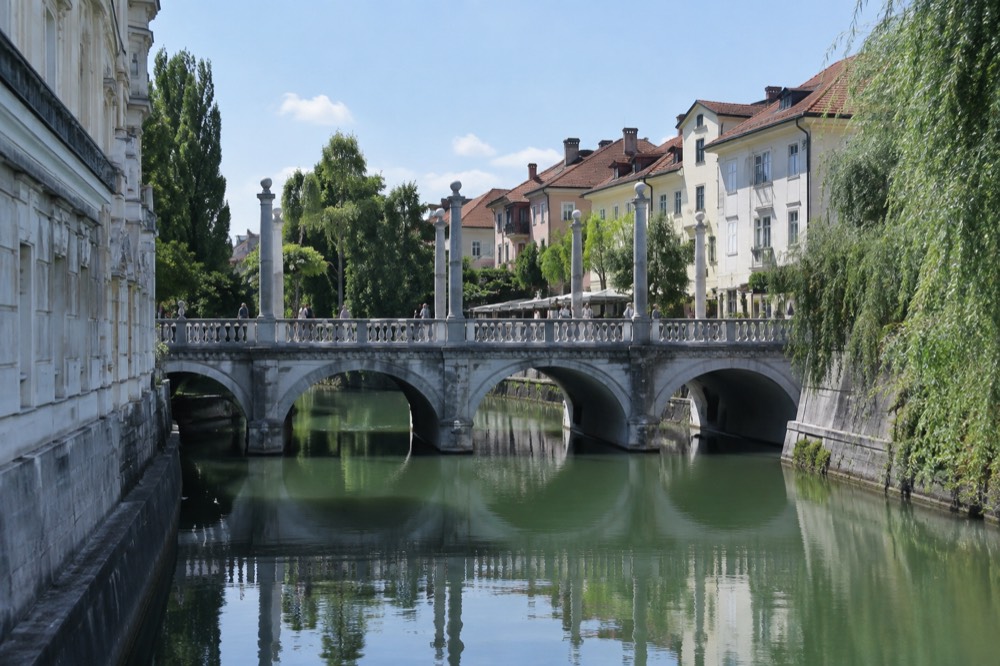
Most visitors meet Jože Plečnik on the bridges and squares of central Ljubljana without ever learning his name. The Triple Bridge, the market colonnades along the Ljubljanica, the National and University Library: all of it came from one man's drawing board, and the clearest way into his mind is not a monument but a house. The Plečnik House, on the quiet western edge of Trnovo, is where the architect actually lived, and it is preserved the way he left it, down to the drawing pins in the studio wall. This guide covers what the house is, exactly how visiting works, what you see inside, and how to fold it into a wider Plečnik day in the city. For the broader sweep of his work across town, start with the companion piece on Plečnik's Ljubljana.
What Is the Plečnik House?
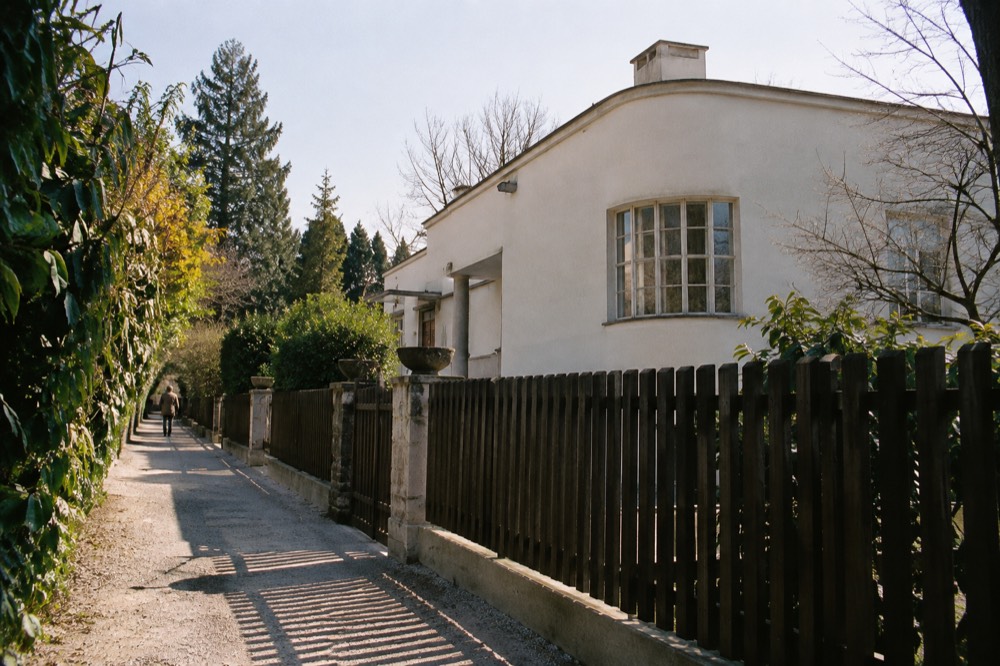
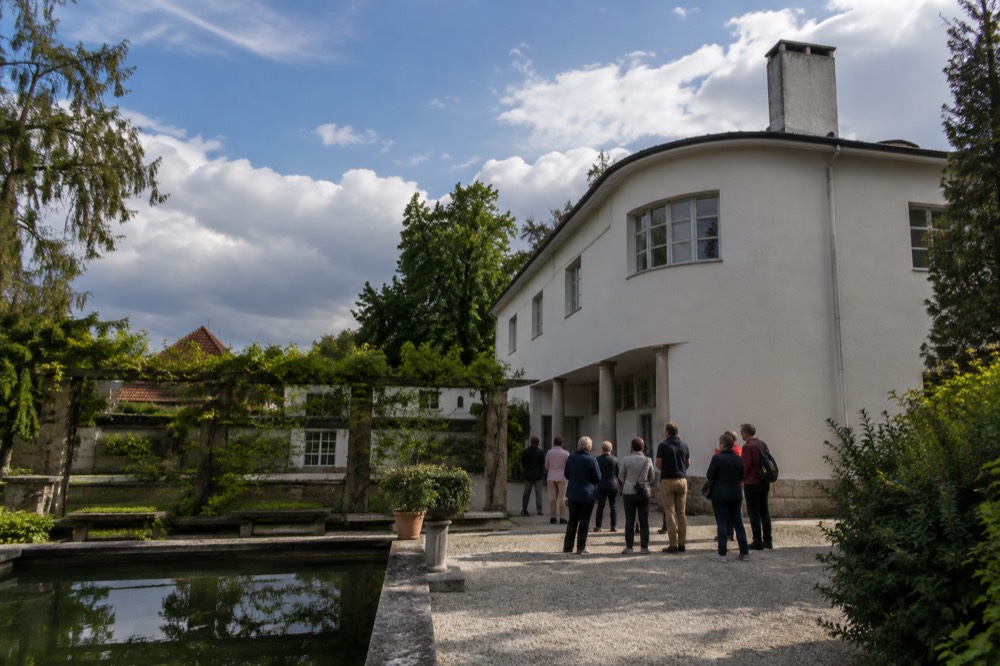
The Plečnik House is the former home, studio and garden of Jože Plečnik, the architect who reshaped central Ljubljana in the first half of the twentieth century. It stands on Karunova ulica in Trnovo, about 2 km southwest of the Old Town, and operates as a branch museum of the City Museum of Ljubljana. Unlike his public works, the house is intimate: a modest villa he extended and reworked himself, filled with his furniture, tools and personal objects, and open only on a guided tour.
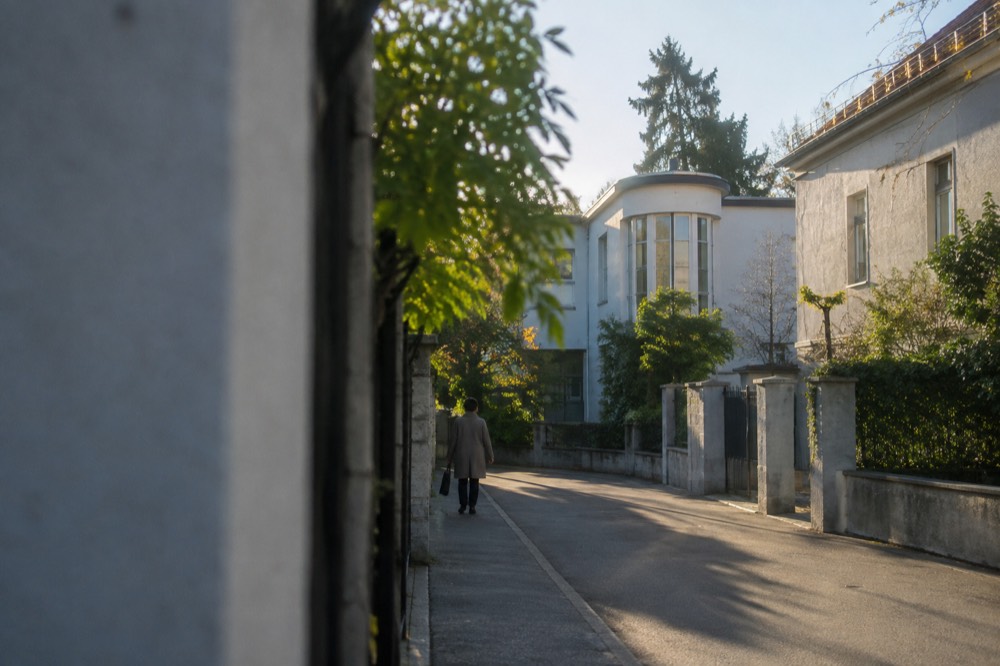
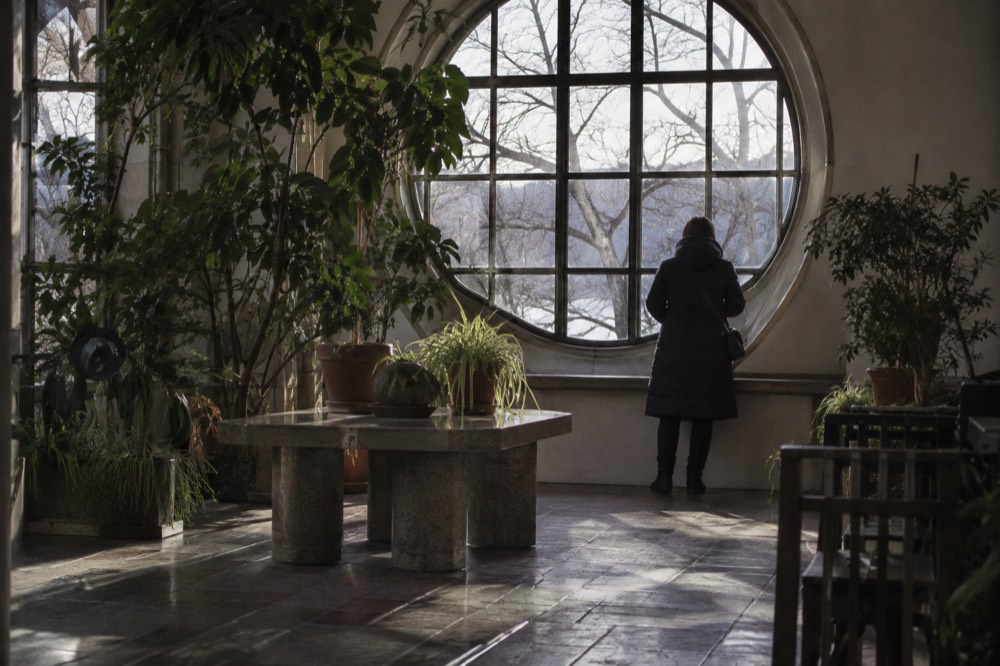
The house is really two buildings joined into one story. There is the original family villa, a plain early twentieth-century suburban house, and there is the annexe Plečnik added for himself: a cylindrical corner tower with a round window, a winter garden and a studio above it. He treated his own home the way he treated the city, as a permanent experiment. Walls were moved, ceilings were lowered or raised, sightlines were cut through from room to room, and nothing was ever quite finished.
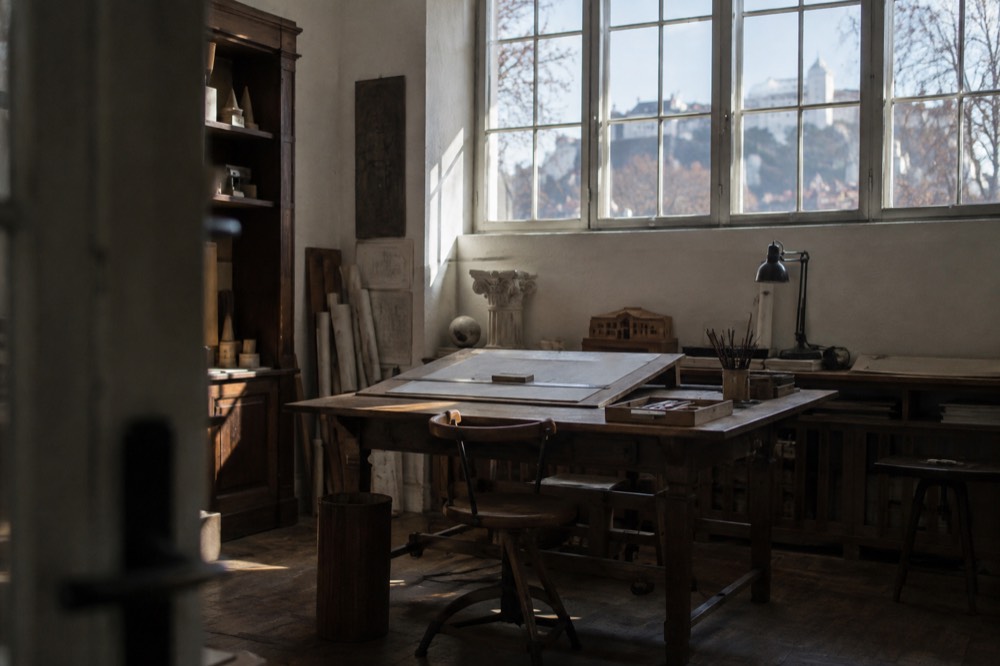
What makes the visit unusual among house museums is how little has been staged. The studio still holds his drawing board, his instruments and the small objects he collected, arranged much as they were during his lifetime. Guides point out the practical inventions everywhere: the built-in furniture, the clever storage, the way light is brought into rooms that had no business being bright. You come out understanding why a man who worked at this scale of detail was also trusted with bridges, churches and a whole riverbank.
The house sits in Trnovo, one of the city's oldest peripheral neighbourhoods, at the foot of the Rožnik hill and beside the Trnovo church where Plečnik worshipped. The Trnovo district guide covers the area in more depth, but the short version is that this is a calm, residential, slightly bohemian quarter, worth twenty minutes of wandering on its own before or after your tour.
How Do You Visit, and What Does It Cost?
Admission is 12 EUR for an adult, and that price includes the guided tour, which is the only way to see the house: there is no free-roam option. Tours depart on the hour, every hour, during opening hours, Tuesday to Sunday from 10:00 to 18:00. The house is closed on Mondays. Because entry is guided only, you should arrive with a tour time in mind rather than hoping to drift in, and the full visit lasts roughly an hour.
The guided-only rule is the single most important planning fact on this page, and it is published by the museum itself on the official Plečnik House visiting page{: rel="noopener"}. Tours start on the hour, so a visitor who turns up at 10:40 waits until 11:00. Groups are small because the rooms are small, and in the peak summer months the earlier slots fill first. Booking ahead is sensible for July and August, and for any weekend.
Here is the visiting picture in one table:
| Item | Detail |
|---|---|
| Adult admission | 12 EUR, guided tour included |
| Entry method | Guided tour only, no self-guided visits |
| Tour departures | On the hour, during opening hours |
| Opening hours | Tuesday to Sunday, 10:00 to 18:00 |
| Closed | Mondays, plus common state-museum holidays |
| Typical visit length | About 1 hour |
| District | Trnovo, Karunova ulica |
One more thing that pairs well with the house: like the other state and city institutions, the museums here follow the national pattern of free admission on the first Sunday of every month. If your trip happens to include a first Sunday, check whether the house is participating before counting on it, but it is a genuinely useful rhythm to know about, and it applies across the National Gallery and the other major institutions as well.
If you would rather have a guide cover the whole city story than just the house, these are the three products that fit a Plečnik-themed day best:
The Classic Ljubljana Group Tour is the natural companion to the house visit. It walks the Old Town's main sights, which in this city means a running commentary on Plečnik's bridges, colonnades and facades, the very works the house explains. Doing the group walk first and the house second is the order most Plečnik-interested visitors enjoy, because the house answers questions the walk raises.
What Do You Actually See Inside?
Inside, the tour moves through Plečnik's own living and working spaces: the modest family rooms of the original villa, the personal annexe he designed for himself with its round corner window, the winter garden, and the first-floor studio where his drawing board, instruments and collected objects are preserved. The guides, who are the museum's own, explain his built-in furniture and design experiments room by room. Photography is generally possible, but the rooms are small and tours are intimate rather than theatrical.
The route through the house tells the story in the right order. You start in the older family part, where the scale is suburban and ordinary, and the guide uses it to explain what the house was before Plečnik made it his. From there you pass into his additions, and the change is immediate: the round window, the curved wall, the winter garden, the staircase arranged so that the studio receives the light he wanted. The contrast between the two halves of the building is the exhibit.
The studio is the room people remember. It is not reconstructed; it is preserved. The drawing board stands where he worked, the walls carry his reference material, and the objects around the room, from plaster models to simple tools, are the actual ones he handled. Guides use them to explain how a project moved from this room to the riverbank or the church up the road. For anyone who has already walked across the Triple Bridge or through the colonnades by the Central Market, the studio is where those designs become human-scale.
The garden is part of the visit too, and it deserves more attention than it gets. Plečnik treated the small outdoor space as another room, with the same discipline he applied indoors: structured planting, a clear axis, a sense that every element was placed rather than left. In summer the garden is a genuinely pleasant place to stand for the last ten minutes of a tour, and it is the best spot for photographs of the house's exterior, since the street in front is narrow.
A reasonable question at this point is whether the house justifies its own trip out of the centre. If you have any interest in architecture at all, it does, and the reason is concentration: nowhere else in Ljubljana do you get Plečnik at this resolution. If you are neutral on architecture, one hour in the house plus a wander through Trnovo is still a pleasant, low-effort excursion, and the walk back along the Ljubljanica or through the Tivoli Park direction turns it into a half-day.
How Do the House and Plečnik's City Works Fit Together?
The Plečnik House works best as the second half of a Plečnik day: start in the centre with the Triple Bridge, the riverside colonnades and the National and University Library, then take the short hop to Trnovo to see where it all came from. The house explains the man; the city works explain the output. A visitor who only does one half gets either an artist with no gallery or a gallery with no artist.
The centre of the story is compact and walkable. The Old Town holds the Triple Bridge, the market colonnades, the Ljubljana Cathedral and the library facade, all within fifteen minutes' walk of Prešeren Square. The Ljubljanica river cruise gives you the riverbank design from the water, which is the angle Plečnik himself was working to when he rebuilt the embankments. None of it requires a ticket except the cruise, and the riverside itself is free to walk at any hour.
Here is how the main Plečnik sites compare, including what each one costs and how long it takes:
| Plečnik site | Where | Cost to visit | Time needed |
|---|---|---|---|
| Plečnik House | Trnovo | 12 EUR, guided tour only | About 1 hour |
| Triple Bridge | City centre | Free, public space | 10 minutes |
| Central Market colonnades | Riverside by the bridge | Free to walk through | 15 minutes |
| National and University Library exterior | City centre | Free from the street | 10 minutes |
| Ljubljanica river cruise | Riverside piers | Cruise ticket, or included in the Ljubljana Card | About 50 minutes |
| Ljubljana Castle | Castle hill | Grounds free; tower and attractions ticketed | Half a day possible |
The castle row deserves a word, because it is the one people get wrong. The castle grounds are free to enter and always have been; the funicular, the Viewing Tower and the interior attractions are what cost money. The distinction matters on a Plečnik day only insofar as the castle is not really a Plečnik site, but the walk up through the woods from the Tivoli Park side is one of the city's best free pleasures, and the castle funicular makes a fine reward at the end of a long day on your feet.
For visitors who want the architecture explained rather than just seen, the guided-walk option that pairs most directly with the house is the funicular-and-castle walk, which covers the Old Town's core and then climbs to the hill for the view. It is a different register from the house tour, broader and more panoramic, and the two together make a full and well-shaped day.
When Is the Best Time to Visit?
The house is open Tuesday to Sunday year-round, so the season matters less than the day of the week: never plan it for a Monday, when it and nearly every other museum in the city closes. In July and August, book the earlier tour slots, because small-group capacity fills first. Weather barely affects the visit, since the tour is indoors and the walk to Trnovo is short, but the garden is at its best from late spring to early autumn.
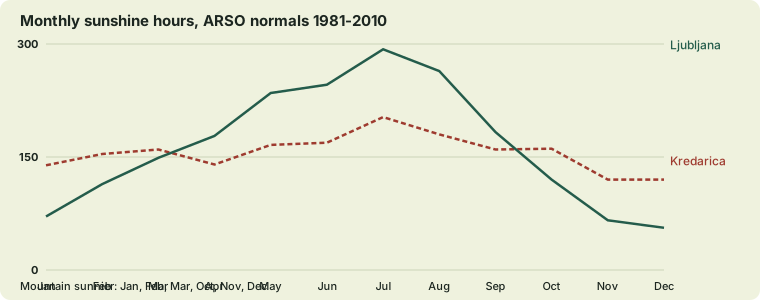
There is a seasonal angle worth knowing about, and it is the one most guides to this city miss entirely. Ljubljana sits on the floor of a basin, and in the colder half of the year the basin fills with fog and low cloud while the hills above it sit in sunshine. ARSO's climate normals for 1981 to 2010 put the city at 56 hours of sunshine in the whole of December against 120 hours at Kredarica, high on Triglav at 2,514 m, and just 37 clear days a year in the city against 130 overcast ones. The practical consequence for a visitor is simple: in November, December and January, an indoor, morning-planned itinerary like a museum tour is the reliable choice, and a grey city day is exactly when the Plečnik House earns its ticket.
The shoulder months carry a second trap. September and October are the joint wettest months of the Ljubljana year at 147 mm of rain each, ahead of July's 115 mm, and ARSO's 1971 to 2000 normals, the only period for which fog is published, record 12.4 fog days in each of those months, level with December. Autumn here is not the dry, golden shoulder season that the word suggests elsewhere. It is a lovely time to visit, but pack for rain and plan at least one indoor anchor per day, of which the house is an ideal one.
Spring and early summer are the sweet spot if you want the garden and the walk through Trnovo at their best, and the long evening light in June means a late-afternoon tour can be followed by a slow wander back along the river. Whatever the month, the on-the-hour rule means you should build the house into your day around a fixed time, not treat it as a drop-in.
How Do You Get to Trnovo and the House?
The Plečnik House is about 2 km southwest of the Old Town, an easy 25-minute walk or a short bus ride, in a low-traffic residential district. There is no metro or tram in Ljubljana, so the choices are walking, the city buses, a taxi, or one of the bike-share schemes. The historic centre itself is pedestrianised, so the walk out of it is the pleasant part: cross the river, follow it south-west, and Trnovo appears within twenty minutes.
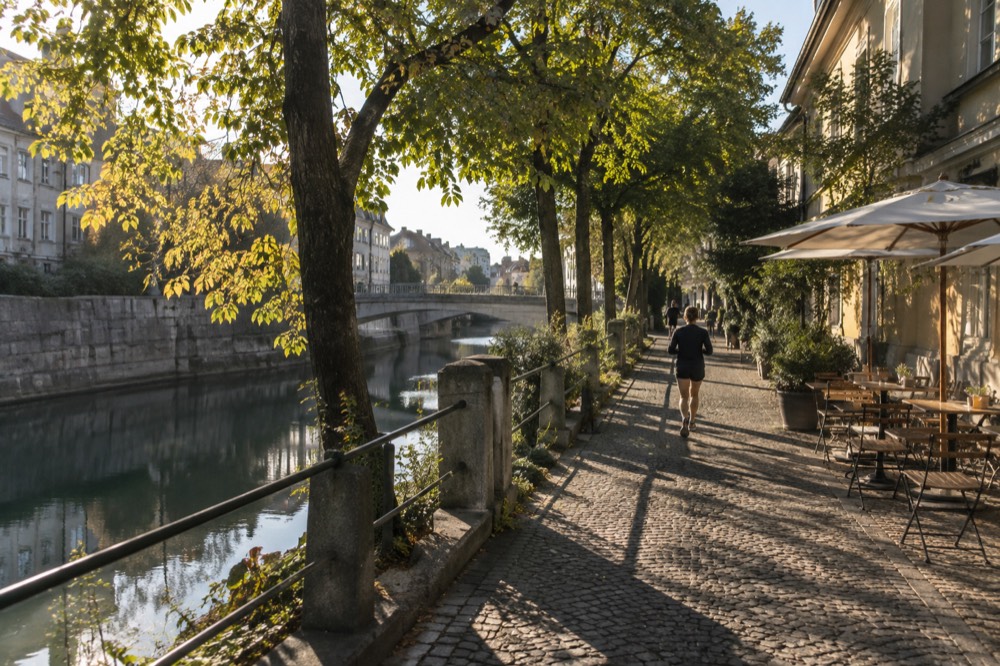
Walking is the recommended way, because the route passes through parts of the city that visitors otherwise skip. From the Triple Bridge, head south along the Ljubljanica's western bank, through the Trnovo church quarter, and the house is a few streets further on. The distance is flat, the pavements are good, and the whole thing is a gentle urban walk rather than a hike.
For the bus, the practical facts are these:
| Transport option | Cost | Notes |
|---|---|---|
| Walking from the Old Town | Free | About 25 minutes, flat, along the riverbank |
| City bus, zone 1 | 1.50 EUR per ride | 90 minutes of transfers included; no cash on board |
| Urbana card purchase | 2.00 EUR | Buy at the LPP Passenger Centre, Urbanomat machines or kiosks |
| Contactless bank card | Accepted on board | Visa, Mastercard and mobile wallets |
| Taxi or transfer | Metered | Reasonable for a direct door-to-door trip |
The no-cash rule on Ljubljana's buses catches out more visitors than any other transport detail in the city. Drivers do not take banknotes or coins, so you either hold a contactless card or phone, which now works directly, or you buy an Urbana card first. The full picture, including where to top up, is in the getting around Ljubljana guide. Cyclists have it easiest of all: the city is flat, the drivers are tolerant, and a bike turns the Trnovo excursion into a twenty-minute round trip.
Should You Visit the House on a Tour or on Your Own?
Visit the house itself on its own guided tour, since there is no other way in, but visit Plečnik's city with a guide if you want the architecture explained rather than just seen. A group walking tour of the centre plus the house's own hour-long tour is the strongest combination, and the Ljubljana Card can cover the transport and the cruise between them. Travellers with only one day should choose the centre first and the house if there is room.
The trade-off is honest and worth spelling out. The house tour is fixed: one hour, one guide, one route, and it is excellent at what it covers. A city walking tour is variable: the guide, the group and the weather all shape it, but it covers far more ground and connects the house to the bridges and squares that give it meaning. Doing both, on the same day or consecutive days, is the answer that nearly every architecture-minded visitor settles on.
For a shorter or more specialised angle, there is a ninety-minute art and architecture walk that stays inside the centre and moves quickly, which suits a visitor with a full afternoon and a specific interest. It is a different product from the house tour, broader and faster, and it works well as a preview before the Trnovo visit rather than after it.
The Ljubljana Card deserves a final mention here because of how it interacts with a museum-heavy itinerary. The card covers the castle funicular, the river cruise, city buses, a guided walking tour and more than thirty museums and galleries, one entry each, across 24, 48 or 72 hours. Whether it beats paying separately depends on your pace, and the honest way to decide is to lay your planned entries against the card's price before buying; the Ljubljana Card guide works that arithmetic through. The card's own details are published on the official tourist board card page{: rel="noopener"}.
Here is a compact planning table for a Plečnik-focused day:
| Time block | Activity | Cost |
|---|---|---|
| Morning | Old Town walk: Triple Bridge, colonnades, library facade | Free |
| Midday | Lunch near the riverside, then bus or walk to Trnovo | Bus 1.50 EUR |
| Afternoon | Plečnik House guided tour, on the hour | 12 EUR |
| Late afternoon | Garden and Trnovo wander, walk back along the Ljubljanica | Free |
| Evening | River cruise or a bar in the centre | Cruise ticket optional |
One last framing thought. The Plečnik House is the kind of attraction that rewards visitors who have already walked the city, and punishes nobody who has not. It is small, cheap by museum standards, and perfectly scheduled, since the on-the-hour departures make it easy to plan around. In a city whose centre is famously walkable and whose museums mostly close on Mondays, a Tuesday-to-Sunday house tour with a fixed start time is about the most dependable item on any itinerary. This Ljubljana Travel Guide article is one of a pair on the architect; the other, on Plečnik's Ljubljana at large, covers every central site in one route.
Before the practical questions, here are the three products that best round out a Plečnik-themed visit:
Common Questions About the Plečnik House
Do you need to book the Plečnik House in advance?
Tours depart on the hour and groups are small because the rooms are small, so booking ahead is wise in July and August and on weekends. Outside the peak, arriving twenty minutes before an hour slot is usually enough, but the tour is the only way in, so never plan a visit without a slot in mind.
How much does the Plečnik House cost?
Adult admission is 12 EUR, and that includes the guided tour. There is no cheaper self-guided option, because entry is guided only. The visit takes about an hour.
When is the Plečnik House open?
Tuesday to Sunday, 10:00 to 18:00, with tours on the hour. It is closed on Mondays, the standard closing day for nearly every museum in Ljubljana, and it follows the common state-museum holiday closures.
How long does a visit take?
About one hour for the guided tour, plus whatever time you spend in the garden and the walk to and from Trnovo. Most visitors budget two to three hours door to door from the centre, including the pleasant riverside walk each way.
Is the Plečnik House worth it if you are not into architecture?
It is a genuinely interesting small museum even for casual visitors, because the guides are good and the house is full of clever, human details. But if architecture leaves you cold, a city walking tour that covers Plečnik's bridges along with everything else is the better use of a morning.
Can you photograph inside the Plečnik House?
Photography is generally possible on the tour, though the rooms are small and the visit is intimate, so follow the guide's lead. The garden and the exterior, with its distinctive round corner window, are the easiest and best subjects.