Where to Stay Near Lake Bled: Best Areas, Prices and How to Choose
Lake Bled is small enough that nowhere is far from the water, but where you sleep changes the trip: lakefront Bled town, the quieter shores, or Ljubljana as a base. Here is how the options actually compare.
Short answer
Stay in Bled town if you want the island, the castle and restaurants within a short walk, and expect lakefront rates to reflect that. Mlino and the western shore are quieter and often cheaper. Ljubljana works as a base if you book a day tour, roughly 6 hours return. Bled Castle entry is 19.00 EUR and the pletna boat to the island is 20 EUR per person.
Lake Bled punches far above its weight in search demand: more people look it up than look up Ljubljana itself, and plenty of visitors treat the city as a stopover and the lake as the destination. That is a reasonable instinct, because the lake is genuinely small, roughly 6 km of shoreline you can walk end to end in about an hour and a half, with a castle on a cliff, an island with a church on it, and the Julian Alps stacked behind. The decision that shapes the whole trip is not whether to come. It is where to sleep, and that choice is narrower and more interesting than most guides admit.
This page lays out the real options: the lakefront in Bled town, the quieter stretches of shore around it, the villages inland, and the case for basing yourself in Ljubljana and day-tripping in. Prices for attractions are stated plainly where they are published, hotel rates are deliberately not quoted because they move daily, and every transport fact comes from the operators themselves. If you are still deciding between the city and the lake, our Ljubljana or Bled comparison covers that question head to head.
What Are the Best Areas to Stay Near Lake Bled?
The best area depends on what kind of trip you want, and the lake is small enough that no choice is wrong. Bled town, on the eastern shore, puts the island viewpoint, the castle cliff and most restaurants within a ten minute walk. Mlino, on the southern shore, is quieter and closer to the swimming areas. Zaka, on the west, is the peaceful, forested option, and villages like Bohinj and Radovljica suit travellers who want cheaper beds and day trips in.
Bled town itself is barely a kilometre across. The pedestrian lakeside promenade runs from the Park area past the Grand Hotel Toplice end of the shore, and the walk from the centre to the classic viewpoint at the castle takes about fifteen minutes uphill. If you book anything within the town boundary, you are never more than twenty minutes on foot from the water, which is why the premium here is about the view from your window rather than access.
The distinction matters more than people expect. A lakefront room in Bled town can cost double the rate of an identical room a ten minute drive away in Radovljica, and the only difference is whether the lake is outside the glass. Some travellers consider that worth every cent, and the sunrise over the island is a real thing. Others spend the whole day out at Vintgar Gorge or Triglav National Park and only sleep in the room, in which case the premium buys very little.
One structural fact shapes every stay: the lake is a year-round destination with a sharply seasonal feel. Vintgar Gorge, the most popular side trip after the island itself, is open to visitors between April and October and closes for the winter, so a February base and a July base serve different trips. Our best time to visit guide works through the seasons in detail.
| Area | Character | Best for | Trade-off |
|---|---|---|---|
| Bled town centre | Lakefront hotels, restaurants, the promenade | First visits, short stays, no car | Highest rates, busiest evenings |
| Mlino, southern shore | Guesthouses near the swimming areas and campsites | Summer stays, families, quieter nights | Fewer dining options in the evening |
| Zaka, western shore | Forested, quiet, near the castle's back paths | Escaping crowds, hiking up to the castle | A long walk or short drive to town |
| Ribno and Bohinjska Bela | Inland villages, 10 minutes' drive | Cheaper beds, rural calm | Need a car or buses |
| Radovljica | Historic market town, 7 km away | Value, charm, self-catering | Commuting to the lake daily |
| Lake Bohinj | Wilder alpine lake, 30 km away | Nature, hiking, fewer crowds | A drive to reach Bled itself |
Bled Town Centre: Is the Lakefront Premium Worth Paying?
For a first visit of two nights or less, yes, the lakefront premium in Bled town is usually worth paying, because the whole point of the lake is the hour after sunrise and the hour before sunset, and staying on the shore puts you there without a drive. For longer stays, a hiking-focused trip or a tight budget, the same money goes further in Mlino, Ribno or Radovljica, and the lake is close enough that you lose nothing but the window view.
The maths of the lake rewards staying central. The classic walk around the entire shoreline is about 6 km and takes roughly an hour and a half at a stroll, so a guesthouse anywhere in Bled town is at most a half circuit from any point on the water. The pletna boats to the island leave from the southern shore, the castle funicular-side paths climb from the west, and the best swimming spots spread along the north and east. Everything is a walk.
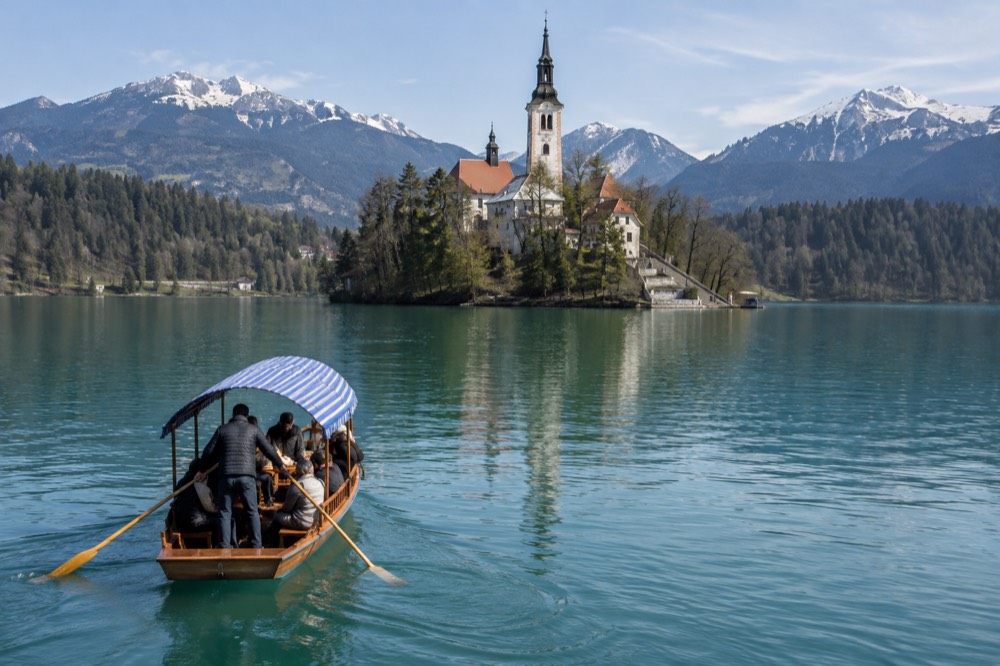
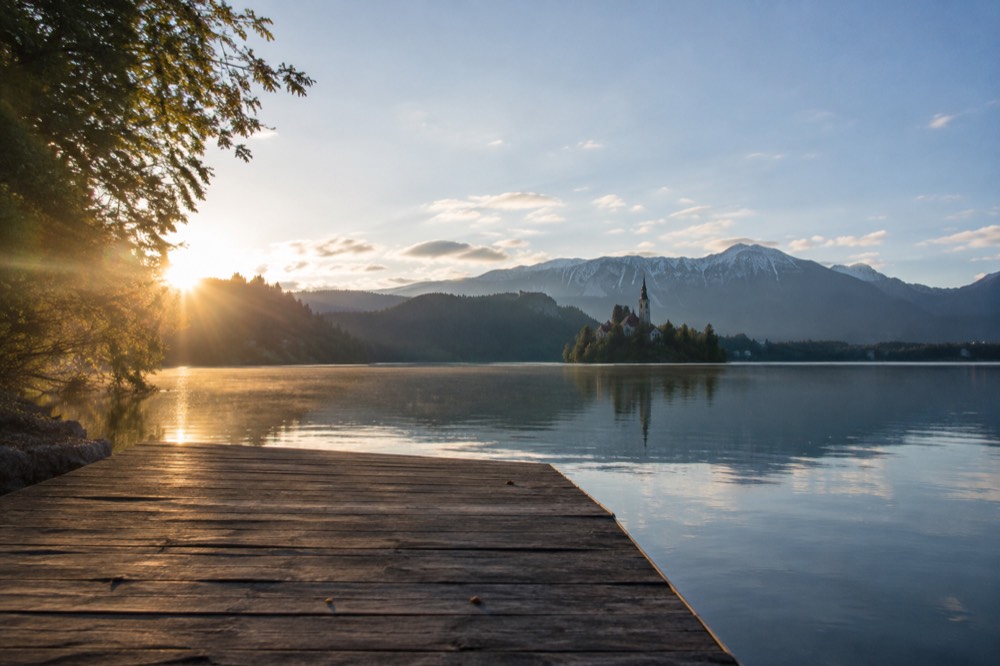
What the lakefront buys you is timing. The island church of the Assumption, the building on Blejski otok that appears in every photograph, faces east, and the postcard light is early morning. Day-trippers arriving mid-morning miss it entirely. Guests staying on the shore see the lake at its quietest and its best without setting an alarm that involves a car.
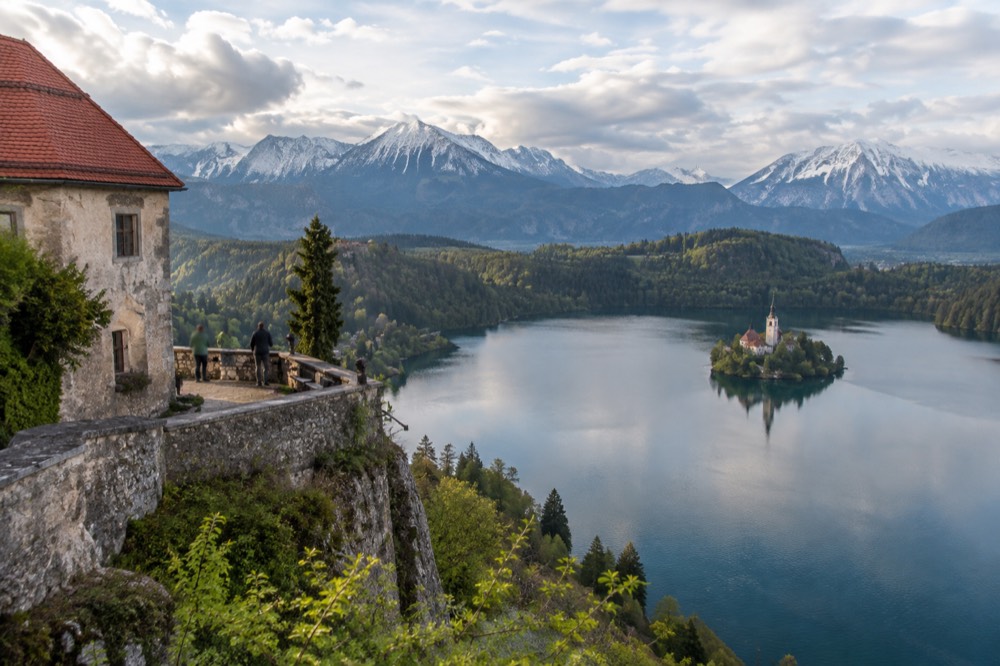
The castle is the other anchor. Bled Castle, perched on the cliff 139 metres above the lake, charges 19.00 EUR for adult entry per the castle's own price list, and the view from its terrace over the whole lake is the single best vantage point in the area. Staying in town means you can climb the back path from Zaka in the late afternoon, when the coach groups have gone. Our is Bled Castle worth it page works through whether the ticket earns its price.
For the island itself, the traditional pletna boats charge 20 EUR per person for the round trip, and the electric Bled Boat Line runs at 16 EUR per person. Neither is a hidden cost you can dodge, so budget them into the daily figure when you compare a lakefront room against a cheaper one inland.
How Much Does a Stay Near Lake Bled Actually Cost?
Attraction costs are fixed and published: Bled Castle is 19.00 EUR, the pletna boat to the island is 20 EUR per person, Vintgar Gorge is 15.00 EUR for an adult, and Triglav National Park is free to enter. Accommodation is the variable, and no honest page can quote nightly hotel rates because they change daily and sit behind booking walls, so compare areas on their published attraction and food costs instead.
The fixed costs stack up quickly, and it is worth doing the sum before you choose a base. A couple doing the classic Bled day, castle plus pletna plus a walk, spends about 78 EUR on the two headline attractions alone before lunch. Add Vintgar Gorge at 15.00 EUR each and the same couple is past 100 EUR on tickets. These are the operator's own published prices, and they do not move with the season the way rooms do.
Vintgar deserves a planning note of its own. The gorge is open between April and October, closes for winter, and uses timed-entry slots, with the operator stating that the busiest window is between 10:00 and 13:00. An early or late slot transforms the experience. The exact closing date each year depends on conditions, and the operator's own page says to check before travelling, which is advice worth taking.
Food is the other daily variable. Bled town has everything from lakefront hotel restaurants to simple pizzerias, and the town's signature dessert, the cream cake, has its own following; our Bled cream cake page explains why a cake has a monument. Eating in Radovljica or Bohinjska Bela is generally cheaper than eating on the promenade, which is one quiet argument for an inland base.
| Item | Adult price | Notes |
|---|---|---|
| Bled Castle entry | 19.00 EUR | Terrace view over the whole lake |
| Pletna boat to the island | 20 EUR per person | Traditional flat-bottomed boat, southern shore departure |
| Bled Boat Line electric boat | 16 EUR per person | Alternative crossing |
| Vintgar Gorge, All-in-One Pass | 15.00 EUR | April to October only, timed entry |
| Triglav National Park entry | free | 840 square kilometres of protected alpine terrain |
| Tourist tax | set by municipality | Check with your accommodation when booking |
The honest gap in any Bled budget is the room itself. Rates on the lakefront swing widely between a February weekday and an August weekend, and any specific figure printed here would be wrong within a week. The reliable pattern is that the premium for a lake view is steepest in Bled town, moderate in Mlino, and largely absent in Radovljica and the inland villages.
If the fixed costs are making you reconsider the whole trip, there is a cheaper architecture: sleep in Ljubljana, where the same budget buys a better room, and take a guided day trip that bundles the transport. The Lake Bled and Castle day trip runs about 6 hours from the capital and covers the lake and the castle, which is exactly the core a short stay would cover anyway.
Do You Need a Car to Stay Near Lake Bled?
No, a car is not necessary for a stay centred on Bled town, because the lake, the castle and the island are all within walking distance of any town-centre bed, and Vintgar Gorge is reachable on foot or by local bus in season. A car becomes worth having for Triglav National Park, Lake Bohinj, the Soča Valley or any itinerary that ranges beyond the immediate lake, and it is essential if you base yourself in an inland village.
The walkability of the lake itself is the strongest argument for a central base. The full shoreline circuit, about 6 km, is flat, paved for most of its length, and passes the swimming areas, the pletna departure point, the castle's lower paths and the Zaka woods. A visitor without a car loses nothing on this circuit. Vintgar Gorge is roughly 4 km from the town centre, a pleasant 50 minute walk through Zagorica, and there is a seasonal local bus for the return leg.
Where a car earns its keep is the ring of destinations around the lake. Triglav National Park covers 840 square kilometres and includes Mount Triglav at 2864 m, the highest peak in Slovenia, and its entry is free, but its trailheads, gorges and viewpoints are spread across an hour of driving in every direction. Lake Bohinj, the larger and wilder lake 30 km on, is a straightforward drive and a slower bus. The Triglav National Park guide maps the options.
Buses connect Bled to Ljubljana and to the surrounding towns, but a caution applies: no verified journey time or fare for the Ljubljana to Bled coach route could be sourced from the operators, and the rail site blocks automated access, so this page deliberately prints no number for that leg. The journey is short, the buses are frequent, and the fare should be checked at the point of booking rather than guessed from a guidebook.
One rail detail is worth more than any of this, because most rail advice gets it wrong. There are two stations serving Bled. Lesce-Bled is the mainline stop, 4 km from the lake, but Bled Jezero, on a different line, is just 1.5 km from the centre, per the local tourist board's own information. Anyone arriving [by train](https://omio.tpk.ro/exV6rGgH) should check which line they are on before assuming a taxi is needed.
| Destination from Bled | Distance by road | Without a car | With a car |
|---|---|---|---|
| Vintgar Gorge | about 4 km | Walk or seasonal bus | 10 minutes |
| Lake Bohinj | about 30 km | Bus, infrequent | 40 minutes |
| Ljubljana | about 55 km | Direct coach, frequent | Under an hour |
| Radovljica | about 7 km | Local bus | 10 minutes |
| Triglav National Park trailheads | varies | Day tour recommended | Full flexibility |
| Ljubljana Airport (LJU) | about 35 km | Transfer or via Ljubljana | 30 minutes |
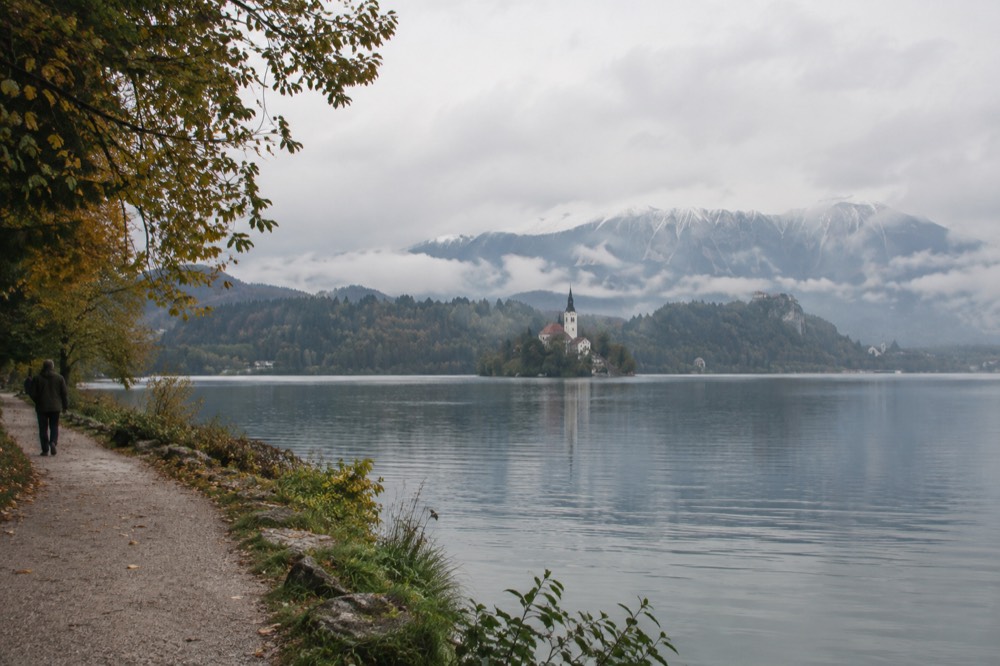
The Quiet Shores: Mlino, Zaka and the Western Side of the Lake
Mlino, on the southern shore near the swimming areas and campsites, and Zaka, on the forested west side below the castle paths, are the two genuinely quiet places to sleep within walking distance of the lake. Both trade evening restaurant choice and the postcard view for lower rates, local guesthouses and mornings where the shoreline is empty, and for many travellers that is the better trade.
Mlino sits where the pletna boats depart, which makes it oddly practical: the island crossing is a five minute walk from your door, and the boats run from the shore you are already standing on. It is also the swimming end of the lake, with the designated areas and grassy banks, so summer stays with children land well here. The trade is dinner: the concentration of restaurants is in the town centre, a 25 minute walk along the promenade, which in practice means either the walk or a taxi. The wider set of guides lives on Ljubljana Travel Guide.
Zaka is the introvert's option. The western shore is woods, a small marina and the steep paths up to Bled Castle's back entrance, and the guesthouses here are few and small. The castle climb from this side is the one locals recommend, quieter than the front steps and through forest. The castle guide covers Ljubljana's castle for comparison, but Bled's cliff fortress rewards the Zaka approach most in the late afternoon, after the last coach has rolled down the front drive.
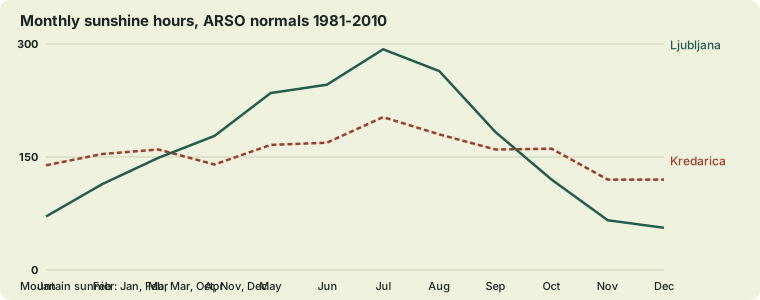
There is a seasonal subtlety to the quiet shores that the booking sites will not tell you. The lake's climate sits just outside the Ljubljana basin, and the basin is the story that defines this whole region. Ljubljana sits at 299 m on the basin floor, where ARSO's 1981-2010 normals record just 56 hours of December sunshine and 37 clear days a year, while Kredarica at 2514 m on Triglav records 120 December hours. The inversion that traps fog over the capital in winter often leaves the lakes and the higher ground in clear air, which is a real argument for basing at Bled rather than in the city between November and February.
When Should You Book, and How Early?
Book three to six months ahead for July and August, which is when lakefront rooms in Bled town sell out first and rates peak, and book Vintgar Gorge's timed-entry slots and the pletna crossings for the same window. For May, June, September and the Christmas period, two to three months is usually enough, and winter stays outside the holidays can often be arranged on short notice.
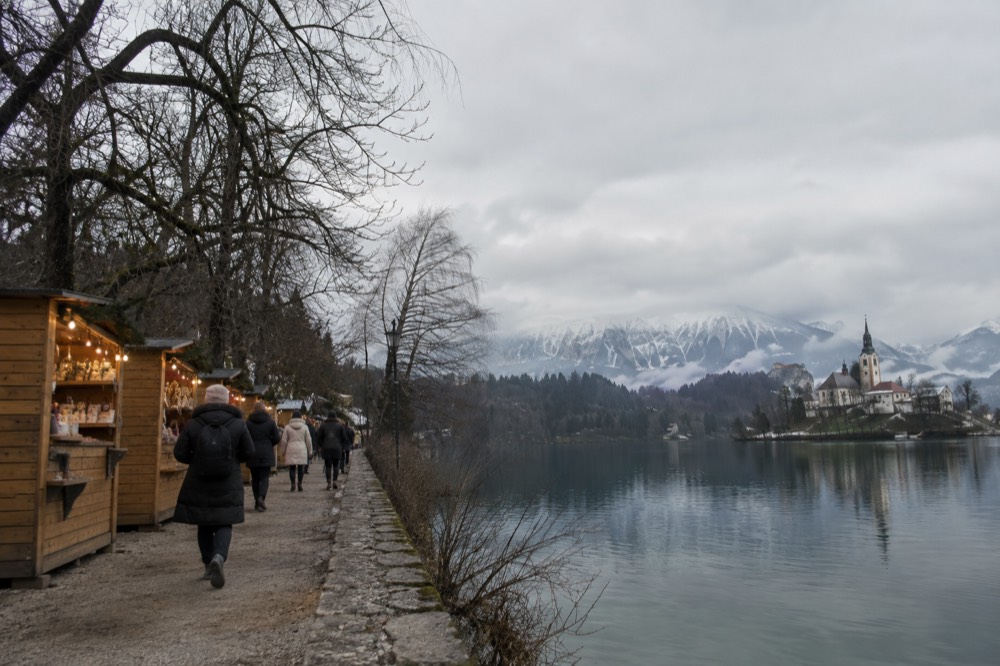
The lake's season is longer than people assume, but it is sharply two-peaked. Summer is the obvious peak. The second, quieter peak is the December festive period, when Bled runs a small Christmas market and the castle and island take on snow-dusted light, and lakefront rooms are scarce then too. Between the peaks, May, June and September offer the best combination of open attractions and thin crowds, and Vintgar's season, April to October, brackets all three months.
The booking order matters. Rooms go first, then the timed-entry gorge slots, then restaurants if you are staying over a weekend. The pletna boats and the electric boat line do not usually sell out days ahead outside peak August, but the gorge's timed slots in July and August do, and the operator's own guidance about the 10:00 to 13:00 crush is worth heeding twice: once when booking the slot, and once when planning which end of the lake to be standing on at that hour.
Travellers coming from the capital should note that day tours from Ljubljana also fill in high summer. The Lake Bled Day Tour covers the same core sights in about 6 hours and is rated 4.8 across 888 reviews, and its summer dates are the ones that go first. Booking a tour does not require you to have booked a room at all, which is precisely the point for anyone using Ljubljana as a base.
Should You Stay Near Lake Bled or Day-trip from Ljubljana?
Stay at the lake if sunrise over the island, swimming, or more than one day of alpine side trips matter to you, because the lake's best hours are the ones day-trippers miss. Day-trip from Ljubljana if your trip is two to three nights, you want restaurants and nightlife, or you are combining Bled with city sights, since a guided tour covers the lake and castle in about six hours and the coach route is under an hour each way.
The honest case for Ljubljana as a base is stronger than Bled's tourism board would like. The city is a two-night destination by the numbers: 2,844,129 overnight stays across 1,392,728 arrivals in the municipality works out to an average stay of about 2.04 nights. A visitor on that pattern cannot usefully sleep at the lake, because a two-night city trip with one Bled day is a better itinerary than a one-night city stop sandwiched by lake nights.
The case for sleeping at Bled is about the hours a tour cannot give you. The island at 07:00, the castle terrace before the coaches, the evening promenade after the last bus leaves, and the freedom to spend a second day at Vintgar or Bohinj without watching a clock. If your trip is four nights or more, or if Bled is the destination and Ljubljana the stopover, the arithmetic flips and the lakefront premium starts to look reasonable.
The middle path is the small-group day tour, which suits travellers who want the lake's sights without the commitment of moving hotels. The small-group Bled, castle and island tour runs about 5h 30m, is rated 4.9 from 293 reviews, and keeps the group small, which matters on a shoreline this narrow. For a fuller alpine day, the Bled and Triglav National Park small-group tour stretches to 10 hours and adds the park's interior.
Where Should Families and Hikers Base Themselves?
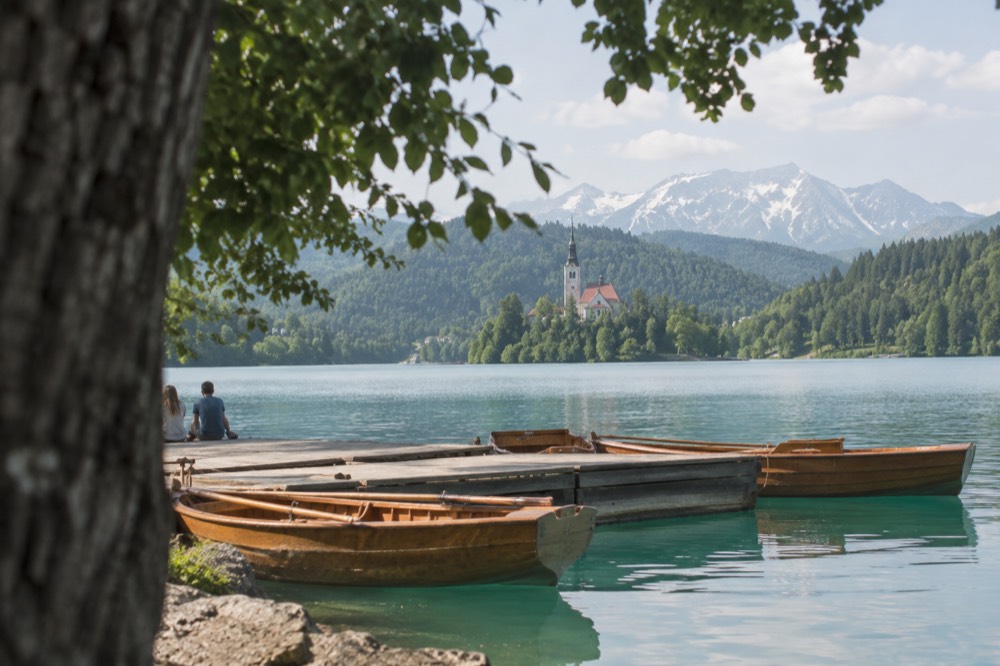
Families should look first at Mlino and the southern shore, where the swimming areas, campsites and flatter access sit together, and where the pletna departure point is a short walk. Hikers should base at Bled for Vintgar and the castle ridge, at Lake Bohinj for the high alpine trailheads, or at Kranjska Gora if the itinerary leans toward the Julian Alps' northern edge, since trailhead access matters more than lake views.
For families, the lake's shape does the work. The southern shore is where the grassy banks and the marked swimming zones are, and the campsites and family guesthouses cluster accordingly. The walk from Mlino to the town centre promenade is flat and strollable with a pushchair, and the pletna crossing, 20 EUR per person, is a short, contained boat trip that suits children better than a long cruise. Vintgar's boardwalks are also manageable with school-age children, though the 15.00 EUR timed tickets and the 10:00 to 13:00 crowding make an early slot the family-friendly one.
For hikers, the base question is really a trailhead question. Bled itself offers the castle ridge, Vintgar, and the long climb toward the Ojstrica and Osojnica viewpoints, the two forested knolls on the southern shore that produce the second-most-photographed views of the lake. Beyond that, the serious terrain starts at Bohinj and in Triglav National Park, and the Vintgar Gorge guide and the Soča Valley guide map what each base unlocks. The park is free to enter, so the only cost is the driving or the transfer.
The pattern across both groups is the same: pick the base for the mornings, not the evenings. Families will want the swimming shore at 09:00 and hikers will want the trailhead at 07:00, and neither group's day is improved by a lakefront window they only see at dinner.
What About Winter Stays and the Shoulder Months?
Winter stays work best for a quiet, atmospheric visit, with the castle and island open year round, but Vintgar Gorge is closed from November to March and swimming is off the table, so the trip becomes about mist, festive stalls and alpine day trips. The shoulder months, May, June and September, are the sweet spot: every attraction is open, the crowds are thinner, and the lake is at its calmest.
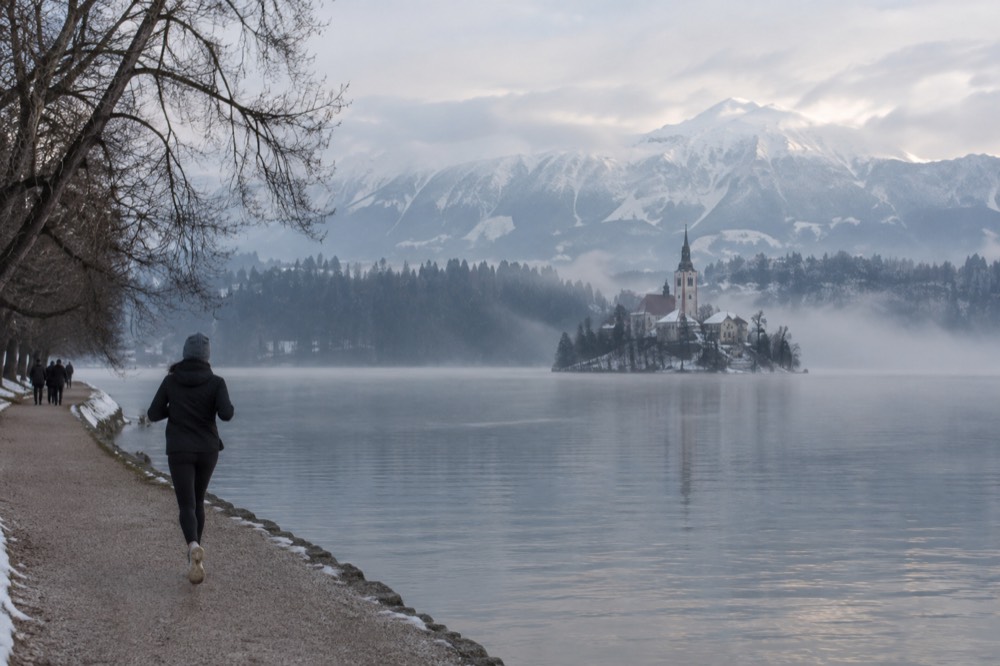
The winter lake has a devoted following, and the reasons are structural rather than sentimental. The basin inversion that fogs in Ljubljana, 91.2 fog days a year in the 1971-2000 normals, often leaves the lake and the hills above it in clearer air, so a February base at Bled can genuinely be the sunnier choice. The castle is open year round, the pletna boats run in calm conditions, and the Christmas period brings the festive market to the promenade.
What winter costs you is the gorge and the green. Vintgar closes after October, and the exact date each year depends on conditions, per the operator's own statement. The swimming season ends, the boat line reduces its schedule, and the days are short. In exchange you get the lake at its emptiest, and the snow-dusted photographs that summer visitors never see.
The shoulder months reward booking less urgently but reward travelling more. May and June bring the alpine meadows into flower before the July heat, and September brings stable water and the first colour on the hills. Our best month to visit breakdown covers the month-by-month case, and the Ljubljana in winter page covers the city side of the same season.
One caution applies to autumn specifically, and it is the one fact most guides miss. If your shoulder trip is September or October and you plan day trips into the capital, expect fog there: those two months average 12.4 fog days each in Ljubljana, level with December, and they are also the joint wettest months at 147 mm. The lake itself sits differently, but the drive between the two is a fog route on early mornings.
The Bottom Line: Matching a Base to Your Trip
Choose Bled town for a first visit of one to three nights where the lake is the destination, the quiet shores for a slower, cheaper version of the same trip, an inland village for value with a car, and Ljubljana with a day tour for short city-centred trips. The lake is small enough that no base is a mistake, and the fixed attraction costs, 19.00 EUR for the castle, 20 EUR for the pletna, 15.00 EUR for the gorge in season, are the same wherever you sleep.
If there is a single organising principle, it is this: the lake rewards early and late hours, so choose the base that puts you on the shore at those hours. For some travellers that means paying the lakefront premium in Bled town, and the sunrise over the island justifies it. For others it means a guesthouse in Mlino, a bed in Radovljica with a car, or a hotel in the capital and a seat on a morning coach.
For the day-trip architecture, the choice of tour is the choice of day. The Lake Bled and Castle trip pairs the lake with the castle in about 6 hours and is rated 4.7 from 1641 reviews. Travellers wanting caves as well can take the Bled and Postojna combo, a 10 hour day that stacks both, while those who want the city first can start with the free Ljubljana Unveiled walk on GuruWalk, a tips-based tour rated 4.91 from 1496 reviews, and reach the lake the following day.
Whichever base you choose, book the room and the gorge slot before anything else, check the pletna and boat schedules for your dates, and leave one afternoon unplanned. The lake is at its best exactly when the itinerary is not.
Common Questions About Where to Stay Near Lake Bled
Is it better to stay in Bled or Ljubljana?
Stay in Bled if the lake is your main destination and you have two or more nights to give it, because the best hours on the shore are early morning and evening, which day-trippers miss. Stay in Ljubljana for trips of two to three nights centred on the city, and take a guided day tour to the lake, which covers the core sights in about 6 hours.
Can you walk everywhere in Bled without a car?
Yes for the lake itself: the full shoreline circuit is about 6 km and takes roughly an hour and a half, and any town-centre bed is within a 20 minute walk of the water. A car is only needed for Triglav National Park, Lake Bohinj and the inland villages.
What is the quietest area near Lake Bled?
Zaka on the western shore is the quietest place within walking distance of the lake, forested and close to the castle's back paths. Mlino on the southern shore is the second quietest, with the swimming areas and campsites nearby.
How many days do you need at Lake Bled?
Two days covers the lake circuit, the castle, the island and Vintgar Gorge at a relaxed pace. A third day unlocks Triglav National Park or Lake Bohinj. Our [how many days in Lake Bled](/answers/how-many-days-in-lake-bled/) page works through the itineraries in detail.
Is Lake Bled expensive to visit?
The fixed attraction costs are moderate: 19.00 EUR for the castle, 20 EUR per person for the pletna boat and 15.00 EUR for Vintgar Gorge in season, with the park itself free. Accommodation is the main variable, and sleeping inland in Radovljica or the villages cuts the room cost substantially.
Which train station is closest to Lake Bled?
Bled Jezero station is 1.5 km from the centre, closer than the mainline Lesce-Bled stop at 4 km, but the two sit on different lines. Check which line your train uses before assuming you need a taxi from the station.