Accessible Ljubljana: Step Free Routes and Wheelchair Access
Ljubljana's car free centre, its funicular, its river boats and its cave trains make it one of the more manageable small capitals in Europe for visitors who cannot manage stairs or long climbs.
Short answer
Ljubljana's historic centre is a pedestrianised zone of roughly 20 hectares, closed to general traffic, so most sightseeing happens on flat riverside ground. The castle funicular at 6.00 EUR return removes the hill climb, city buses take contactless cards, and Postojna Cave covers 3.7 km partly by train. The main obstacles are cobbled lanes and the 400 stairs at Škocjan.
Ljubljana is a small capital built around one river, and that geography does most of the work for any visitor planning around steps, gradients or wheelchair access. The historic core is closed to general motor traffic, the main sights sit within a kilometre or two of each other, and the single real climb in the city, up to the castle, has a funicular running beside it. This guide sets out what the official sources actually publish: the funicular prices and hours, the bus rules that catch visitors out, the card arithmetic, and which day trips from the city ask the least of your legs.
How Walkable Is Central Ljubljana for Wheelchair Users?
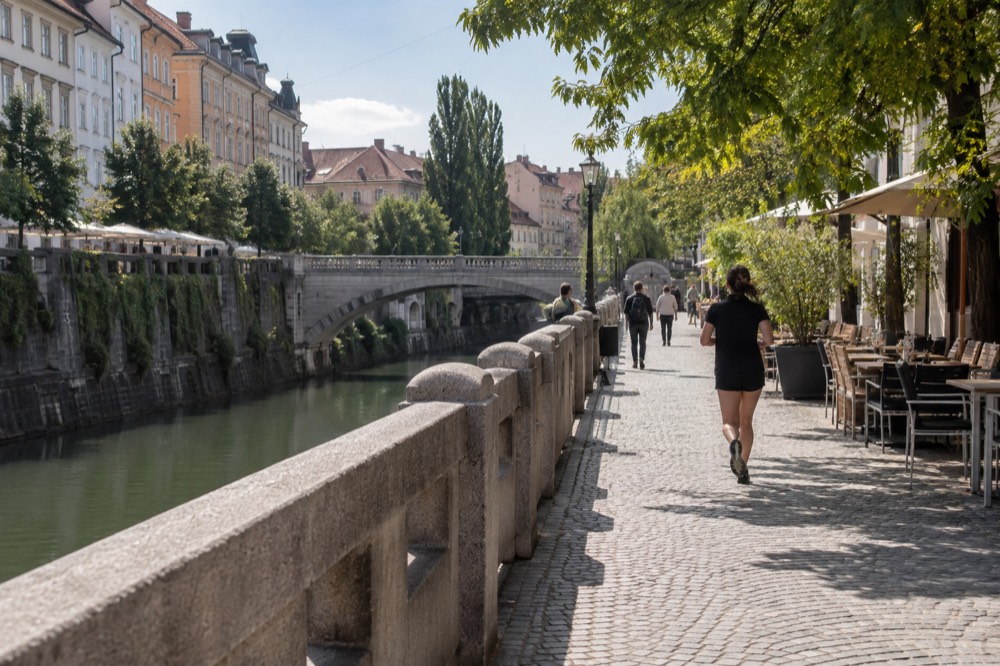
The historic centre of Ljubljana is a pedestrianised zone of roughly 20 hectares, progressively closed to general motor traffic since 2007, which makes the core of the city flat, traffic free and short: most of the main sights sit within a 15 minute roll of Prešeren Square. The Three Bridges, Čevljarski most, the riverside embankments along the Ljubljanica and the Central Market halls all sit on the same level ground on either side of the river. There are no hills to speak of between the Triple Bridge and the Opera House.
That pedestrianisation is the single biggest accessibility fact about the city, and it is official policy rather than a happy accident. The city's own mobility page records the roughly 20 hectare car free zone and its expansion since 2007 (City of Ljubljana walking and cycling page). For a wheelchair user or anyone who cannot manage steps, a traffic free centre removes the two biggest hazards of most European old towns: kerbs and cars sharing narrow lanes.
The honest caveat is the surfaces. Old Town lanes are paved in places with stone setts rather than modern asphalt, and the riverside walks mix smooth sections with older paving. Nothing in the official sources quantifies the cobbles, so this guide will not pretend to. The practical approach is to plan around the main axes, the embankments and the squares, which carry the most foot traffic and the most even surfaces, and treat the narrow side lanes as optional. The Old Town orientation guide maps those lanes street by street.
Distances help too. The city is compact: from Prešeren Square to the Central Market is a few hundred metres, to the Dragon Bridge about the same, and the whole sightseeing core fits inside a loop most visitors complete in a morning. The one day in Ljubljana itinerary shows how little ground a full day actually covers.
| Core zone fact | Figure | Source basis |
|---|---|---|
| Car free historic centre | Roughly 20 hectares | City of Ljubljana |
| Pedestrian zone expanded since | 2007 | City of Ljubljana |
| Main sightseeing radius | Under 1.5 km end to end | Publisher measurement of the core |
| River crossings in the core | Tromostovje and Čevljarski most | City mapping |
Which Ljubljana Sights Work Without Stairs?
Most of the headline sights in the centre sit at street level with no steps between them: Prešeren Square, the Triple Bridge, the Dragon Bridge, the riverside embankments and the outdoor Central Market are all on the flat, and the whole lot connects along level riverside paths. The exceptions are predictable. Ljubljana Castle sits on a hill and is reached either by footpath or by funicular. The cathedral, the National Gallery and the museums are street level buildings with their own internal arrangements, and the museums almost all close on Mondays, which matters more to an itinerary than any single doorway does.
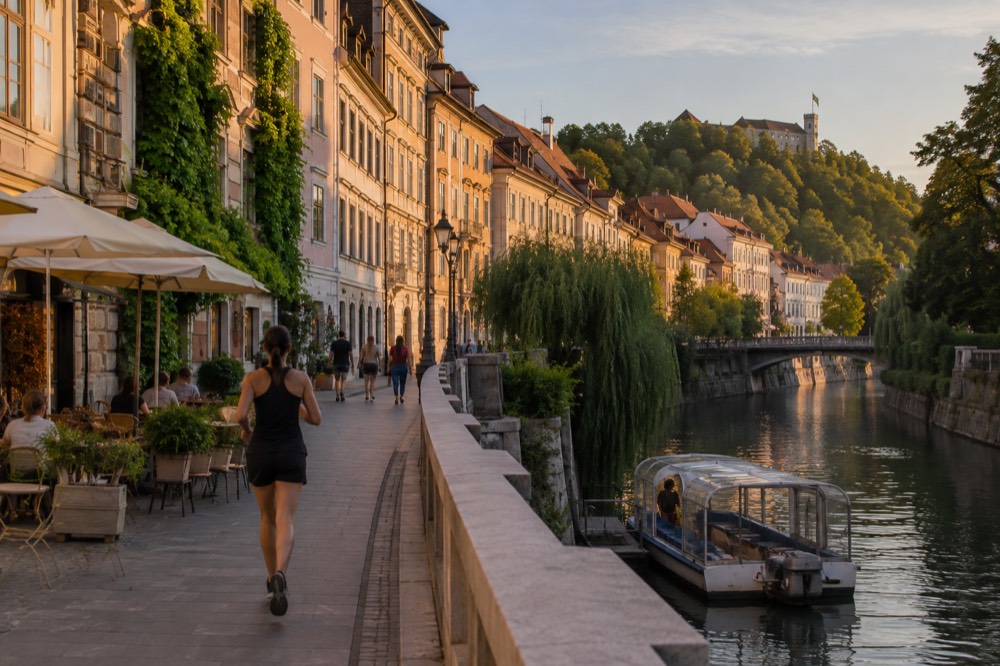
The riverside is the spine of an accessible day. The Ljubljanica runs straight through the middle of the pedestrian zone, and both banks carry paved walks from the Trnovo district through to the eastern edge of the centre. The Ljubljanica river cruise guide covers the boat options, and the electric boat trips board from central piers: the 50 minute electric boat tour runs from a central departure point and holds a 4.6 rating from 149 reviews, from $17. Boarding arrangements are set by the operator, so confirm step free boarding when you check the listing.
For orientation on day one, a guided walk covers the flat core efficiently. The free Old Town walk on GuruWalk, "Ljubljana Unveiled", runs about two hours from the Roman roots of the city to the Dragon Bridge, is rated 4.91 from 1496 reviews, and costs nothing up front: you pay what you think the walk was worth. Because it stays in the pedestrianised core, it follows the same flat ground this guide describes.
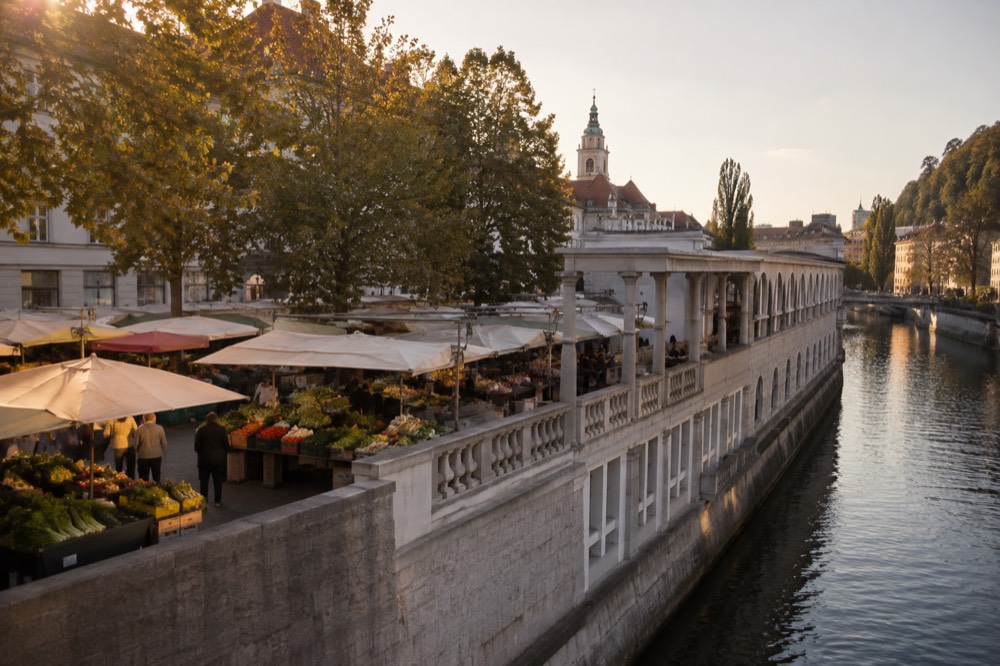
The market is worth a paragraph of its own. The Central Market's covered halls run Monday to Friday 07:00-16:00 and Saturday 07:00-14:00, with the outdoor stalls on Vodnikov and Pogačarjev trg roughly Monday to Saturday from 06:00. The Central Market guide has the full hours, and the halls sit on flat ground directly across the river from the core. The Ljubljana for free guide collects the other no cost options, including the first Sunday of the month, when the national museums and galleries admit everyone free of charge.
Is Ljubljana Castle Accessible Without the Climb?
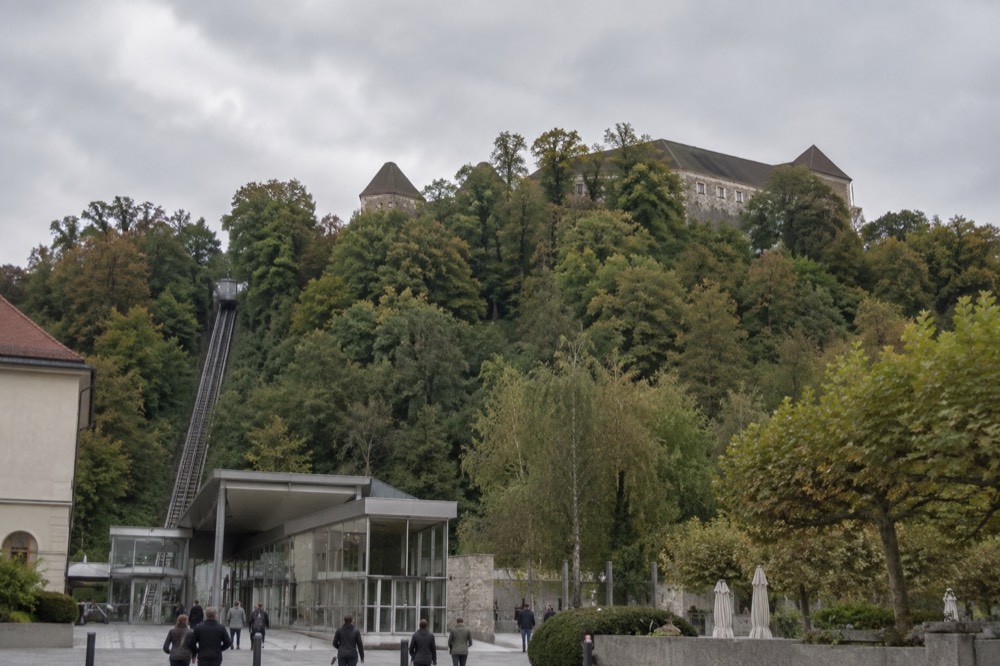
The castle hill is the one unavoidable gradient in the city, and the funicular removes it: a return adult ticket is 6.00 EUR, the combined castle ticket with funicular is 19.00 EUR, and the funicular runs 09:00-22:00 from May to September and 09:00-19:00 the rest of the year, every day of the year. The castle's own price list publishes all of these figures, and the combined 19.00 EUR ticket covers the Viewing Tower, the exhibitions, the video mapping and the funicular both ways.
The funicular is the practical answer for anyone who cannot or does not want to walk the hill path. It departs from the lower station just off the Krekov trg side of the old core, a few minutes' level roll from the river, and it runs late into the evening in summer, which makes the sunset viewing window realistic without a climb. Hours shorten in the October to April half of the year, and on 31 December everything closes at 17:00, reopening from 10:00 on 1 January.
What the official sources do not settle is the internal layout: the castle is a complex of courtyards and buildings of different ages, and the castle's site does not publish a step by step accessibility map. So the honest planning position is this: the funicular solves the hill, the grounds and courtyard are at the top of the ride, and the individual exhibitions and the Viewing Tower have their own arrangements that should be confirmed with the castle before a visit. The Ljubljana Castle guide and the castle funicular guide carry the full price and hours tables.
| Castle and funicular item | Figure |
|---|---|
| Funicular, single, adult | 3.30 EUR |
| Funicular, return, adult | 6.00 EUR |
| Castle ticket including funicular, adult | 19.00 EUR |
| Castle ticket including funicular, child 7-18 | 13.50 EUR |
| Funicular hours, May-Sep | 09:00-22:00 |
| Funicular hours, Jan-Apr and Oct-Dec | 09:00-19:00 |
| Open | 365 days a year |
If you would rather have the arrangements handled for you, the skip the line castle entry ticket with optional funicular ride covers both pieces in one booking, rated 4.3 from 993 reviews and from $17, with the funicular ride as an option at booking.
How Do You Pay for Buses, and What Catches Visitors Out?
City buses in Ljubljana do not take cash at all: a single zone 1 ride is 1.50 EUR for 90 minutes including transfers, paid by Urbana card for 2.00 EUR or by contactless bank card and mobile wallet directly on board, and the no cash rule is the single fact guidebooks most often get wrong. LPP, the operator, publishes the payment methods, and the contactless option now removes the old trap of needing an Urbana card before you can board anything.
The Urbana card itself is bought and topped up at the LPP Passenger Centre on Slovenska 56, at Urbanomat machines, kiosks, tourist information centres and post offices. For a visitor staying in the pedestrianised core, buses matter mostly for the edges of the city and the bus station; the centre itself is walked. The getting around Ljubljana guide compares buses, taxis and the bike share system in full, and the Ljubljana bus station guide covers the main terminal, which sits just outside the pedestrian zone on flat ground.
Low floor buses are the standard on LPP's city network, though the operator's English pages do not publish a per route accessibility guarantee, so this guide states only what is sourced: the fare rules, the payment rules and where to buy cards. Taxis fill the gaps. The Ljubljana taxi and transfers guide covers operators and typical uses, and taxis can drop closer to the pedestrian core than a private car can, since the centre itself is closed to general traffic.
One more payment fact belongs here because it appears on every hotel bill: tourist tax in Ljubljana is 3.13 EUR per person per night, comprising 2.50 EUR of tax plus a 0.63 EUR promotion surcharge, with a half rate of 1.57 EUR for ages 7 to 18 and exemption for children under 7. The Ljubljana prices guide puts that in the context of a full daily budget.
| Bus and payment item | Figure |
|---|---|
| Urbana card purchase | 2.00 EUR |
| Single ride, zone 1, 90 minutes with transfers | 1.50 EUR |
| Cash accepted on board | No |
| Contactless bank cards and phones on board | Yes |
| Card purchase and top up points | LPP Passenger Centre, Urbanomat machines, kiosks, TICs, post offices |
Planning a day trip while you are still sorting the transport? The most leg friendly big excursion from the city is the cave and castle combination: the six hour Postojna Cave and Predjama Castle tour runs from central Ljubljana, holds a 4.8 rating from 2802 reviews, and covers the cave's 3.7 km route partly by the underground train.
Does the Ljubljana Card Make Sense for an Accessible Visit?
The Ljubljana Card costs 41.00 EUR for 24 hours, 49.00 EUR for 48 hours and 54.00 EUR for 72 hours, and it includes the castle funicular, the Ljubljanica river boat cruise, city buses, a guided walking tour, four hours of BicikeLJ bike share and one entry each to more than 30 museums and galleries. The official tourist board page publishes the tiers and the inclusions (Ljubljana Card page), and the arithmetic is checkable from the verified single item prices.
The card's value for this kind of visit rests on two inclusions in particular. The funicular and the river cruise are the two paid items that do the most physical work for a visitor: one removes the castle hill, the other moves you along the river without walking. A castle ticket with funicular is 19.00 EUR and a river cruise runs about 15 EUR with Barka, so those two alone come to roughly 34 EUR before a single museum entry. Add one or two galleries and a bus ride or two, and the 24 hour card has paid for itself. The full index of guides sits on Ljubljana Travel Guide.
| Item, bought separately | Price | Card covers it? |
|---|---|---|
| Castle ticket including funicular | 19.00 EUR | Yes, funicular included |
| Ljubljanica river cruise | About 15 EUR | Yes |
| Zone 1 bus ride | 1.50 EUR | Yes, LPP buses |
| National Gallery permanent collection | 10 EUR | Yes, one entry each |
| Museum of Modern Art | 7 EUR | Yes, one entry each |
| Guided walking tour | Varies by operator | Yes, a guided city walk |
Two mechanics matter. Each attraction allows one entry, and the card deactivates the moment its 24, 48 or 72 hours expire, so start the clock on the morning you begin sightseeing, not at the airport. The Ljubljana Card guide runs the full comparison, and the best time to visit Ljubljana guide helps with choosing the window in which those outdoor hours are worth most.
Which Day Trips from Ljubljana Ask the Least of Your Legs?
Postojna Cave is the standout low effort day trip: the visitor route is 3.7 km and travelled partly by the cave's own train, the tour lasts about 90 minutes, and the cave is open every day of the year including holidays and in bad weather. The train does the distance. That is the difference between Postojna and almost every other cave in Slovenia, and it is why this guide's related tour is the six hour Postojna Cave and Predjama Castle combination from Ljubljana.
Contrast that with Škocjan Caves, the UNESCO listed alternative. Škocjan's tour runs about 2 km on foot with roughly 400 stairs and lasts 2h30 to 3 hours. It is a magnificent cave, but it is a walk, and Postojna is a ride. For a visitor planning around stairs, that single comparison settles the choice, and both sets of figures come from the operators' own pages (Postojna Cave ticket page).
| Day trip | Physical demand | Key figures |
|---|---|---|
| Postojna Cave | Route 3.7 km, partly by cave train, about 1h30 | 34.90 EUR adult, cave holds 10 C year round |
| Predjama Castle | Cliff castle, reached from the car park | 24.00 EUR adult, open year round |
| Škocjan Caves | About 2 km on foot, roughly 400 stairs | 16.00 to 24.00 EUR adult by season, 12 C |
| Lake Bled | Lakeside path is flat; castle and island add stairs | Bled Castle 19.00 EUR, pletna boat 20 EUR per person |
| Velika Planina | Guided hike, 6 hours, mountain terrain | From $86, rating 4.8 from 74 reviews |
The 10 C cave temperature is the practical detail visitors miss. Caves hold roughly the same temperature year round, which makes them the reliable answer on a wet or a heatwave day, but it also means arriving in August shorts and standing in 10 C for 90 minutes. Bring a layer. The Postojna Cave guide and the Škocjan Caves guide carry the full price tables and seasonal notes.
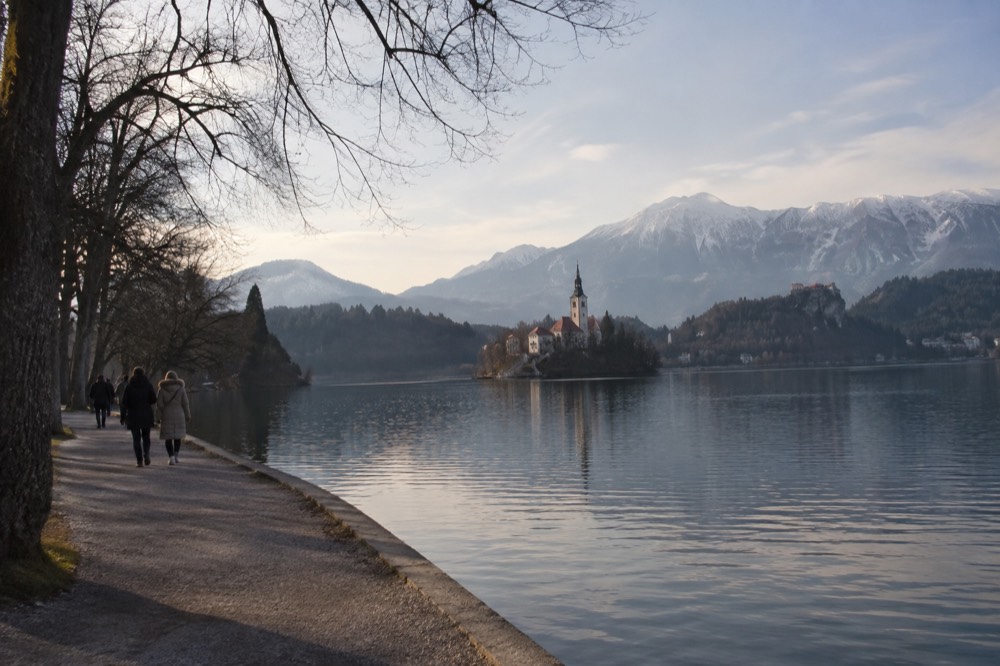
Lake Bled is the other big excursion, and it splits cleanly. The lakeside itself is level walking with the castle perched above and the island reached by boat, so a Bled day can be as easy or as demanding as you choose. The six hour Lake Bled and Bled Castle tour from Ljubljana, rated 4.7 from 1641 reviews from $86, handles the transfer, and the Ljubljana to Lake Bled guide covers the independent options, including the rail detail most guides get wrong: Bled Jezero station is 1.5 km from the lake, while Lesce-Bled is 4 km away on a different line.
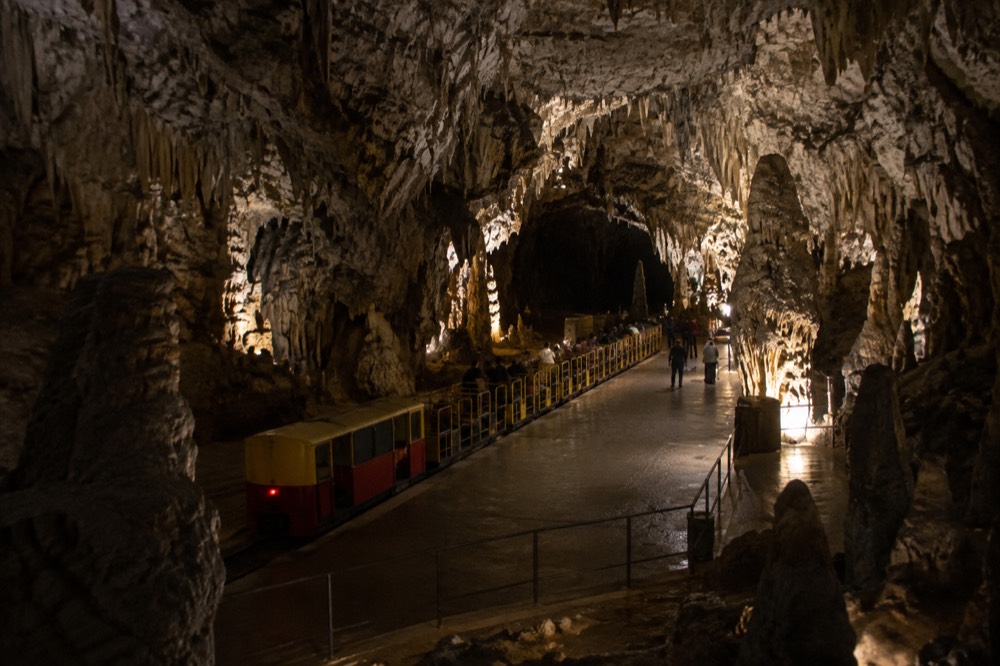
For the cave and castle combination in one booked day, the six hour tour from Ljubljana covers both Postojna Cave and Predjama Castle with transport from the city included, rated 4.8 from 2802 reviews and from $132.
When Is the Best Time of Year for an Easy Visit?
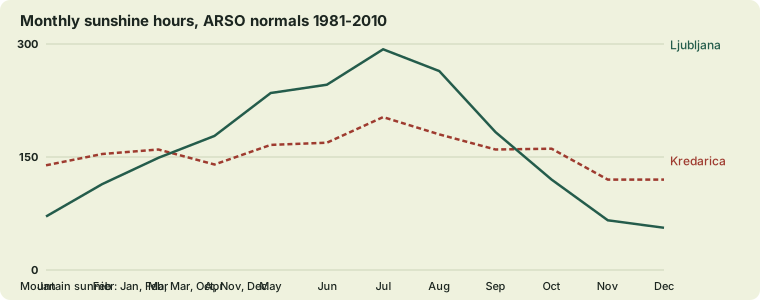
July is the sunniest month in Ljubljana with 293 hours of sunshine and only 4 overcast days on average, while December bottoms out at 56 hours of sunshine and 19 overcast days, and September and October tie as the joint wettest months at 147 mm of rain each, above July's 115 mm. Those are ARSO's 1981-2010 climate normals for the city, and they reframe the usual shoulder season advice: early autumn in Ljubljana is wetter than midsummer, not drier.
The fog numbers are the detail almost every other guide misses. ARSO's 1971-2000 series, the only period for which fog is published, gives Ljubljana 91.2 fog days a year, with September and October at 12.4 fog days each, level with December's 12.6 and above January's 11.3. The reason is the basin: Ljubljana sits in a hollow at 299 m, and in the colder half of the year cold air is trapped under warmer air above, so the city sits under fog while the hills a few hundred metres up are in sunshine.
That inversion is the most useful weather fact on this site. In December the city averages 56 hours of sunshine while Kredarica, at 2514 m on Triglav, averages 120 hours over the same month, and in January it is 139 hours against the city's 71. The city wins April to September and loses October to March: the lines cross. A winter visitor who wants sun should go up, to the castle viewpoint, to Šmarna gora, or up into the Julian Alps on a booked day tour, rather than waiting for the basin to clear.
For a visit planned around easy walking, the practical reading is late spring to early summer. May combines 235 hours of sunshine with mild mean temperatures of 15.8 C, before the July and August peaks of 21.3 C and 20.6 C, and the funicular runs until 22:00 from May through September, giving long evenings at the top. The Ljubljana in winter guide and the Ljubljana in December guide cover the cold half of the year, when indoor museums, the covered market halls and the 10 C caves become the reliable plan.
| Month | Sunshine hours | Rain, mm | Clear days | Overcast days |
|---|---|---|---|---|
| May | 235 | 109 | 3 | 8 |
| June | 246 | 144 | 3 | 7 |
| July | 293 | 115 | 5 | 4 |
| August | 264 | 137 | 6 | 5 |
| September | 183 | 147 | 2 | 8 |
| October | 120 | 147 | 1 | 13 |
What Should You Know Before Arriving?
Slovenia is in the European Union, the eurozone and the Schengen area, so there is no currency to change and no routine border check arriving from Italy, Austria, Hungary or Croatia; the euro was adopted on 1 January 2007 and land and sea Schengen checks were lifted on 21 December 2007, with air checks following on 30 March 2008. Ljubljana Airport is about 26 km from the city, and the historic centre you arrive into is pedestrianised, so plan the last kilometre on foot, by taxi or by bus rather than by rental car to the door.
If you are driving, the pedestrian zone is the planning fact. The centre is closed to general motor traffic, so hotels inside the core are reached by a short walk from drop off points at its edge, and the car parks sit just outside the zone. The car rental in Ljubljana guide covers picking a vehicle up, and this site publishes no car hire rates because they are date specific. The Ljubljana airport to city centre guide covers the transfer options; an airport bus exists, but the airport's own site blocks automated reading, so check times and fares there directly rather than trusting a second hand figure.
Language is rarely a barrier. The guide to English in Ljubljana covers what to expect, and the tourist information centres, where you can buy and top up an Urbana card, are staffed in English through the day. The is Ljubljana safe guide addresses the other common pre trip question, and the short answer is that the centre is a low crime, traffic light environment after dark.
For the river itself, the 50 minute electric boat tour along the Ljubljanica boards from the centre and holds a 4.6 rating from 149 reviews, from $17, and the silent electric boats are the calmest way to see the embankments without walking them. Confirm boarding arrangements on the live listing.
Whether you build the days yourself or let a tour handle the transfers, the three options below cover the range most visitors to this site end up comparing: the cave and castle day trip, the Lake Bled excursion and the free GuruWalk orientation walk through the flat core.
Common Questions About Accessible Ljubljana
Is central Ljubljana pedestrianised?
Yes. The historic centre is a pedestrianised zone of roughly 20 hectares, progressively closed to general motor traffic since 2007. The main sights, the river embankments and the market all sit inside it on flat ground.
Is Ljubljana Castle accessible without climbing the hill?
The funicular removes the climb. A return adult ticket is 6.00 EUR, or 19.00 EUR combined with the castle ticket, and it runs from 09:00 to 22:00 between May and September and 09:00 to 19:00 the rest of the year, every day of the year. Internal arrangements for the exhibitions should be confirmed with the castle directly.
Do Ljubljana buses take cash?
No. City buses accept no cash at all. Pay with an Urbana card, which costs 2.00 EUR to buy, at 1.50 EUR per zone 1 ride valid 90 minutes with transfers, or tap a contactless bank card or phone on board.
Which cave is easier, Postojna or Škocjan?
Postojna. Its 3.7 km visitor route is travelled partly by the cave's own train over about 90 minutes, while Škocjan's tour is about 2 km on foot with roughly 400 stairs. Postojna also holds a steady 10 C year round and opens every day, including holidays and bad weather.
Is the Ljubljana Card worth it for a short visit?
Often, yes. The 24 hour card costs 41.00 EUR and includes the funicular, the river cruise, buses, a guided walk and one entry each to more than 30 museums and galleries. The funicular and cruise alone come to roughly 34 EUR bought separately.
What is the best month to visit for easy walking?
May to early July. May averages 235 hours of sunshine at a mild 15.8 C mean, and from May through September the funicular runs until 22:00. Avoid counting on September and October: they tie as Ljubljana's joint wettest months at 147 mm each.