What to Be Careful of in Slovenia?
The practical cautions for visitors to Slovenia and Ljubljana: bus payment rules, seasonal closures, cave temperatures, autumn fog, and the tourist traps that do exist.
What to Be Careful of in Slovenia?
Slovenia is one of the safest countries in Europe, and the things to be careful of are practical rather than dangerous. The real cautions: city buses in Ljubljana take no cash, Vintgar Gorge closes from about November to March, show caves hold about 10 to 12 degrees Celsius year round, and September and October bring the year's densest fog and heaviest rain. Violent crime and organised scams are rare, and because Slovenia is in the Schengen area there are no routine border checks arriving from Italy, Austria, Hungary or Croatia.
That is the short version. The longer version is that most visitors to Slovenia run into trouble of a very specific kind: a plan that assumed summer conditions, a payment method that does not work where they expected it to, or a bill with a small surcharge nobody mentioned at check-in. None of it is dramatic, and all of it is avoidable with a little planning.
The country's fundamentals are genuinely reassuring. Slovenia is a member of the European Union, adopted the euro on 1 January 2007, and joined the Schengen area on 21 December 2007, with air border checks lifted on 30 March 2008, as the Slovenian government's own membership page states. Coming from Italy, Austria or Hungary you drive straight through the former border. Coming from Croatia, which joined Schengen and the euro on 1 January 2023, the same now applies. There is no currency to change if you are coming from the eurozone, and no border formalities to build into your schedule.
Is Slovenia Safe for Tourists?
Yes, Slovenia is widely regarded as one of Europe's safest destinations, with low rates of violent crime and little of the aggressive tourist targeting found in more crowded capitals. The cautions that do matter are petty and avoidable: keep an eye on belongings in busy spots, take care on wet cobblestones and riverbanks, and treat the Ljubljanica's edges with respect at night. Solo travellers and families face no unusual risks here.
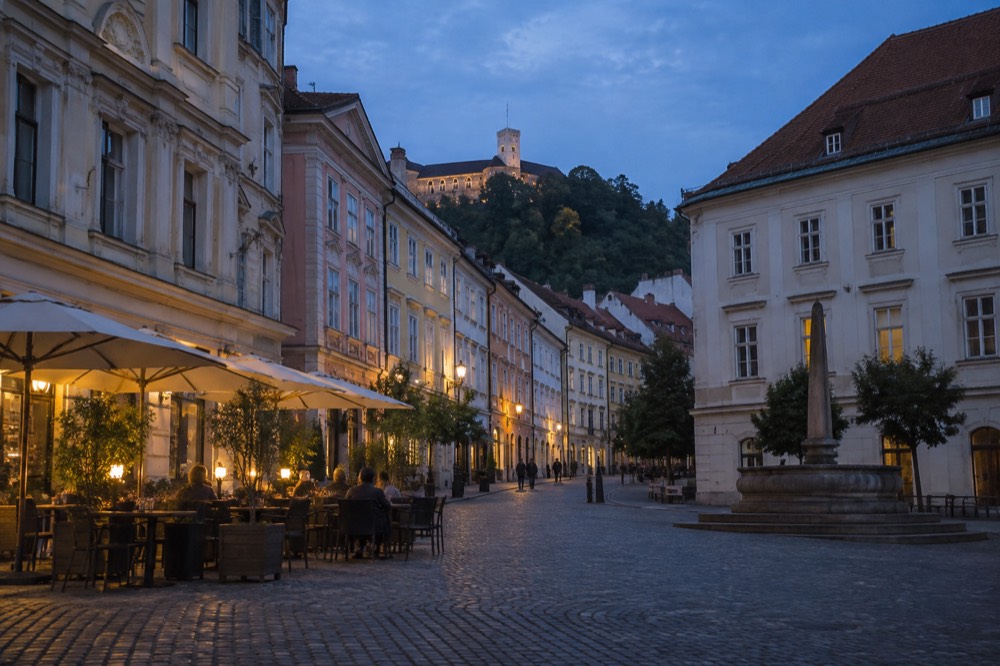
Ljubljana's historic centre helps with this more than most visitors realise. The centre is pedestrianised, a car-free zone of roughly 20 hectares that has been progressively expanded since 2007, so the usual dance with traffic simply does not happen on the main sightseeing streets. Walkable, compact and largely free of vehicles, the old core removes a whole category of urban risk.
Tap water is safe to drink throughout Slovenia, which is one less thing to worry about and one less reason to buy plastic bottles. If you want the fuller picture on that, the site's guide to tap water in Slovenia covers it in detail, and the question of whether Ljubljana is safe gets its own dedicated answer elsewhere on this site.
The honest caveat is that this site does not publish crime statistics, because no verified official series was sourced for them. What can be said is behavioural: the risks here look like an unattended bag at a busy market, a phone on a café table, or a bicycle light left off at night, not anything directed at tourists as targets.
What Should You Be Careful of with Money and Transport in Ljubljana?
The two payment traps in Ljubljana are cash on city buses and the tourist tax on your hotel bill. Ljubljana's city buses accept no cash at all: a single ride in zone 1 costs 1.50 EUR with an Urbana card, the card itself costs 2.00 EUR, and contactless bank cards and mobile wallets also work on board. Tourist tax adds 3.13 EUR per person per night to accommodation bills, with children under 7 exempt.
The no-cash bus rule is the single fact that most often catches visitors out, and the one guidebooks are most frequently wrong about. The operator's own payment page is explicit: no cash is accepted on board. Contactless payment now softens the old trap of needing an Urbana card before you can board anything, but if you are paying per ride with a card, check the fare rules rather than assuming a daily cap exists. The site's guide to getting around Ljubljana goes through the options, and paying for public transport in Ljubljana answers the bus question directly.
| Item | Figure | What to be careful of |
|---|---|---|
| Single bus ride, zone 1, 90 minutes | 1.50 EUR | Cash not accepted on board |
| Urbana card purchase | 2.00 EUR | Buy at LPP Passenger Centre, Urbanomat machines or kiosks |
| Contactless on board | Visa, Mastercard, mobile wallets | Check your bank's foreign transaction fee |
| Tourist tax | 3.13 EUR per person per night | Half rate 1.57 EUR for ages 7-18; under 7s exempt |
| Currency | Euro | Slovenia adopted it 1 January 2007 |
Taxi pricing is the other money question, and the honest answer is that this site publishes no fare table because none could be verified from a primary source. Agree the fare or confirm the meter before the doors close, and treat any driver who quotes a flat price well above the going expectation with the scepticism you would anywhere. For the wider cost picture, Ljubljana prices and the answer to whether Ljubljana is expensive for tourists set out what meals, attractions and day trips actually cost.
Which Natural Hazards and Seasonal Traps Catch Visitors Out?
The seasonal traps are the ones that ruin plans: Vintgar Gorge closes to visitors between April and October, so it is shut through winter, and show caves hold roughly the same temperature year round, about 10 degrees Celsius at Postojna and 12 at Škocjan, which chills August visitors badly. September and October are the joint wettest months at 147 mm each and average 12.4 fog days each, so autumn plans need indoor backups.
Start with the caves, because they cut the other way too: a constant 10 degrees Celsius makes Postojna Cave a reliable answer to a heatwave or a downpour, and the operator states the cave is open every day, including holidays and in bad weather. The official ticket page gives 34.90 EUR adult entry and about 1 hour 30 minutes for the 3.7 km route, part of it on the cave train. Bring a layer even in August, because shorts and 10 degrees do not mix for ninety minutes. The Cave and Castle Tickets and Tour from Ljubljana bundles this with Predjama Castle in a six-hour day, rated 4.8 across 2,802 reviews and from $132, which suits anyone who would rather not arrange two separate tickets and a transfer.
Vintgar Gorge is the opposite kind of caution: a seasonal closure that catches shoulder-season travellers. The operator's own opening page states the gorge is open to visitors between April and October, with the exact closing date depending on conditions and timed-entry slots applying in season. An adult All-in-One Pass is 15.00 EUR. Do not build a November itinerary around it, and if you are going in the busiest window, the operator says crowds peak between 10:00 and 13:00.
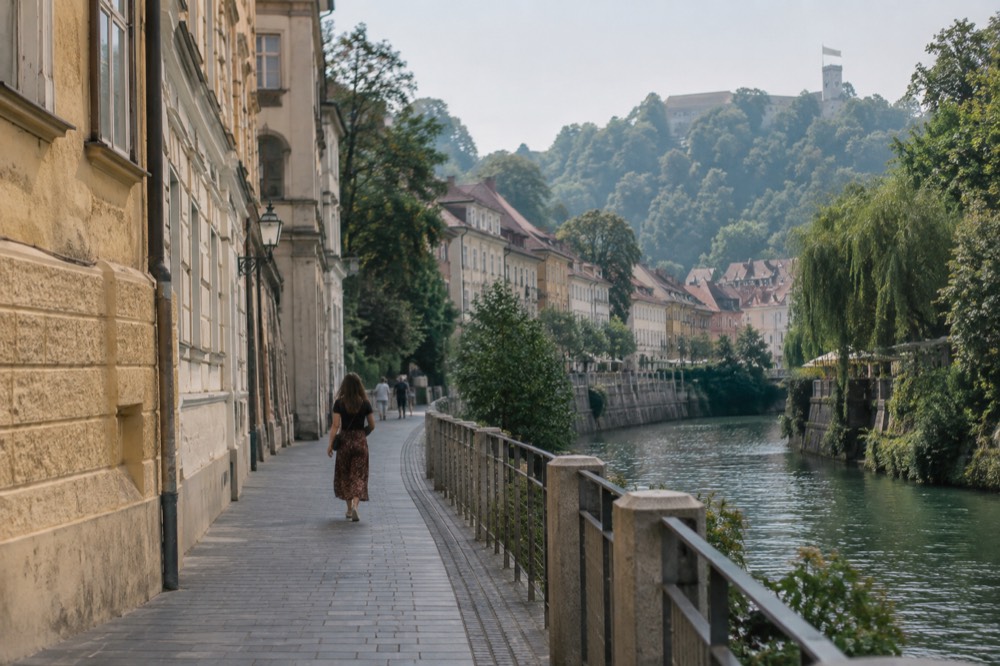
The autumn weather is the fact most guides get wrong. Ljubljana sits in a basin, and in the colder half of the year cold air is trapped under warmer air above, so the city fogs in while hills a few hundred metres up sit in sunshine.
The practical reading of that: an October city break should carry a rain plan and a fog expectation, and a winter visitor who wants sunshine should go up, to the castle hill, Šmarna Gora, or a Bled or Julian Alps day trip. The site's guides to the best time to visit Ljubljana and rainy day ideas in Ljubljana build those plans out properly.
Are There Scams or Tourist Traps in Slovenia?
The scams are few and mild, and most of what gets called a tourist trap is really a pricing structure worth knowing in advance. Ljubljana Castle's grounds are free while the funicular and the tower are paid, a combined castle ticket with funicular costs 19.00 EUR, and museums that normally charge are free on the first Sunday of every month. The one genuine trap is assuming an outdoor event will run regardless of weather.
The castle distinction matters because visitors arrive with three different beliefs: that the castle is free, that it is expensive, or both at once. The truth is split. The grounds are free to enter; the funicular, the Viewing Tower and the exhibitions are not, and a castle ticket including the funicular is 19.00 EUR for an adult, per the castle's official price list. State museums and galleries, including the National Gallery and the Slovenian Ethnographic Museum, are free on the first Sunday of every month, and most close on Mondays, which is the planning fact that saves a wasted walk.
The weather-cancellation trap is Ljubljana's own. Odprta Kuhna, the open-air food market on Pogačarjev trg, runs on Fridays roughly March to November, and the official wording is "every sunny Friday", which is literal: it is cancelled in bad weather. Build a Friday around it and check the sky, or have a restaurant fallback from the where to eat in Ljubljana guide.
Two smaller cautions complete the honest list. First, do not print a combined Postojna Cave and Predjama Castle ticket price from memory: the separate prices are 34.90 EUR and 24.00 EUR, and this site deliberately publishes no combined figure because the operators' own pages do not confirm one. Second, if a free walking tour tempts you, the genuinely free tips-based walks in Ljubljana run on GuruWalk, and one, the Snacking Love Walk, pairs sights with snack stops whose tasting carries a fixed extra cost on its listing, so read the fine print before assuming everything on a "free" walk costs nothing.
| Attraction or rule | The trap | The reality |
|---|---|---|
| Ljubljana Castle | "Is it free or paid?" | Grounds free; funicular and tower paid; combined ticket 19.00 EUR |
| State museums | Arriving on a Monday | Most close Mondays; free entry first Sunday of each month |
| Odprta Kuhna | Assuming it runs in rain | "Every sunny Friday" is literal; cancelled in bad weather |
| Vintgar Gorge | Winter itineraries | Open April to October only; exact closing date depends on conditions |
| Show caves | Dressing for August | About 10 C at Postojna, 12 C at Škocjan, year round |
For a first visit that covers the city without any of these traps, the free Old Town walk on GuruWalk, rated 4.91 from 1,496 reviews, is a low-risk way to get oriented, and Ljubljana Travel Guide covers each of these cautions in depth in its dedicated guides.
Common Questions About Staying Safe in Slovenia
What To Be Careful Of In Slovenia?
Be careful with practical details rather than safety: no cash on Ljubljana city buses, tourist tax of 3.13 EUR per person per night on hotel bills, Vintgar Gorge's winter closure, cave temperatures near 10 degrees Celsius, and the September and October fog and rain peak. Violent crime and scams are rare, and Slovenia's EU, eurozone and Schengen membership means no border or currency friction from neighbouring countries.
Is Slovenia safe for tourists?
Yes. Ljubljana's centre is pedestrianised, tap water is drinkable nationwide, and there is no pattern of tourist-targeted crime. The usual city precautions about bags and phones are enough.
Do you need cash in Slovenia?
Less than you might think. The currency is the euro, contactless cards work on city buses and almost everywhere else, and the main cash-only failure point is one that no longer exists, since buses accept contactless but not cash.
What is the biggest weather caution?
Autumn. September and October are the joint wettest months at 147 mm each and average 12.4 fog days each in ARSO's 1971-2000 fog series, so carry a rain plan and expect morning fog. In winter the basin fogs in while the hills above sit in sunshine.
Are the caves cold?
Yes, year round. Postojna Cave holds about 10 degrees Celsius and Škocjan about 12, whatever the weather outside, which makes them excellent heatwave and rain options but cold in shorts. Bring a layer.
Are free walking tours really free in Ljubljana?
The GuruWalk walks are tips-based, so the walk itself is free. Read each listing's fine print: the Snacking Love Walk's snack tastings carry a fixed extra cost stated on its listing.