Can Brits Drink Tap Water in Slovenia?
Yes, Slovenia's tap water is safe to drink, and it is some of the cleanest in Europe. Here is what Brits should know about the taste, the sources and where to refill a bottle.
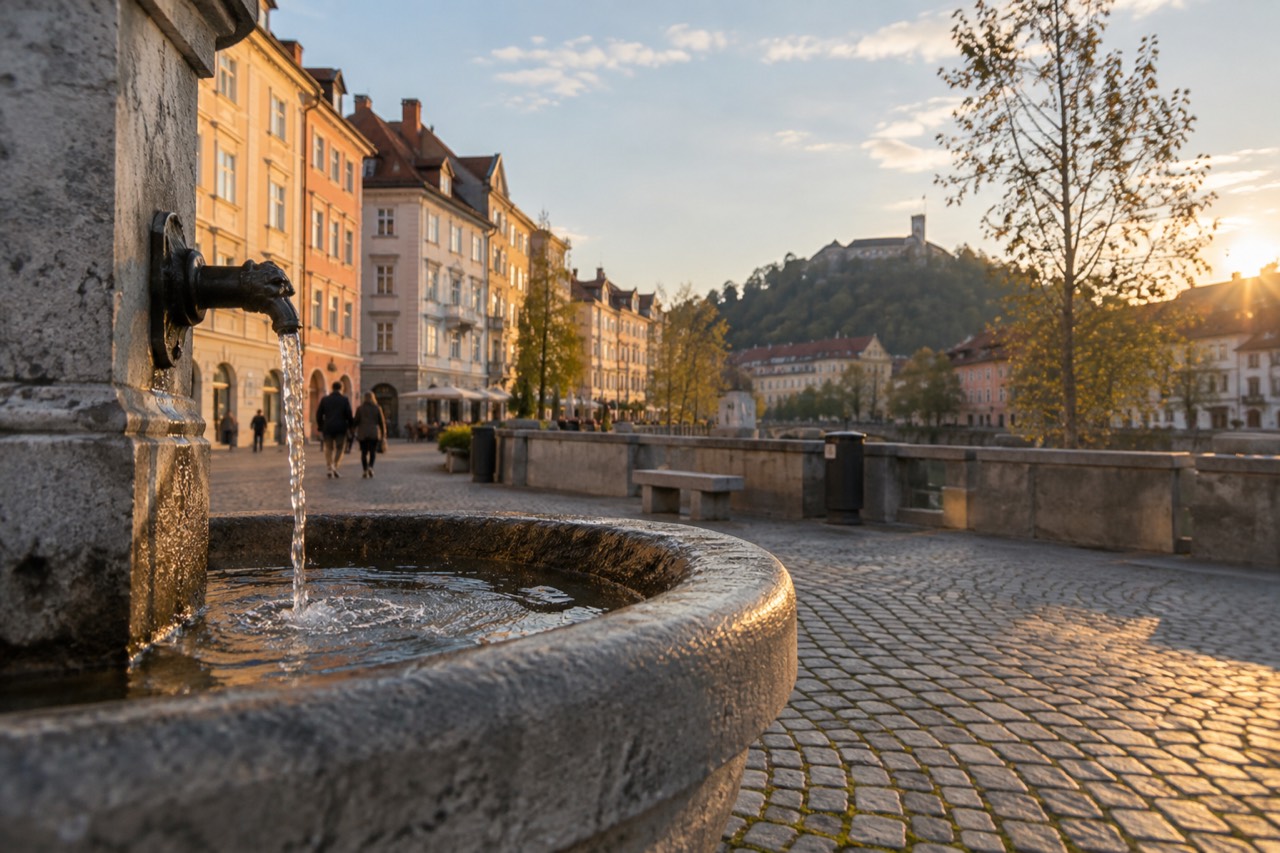
Can Brits Drink Tap Water in Slovenia?
Yes. Tap water throughout Slovenia is safe to drink, including every hotel, restaurant and public building in Ljubljana, and British visitors can drink it straight from the tap with no filtering or boiling. Slovenia is a European Union member state, so its drinking water is held to the same EU standards framework the UK followed before Brexit, and in practice the country's groundwater sources are unusually clean.
That is the headline, and it holds for the whole country rather than just the capital. Slovenia is a small, heavily forested, sparsely industrialised country with more groundwater than it knows what to do with. The water that comes out of a tap in Ljubljana, Bled, Piran or Kranjska Gora is treated mains supply, monitored to EU drinking water rules, and safe.
The only practical exceptions are untreated mountain streams and springs in the backcountry, which is true of streams anywhere, and a handful of situations involving private wells or very remote huts. For a city break or a standard tourist route, the question is not safety at all. It is taste, convenience and whether to keep buying plastic bottles you do not need. Anyone still weighing the country up can start with is Ljubljana worth visiting, which covers the wider case for the trip.
There is also a nice symmetry worth knowing about. The same karst geology that gives Slovenia its spectacular caves is what filters much of the drinking water in the first place. Rain falls on limestone upland, sinks into the rock, and spends years moving through it before it re-emerges. When you visit Postojna Cave or the Škocjan Caves, you are looking at the inside of the filter.
Where Does Ljubljana's Tap Water Come From?
Ljubljana's drinking water comes mainly from groundwater, drawn from the gravel and sand aquifers beneath and around the Ljubljana basin, and it is chlorinated lightly at the point of supply as EU rules require. The city sits in a flat basin ringed by forested hills, which is why the water needs so little treatment compared with river-derived supplies elsewhere in Europe.
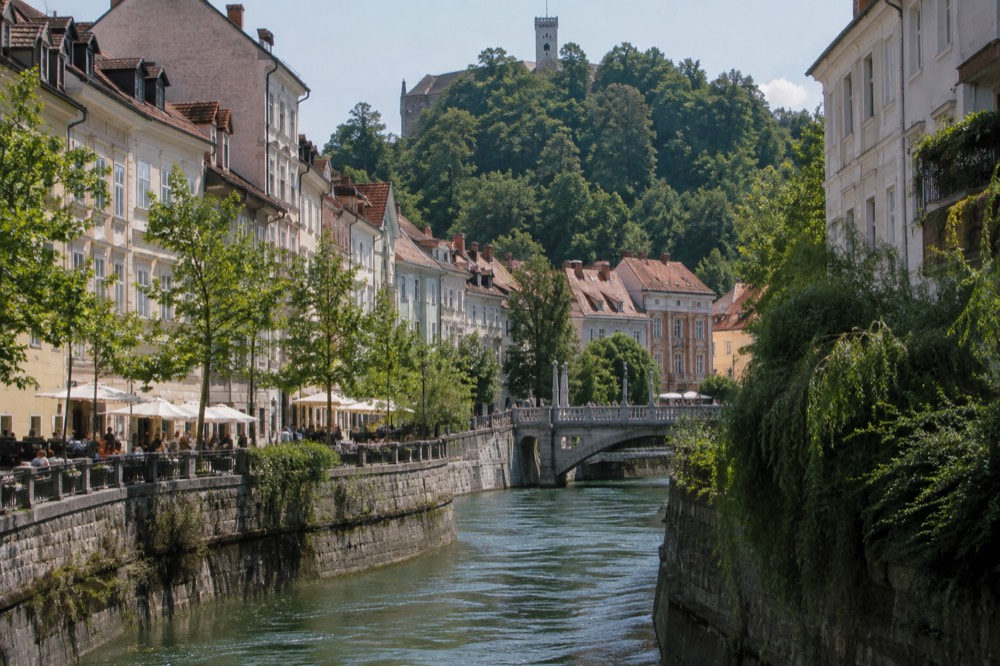
The Ljubljanica, the river that runs through the centre, is itself a karst river. It rises from springs west of the city after travelling underground through limestone, which is why it runs so clear and so green. The river and the drinking supply draw on the same hydrological system, and the basin's gravel layers act as a natural filter long before any water reaches a treatment plant. The Ljubljanica river cruise is the easiest way to see that clarity from the water itself.
This matters to visitors for one reason: the water is genuinely local. Unlike the UK, where a tap in the south-east may be drinking water pumped from hundreds of kilometres away, Slovenian city water is drawn from directly under and around the city. That short distance from source to tap is part of why it tastes clean.
The basin has a second, less welcome effect. Cold air gets trapped in the basin in the colder half of the year, and the city fogs in while the hills above it sit in sunshine. ARSO's climate normals record 56 hours of sunshine in Ljubljana across the whole of December, against 120 hours at Kredarica on Triglav at 2514 m over the same month. The same geography that fills the aquifer also caps the city in cloud from October to March, which is worth remembering when reading the rainiest month in Slovenia.
If a first day in the city is being planned, the free Ljubljana Unveiled walk on GuruWalk covers the Old Town from Roman remains to the Dragon Bridge in about two hours, and the guides point out the river, the bridges and the drinking fountains along the way. It is pay-what-you-think-it-was-worth, which suits a day when the budget is being kept for food.
Is the Water Safe Everywhere in Slovenia, or Just in the Cities?
Tap water from any mains supply in Slovenia is safe to drink, whether that is a city apartment, a mountain resort hotel in Kranjska Gora or a guesthouse on the coast in Piran. The only water a visitor should not drink untreated is water from open streams, springs and troughs in the mountains, which can carry livestock or soil contamination just as upland streams do anywhere in Europe.
That distinction is worth spelling out because guidebook advice tends to blur it. "The tap water is safe" and "all the water is safe" are different claims. The first is true of everywhere with a mains connection. The second is not a promise any country can make about its wild streams, and Slovenia's hills are full of grazing land.
For a typical British visitor doing normal tourist things, the practical rule is simple:
| Water source | Drink or not | Notes |
|---|---|---|
| Any tap in a hotel, restaurant, flat or public building | Drink | Mains supply, EU-monitored |
| Public drinking fountains in towns and cities | Drink | Connected to the mains network |
| Water offered in restaurants, free or paid | Drink | Tap or bottled, both safe |
| Open mountain streams and roadside springs | Avoid untreated | Grazing and soil runoff possible |
| Water from a hut tap in the high mountains | Generally drink | Ask the hut keeper if unsure |
Restaurant water deserves a note. In Slovenia it is normal to be served bottled water if you order water, and some places will not automatically bring tap water the way a British pub might. Asking for "water from the tap" is perfectly acceptable, costs nothing or next to nothing, and no one will blink. The country is not one where tap water requests are treated as strange, and the restaurant scene is covered in more depth in the best restaurants in Ljubljana.
The mountains are where the advice changes slightly. On a day hike, say up Šmarna Gora on Ljubljana's northern edge or anywhere in Triglav National Park, carry the water you need rather than planning to drink from streams. Triglav National Park, which covers 840 km² of the Julian Alps and charges no entry fee, has plenty of surface water, but a filter or purification tablets are the standard practice for anyone refilling mid-route. Anyone planning that kind of day should also read what to pack for Ljubljana before leaving home.
Does Slovenian Tap Water Taste Different from UK Water?
Slovenian tap water generally tastes softer and cleaner than hard London or Home Counties water, because much of it is groundwater filtered through gravel and limestone rather than surface water stored in reservoirs. Some visitors notice a faint chlorine taste in city supplies, exactly as in the UK, and letting a glass stand for a few minutes removes most of it.
Water taste is mostly about mineral content, and this is where British visitors notice the difference. Large parts of southern and eastern England have very hard water, full of dissolved calcium from chalk and limestone, and the limescale kettle is a national institution. Slovenian supplies vary by region, since the geology shifts from limestone karst to alpine gravel to coastal flysch, but the common experience is water that tastes lighter and makes less scale.
The chlorine point is worth being honest about. EU rules require a disinfection residual in the network, so a slight chlorine note in Ljubljana tap water is normal and is not a sign of a problem. It is the same in most European capitals. Cold water straight from the tap, run for a moment, tastes best, and a jug left in a fridge overnight loses nearly all the taste of chlorine.
One thing Brits sometimes ask about is fluoride. The UK fluoridates some supplies; Slovenia does not add fluoride to its drinking water. Neither approach is a safety issue for a visitor on a week's holiday, it is simply a difference in public health policy between two systems that both meet EU standards.
Do You Need to Buy Bottled Water on a Day Trip?
No. For day trips from Ljubljana, carrying a refillable bottle and topping up at taps in towns, restaurants and attractions covers everything, and bottled water is an optional convenience rather than a necessity. On long cave tours or hikes, carry enough water from the start, since refills are not always available mid-route.
The day trips are where bottled water habits die hardest, because British visitors are used to buying a bottle at a station or a motorway services. In Slovenia there is rarely any need. Every town on every standard tourist route, Bled, Piran, Postojna, Kranjska Gora, has drinkable mains water, and cafes will refill a bottle if you ask nicely, particularly if you are buying something.
Caves are the one place to plan ahead. Postojna Cave holds about 10 C year round and the visitor route is 3.7 km long, partly travelled by the cave train, with a guided tour of about an hour and a half. There is no topping up mid-cave, so carry water in. The constant temperature is also why the caves are the reliable wet-weather and heatwave answer: while it rains above, the cave is the same temperature it was yesterday. The full underground picture is in the Postojna Cave guide.
The Cave and Castle Tickets and Tour from Ljubljana bundles Postojna Cave with Predjama Castle in a six-hour day trip, which suits a visitor who wants the karst story in one outing without organising transport. Predjama, a castle built into the mouth of a cave system, makes the connection between the rock and the water unusually visible.
Lake Bled works the same way for water logistics. The lake shore has taps and fountains in the town, and the walk around the lake passes through Bled itself more than once. Anyone heading further afield should read what not to miss in Lake Bled before choosing between the viewpoints and the boat.
Where Can You Refill a Bottle in Ljubljana?
Ljubljana is one of the easiest cities in Europe for bottle refills, because the pedestrianised historic centre is small, museums and galleries are open most days of the week, and public drinking fountains operate across the city in the warmer months. In winter, museums, the Central Market halls and any cafe are the reliable refill points.
The museum circuit is the dependable option because the opening hours are long and published. The national institutions are also free on the first Sunday of every month, which makes a museum-based refill stop cost nothing at all:
| Refill stop | Open | Notes |
|---|---|---|
| National Gallery | Tue-Sun 10:00-18:00, Thu to 20:00 | Closed Monday |
| Slovenian Ethnographic Museum | Tue-Sun 10:00-18:00, Thu to 20:00 | Closed Monday |
| City Museum of Ljubljana | Tue-Sun 10:00-18:00 | Closed Monday |
| Natural History Museum | Daily 10:00-18:00, Thu to 20:00 | Open Mondays |
| Central Market covered halls | Mon-Fri 07:00-16:00, Sat 07:00-14:00 | Outdoor stalls Mon-Sat from 06:00 |
The Monday closure is the planning fact: most museums in the city shut on Mondays, so a Monday refill plan should lean on cafes, the market's outdoor stalls or the hotel. The Central Market, on Vodnikov and Pogačarjev trg, is the most pleasant stop of the lot, and on Fridays from roughly March to November it hosts Odprta Kuhna, the Open Kitchen street-food market, though the official wording is "every sunny Friday", so the event is cancelled in bad weather. The Central Market guide covers the stalls in detail.
Around the city, the practical picture is friendly. The historic centre is a pedestrian zone of roughly 20 hectares, closed to general motor traffic, so walking between refills is the default anyway. The castle grounds are free to enter, so carrying a bottle up the hill costs nothing even without a castle ticket, and the funicular and tower are the paid parts, as the Ljubljana Castle guide explains.
Weather is the one thing to plan around rather than water. September and October are the joint wettest months in Ljubljana at 147 mm of rain each, ahead of July's 115 mm, and ARSO's 1971-2000 normals record 12.4 fog days in each of those months. A refillable bottle plus a light rain layer covers the whole shoulder season, and the best month to visit Ljubljana weighs up the rest of the calendar.
Common Questions About Tap Water in Slovenia
Can Brits Drink Tap Water In Slovenia?
Yes. Tap water from any mains supply in Slovenia is safe to drink, and that includes hotels, restaurants and public buildings in every city and resort. The only untreated water to avoid is water from open mountain streams, as with upland streams anywhere.
Does Slovenian tap water contain chlorine?
Mains supplies in Slovenia carry a disinfection residual, as EU rules require, so a faint chlorine taste is normal in some city water. Letting a glass stand, or chilling it, removes most of the taste. It is not a sign of poor quality.
Is tap water free in Slovenian restaurants?
Restaurants are not obliged to serve free tap water, and many will bring bottled water if you simply order "water". Asking for tap water is accepted and normal, and it costs nothing or very little. There is no cultural awkwardness attached to the request.
Can you drink from streams in the Julian Alps?
Untreated stream water should not be drunk in the mountains, since grazing animals and soil runoff can contaminate it, exactly as in the British hills. Carry the water you need for the day, or use a filter or purification tablets to refill mid-route.
Is Ljubljana's water hard or soft?
It varies by district and source, but much of the supply is groundwater filtered through basin gravels and limestone, and most British visitors find it tastes softer than hard southern-English water. Kettle scale is noticeably less of a problem than in chalk areas of the UK.
The broader practical picture for British visitors, from restaurant etiquette to driving and safety, is covered in what to be careful of in Slovenia and is Slovenia friendly to tourists. For everything the tap water pairs best with, start with Slovenian famous food and plan the meals around the water. The short version, though, stands on its own: as this Ljubljana Travel Guide reports from primary sources, Slovenia is in the EU and the eurozone, the tap water is safe everywhere the mains reaches, and the only bottle a visitor really needs is the refillable one in their daypack.