Is Ljubljana Worth Visiting for Tourists?
An honest assessment of Ljubljana for tourists: what the city does well, what it costs, how long to stay, and the downsides most guides skip.
Is Ljubljana Worth Visiting for Tourists?
Yes, for most travellers Ljubljana is worth visiting, provided you calibrate expectations. It is a compact, pedestrianised capital of about 293,000 people where the main sights, riverside walks and market halls sit within fifteen minutes of each other on foot, where queues are short compared with Prague or Dubrovnik, and where a two-night stay is the statistical norm: 2,844,129 overnight stays across 1,392,728 arrivals in 2025 works out to about 2.04 nights per visitor.
That average stay length, published by the Slovenian statistical office, tells you what kind of city this is. People come for a weekend, walk the centre, eat well, maybe take one day trip, and leave. If you want a week-long museum capital, Ljubljana will underdeliver. If you want a beautiful small city that you can genuinely finish in two or three days, it is close to ideal.
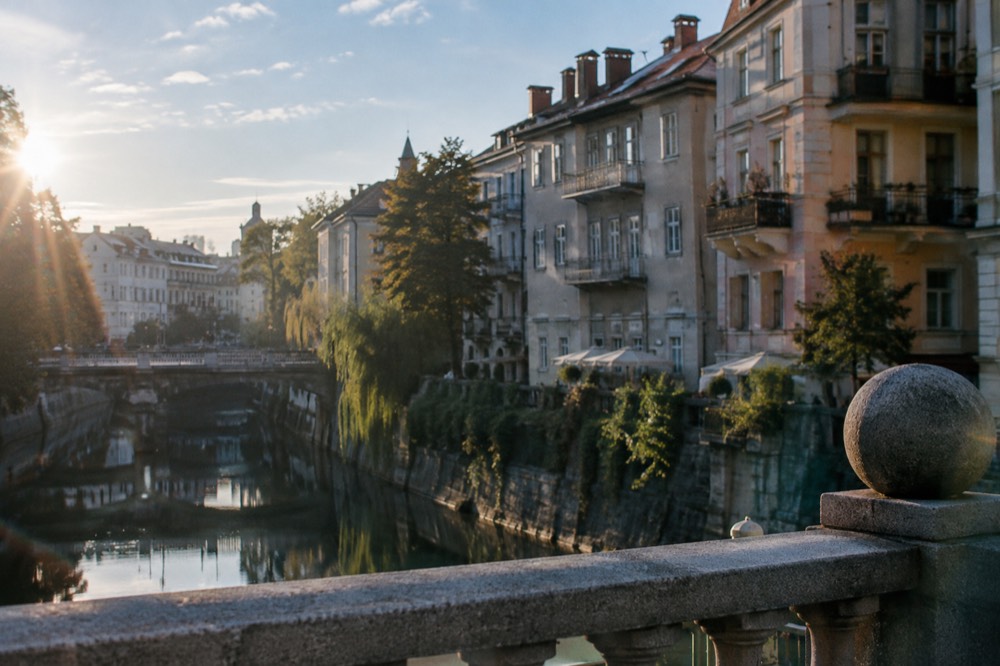
The honest framing is this: Ljubljana is a city you visit for atmosphere and livability rather than for blockbuster monuments. Its strongest single sight, Ljubljana Castle, is a pleasant hilltop complex rather than a Versailles. What carries the city is the whole: the Ljubljanica river bending through the middle, Jože Plečnik's bridges and markets, the car-free old centre, and a food and bar scene that punches above the city's size. For a fuller rundown of the individual sights, see the must-see sights in Ljubljana guide.
What Makes Ljubljana Worth the Trip?
Ljubljana's core appeal is a historic centre closed to cars, a riverside that functions as the city's living room, and a scale where everything worth seeing is a short walk apart. The pedestrian zone covers roughly 20 hectares and has been progressively expanded since 2007, which means the old centre is quiet, clean and safe to wander without watching traffic. Add a castle funicular, a lively market culture and short queues, and the city delivers a rare thing: a European capital you can relax in.
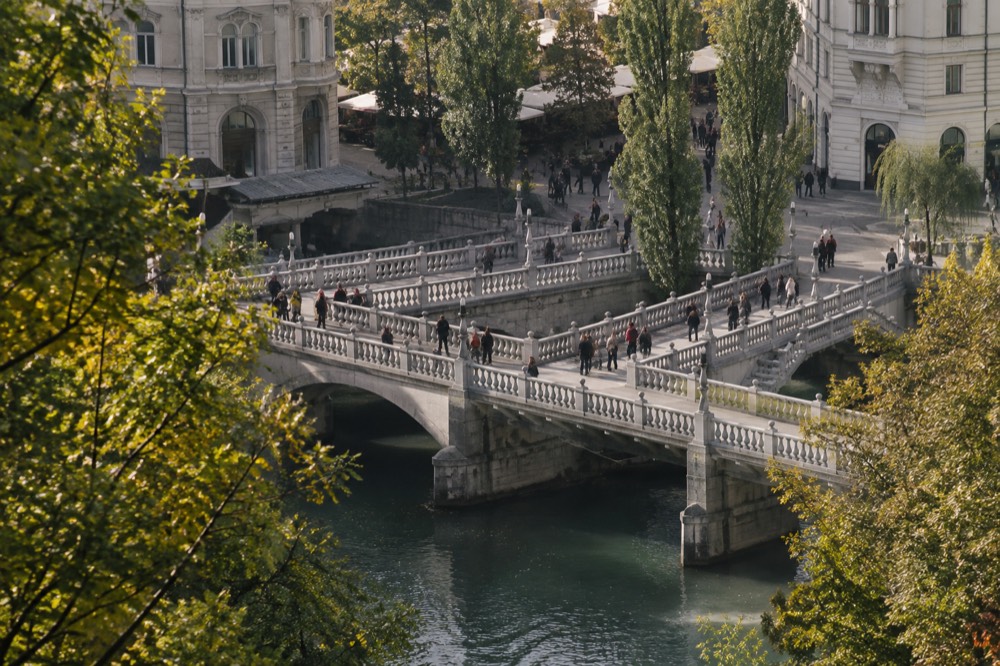
The car-free centre is the fact that changes the visit most. You walk from Prešeren Square across Tromostovje, the triple bridge, along the Ljubljanica past the outdoor tables, up to the castle, and never share the lane with a car. Few European capitals have committed to this so thoroughly. The city's own mobility pages document the pedestrian zone's growth, and you feel it within an hour of arriving.
The second strength is food and drink. The Central Market's outdoor stalls run roughly Monday to Saturday, the covered halls on weekdays, and on Fridays from around March to November the Odprta Kuhna open-air kitchen takes over Pogačarjev trg with chefs cooking in the open. One caveat worth knowing before you plan a Friday around it: the official wording is "every sunny Friday", and the event is cancelled in bad weather. The slovenian food in Ljubljana guide covers the eating side in depth.
The third strength is location. Ljubljana is a small city sitting inside one of Europe's most concentrated day-trip zones: Lake Bled, Postojna Cave, the Škocjan Caves, Piran, the Soča Valley and Triglav National Park all sit within a couple of hours. Many visitors base here and rotate outward.
The day-trip layer deserves its own weight in the decision. Lake Bled alone carries more search demand than the entire city of Ljubljana, and a Bled excursion is the single most popular add-on. A guided trip to the lake and Bled Castle runs six hours and rates 4.7 from 1,641 reviews, which makes it an easy, low-risk addition to any stay. On the free side, the Ljubljana Unveiled walk on GuruWalk is a tips-based two-hour tour from Roman remains to the Dragon Bridge, rated 4.91 from 1,496 reviews, and it is a genuinely good orientation on day one.
For a sense of how the pieces fit into a short stay, the one day in Ljubljana and weekend in Ljubljana itineraries break the city down hour by hour.
Is Ljubljana Expensive for Tourists?
By Western European standards, no; by Balkan standards, yes. Slovenia uses the euro, a castle ticket with the funicular costs 19.00 EUR, a single city bus ride is 1.50 EUR with ninety minutes of transfers included, and tourist tax adds 3.13 EUR per person per night. Eating out sits below Vienna or Milan but above Zagreb or Belgrade. A two-night mid-range visit is very achievable without careful budgeting, and the free layer, from castle grounds to first-Sunday museums, is unusually generous.
The transport and entry numbers are the ones that matter. Buses do not accept cash on board, but they do take contactless bank cards and phones, so the old Urbana-card trap has mostly dissolved. Entry costs are moderate: the castle's official price list puts the combined castle-and-funicular ticket at 19.00 EUR for adults, the funicular alone at 6.00 EUR return, and the national museums cluster around 6 to 10 EUR.
| Typical visitor cost | Figure | Notes |
|---|---|---|
| Castle ticket incl. funicular, adult | 19.00 EUR | Covers tower, exhibitions and return funicular |
| Funicular only, return, adult | 6.00 EUR | Castle grounds reached on foot are a separate question; the official site does not state free-access hours |
| City bus single, zone 1 | 1.50 EUR | 90 minutes including transfers; no cash on board, contactless accepted |
| Tourist tax | 3.13 EUR per night | 2.50 EUR tax plus 0.63 EUR promotion surcharge; under-7s exempt |
| National museums, adult | 6.50–10 EUR | Free on the first Sunday of every month at the national institutions |
| Ljubljana Card, 24 hours | 41.00 EUR | Covers funicular, river cruise, buses, walking tour and 30+ museums |
The free layer is the surprise. The national institutions, including the National Gallery and the Slovenian Ethnographic Museum, admit visitors free on the first Sunday of every month, a rule each institution publishes on its own site. The Ljubljana for free guide collects the rest, and the is Ljubljana expensive for tourists answer breaks the daily budget down further.
Is Two Days in Ljubljana Enough?
Two days is enough to see Ljubljana properly, and the visitor numbers back that up: the average stay is about 2.04 nights, so the typical visitor spends a weekend, not a week. Day one covers the old centre, Tromostovje, Prešeren Square, the riverside and the castle. Day two is best spent out of the city entirely, because Ljubljana's biggest attractions are day trips: Postojna Cave, Lake Bled, the Škocjan Caves or the coast at Piran. Three days lets you breathe; more than that and the city runs out.
The most common pattern is one full city day plus one day trip. The strongest day trip for first-timers combines Postojna Cave, a 3.7 km show cave toured partly [by train](https://omio.tpk.ro/exV6rGgH) at a constant 10 C, with Predjama Castle, built into a cliff face. The Cave and Castle Tickets and Tour from Ljubljana does both in six hours, rates 4.8 across 2,802 reviews, and removes all the transport friction of doing it independently. Other pages covering the same trip are gathered on Ljubljana Travel Guide.
One practical note for that trip: the cave holds about 10 C year round, so the operator's advice is to bring a layer even in August. Arrive thirty minutes before the stated tour time, since train boarding closes fifteen minutes before. The Postojna Cave guide has the full ticket and timetable detail.
What Are the Downsides?
The honest downsides are the weather, the fog, and the fact that the headline sights are modest rather than monumental. Ljubljana sits in a basin that averages 37 clear days a year against 130 overcast, and it fogs in: ARSO's normals record 91.2 days with fog annually. Winters are grey and short of light, with just 56 hours of December sunshine. If you visit between November and February expecting postcard light, you may be disappointed; if you visit April to September, the city is at its best.
The fog deserves a proper explanation, because it is the one thing competing guides get wrong. Most write that Ljubljana is foggy in winter. ARSO's 1971-2000 normals, the only period for which fog is published, show the foggiest months are actually September and October at 12.4 fog days each, level with December's 12.6 and above January's 11.3. The same 1981-2010 tables make September and October the joint wettest months at 147 mm each, above July's 115 mm. Autumn here is not the dry shoulder season people assume.
The other downsides are smaller. Almost every museum closes on Monday, which catches weekend-extenders out. The castle's official site does not state free-access hours for the grounds, so do not plan around entering free. And the city's sights, taken one by one, are not world-famous; people who love Ljubljana love it as a whole, not as a checklist.
Is Ljubljana Worth Visiting in Winter?
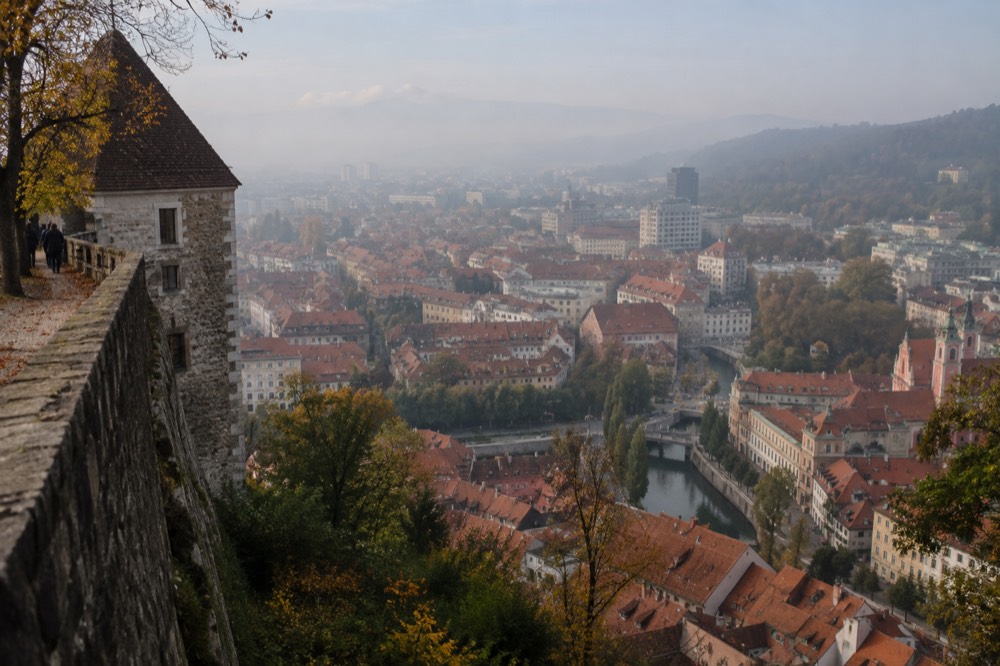
Yes, but go up. Winter in the basin means fog, 56 hours of December sunshine and a flat grey light, while the hills a few hundred metres above the city sit above the inversion in sun. The practical winter strategy is a short city day plus altitude: the castle funicular, Šmarna gora, or a Bled or Julian Alps day trip. The Christmas market season and the car-free centre also make December atmospheric in its own right, provided you accept that the light is scarce.
The inversion is the key. Because the city sits at 299 m on the basin floor, cold air pools under warmer air above, and the result is that on individual winter days a hilltop station can record a higher temperature than the city, while the monthly means stay firmly in the mountain's disfavour. Do not read that as mountains being warmer on average; they are not, and Kredarica's January mean is far below the city's. What they are is sunnier in winter: 139 hours of January sunshine against the city's 71.
| Winter comparison, ARSO 1981-2010 | Ljubljana, 299 m | Kredarica, 2,514 m |
|---|---|---|
| December sunshine | 56 hours | 120 hours |
| January sunshine | 71 hours | 139 hours |
| Annual sunshine | 1,974 hours | 1,872 hours |
| Clear days per year | 37 | 47 |
The annual totals show the trade: the city wins April to September comfortably, and loses every month from October to March. That crossing point is the whole seasonal argument, and the best time to visit Ljubljana guide works through it month by month.
Common Questions About Visiting Ljubljana
Is Ljubljana Worth Visiting For Tourists?
Yes. It is a compact, walkable, car-free-centre capital best suited to a two or three night stay, with strong food, riverside atmosphere and easy day trips to Lake Bled and the karst caves. It is not a monumental capital, and winter is grey, but for a short European city break it rates very highly with visitors.
How many days do you need in Ljubljana?
Two days covers the city itself, and the average visitor stays about two nights. Add a third day for one big excursion such as Postojna Cave or Lake Bled.
Is Ljubljana walkable?
Very. The historic centre is pedestrianised, roughly 20 hectares of it, and the main sights sit within a fifteen minute walk of each other.
Is Ljubljana expensive?
Moderately. The euro is the currency, a castle ticket with the funicular is 19.00 EUR, a bus ride is 1.50 EUR, and tourist tax is 3.13 EUR per night. Costs sit below Vienna and above Zagreb.
What is the best day trip from Ljubljana?
Lake Bled is the most popular, and Postojna Cave with Predjama Castle is the most distinctive. Both run as guided tours from the city in around six hours.
Is Ljubljana worth visiting in winter?
Yes, with adjusted expectations. The basin is foggy and short of sunshine from November to February, so plan short city days and trips uphill or to Bled. The Christmas market season adds atmosphere in December.