Is Slovenia LGBT Friendly?
A straight answer for LGBT travellers planning a trip to Slovenia and Ljubljana: safety, nightlife, practical basics and which day trips are worth booking.
Is Slovenia LGBT Friendly?
Yes. Slovenia is one of the more LGBT-welcoming countries in its region, and the capital, Ljubljana, is where nearly all of that openness is concentrated. The city centre is pedestrianised, the nightlife is relaxed, and the general safety level is high. Expect a capital that feels comfortable and a countryside that is more reserved, which is the pattern in most of central Europe.
That one-sentence answer needs some unpacking, because "friendly" means different things in different places. In Ljubljana it means you can walk hand in hand through the old centre without it being an event. In smaller towns it means nobody will bother you, but visible affection draws more attention than it would in the capital. The gap between the city and the villages is the single most useful thing to understand before you travel.
This site is an editorial desk, so everything below is reported rather than lived: what the tourist board publishes, what the city itself says about its centre, and what the practical facts of visiting Slovenia actually are. What we can say with confidence is that Ljubljana markets itself as an open city, that its historic core is car-free, and that its alternative cultural quarter is one of the most visited spots in the city after dark. Those are structural facts, and they add up to a city that is easy to be a visitor in.
One framing note before the detail. Slovenia is a small country, and Ljubljana is its cultural, political and social centre, so a question about Slovenia is, in practice, mostly a question about Ljubljana plus whatever you do around it.
Is Ljubljana Safe for LGBT Visitors?
Yes, Ljubljana is a safe city by European standards, and the parts a visitor actually walks are among the safest of all: the historic centre is closed to general traffic and covers roughly 20 hectares of pedestrianised streets. Violent crime is rare, the centre stays lively into the evening, and the usual city precautions are enough. For a fuller breakdown of neighbourhoods, scams and late-night safety, see our guide to whether Ljubljana is safe.
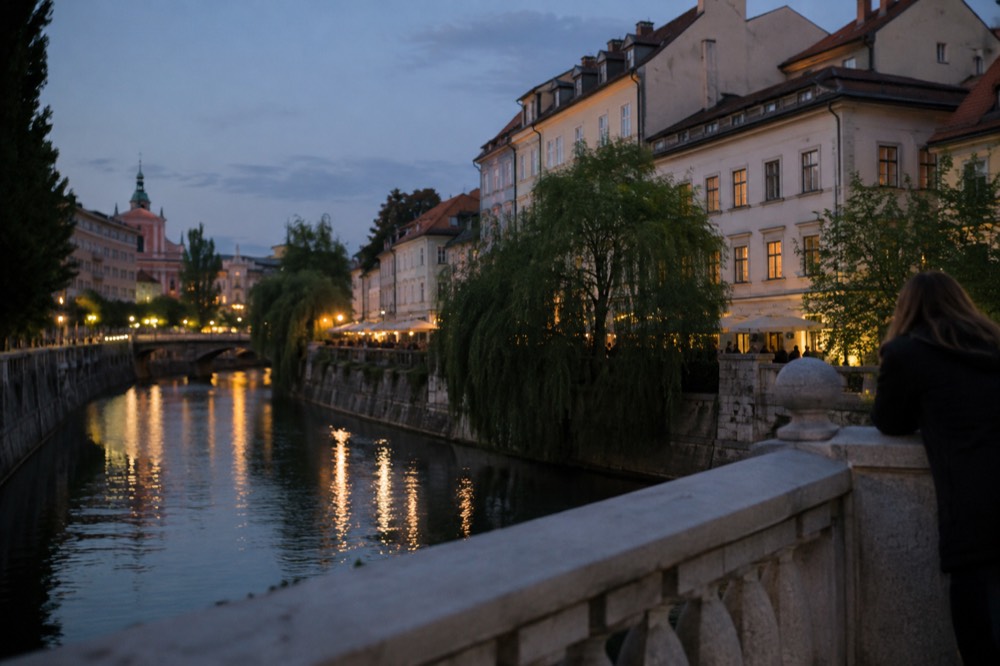
The pedestrianised centre matters more than it sounds. A city where the main sightseeing area is a car-free zone is a city where walking at night is normal, and where the streets between the river and the castle are full of other people doing exactly the same thing. The city of Ljubljana's own mobility pages describe the centre as a pedestrian zone progressively expanded since 2007, and you feel that expansion on the ground: café tables on cobbles, people strolling past Prešeren Square, the Ljubljanica banks busy until late.
Slovenia is in the European Union, uses the euro, and sits inside the Schengen area, so there are no border formalities arriving from Italy, Austria, Hungary or Croatia, and no currency to change if you are coming from the eurozone. That is practical rather than symbolic, but it shapes the feel of a trip: Slovenia is a fully integrated European country, not a place on the edge of somewhere else.
For context on how the city treats visitors generally, our piece on what makes Ljubljana special covers the same ground from a broader angle: a green, compact, walkable capital that consistently ranks among Europe's more relaxed city breaks.
If you are building a trip around the city itself, these are the three experiences most visitors book first:
The trio above spans the full range of what a Ljubljana-based trip looks like: the country's signature cave day trip, the classic Lake Bled excursion, and a free tips-based walk of the Old Town that runs on the GuruWalk platform and rates 4.91 from 1,496 reviews. Between them they cover underground, alpine and city, which is more or less the whole of Slovenia in three bookings.
Where Are the LGBT-friendly Nights Out in Ljubljana?
The centre of gravity is Metelkova Mesto, the autonomous cultural centre built in former army barracks, where street art, bars and club venues share one walled compound. Entry to the area is free, individual clubs set their own covers, and the whole quarter is busiest on Friday and Saturday nights. Metelkova is Ljubljana's alternative heart, and it is the city's most openly inclusive nightlife space.
The tourist board's own listing describes Metelkova as an autonomous cultural centre in former army barracks, which is an accurate and rather dry way of saying it is a walled city of murals, sculptures, dive bars and club rooms a short walk northeast of the railway station. It has been the city's countercultural base for decades. For an LGBT visitor it is the obvious first stop: the crowd is mixed, the dress code is "whatever you like", and nobody is keeping score. The rest of the planning pages sit on Ljubljana Travel Guide.
Our full guide to Metelkova covers what to expect inside, when to go and how the clubs work. Pair it with the broader Ljubljana nightlife guide for the mainstream side of the evening, from riverside bars on the Ljubljanica to the pub scene around the Old Town. The two scenes are ten minutes' walk apart, and most visitors end up sampling both in one night.
Beyond Metelkova, the city's evening economy runs along the river. A boat cruise with craft beer tastings runs on the Ljubljanica, rating 4.5 from 37 reviews and starting from $56, and the guided pub crawl across the city centre runs five hours from $29 with a 4.5 rating from 198 reviews. Both are group formats where nobody asks questions about who came with whom.
Wondering how to split a week between the city and the countryside? The cave and castle day trip runs six hours, rates 4.8 from 2,802 reviews and starts from $132, with free cancellation on the operator's listing, so you can lock it in early and adjust later.
Do I Need to Plan Around Practical Things Like Money and Transport?
Not much, and what there is works in your favour. Slovenia uses the euro, city buses do not accept cash but do take contactless bank cards and phones, and the historic centre is walkable end to end in under half an hour. The one genuinely useful rule is that Ljubljana's buses are cash-free: a single zone 1 ride is 1.50 EUR with a 2.00 EUR Urbana card, or tap a Visa, Mastercard or mobile wallet on board.
That no-cash rule is the fact guidebooks are most often out of date on. You no longer need to buy an Urbana card before you can board at all, because contactless payment works on the bus, but handing coins to a driver still does not. Everything a visitor is likely to do is in zone 1 anyway, and the centre being pedestrianised means you will walk most places regardless.
Tourist tax is 3.13 EUR per person per night, made up of 2.50 EUR of tax plus a 0.63 EUR promotion surcharge, with a half rate of 1.57 EUR for ages 7 to 18 and children under 7 exempt. It is charged through your accommodation, not collected at the door, so it is not something to plan around, just something to expect on the bill.
Here is the practical picture in one table:
| Practical item | What to expect |
|---|---|
| Currency | Euro, adopted 1 January 2007 |
| Border checks | None from Schengen neighbours; land and sea checks lifted 21 December 2007, air 30 March 2008 |
| City buses | No cash on board; 1.50 EUR zone 1 single, contactless cards accepted |
| Historic centre | Pedestrianised, roughly 20 hectares |
| Tourist tax | 3.13 EUR per person per night, half rate 1.57 EUR for ages 7-18 |
| Metelkova | Free to enter, clubs set own covers, busiest Friday and Saturday |
| Airport | Ljubljana Airport (LJU) is about 26 km from the city |
Language is the last piece, and it is an easy one: English is widely spoken in the capital, especially among anyone working in hospitality or tourism. Our article on whether Ljubljana is English-friendly goes into more detail, but the short version is that a visitor with no Slovene will manage everywhere in the city.
Which Day Trips Work Well from an LGBT-friendly Base?
All of them, because day trips from Ljubljana are group-tour or small-group formats where the guide, the scenery and the schedule do the talking. Lake Bled, Postojna Cave, the Soča Valley and the coast at Piran are the four big draws, and none of them involves anything a visitor needs to plan around beyond a departure time and a jacket for the caves.
The caves deserve their own sentence, because they are the one day trip people get wrong. Postojna Cave holds about 10 degrees Celsius all year, which is why it is the reliable answer to both a heatwave and a downpour, and why visitors who arrive in August shorts spend ninety minutes wishing they had not. The most-booked version from Ljubljana is the six-hour cave and castle combination, which rates 4.8 from 2,802 reviews and starts from $132, covering both Postojna Cave and the cliff-hung Predjama Castle in one coach day. You can check availability on the live listing before you commit.
Lake Bled is the other headline trip, and search demand for it exceeds the entire city, which tells you how central it is to a Slovenian holiday. The standard six-hour excursion from Ljubljana rates 4.7 from 1,641 reviews and starts from $86, and a cheaper guided day tour runs the same duration from $57 with a 4.8 rating from 888 reviews. Our guide to getting from Ljubljana to Lake Bled covers the independent options too, including the rail detail most guides miss: Bled Jezero station is 1.5 km from the lake, while the better-known Lesce-Bled station is 4 km out.
The Soča Valley and Julian Alps trips run longer, around ten to twelve hours, and are the choice for scenery over sightseeing. The Triglav National Park covers 840 square kilometres, entry is free, and the guided tours from the city start from around $132. If your trip lands in the colder half of the year, the basin inversion above is the planning fact: in winter the sunniest plan is often to go up, not stay down.
For a full menu of options, our day trips from Ljubljana guide ranks the excursions by length, price and what they suit.
Common Questions About LGBT Travel in Slovenia
Is Slovenia LGBT Friendly?
Yes. Ljubljana is a relaxed, walkable, pedestrian-centred capital with an openly inclusive alternative quarter at Metelkova, and the country as a whole is welcoming to visitors. The capital is where the openness is concentrated; smaller towns are more reserved but no less safe.
Is Ljubljana safe at night for LGBT visitors?
Yes. The historic centre is pedestrianised, stays busy into the evening, and violent crime is rare. Metelkova, the alternative cultural quarter, is busiest on Friday and Saturday nights and is the city's most inclusive nightlife space.
Do I need cash in Ljubljana?
Not on the buses. City buses accept contactless bank cards and phones but no cash, with a zone 1 single at 1.50 EUR. Bars, cafés and shops take cards almost everywhere, and the currency is the euro.
Where is the LGBT nightlife in Ljubljana?
Metelkova Mesto, the autonomous cultural centre in former army barracks, is the centre of the alternative and inclusive scene. Entry to the area is free and clubs set their own covers. The mainstream riverside bar scene along the Ljubljanica is a ten-minute walk away.
Is Slovenia safe for solo travellers?
Yes. Slovenia ranks among Europe's safer countries, the capital is compact and pedestrian-friendly, and the main visitor areas are busy and well-lit. Standard city precautions are sufficient.
What is the best day trip from Ljubljana?
Postojna Cave and Predjama Castle is the most-booked option, a six-hour trip rated 4.8 from 2,802 reviews from $132. Lake Bled is the other headline excursion. The caves hold about 10 degrees Celsius year round, so bring a jacket whatever the season.