What Is Special About Ljubljana?
A green, car-free capital built around a river and one architect's vision, with caves, lakes and the Julian Alps on its doorstep. What makes Ljubljana unlike anywhere else.
What Is Special About Ljubljana?
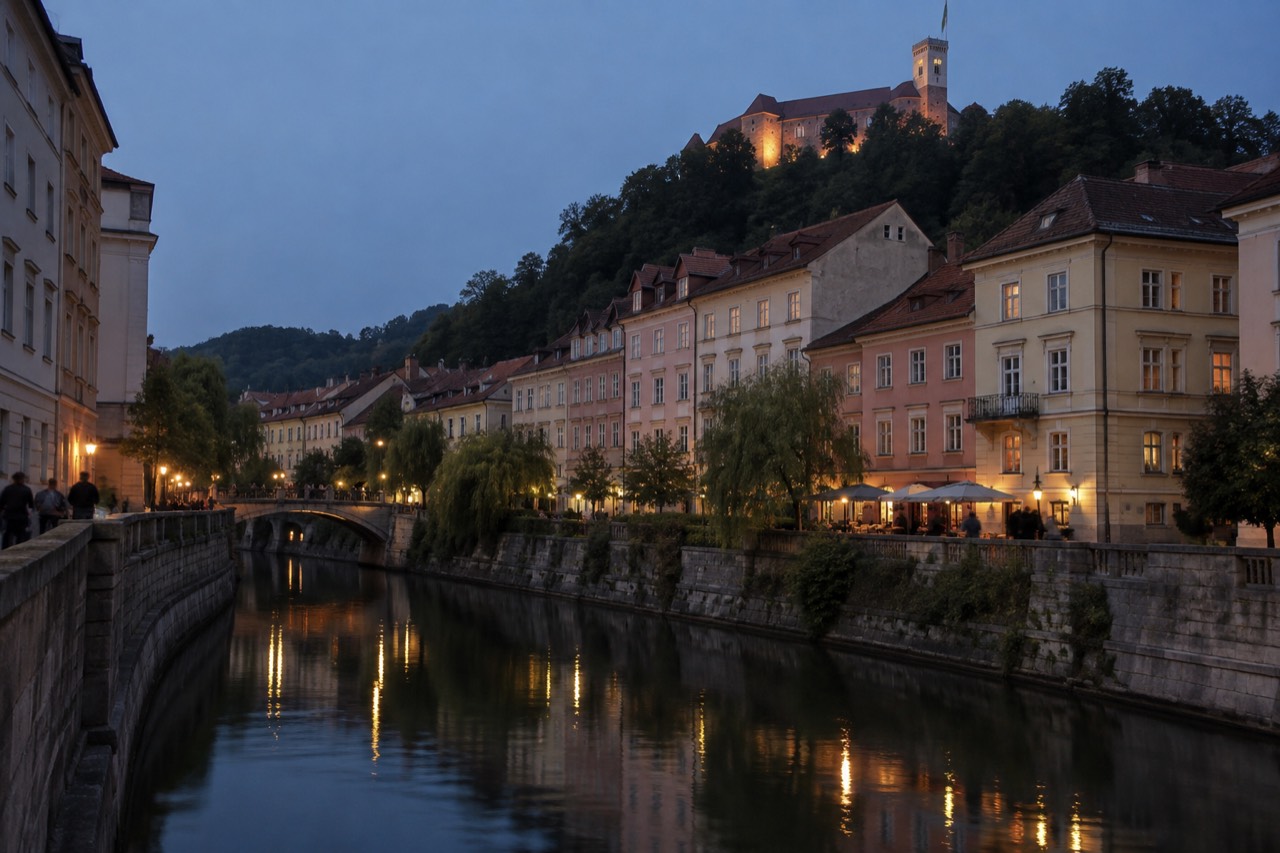
Ljubljana is special because it is a capital city that behaves like a small town: the entire historic centre is car-free, the Ljubljanica river runs straight through it, and one architect, Jože Plečnik, gave the whole place a coherent, almost theatrical design. Around it sit caves, alpine lakes and the Soča Valley, so a city of about 293,000 people works as a base for some of the most dramatic day trips in Europe.
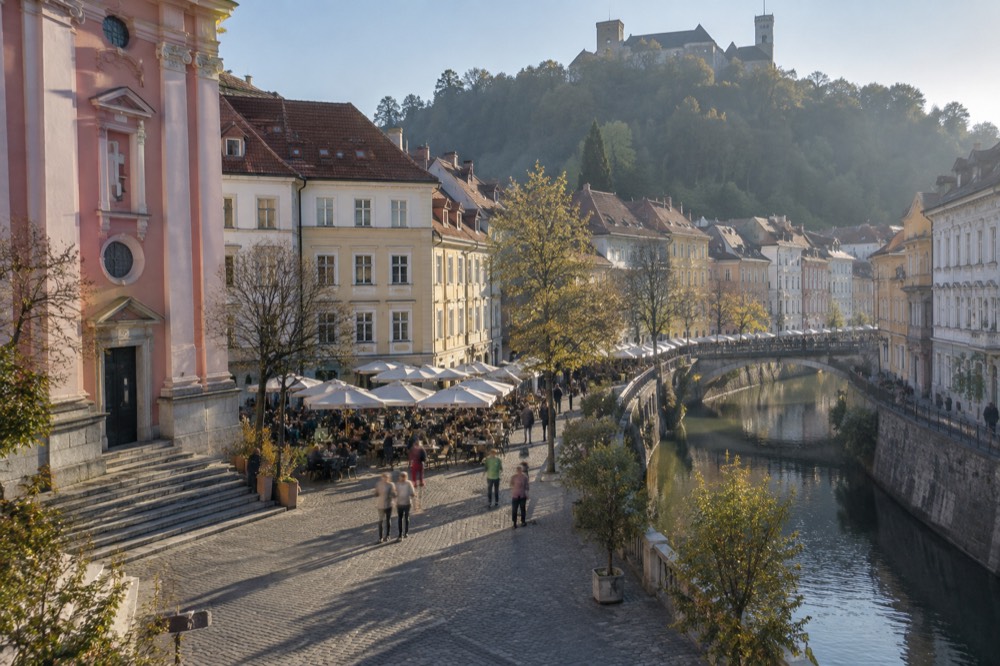
That combination is genuinely unusual. Plenty of European capitals have old towns, and plenty have rivers. Very few have handed the entire centre back to pedestrians, roughly 20 hectares of it, progressively closed to general motor traffic since 2007. The result is a city you experience at walking pace, from Prešeren Square across Tromostovje, the Triple Bridge, into the market colonnades and up to the castle on the hill.
The scale helps. You can cross the whole centre on foot in twenty minutes. Yet Ljubljana is the political, cultural and university capital of a country that joined the European Union in 2004, adopted the euro in 2007 and sits inside the Schengen area, so there are no border formalities arriving from Italy, Austria, Hungary or Croatia. It feels provincial in the best sense, and it runs on the same systems as Vienna or Rome.
This site, Ljubljana Travel Guide, exists because that combination keeps surprising people. Visitors arrive expecting a minor stopover between Venice and Zagreb and find a city that rewards two or three full days. The average stay works out to about two nights, which is enough for the centre but leaves the day trips, the real reason many people extend, half done.
Why Does a Car-free Centre Change Everything?
Ljubljana's historic core is a pedestrian zone of roughly 20 hectares, closed to general traffic and expanded steadily since 2007, which means the entire experience of the city, its squares, bridges, market and riverbanks, happens on foot or by bike. No other capital in Europe has gone this far.
The practical effect is bigger than it sounds. There is no traffic noise behind the café tables on the riverbank. Children run ahead on the cobbles without anyone tensing. The Ljubljanica's banks, renovated on both sides, work as one continuous living room for the city, and the distance between things stops mattering because walking is the pleasure, not the cost.
It also reshapes how you plan. You do not need a transit pass to see the centre, and you should not drive into it; the centre is closed to general traffic and parking sits at its edge. If you want the numbers behind getting around, the guide to getting around Ljubljana covers buses, the Urbana card and why cash does not work on board.
The best first move in a car-free city is a walk. The free GuruWalk tour called Ljubljana Unveiled, tips-based, rated 4.91 from 1,496 reviews, covers the Roman roots to the Dragon Bridge in about two hours, and it is the cheapest possible way to get the city's shape into your head on day one.
What Did Jože Plečnik Actually Do to the City?
Between the wars, architect Jože Plečnik rebuilt Ljubljana's riverfront, bridges, market colonnades, locks and library into a single unified composition, a project so distinctive that UNESCO inscribed his work on the World Heritage List in 2021. No other European capital bears one designer's signature this visibly.
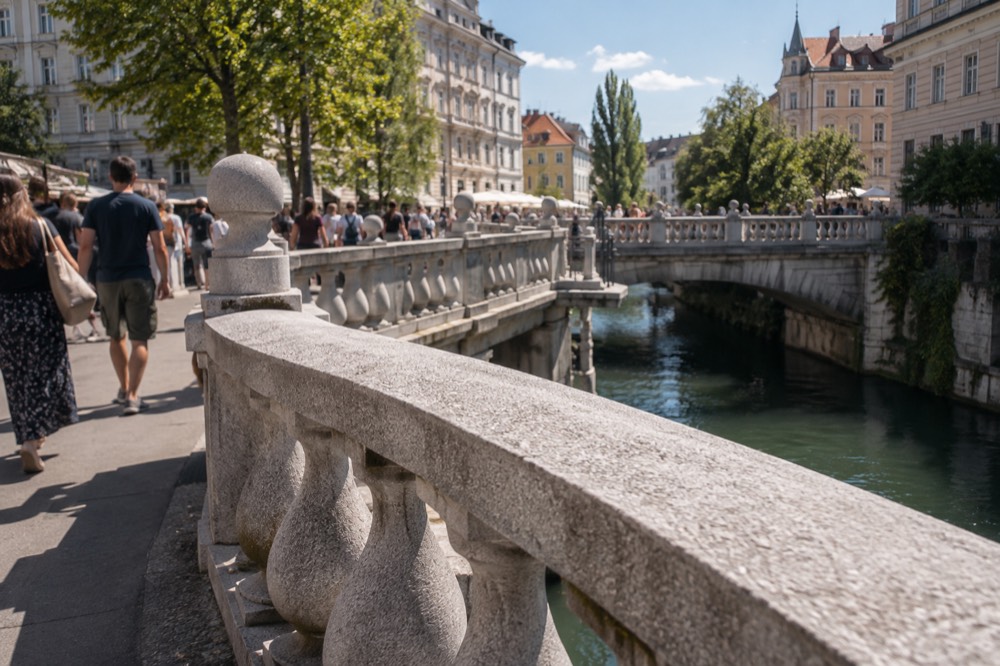
Plečnik treated the Ljubljanica as an axis rather than an obstacle. The Triple Bridge fanned a single Roman crossing into three, so foot traffic flows with the river instead of fighting it. The Central Market colonnades along Vodnikov trg turn grocery shopping into architecture. The sluice gates by Trnovo, the Cobbler's Bridge, Čevljarski most, and the National and University Library all belong to the same grammar: stone, columns, water, order.
You can feel his hand without knowing any of this, which is the point. Visitors who have never heard the name still photograph the same five structures, and they are all his. For the full picture, the Plečnik's Ljubljana guide walks through the sites, including the Plečnik House, which is guided-entry only, with tours on the hour.
The castle above completes the composition. Ljubljana Castle sits on a hill the city grew around, and the funicular, 6.00 EUR return for an adult, lifts you from the edge of the old town to the walls in under a minute. The Ljubljana Castle guide covers tickets, the combined 19.00 EUR entry and what the view actually gives you.
Is the Weather Part of What Makes Ljubljana Special?
Yes, in a way almost no guidebook mentions: Ljubljana sits in a basin, and in winter a temperature inversion traps fog and low cloud over the city while the hills a few hundred metres above it sit in sunshine. ARSO's climate normals give the city just 56 hours of December sunshine against 120 hours at Kredarica, 2,514 metres up on Triglav.
That number stops people. The city loses the sun from October to March and wins it from April to September, and the lines on the chart cross. A grey, foggy December afternoon in the centre can coincide with clear skies at the castle, on Šmarna Gora or across at Vogel.
The practical read: when the city fogs in, go up. The funicular, a Šmarna Gora climb, or a day trip to altitude are the correct answers to a grey Ljubljana morning, and the best time to visit Ljubljana guide works through the months in detail.
| Station | Altitude | Clear days/yr | Overcast days/yr | Dec sunshine (h) | Jan sunshine (h) |
|---|---|---|---|---|---|
| Ljubljana (Bežigrad) | 299 m | 37 | 130 | 56 | 71 |
| Rateče (Alpine valley) | 864 m | 71 | 101 | 88 | 111 |
| Kredarica (Triglav) | 2,514 m | 47 | 117 | 120 | 139 |
All three rows are ARSO 1981-2010 normals. The city is the cloudiest of the three in winter despite being the lowest, which is the inversion at work.
Why Is Ljubljana Such a Good Base for Day Trips?
Within about two hours of Ljubljana you can reach Lake Bled, Postojna Cave, the Škocjan Caves, Piran on the Adriatic, the Soča Valley and the Julian Alps, a spread of lakes, caves, coast and alpine country no other capital in the region can match, and everything sits inside Schengen and the eurozone so there are no borders or currency changes to plan around.
Lake Bled alone carries more search demand than the entire city of Ljubljana, which tells you where visitors' minds go. Bled is an hour's drive, and the Ljubljana to Lake Bled guide covers the two-station rail detail most advice gets wrong: Bled Jezero station is 1.5 km from the lake, while the better-known Lesce-Bled is 4 km out.
The caves are the other signature. Postojna Cave holds a steady 10 C year round, which makes it the reliable answer to both a heatwave and a downpour, and Predjama Castle is built into the cliff face 9 km away. The combined tour from Ljubljana, six hours, rated 4.8 across 2,802 reviews from $132, handles tickets and transport in one booking.
Škocjan, a UNESCO cave system inscribed in 1986, is the walkers' alternative: about 2 km of route, roughly 400 stairs, and a tour of two and a half to three hours, against Postojna's train ride. Piran adds the Adriatic, and the Soča Valley adds the most startling river colour in the Alps. A rainy-day plan for the city itself is covered in the rainy day in Ljubljana guide.
| Day trip | Duration | Rating | From |
|---|---|---|---|
| Lake Bled and Bled Castle tour | 6 hours | 4.7, 1,641 reviews | $86 |
| Postojna Cave and Predjama tour | 6 hours | 4.8, 2,802 reviews | $132 |
| Soča and Kranjska Gora guided tour | 10h 30m | 4.9, 911 reviews | $132 |
| Škocjan Caves and Piran day trip | 9h 30m | 4.7, 382 reviews | $126 |
Is the Food and River Life Part of the Specialness?
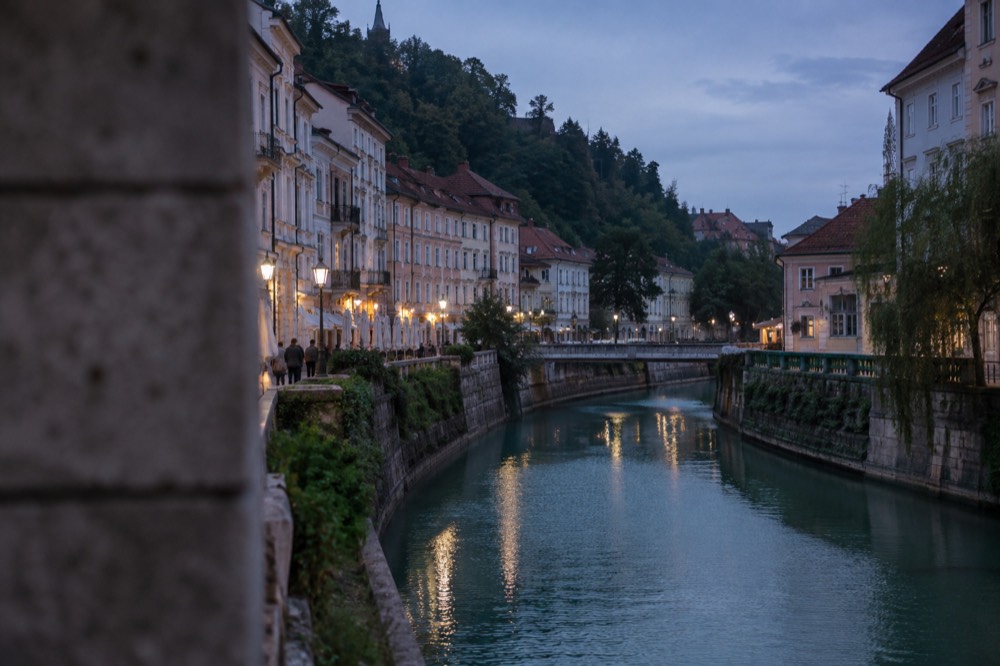
Yes, and they are linked: because the centre is car-free, the Ljubljanica's banks have become the city's main social space, lined with tables, and the food culture around them, from the Central Market to Friday's Odprta Kuhna open-air kitchen, is built on Slovenian produce rather than imported tourist menus.
The Central Market, Plečnik's colonnades included, runs Monday to Saturday from early morning, and it is where the city actually shops. On Fridays from roughly March to November, Pogačarjev trg hosts Odprta Kuhna, the Open Kitchen, where restaurants cook outdoors from 10:00 into the evening. One honest catch the official wording makes plain: it runs "every sunny Friday", so it is cancelled in bad weather, and the city's 147 mm Septembers mean you should have a plan B.
The river itself is rideable. A 50-minute electric boat tour, rated 4.6 from 149 reviews and from $17, is the cheapest way to see the centre from the water, and a river cruise is also bundled into the Ljubljana Card. For eating, the where to eat in Ljubljana guide goes neighbourhood by neighbourhood.
Slovenia's food identity, štrukelj rolled pastry, potica, river fish, Teran wine from the karst, is small-country cooking that survived rather than being revived, and a four-hour Slovenian cuisine walking tour with tastings, rated 4.8 from 552 reviews, is the structured way into it.
Common Questions About What Makes Ljubljana Special
What Is Special About Ljubljana?
A car-free historic centre, a river lined with Plečnik's bridges and colonnades, a castle on a hill above it, and day-trip access to Lake Bled, Postojna Cave, the Adriatic and the Julian Alps, all inside the eurozone and Schengen.
Is Ljubljana worth visiting on its own, or only as a stopover?
On its own. The average stay is about two nights, but the centre plus a cave or lake day trip justifies three. The free GuruWalk walks, rated above 4.9 on the main routes, make a first day easy to fill.
Why is Ljubljana so walkable?
The historic centre is a pedestrian zone of roughly 20 hectares, closed to general motor traffic and expanded since 2007, so almost everything visitors come for is within a twenty-minute walk.
What is the deal with the fog in Ljubljana?
The city sits in a basin, and in the colder half of the year cold air is trapped under warmer air, so the centre fogs in while the hills above are in sun. ARSO's 1971-2000 normals put September and October at 12.4 fog days each, level with December.
Which day trip should I take from Ljubljana?
Lake Bled for the classic alpine image, Postojna Cave and Predjama Castle for the underground and a 10 C cave that works in any weather, or the Soča Valley for the river and the mountains. All run as guided tours from the city.
Who was Jože Plečnik?
The architect who rebuilt Ljubljana's riverfront, bridges, market and library between the wars into one unified design. His work was inscribed on the UNESCO World Heritage List in 2021.