Is It Better to Stay in Ljubljana Old Town or City Centre?
A plain comparison of Ljubljana's Old Town and the wider city centre for visitors choosing where to sleep, with prices, walking distances and weather realities.
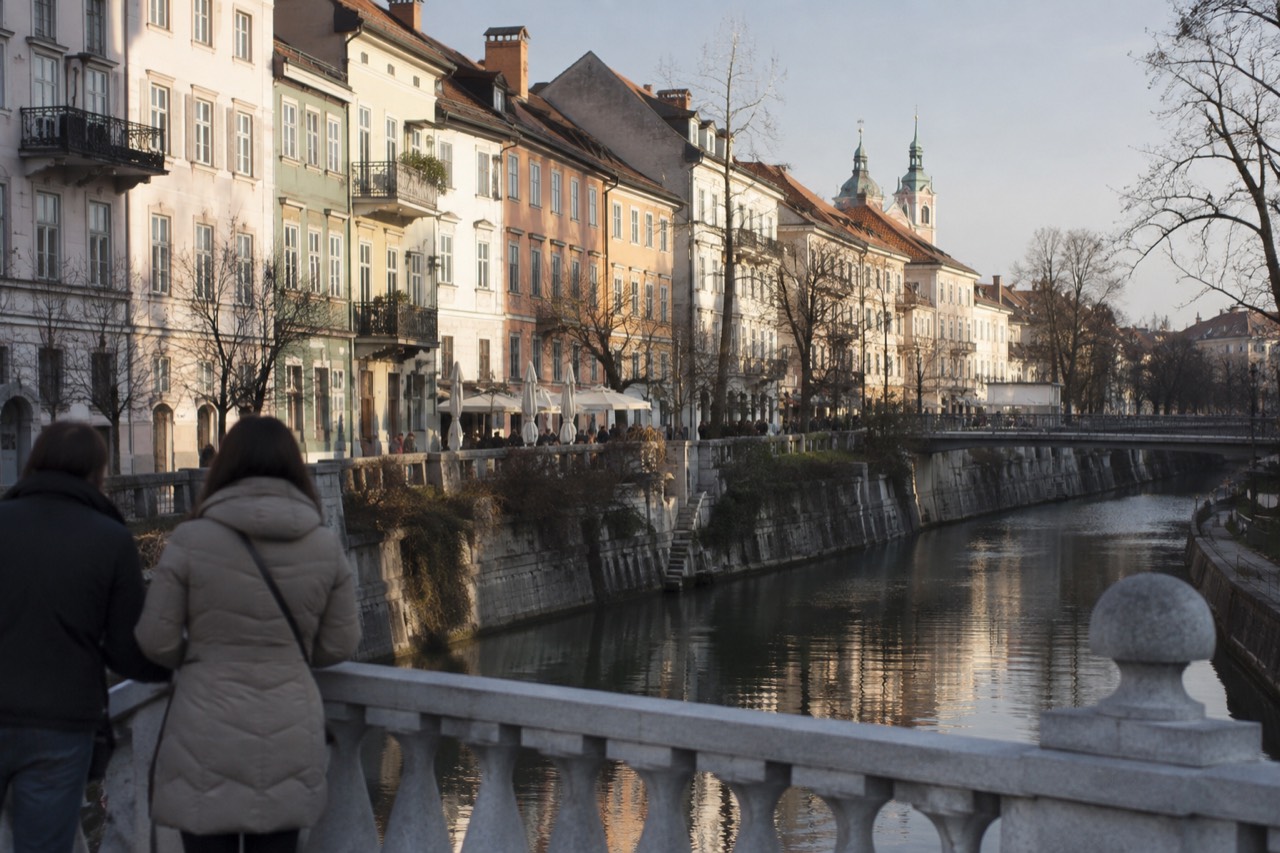
Is It Better to Stay in Ljubljana Old Town or City Centre?
For most visitors the city centre is the better base: it has the wider choice of hotels, easier access to buses and the train and bus stations, and prices that sit below Old Town rates for comparable rooms. The Old Town wins on atmosphere and doorstep views, and because the whole historic core is compact and pedestrianised, staying on either side of the Ljubljanica still puts you within a ten minute walk of almost everything. The distinction confuses people because the Old Town sits inside the broader centre; one is a district, the other is the whole flat area around it.
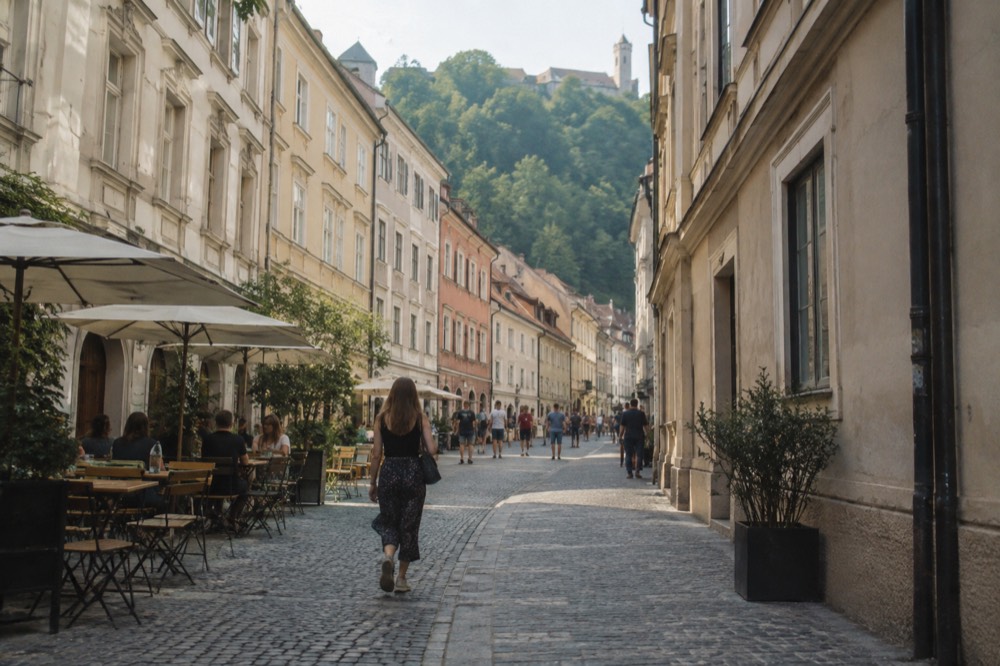
Start with the geography, because it settles half the argument on its own. The Old Town is the strip on the right bank of the Ljubljanica, the medieval core that climbs from Prešernov trg across Tromostovje, the Triple Bridge, up towards Ljubljana Castle. The city centre is the larger ring around it, covering the left bank through the Trnovo edge, the business streets around Slovenska cesta and the area up to the railway station. Ljubljana's historic centre has been closed to general motor traffic and progressively pedestrianised since 2007, a zone of roughly 20 hectares, which the city itself documents on its mobility pages.
That pedestrian zone is the practical heart of the matter. Inside it there are no buses and no cars delivering luggage, so an Old Town hotel means a short drag of suitcases over cobbles from the nearest taxi drop-off point. On the centre side, most hotels sit on or near streets that still carry traffic, with bus stops, the Urbana network and the coach and rail terminals within easy reach. If you are arriving [by train](https://omio.tpk.ro/exV6rGgH), flying out early or travelling with heavy bags, that difference is worth real money in convenience.
What Is the Difference Between the Old Town and the City Centre?
The Old Town is the historic, largely pedestrianised district on and around the castle hill, while the city centre is the wider flat area that surrounds it, including the modern shopping streets, the station quarter and the riverside on both banks. The Old Town delivers postcard Ljubljana: Čevljarski most, the shoemakers' bridge, the cathedral, the market colonnades and the funicular to the castle. The centre delivers the working city: hotels, offices, the main shopping streets and most of the practical infrastructure a visitor actually uses.
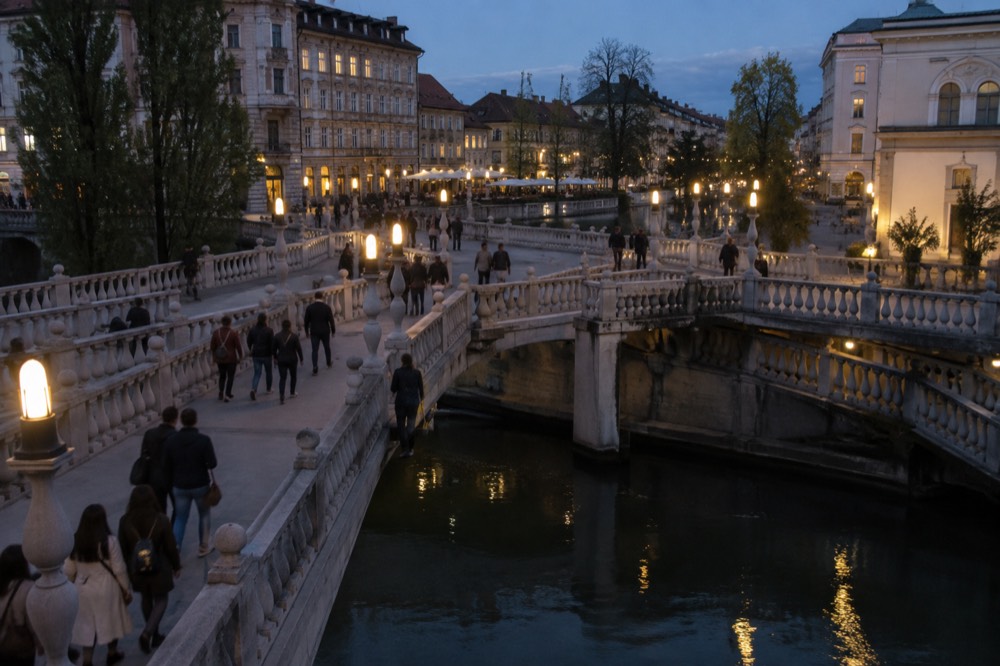
The two areas are not rivals in any meaningful walking sense. From the middle of the Old Town to the edge of the wider centre is a walk of ten to fifteen minutes at tourist pace, and the bridges across the Ljubljanica stitch the districts together every few hundred metres. This is why the question matters less in Ljubljana than in bigger capitals: a "wrong" choice here still leaves you central. The genuine differences are character, price and noise rather than location.
Character first. The Old Town is Baroque and medieval in fabric, with narrow streets, stone staircases up to the castle and a high density of restaurants aimed squarely at visitors. The centre outside it is a mix of Art Nouveau, socialist-era blocks and contemporary infill, with the National Gallery, Moderna galerija and the museum quarter sitting in that ring. If your trip is about architecture and photographs, the Old Town puts you inside the subject. If it is about museums, eating where locals eat and practical comfort, the centre is the stronger fit.
Price is the second axis and it is consistent: Old Town rooms cost more per night for less space, because the buildings are old, small and in demand. The centre offers the newer builds, the chains and the apartment hotels. Tourist tax is the same everywhere in the municipality, 3.13 EUR per person per night including the promotion surcharge, so the difference is purely in the room rate, which this site does not quote because hotel rates are date-specific.
A good way to decide is to walk both before you book anything. The Classic Ljubljana Group Tour, rated 4.8 from 406 reviews, covers the Old Town's main sights in one guided sweep, and the free Ljubljana Unveiled walk on GuruWalk, rated 4.91 from 1,496 reviews, does the same route from Roman roots to the Dragon Bridge on a pay-what-you-think-it-was-worth basis. Two hours on the ground tells you more about which streets you want to sleep on than any map will.
Where Should You Stay for Sightseeing and Atmosphere?
Stay in the Old Town if doorstep atmosphere matters more than price or space: you wake up inside the pedestrian zone, under the castle, with the river, the bridges and the market within a two minute walk, and everything else within ten. The trade is real, though. Rooms are smaller, rates are higher, delivery access is awkward and the restaurant strip below your window runs late into the night in summer.
The Old Town's case is strongest for short stays. Ljubljana's own arrival figures, 1,392,728 tourist arrivals against 2,844,129 overnight stays in the municipality in 2025, work out to an average stay of about two nights. For a two-night city break, paying a premium to be inside the postcard saves time and buys atmosphere, and the compactness of the centre means you lose almost nothing by walking out of the zone for dinner. For a week-long stay the calculus flips: the centre's space, kitchens and quieter nights matter more once the novelty of the cobbles wears off. The rest of the planning pages sit on Ljubljana Travel Guide.
If you do choose the Old Town, use the geography deliberately. The streets on the castle side of the river, up towards the cathedral and the funicular base, are quieter than the strip directly on the riverbank. The funicular itself runs from near the Old Town edge, 6.00 EUR for an adult return, and the castle grounds are free to enter even though the tower and the funicular are not, so an Old Town base effectively gives you the castle hill as your evening walking territory. Our guide to Ljubljana Castle covers the ticket options in detail.
The centre's case for sightseers is that Ljubljana's attractions are not actually concentrated in the Old Town. The National Gallery, the Museum of Modern Art, MSUM at Metelkova, the Plečnik House and Tivoli Park all sit in the wider centre ring, and most state museums close on Mondays, a planning fact that pushes serious museum visitors towards the centre anyway. The Plečnik House is guided-entry only with tours on the hour, which rewards a base near Trnovo rather than one in the medieval core.
Where Should You Stay for Price and Practicalities?
Stay in the wider city centre for the lower room rates, the easier transport links and the everyday services: the bus and coach station, the rail terminal, the LPP bus network and the bulk of the apartment hotels all sit in the centre ring rather than the Old Town. You give up the postcard window and gain somewhere between ten and fifteen minutes of walking, which in a city this compact is a modest price.
| Factor | Old Town | Wider city centre |
|---|---|---|
| Access by car or taxi | Limited, pedestrian zone | Direct to most hotel doors |
| Nearest bus and coach stops | Edge of the pedestrian zone | Throughout the ring |
| Room size and building age | Older, smaller, more character | Newer builds, more space |
| Typical nightly rate | Higher for comparable rooms | Lower across the board |
| Evening noise | Riverside restaurants run late | Quieter side streets available |
| Distance to castle funicular | 2-5 minutes on foot | 10-15 minutes on foot |
| Museums and galleries | Few, mostly over the bridges | Most sit in the centre ring |
Transport is where the centre wins most clearly. City buses run on the Urbana system, 1.50 EUR for a single 90-minute zone 1 ride including transfers, and cash is not accepted on board, though contactless bank cards and phones now are. The Ljubljana Card is worth counting into a centre stay: the 24-hour tier is 41.00 EUR and covers the castle funicular, the river cruise, city buses and more than thirty museums, which stacks up quickly against the 19.00 EUR castle-with-funicular ticket and a roughly 15 EUR river cruise bought separately. The official tourist board card page lists the full inclusions.
Practicalities also include the airport run. Ljubljana Airport sits about 26 km from the city, and coaches and airport shuttles drop on the centre side of the river, so an early flight means dragging luggage across the pedestrian zone from an Old Town hotel, or budgeting extra time. The same applies in reverse on arrival. Anyone landing late with bags should read our airport to city centre guide before choosing a hotel on the far side of the bridges.
Which Area Is Better in Winter and in Bad Weather?
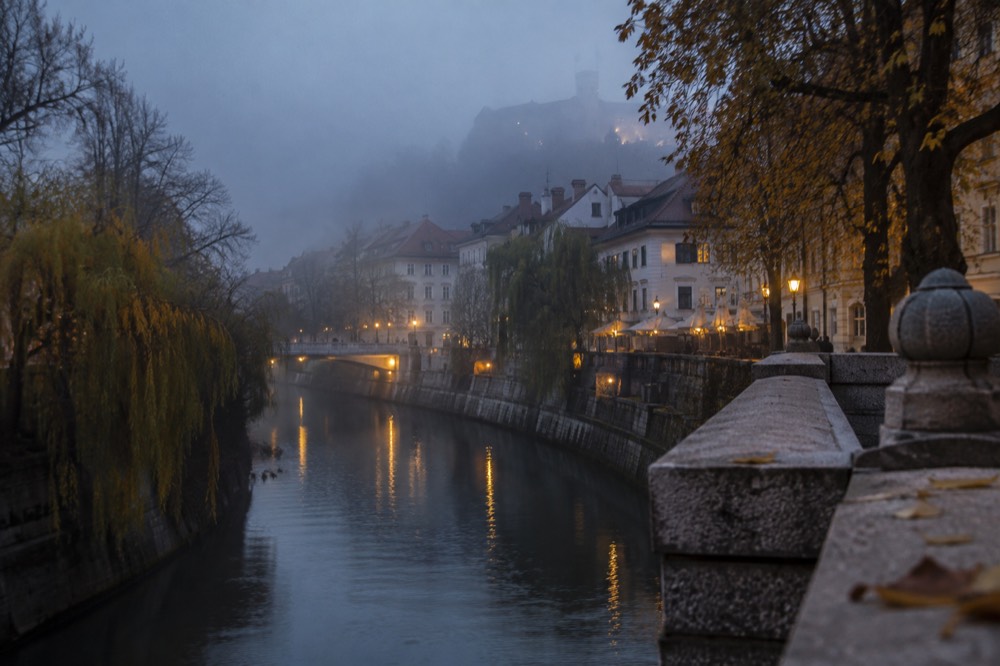
Neither district has a weather advantage over the other, because they are minutes apart on flat ground; what matters is that Ljubljana sits in a basin, fogs in heavily from September through to December, and averages just 37 clear days a year against 130 overcast days, so the indoor options of the centre ring beat the riverside terraces of the Old Town in the colder half of the year. ARSO's 1981-2010 normals put December sunshine in the city at 56 hours for the whole month, against 120 hours at Kredarica on Triglav at 2,514 m, because the basin traps cold air and cloud under an inversion while the hills above sit in sun.
That inversion is the site's single most useful weather fact, and it bears directly on where you sleep. In October through March the Old Town's riverside charm dims under low cloud and fog, which ARSO's 1971-2000 series records at 12.4 fog days in September, 12.4 in October and 12.6 in December, an annual 91.2 days. The centre's advantage is not that it is sunnier, it is not, but that its hotels, covered market halls, museums and shopping streets give you somewhere to be when the Old Town's outdoor café culture shuts down. Our Ljubljana in winter guide covers the seasonal picture.
Summer inverts the argument. From April to September the city's sunshine figures beat the mountains, peaking at 293 hours in July, and the Old Town's riverbank comes into its own: the terraces, the evening boat traffic and the Open Kitchen food market on Pogačarjev trg on sunny Fridays, roughly March to November, are all Old Town or Old Town-adjacent. A summer stay inside the pedestrian zone puts that whole scene at the door, and the noise that comes with it is the price of the location.
The honest summary is seasonal. Book the Old Town for a warm-month short break when the terraces and the river are the point of the trip, and book the centre for anything between October and March, anything longer than three nights, and any trip where an early departure or heavy luggage features. The two areas are close enough that the wrong choice costs you minutes, not days, as our is Ljubljana a walkable city piece sets out.
Whichever side you choose, one guided walk on day one will repay itself. The Classic Ljubljana Group Tour covers the Old Town's main sights with a guide, rated 4.8 across 406 reviews, and the Ljubljana walking tour guide compares it against the free options, including the GuruWalk walks this site lists, so you can see the district properly before settling into it.
Common Questions About Staying in Ljubljana
Is It Better To Stay In Ljubljana Old Town Or City Centre?
For most visitors the wider city centre is the better base: lower rates, easier transport and more space, with the Old Town still only a ten minute walk away across the bridges. Choose the Old Town when atmosphere is the point of the trip, especially for a short summer break.
Is the Old Town in Ljubljana walkable from the city centre?
Yes, entirely. The Old Town sits inside the wider centre, separated only by the Ljubljanica and its bridges, and the whole historic core is pedestrianised. The walk from the station area to the heart of the Old Town takes about fifteen minutes.
Is the Old Town noisy at night?
The riverside strip can be, especially in summer when restaurant terraces run late. Streets further up towards the castle hill are noticeably quieter. The centre ring has quieter side streets but also carries traffic noise on the main roads.
Can taxis reach hotels in the Old Town?
Only to the edge of it. The historic centre is a pedestrian zone of roughly 20 hectares, so vehicles stop at the boundary and the final stretch is on foot over cobbles. The centre ring's hotels mostly have direct vehicle access.
Which area is closer to Ljubljana Castle?
The Old Town, by a clear margin. The funicular base and the castle hill sit on the Old Town side, two to five minutes on foot from most Old Town hotels, against ten to fifteen minutes from the centre ring. The castle grounds are free to enter year round.
Does it matter for day trips whether I stay in the Old Town or the centre?
It matters a little. Coaches to Lake Bled, Postojna Cave and the coast leave from the bus station on the centre side of the river, so a centre hotel means a shorter start and finish on long day-trip days.