Is Piran in Slovenia Worth Visiting?
Is Piran worth the journey from Ljubljana? A straight answer on the old town, the sea, the cost and the best way to get there, with real tour figures.
Is Piran in Slovenia Worth Visiting?
Yes, if you want the sea and you have a spare day. Piran is a compact peninsula old town of terracotta facades, a harbour full of small boats and a main square that opens straight onto the water, and it delivers the most Italian-looking hour of coastline in Slovenia. It is not worth it if you only have two nights in the country and have not yet seen Lake Bled or the caves, because those are closer and, for most visitors, bigger.
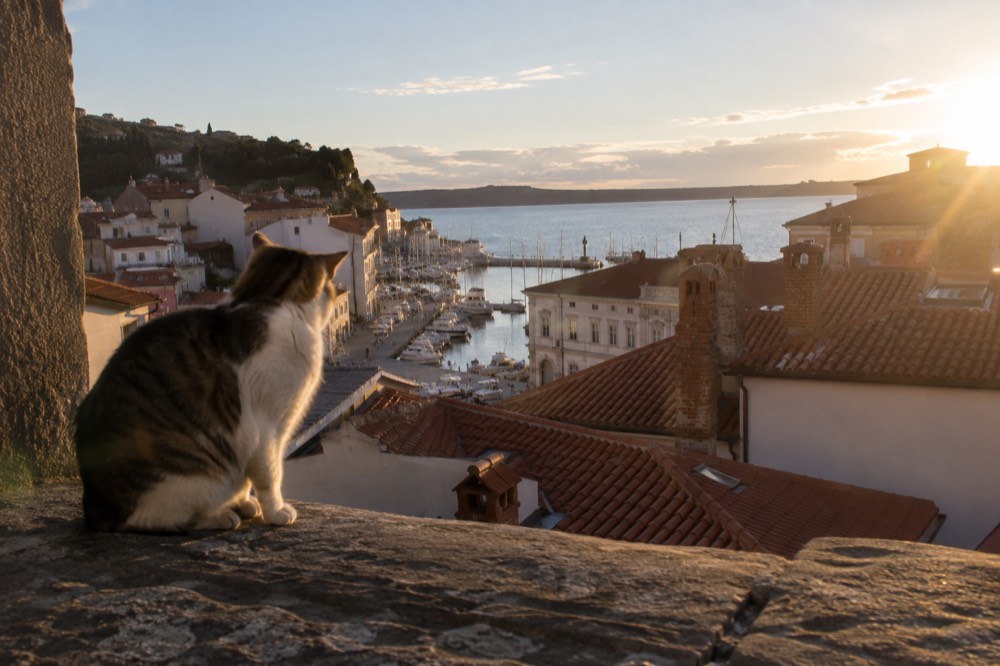
Slovenia's coast is short, roughly 40 km of it, and Piran is the prettiest stretch. The town clings to a pointed peninsula that juts into the Adriatic, with the Church of St George sitting above the rooftops at the highest point and the old town below it arranged in a tight medieval web. There is no beach resort feel here, no high-rise strip, and the centre is closed to through traffic, which keeps the streets quiet in the mornings and evenings even in summer. The trade-off is distance: Piran sits in the far south-west corner of the country, and getting there from the capital eats a chunk of the day.
The honest framing is this. If your trip is Ljubljana plus one or two day trips, Piran competes directly with Lake Bled and Postojna Cave for those slots, and it usually loses on convenience but wins on atmosphere. If you have three or more days of excursions, or you are travelling between Ljubljana and Istria anyway, Piran stops being a detour and becomes the obvious stop. Our full Piran guide covers the town itself in depth; this page is the verdict and the logistics.
What Makes Piran Worth the Journey from Ljubljana?
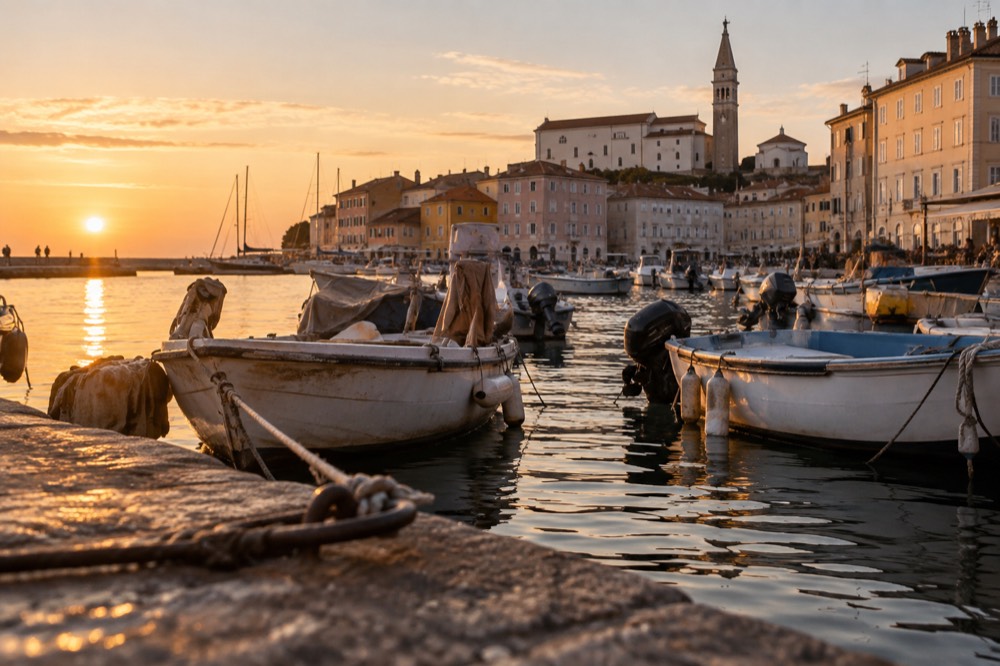
Piran earns its day trip on three things: the waterfront square, the view from the church above the town, and the simple fact that it is the only place near Ljubljana where you can stand on a Mediterranean seafront. Tartini Square, the main piazza, is a broad oval of pale stone surrounded by Venetian-style facades with the harbour on one side, and it is the single most photographed space on the Slovenian coast.
The town rewards aimlessness. You can walk the peninsula's full perimeter in well under an hour, out along one harbour wall and back along the other, and the loop gives you water on one side the whole way. The lanes behind the square climb steeply toward the church, and the stair-streets are cooler and emptier than the front. From the church terrace the whole peninsula reads as a single shape, red roofs on a green finger of land, with the Croatian coast visible to the south and the Italian lighthouse of Savudrija visible to the north on a clear day.
What Piran does not offer is a list of ticketed attractions. This is a walking town, not a sightseeing town. There are a couple of small museums, a modest aquarium and the church itself, but the experience is the ensemble: salt-pan heritage, seafood restaurants along the waterfront, and evening light on the stone. If you need a day to be structured and full of named highlights, a guided trip does that structuring for you. The Piran Trip with Historic Walking Tour runs six hours, is rated 4.6 across 169 reviews and costs from $86, and it bundles the drive with a guided walk so the town explains itself rather than just sitting there looking good.
One thing worth knowing before you commit: the coast is not a warm-water guarantee. The Adriatic here is shallow and swimmable in high summer, but Piran is a stony-waterfront town rather than a sandy-beach town, and people arrive expecting a beach day that the town does not really sell. Come for the look, the lunch and the walk, and treat swimming as a bonus.
How Do You Get from Ljubljana to Piran?
There is no fast way. Piran is about 100 km south-west of Ljubljana, and the drive takes roughly 1 hour 30 minutes to 2 hours each way depending on traffic and the final approach, because the last stretch into the peninsula is narrow and constrained. By public transport you are looking at a coach to the coast and then a local connection, and door-to-door it can take well over two hours each way.
The practical consequence is that a Piran day is a long day. You leave early, you spend three to four hours of it in transit, and you get the middle of the day on the coast. That is a fair trade for many people, a lunch on the seafront is a genuine change of scene from a basin city, but it is the reason Piran is usually the third or fourth day trip people book rather than the first.
A car gives you flexibility but a parking problem: the old town itself is largely closed to traffic and parking is on the edge, so budget time for the walk in. Organised transport removes both the driving and the parking question entirely, and the two most common options are the straightforward Piran trip and the version that adds the Lipica stud farm, home of the Lipizzaner horses, on the way down. The Lipica Stud Farm and Piran Full-Day Tour runs 9 hours 30 minutes, is rated 4.6 from 89 reviews and starts at $126, and it suits travellers who accept a longer day in exchange for two very different stops, horses in the morning and the sea in the afternoon. Our Lipica guide covers the stud farm if you would rather judge that half first.
How Much Time Do You Need in Piran?
Half a day is enough to see Piran properly. The old town is genuinely small, you can cross it end to end in fifteen minutes, and the standard visitor loop of the square, the harbour walls, the church viewpoint and a slow lunch fills four to five hours comfortably. A full day adds swimming, the salt pans or a long seafood lunch, but it is not required, and most day-trippers are satisfied with an afternoon.
The mistake is not under-planning Piran, it is over-planning it. This is not a town with an itinerary inside it. The structure that works is: arrive, walk the perimeter, climb to the church, come back down for lunch, sit somewhere with a view of the water, leave. Do that and you have seen Piran. Add the Škocjan Caves on the same day, they sit under an hour inland from the coast, and the pairing is one of the best full days out of Ljubljana: a UNESCO-listed underground canyon in the morning and the sea in the late afternoon. The caves hold about 12 C year round and the guided tour runs roughly 2 hours 30 minutes to 3 hours, so the combination is tight but workable with a car or a tour built for it.
| Day shape | Time in Piran | What you get | Who it suits |
|---|---|---|---|
| Half-day, guided | 3-4 hours | Guided walk, free time, transport handled | First-time visitors without a car |
| Full day, self-drive | 6-8 hours | Piran plus Škocjan Caves or the salt pans | Travellers who want two stops |
| Full day, with Lipica | 3-4 hours in town | Stud farm morning, coast afternoon | Families, horse enthusiasts |
| Overnight | Evening and morning | Sunset on the water, empty morning streets | Slow travellers, photographers |
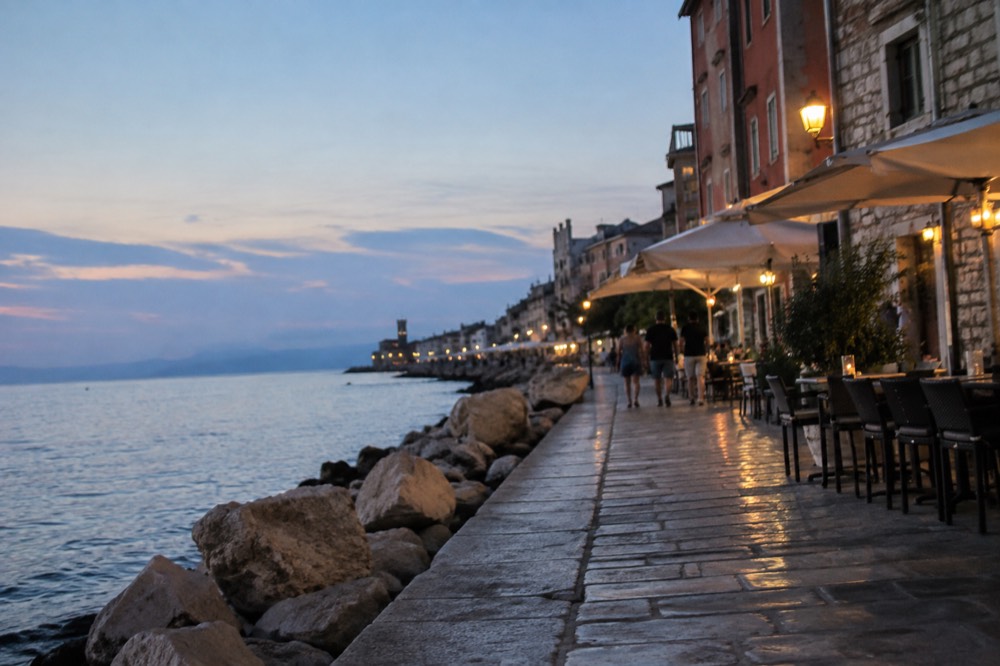
The evening is the part day-trippers miss, and it is arguably the town's best hour, when the day crowd drains out and the waterfront restaurants light up along the harbour wall. If you can stretch to one night, the case for Piran gets much stronger. The wider set of guides lives on Ljubljana Travel Guide.
What Does a Piran Day Trip Cost?
Transport is the main cost, not the town. Piran's old town is free to wander, and the guided six-hour trip from Ljubljana starts at $86 per person including transport, while the Lipica-and-Piran combination day starts at $126. Beyond the ticket, budget for lunch, because the seafront restaurants are the point of the visit, and seafood on the water is the one splurge the town invites.
There is no entry fee for the peninsula, the square or the harbour walls, so a budget traveller who takes public transport and eats from a bakery spends a day in Piran for very little. The church viewpoint and the small museums charge modest local admission, and the salt pans have their own visitor arrangement. The real money question is how you value four hours of transit: a coach fare plus local connections is cheaper than a tour ticket, but the tour buys back your planning time and removes the last-mile problem at the peninsula.
| Cost item | Typical approach | Notes |
|---|---|---|
| Guided Piran trip | from $86 | 6 hours, rated 4.6 from 169 reviews |
| Piran plus Lipica stud farm | from $126 | 9h 30m, two stops in one day |
| Postojna Cave and Predjama instead | from $132 | 6 hours, rated 4.8 from 2,802 reviews |
| Old town, square, harbour walk | free | No ticket, no gate |
| Seafront seafood lunch | mid-range | The town's main indulgence |
That third row is the honest competition. For roughly the same money as the Piran trip you can do the [Postojna Cave and Predjama Castle](/tours/ljubljana-postojna-cave-predjama-castle-tickets-and-tour/) day, which is shorter in transit, higher rated and, for many visitors, more memorable. If caves and castles appeal more than seafront, Piran is the wrong day trip and there is no shame in that. If your trip already has mountains and caves in it, the coast is the change of scene you will remember.
When Is the Best Time of Year to Visit Piran?
May, June, September and early October are the sweet spot: warm enough for the seafront to feel Mediterranean, quiet enough that the square is not wall to wall, and outside the July and August peak when coastal Slovenia is at its busiest. Winter visits work too, the town stays open and photogenic, but you get empty restaurants, grey water and no swimming, which suits photographers more than families.
One counter-intuitive fact from the climate record is worth carrying into any Slovenian coastal planning: Ljubljana itself, not the coast, is the fog bottleneck. ARSO's 1971-2000 normals give the capital 91.2 days with fog a year, with September and October averaging 12.4 fog days each, level with December. The coast sits outside the basin, so an autumn morning that starts grey in Ljubljana often clears before you reach the sea.
The other seasonal note is that Piran's calendar is quiet. It has festivals, particularly in summer, but it is not a resort that shuts down in the off-season the way bigger beach towns do. Restaurants close and reopen on their own schedules through winter, so a cold-month visit is a low-commitment stroll rather than a programme. If you are weighing Piran against other day trips month by month, our best time to visit Ljubljana breakdown covers the capital's side of the equation.
Is Piran Worth It Compared with the Other Day Trips?
Piran is the atmosphere pick, not the headline-attraction pick. Lake Bled, Postojna Cave and the Soča Valley are bigger, closer and more dramatic, and if you are only taking one day trip from Ljubljana, Piran is probably not it. But it is the only option that gives you the sea, it is the best food day of the standard roster, and it pairs beautifully with Lipica or Škocjan, which lifts it well clear of a standalone visit.
Rank the standard day trips by what they deliver and the pattern is clear. Bled delivers the postcard lake and castle, and it carries more search demand than the entire city of Ljubljana, which tells you how visitors vote. Postojna delivers the underground spectacle, a 3.7 km route travelled partly by cave train at a steady 10 C, open every day of the year. The Soča Valley delivers alpine drama at the cost of a very long day. Piran delivers none of those things, and instead delivers the one thing none of them can: an hour on a Mediterranean seafront with lunch to match.
| Day trip | Travel each way | Character | Best for |
|---|---|---|---|
| Lake Bled | about 1 hour | Alpine lake, island, castle | First trip, families, photos |
| Postojna Cave and Predjama | about 1 hour | Underground train, cliff castle | Weather-proof, wow factor |
| Piran | 1h 30m to 2 hours | Sea, old town, seafood | Change of scene, food, slow pace |
| Soča Valley | 2 hours plus | Alpine river, high passes | Long-day scenery seekers |
The decision rule is simple. Two days of excursions: Bled and Postojna, and save Piran for a future trip that includes Istria. Three or more: add Piran, ideally combined with something, because the drive down the coast is too long to spend on the town alone. And if your itinerary is Ljubljana then onward to Croatia, Piran sits almost on the route and becomes close to free.
Common Questions About Visiting Piran
Is Piran In Slovenia Worth Visiting?
Yes, if you have a spare day and want the sea. Piran is a small, beautiful peninsula old town with a Mediterranean feel that nothing else near Ljubljana offers. It is a long round trip, so it suits trips with three or more excursion days, or anyone already travelling toward the Croatian or Italian coast.
Can you visit Piran as a day trip from Ljubljana?
Yes, easily. Guided trips run about six hours door to door, and the drive is roughly 1 hour 30 minutes to 2 hours each way. Public transport works too but takes longer and needs a connection at the coast.
How many hours do you need in Piran?
Half a day covers the old town well: the square, the harbour loop, the church viewpoint and a long lunch. A full day lets you add swimming in summer or a second stop such as the Škocjan Caves or the Lipica stud farm.
Is Piran expensive?
The town itself is free to wander, and the main costs are transport and lunch. Guided trips from Ljubljana start at $86, and seafront seafood restaurants are the one place Piran invites you to spend.
Is Piran better than other Slovenian day trips?
Not better, different. Lake Bled and Postojna Cave are closer and more dramatic, but Piran is the only option with the sea and the best food of the standard roster. Pair it with Lipica or Škocjan and it competes with anything.