Can Americans Rent a Car in Slovenia?
Yes, Americans can rent a car in Slovenia with a US driving licence. Here is what to know before you drive: the pedestrianised centre, the euro, Schengen borders and when a tour beats the wheel.
Can Americans Rent a Car in Slovenia?
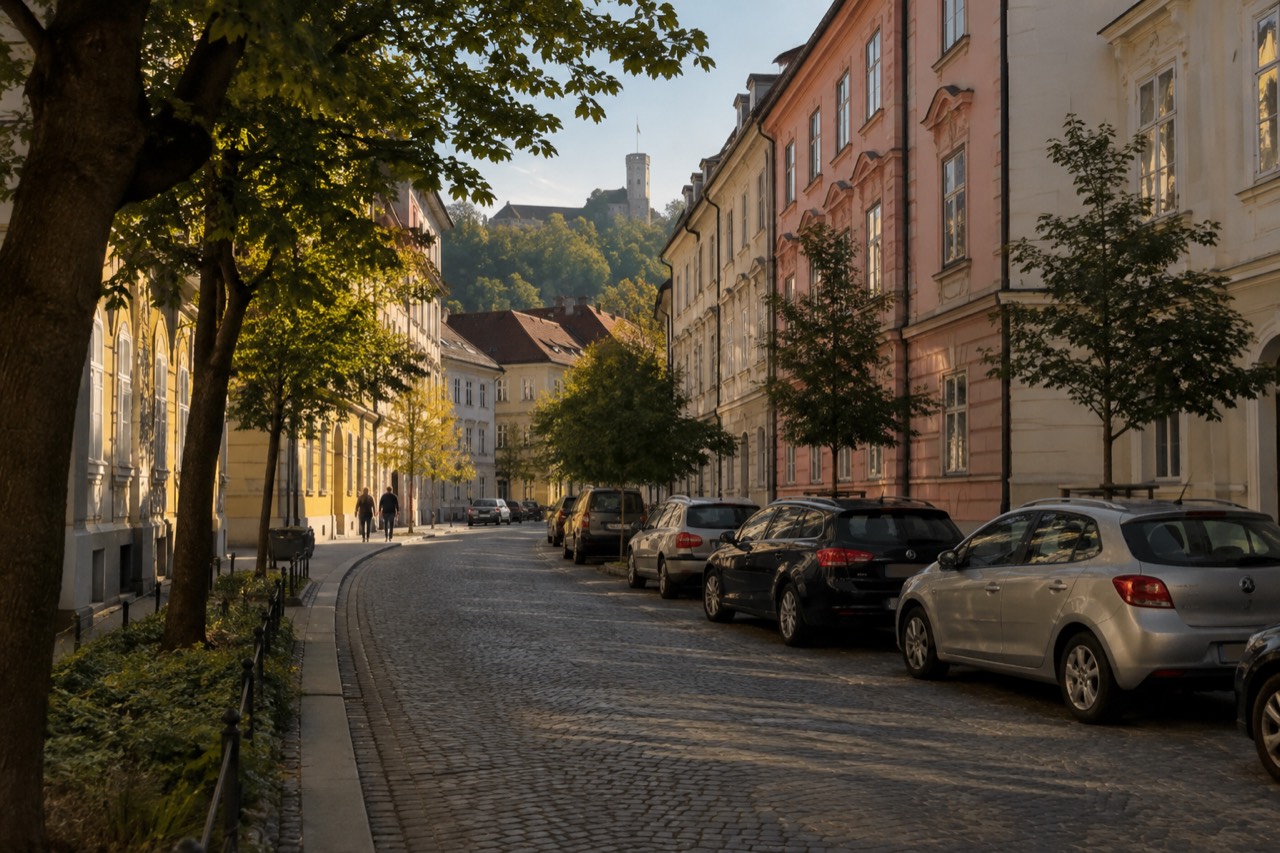
Yes, Americans can rent a car in Slovenia. Rental companies in Ljubljana city centre and at Jože Pučnik Airport accept US driving licences, the country uses the euro so there is no currency friction, and Slovenia's membership of the Schengen area means no routine border checks when you cross into Italy, Austria or Hungary. The one real trap is Ljubljana's historic centre, which is closed to general motor traffic, so the car needs a place to sleep outside the pedestrian zone.
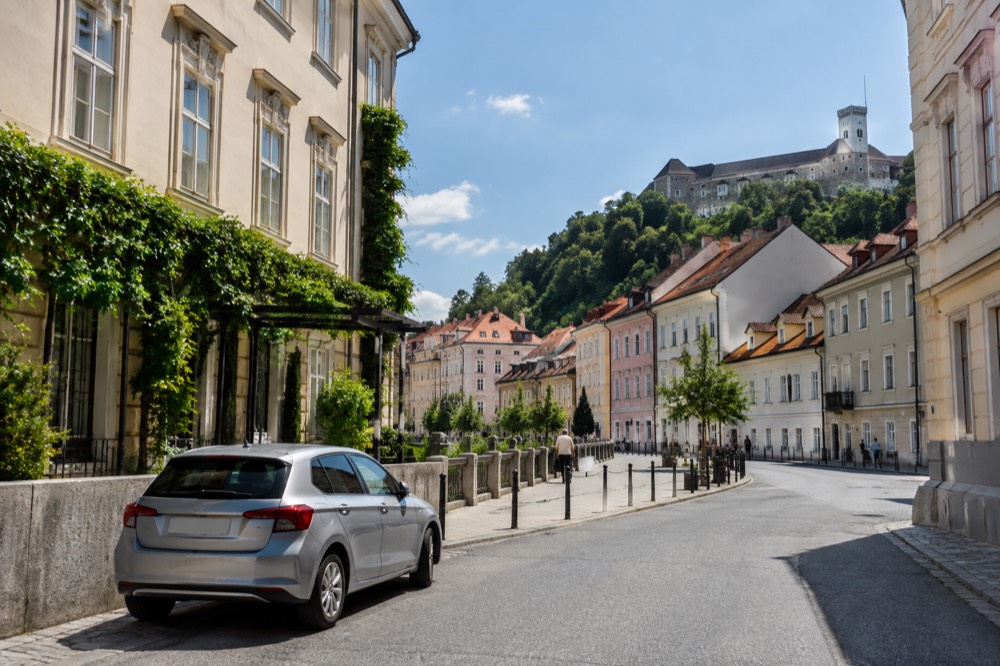
Slovenia is one of the easier European countries for an American driver, and the reason is mostly geography. The whole country is roughly the size of a single US metropolitan commute network, so the drives that matter, Ljubljana to Lake Bled, Ljubljana to the coast at Piran, Ljubljana to the Postojna caves, are all comfortable half-day runs rather than endurance tests. The airport sits about 26 km from the city, which makes the collection-and-return leg short by American standards.
The paperwork side is straightforward in the way that matters most: there is no visa or border step in the way, because Slovenia is in the European Union and the Schengen area, with internal land and sea border checks abolished on 21 December 2007 and air checks following on 30 March 2008, per the Slovenian government's own summary of its EU membership. Croatia joined Schengen and the euro on 1 January 2023, so even the Zagreb or Istria run is an internal trip now. You will not be changing money anywhere on the mainland: Slovenia adopted the euro on 1 January 2007.
What you should not do is assume the rental desk will absorb every difference between driving in Ohio and driving in a basin city that fogs in for much of the colder half of the year. The centre is pedestrianised, distances are quoted in kilometres, temperatures in Celsius, and the fuel price is in euros per litre. None of that is hard. It is just different, and knowing it before you arrive is what separates a smooth pickup from a confused one.
What Should Americans Know Before Driving in Ljubljana?
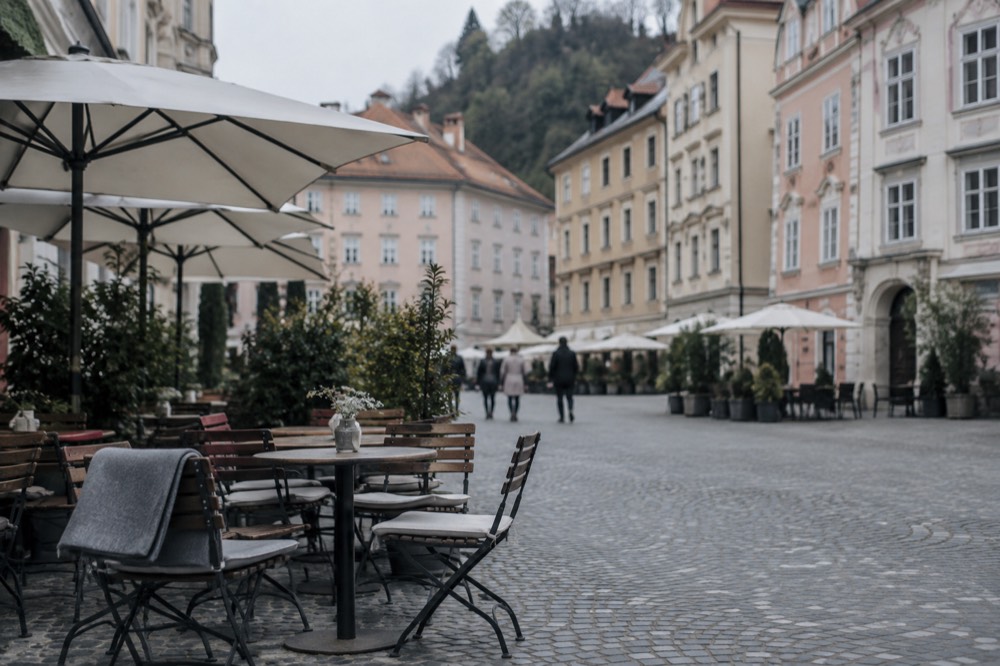
The single most important fact is that Ljubljana's historic centre is pedestrianised, a car-free zone of roughly 20 hectares that has been progressively expanded since 2007. You cannot drive to your hotel on the river, and you should not try. Park at the edge of the zone or at your accommodation outside it, and walk in; the centre is compact enough that a car inside it would be a burden even if it were allowed. Everything else, the euro, metric signs, contactless payment, is minor by comparison.
The pedestrian zone is not a hardship, it is the reason the city works. Once the car is parked, the Old Town, the Triple Bridge, Prešeren Square and the funicular up to the castle are all within an easy walk of each other, and the river cruise along the Ljubljanica covers the same ground from the water. A practical structure many visitors land on is one or two days in the city without the car at all, then a rental day for the karst, the coast or the lakes. That is exactly the shape of the question how many days in Ljubljana answers, and it pairs well with getting around Ljubljana if you would rather not drive inside the city limits at all.
A few practical points for the American driver, none of which require a number this site could not source:
| Question Americans ask | The situation in Slovenia |
|---|---|
| What currency for fuel and tolls? | The euro, everywhere; Slovenia adopted it on 1 January 2007 |
| Will I clear a border driving to Italy, Austria or Hungary? | No routine checks; Schengen internal land borders opened 21 December 2007 |
| What about driving to Croatia or Zagreb? | Croatia joined Schengen and the euro on 1 January 2023, so that route is internal too |
| Can I park in the old centre? | No; the historic centre is a pedestrian zone of roughly 20 hectares |
| Kilometres or miles? | Kilometres and Celsius, as everywhere in Slovenia |
| Where do I pick the car up? | City desks or Jože Pučnik Airport, about 26 km from the centre |
One thing worth saying plainly: cross-border driving is allowed by the geography but governed by your rental contract, not by Schengen. Most companies permit travel within the EU and will say so at the desk, but confirm before you sign, especially if a Zagreb or Trieste leg is on your list. The border itself will feel like driving between two US states; the paperwork is the only part with an opinion. Other pages covering the same trip are gathered on Ljubljana Travel Guide.
If you would rather not drive at all on day one, the free orientation walks are a good way to learn the city's shape before you commit to anything with an engine. The Old Town Walk, Romans to Dragons on GuruWalk is a tips-based two-hour walk from Roman roots to the Dragon Bridge, rated 4.91 across 1,496 reviews, and it costs nothing up front: you pay what you think it was worth at the end.
Is Renting a Car the Best Way to See Lake Bled and the Caves?
For Lake Bled, a car is convenient but not essential, because Bled Jezero station is only 1.5 km from the lake and the guided day tours run daily. For Postojna Cave and Predjama Castle, a car works but the logistics are heavier than they look: the cave tour runs about 90 minutes inside, boarding closes 15 minutes before the stated departure, and the cave holds 10 C year round, so timing and clothing both matter. Many Americans end up mixing one rental day with one or two guided days.
The honest comparison is not car versus no car, it is car versus the specific guided products that already solve the problems a car creates. The cave day trip from Ljubljana handles the timing and the tickets in one move:
That tour runs six hours, is rated 4.8 from 2,802 reviews, and covers both Postojna Cave and Predjama Castle with transport from the city. The equivalent self-drive day means parking at two sites, hitting a departure slot at the cave, and remembering that the underground is 10 C in every season, a fact the Postojna Cave guide covers in full. If the karst day is the one you are most tempted to drive yourself, it is also the one where a booked seat saves the most fiddly planning, which is why it earns the box below.
For Bled, the calculus is different. The drive is short and the lake is a destination where a car helps with the surrounding stops, Vintgar Gorge above all, which is open April to October and closes for winter. The Ljubljana to Lake Bled guide walks through the options, including the two-station rail detail that most advice gets wrong: Lesce-Bled is 4 km from the lake, but Bled Jezero is 1.5 km. A guided option like the Lake Bled and Castle day trip, six hours and rated 4.7 from 1,641 reviews, removes the parking question entirely, and is Bled worth visiting is worth reading before you decide how much of your trip to spend there.
| Factor | Rental car | Guided day trip | |---|---| | Centre access | Park outside the pedestrian zone | Pickup inside the city, no parking worry | | Winter fog in the basin | You drive in it | A local driver handles it | | Cave departure slots | You must hit the boarding time | Tickets and timing are arranged | | Cross-border trips | Check your rental contract first | Not usually on the route | | Flexibility to stop anywhere | Full | Fixed itinerary | | Cost with two or more people | One vehicle, shared | Per person |
Does the Weather Ever Argue Against Renting a Car in Slovenia?
Yes, and it is the one factor almost nobody plans for: Ljubljana sits in a basin that fogs in, with 91.2 days of fog a year in ARSO's 1971-2000 series, and the foggiest stretch is September and October at 12.4 days each, not midwinter as most people assume. On those mornings the motorway out of the city can be fine while the city floor is grey, or the reverse. It rarely stops a drive, but it changes when you leave and which route feels comfortable.
The inversion is the interesting part. Because cold air traps under warmer air above, the hills a few hundred metres up can sit in sunshine while the city is under low cloud, which is why ARSO's 1981-2010 normals give Ljubljana 56 hours of December sunshine against 120 hours at Kredarica, high on Triglav. For a driver this cuts both ways: a grey morning in the city often means a bright morning at Bled or on the coast road, so an early start can feel like driving into a different country's weather. The best time to visit Ljubljana guide carries the full month-by-month picture, including the fact that September and October are also the joint wettest months at 147 mm each.
Rain matters more than fog for the itinerary. September and October out-rain July, 147 mm against 115 mm in the 1981-2010 normals, so the autumn shoulder season that looks cheap and quiet on a booking site is also the season where a cave, which holds the same temperature year round, is the reliable plan. That is the real strength of mixing formats: a car for the sunny Alpine day, a booked cave tour for the wet one.
Common Questions About Renting a Car in Slovenia as an American
Can Americans [Rent A Car](https://discovercars.tpk.ro/laYIo9hK) In Slovenia?
Yes. US licence holders can rent from desks in Ljubljana and at the airport, about 26 km from the city. Slovenia uses the euro and sits inside the Schengen area, so there are no border checks driving to Italy, Austria, Hungary or, since 1 January 2023, Croatia.
Can I drive my rental car from Slovenia to Croatia or Italy?
Geographically and legally yes, since Croatia joined Schengen and the euro on 1 January 2023. Whether your specific rental contract permits it is a separate question: confirm cross-border terms at the desk before you sign.
Can I park in Ljubljana's old centre?
No. The historic centre is a pedestrianised zone of roughly 20 hectares, progressively expanded since 2007. Park at the edge of the zone or outside it and walk in; the centre is small enough that this costs you nothing.
Is driving in Slovenia difficult for Americans?
Not especially. Distances are short, roads are metric, and the euro removes currency friction. The two adjustments are the pedestrianised centre and basin fog, which averages 91.2 days a year and peaks in September and October, not midwinter.
Do I need a car to see Lake Bled or Postojna Cave?
No. Bled Jezero station is 1.5 km from the lake, and guided day tours from Ljubljana cover both Bled and the Postojna-Predjama pair with transport and tickets included, which also removes the cave's fixed boarding times from your planning.
What is the best mix of car and tours?
A common shape is a car-free day or two in the pedestrianised city, then either one rental day for flexible stops or a booked cave and castle tour for the karst, where timing, tickets and the constant 10 C underground temperature are handled for you.